Ultimate Guide to Quick Healthy Meals for Busy People
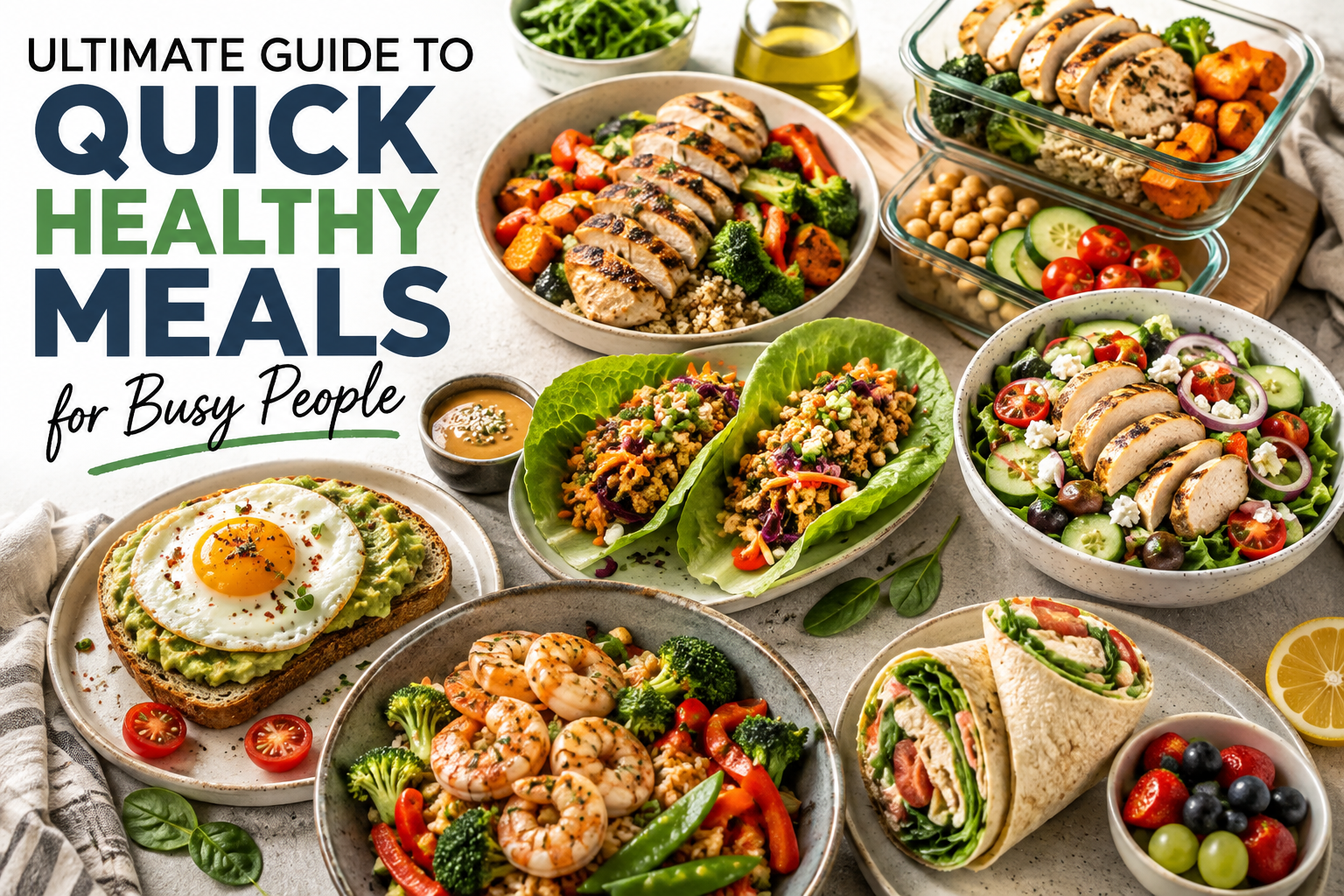
Discover quick healthy meals, easy meal planning tips, and fast breakfast, lunch, and dinner ideas to help busy people eat nutritious meals every day.
Ultimate Guide to Quick Healthy Meals for Busy People
Life moves quickly, and finding time to prepare nutritious meals often feels impossible. Between work responsibilities, family commitments, commuting, studying, and everyday errands, many people end up relying on fast food or heavily processed convenience meals simply because they're easy. Unfortunately, convenience doesn't always equal nutrition. Regularly choosing unhealthy options can contribute to weight gain, lower energy levels, poor concentration, and increased risk of chronic diseases. The good news is that eating healthy doesn't require spending hours in the kitchen. With the right ingredients, simple planning, and efficient cooking techniques, anyone can prepare delicious meals in less than 30 minutes.
Quick healthy meals have become one of the most searched nutrition topics because people want practical solutions that fit into busy schedules. Instead of following restrictive diets or complicated recipes with dozens of ingredients, today's healthy eating focuses on balance, simplicity, and sustainability. Whether you're a busy professional, a college student, a parent managing multiple responsibilities, or someone simply looking to eat better, quick meals can help you stay consistent with healthy habits. Throughout this comprehensive guide, you'll discover practical strategies, time-saving cooking tips, and dozens of meal ideas that make healthy eating realistic every day.
Why Quick Healthy Meals Matter More Than Ever
Modern lifestyles have dramatically changed the way people eat. Long work hours, remote jobs, packed calendars, and constant digital distractions often push meal preparation to the bottom of the priority list. When time becomes limited, unhealthy convenience foods become tempting because they're available immediately. Unfortunately, these foods are frequently high in sodium, added sugars, unhealthy fats, and refined carbohydrates while lacking fiber, vitamins, and essential nutrients.
Preparing quick healthy meals at home offers benefits far beyond saving money. Home cooking gives you complete control over ingredient quality, portion sizes, cooking methods, and nutritional balance. Fresh vegetables, lean proteins, whole grains, legumes, and healthy fats can easily be combined into meals that are satisfying, flavorful, and ready within minutes. Many healthy recipes actually require less preparation time than ordering takeout and waiting for delivery.
Healthy eating also improves productivity and energy throughout the day. Balanced meals help stabilize blood sugar, reducing afternoon energy crashes and improving concentration. Protein supports muscle maintenance, fiber promotes digestive health, and healthy fats contribute to brain function and heart health. When nutritious eating becomes part of a consistent routine rather than an occasional effort, the benefits accumulate over time, making healthy meal preparation one of the smartest investments in long-term wellness.
What Makes a Meal Both Quick and Healthy?
A meal is considered both quick and healthy when it provides balanced nutrition while requiring minimal preparation time. Rather than focusing on calorie restriction alone, healthy meals prioritize nutrient density. That means every bite delivers vitamins, minerals, protein, fiber, and healthy fats that nourish the body instead of simply filling it. A balanced plate often includes lean protein, colorful vegetables, whole grains or other complex carbohydrates, and a healthy source of fat.
Quick meals also rely on smart ingredient choices. Frozen vegetables retain most of their nutrients and eliminate chopping time. Rotisserie chicken, canned beans, pre-washed greens, microwaveable brown rice, frozen seafood, and Greek yogurt are excellent convenience foods that maintain strong nutritional value. Keeping these staples stocked makes it much easier to prepare healthy meals without extensive planning.
One useful guideline is the "30-minute rule." If a recipe consistently takes longer than half an hour on busy weekdays, it may not be practical for everyday use. Instead, focus on meals that require simple cooking techniques such as stir-frying, roasting on a sheet pan, air frying, grilling, or assembling fresh ingredients into nourishing bowls and salads. Over time, these efficient cooking habits become second nature, making healthy eating feel effortless rather than overwhelming.
Smart Kitchen Essentials for Faster Healthy Cooking
One of the biggest secrets to preparing quick healthy meals consistently is having a well-stocked kitchen. When nutritious ingredients are readily available, you're far less likely to order takeout or reach for processed snacks after a long day. Think of your kitchen as your personal healthy meal station. The better it's organized, the easier it becomes to create balanced meals in minutes rather than scrambling for ideas when hunger strikes.
A smart pantry starts with versatile staples that can be used in multiple recipes. Whole grains like brown rice, quinoa, rolled oats, and whole wheat pasta provide complex carbohydrates that keep you feeling full longer. Canned beans such as chickpeas, black beans, and kidney beans are affordable, rich in protein and fiber, and require almost no preparation. Healthy fats including extra virgin olive oil, natural peanut butter, almonds, walnuts, pumpkin seeds, and chia seeds add flavor while supporting heart health. Seasonings like garlic powder, onion powder, paprika, oregano, cumin, turmeric, black pepper, and Italian herbs instantly transform simple ingredients into delicious meals without adding unnecessary calories.
Your refrigerator should always include foods that work well across breakfast, lunch, and dinner. Eggs remain one of the most versatile protein sources because they cook quickly and pair well with vegetables, toast, or whole grains. Greek yogurt serves as both a breakfast ingredient and a healthy snack. Fresh vegetables such as spinach, bell peppers, cucumbers, tomatoes, carrots, broccoli, and lettuce can be added to salads, wraps, omelets, or stir-fries. Frozen vegetables deserve equal attention because they maintain excellent nutritional value while lasting much longer than fresh produce. Frozen berries, mixed vegetables, and broccoli are excellent time-saving options that reduce food waste.
Kitchen equipment can also make healthy cooking significantly faster. An air fryer prepares crispy meals with very little oil, while a non-stick skillet speeds up cooking and simplifies cleanup. A quality chef's knife reduces preparation time, and a blender makes smoothies, soups, and sauces within minutes. Slow cookers and pressure cookers allow busy people to prepare large batches of healthy meals with minimal effort. Investing in a few reliable kitchen tools often saves countless hours throughout the year while making healthy cooking more enjoyable.
Meal Planning Strategies That Save Time Every Week
Meal planning is one of the most effective habits for anyone trying to maintain a healthy lifestyle despite a busy schedule. Instead of deciding what to cook every evening, planning ahead removes stress and prevents last-minute unhealthy food choices. Many people assume meal planning requires hours of preparation, but spending just 30 minutes once a week can save several hours during the weekdays.
Begin by selecting simple recipes that use similar ingredients. For example, grilled chicken can become part of a salad on Monday, a wrap on Tuesday, and a rice bowl on Wednesday. Roasted vegetables can be added to omelets, pasta dishes, grain bowls, or soups throughout the week. Using ingredients in multiple meals reduces grocery costs while minimizing food waste. Planning meals around seasonal produce is another excellent strategy because fresh fruits and vegetables are often more affordable, flavorful, and nutritious during their peak season.
Batch cooking takes meal planning one step further. Cooking larger portions of proteins, grains, and vegetables allows you to assemble different meals in just a few minutes throughout the week. Preparing a large container of quinoa, grilled chicken breasts, roasted sweet potatoes, and chopped vegetables creates endless meal combinations. Proper storage in airtight containers keeps meals fresh and makes healthy eating much more convenient during busy workdays.
Keeping healthy snacks prepared is equally important. Wash and portion fresh fruit, cut vegetables for dipping, prepare boiled eggs, and divide nuts into small containers. Having ready-to-eat nutritious snacks reduces the temptation to purchase sugary snacks or fast food between meals. Meal planning is less about perfection and more about creating a system that consistently makes healthy choices easier than unhealthy ones.
10 Quick Healthy Breakfast Ideas
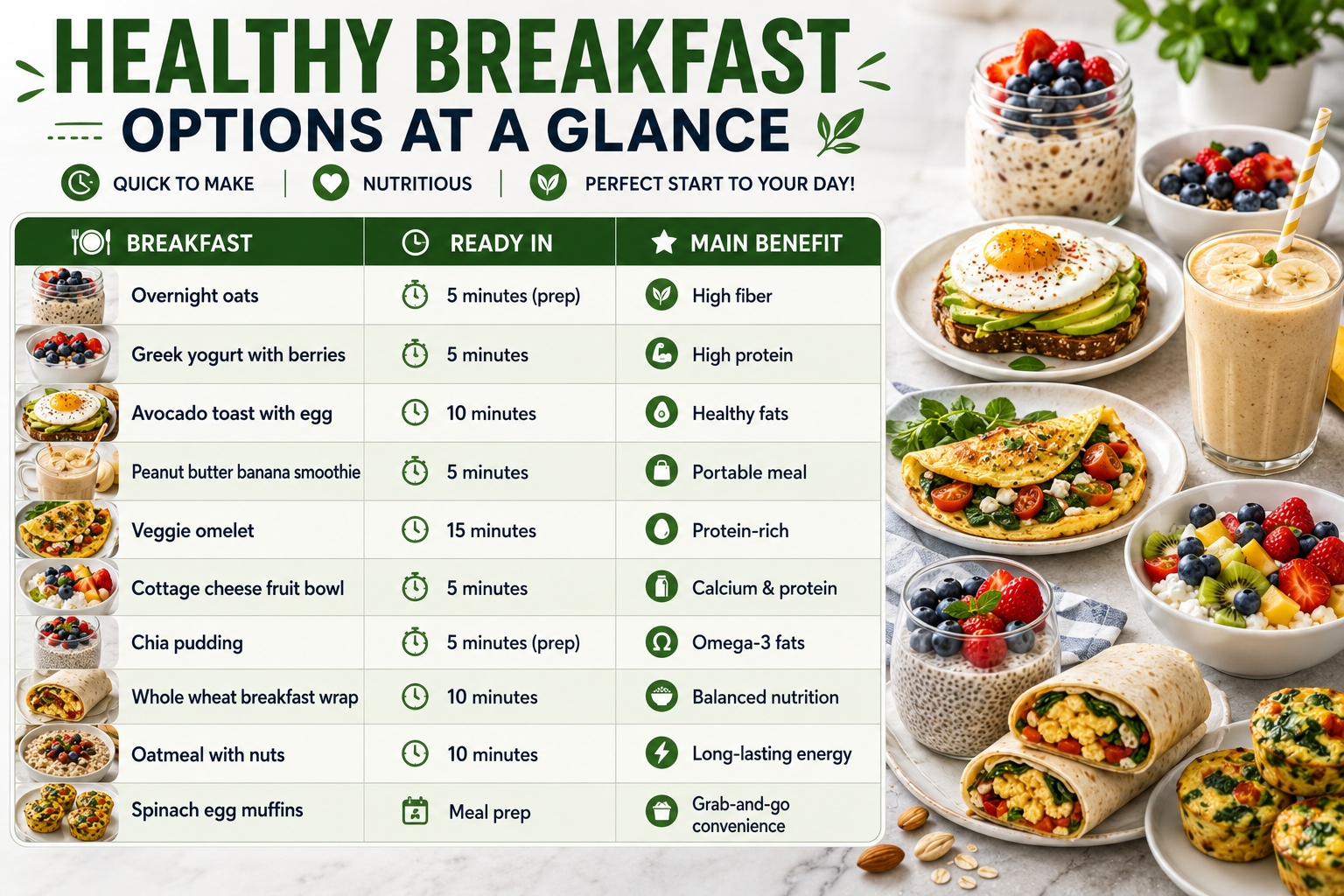
Breakfast provides the energy needed to begin the day productively, yet it's often the meal people skip most frequently. Fortunately, healthy breakfasts don't need to be complicated or time-consuming. Choosing breakfasts rich in protein, fiber, and healthy fats helps maintain energy levels and keeps hunger under control until lunchtime.
High-Protein Breakfast Options
Protein plays an essential role in maintaining muscle, supporting metabolism, and increasing satiety. Greek yogurt topped with mixed berries, almonds, and chia seeds delivers protein, antioxidants, and healthy fats in just a few minutes. Vegetable omelets prepared with spinach, mushrooms, tomatoes, and peppers provide vitamins alongside high-quality protein. Cottage cheese paired with pineapple or peaches creates another refreshing breakfast that requires virtually no cooking while supplying calcium and protein.
Smoothies also offer an excellent high-protein option for busy mornings. Blending Greek yogurt, banana, spinach, frozen berries, oats, and milk creates a balanced breakfast that's easy to enjoy during a commute. Adding nut butter or protein powder can further increase protein intake for active individuals. These breakfasts keep you satisfied for hours while supporting better concentration and stable energy throughout the morning.
Grab-and-Go Breakfasts
Some mornings leave almost no time for cooking, making portable breakfasts invaluable. Overnight oats prepared the evening before combine rolled oats, milk, chia seeds, yogurt, and fruit into a ready-to-eat breakfast waiting in the refrigerator. Egg muffins baked in advance with vegetables and cheese can be reheated in less than a minute, making them ideal for hectic schedules.
Whole grain toast topped with avocado and sliced boiled eggs creates another nutritious breakfast that's ready within minutes. Peanut butter spread over whole wheat bread with banana slices provides a satisfying combination of healthy fats, protein, and complex carbohydrates. Even a simple fruit smoothie paired with a handful of almonds offers far better nutrition than skipping breakfast altogether. The goal isn't perfection but consistency, choosing breakfasts that fit your lifestyle while supporting long-term health.
10 Easy Lunch Ideas
Lunch should provide sustained energy for the afternoon rather than causing sluggishness or hunger an hour later. Balanced lunches combine lean protein, whole grains, vegetables, and healthy fats while remaining simple enough to prepare ahead of time. Meal-prepped lunches also help reduce spending on restaurant meals while giving you greater control over ingredients and portions.
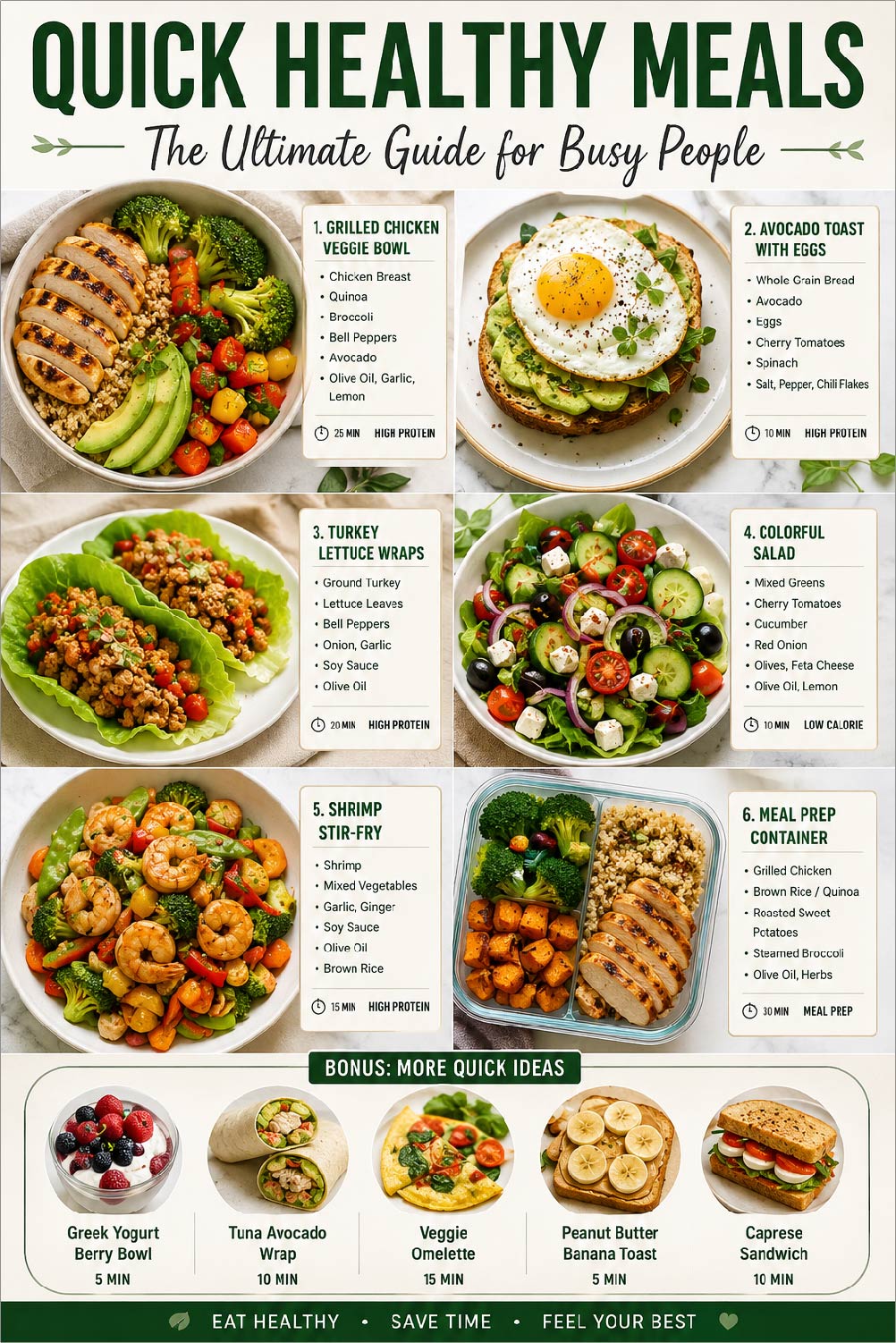
A grilled chicken quinoa bowl is one of the most versatile options because it combines protein, fiber, and colorful vegetables into a satisfying meal. Turkey and avocado wraps prepared using whole wheat tortillas offer a portable lunch that's easy to customize with spinach, tomatoes, cucumbers, and hummus. Chickpea salads made with cucumbers, cherry tomatoes, red onion, feta cheese, olive oil, and lemon juice provide a refreshing vegetarian option rich in fiber and plant-based protein.
Brown rice bowls topped with grilled salmon and steamed vegetables deliver heart-healthy omega-3 fats alongside complex carbohydrates for lasting energy. Leftover roasted vegetables can easily be transformed into wraps, grain bowls, or pasta salads. Lentil soup paired with whole grain bread makes an affordable, filling lunch that's ideal during cooler months. Tuna salad prepared with Greek yogurt instead of mayonnaise offers another healthier twist on a classic meal while maintaining excellent flavor.
No-cook lunches are equally valuable for extremely busy days. Mixed greens topped with canned beans, rotisserie chicken, nuts, seeds, and olive oil dressing require almost no preparation while supplying excellent nutrition. Cottage cheese served alongside fruit and whole grain crackers creates another balanced meal that can be packed within minutes. With thoughtful planning, healthy lunches become one of the easiest meals to prepare consistently instead of the most challenging.
10 Fast Healthy Dinner Recipes
Dinner doesn't have to be complicated to be satisfying and nutritious. After a busy day, most people want meals that require minimal preparation, cook quickly, and deliver plenty of flavor. The key is choosing recipes that rely on wholesome ingredients and efficient cooking methods while providing a balanced mix of lean protein, vegetables, healthy fats, and complex carbohydrates. Whether you're cooking for yourself or feeding a family, these dinner ideas can help you stay on track with healthy eating without spending hours in the kitchen.
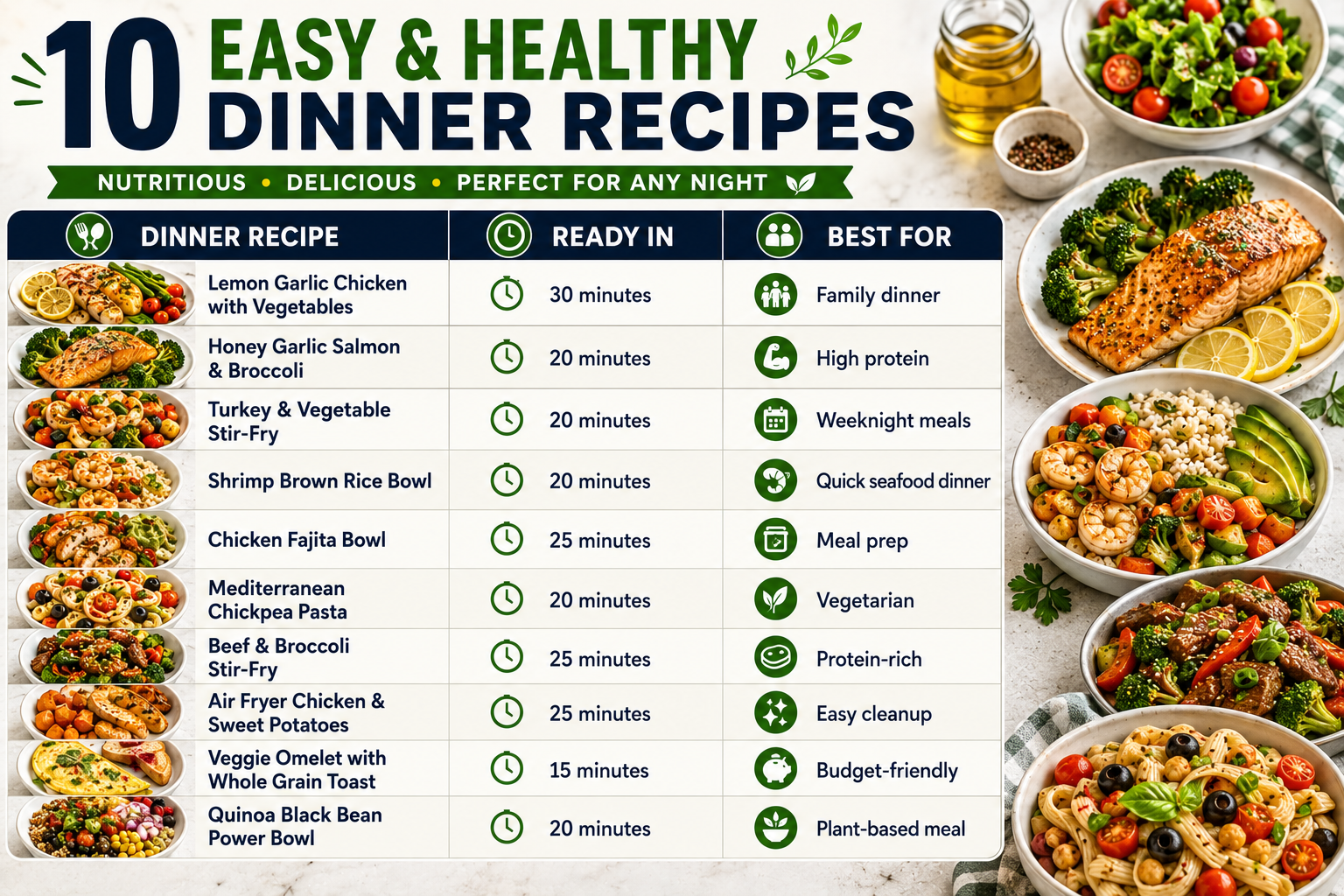
Each of these recipes is designed to maximize nutrition while minimizing preparation time. Lean proteins like chicken, salmon, turkey, shrimp, and beans help build and repair muscles while keeping you full for longer periods. Vegetables such as broccoli, spinach, bell peppers, zucchini, carrots, and green beans provide essential vitamins, minerals, antioxidants, and fiber that support digestion and immune health. Whole grains like brown rice and quinoa supply slow-releasing carbohydrates that maintain steady energy throughout the evening.
Preparing these meals becomes even easier when ingredients are partially prepared in advance. Grilled chicken can be cooked on Sunday and used throughout the week in bowls, wraps, and salads. Frozen vegetables reduce chopping time, while microwaveable brown rice or quinoa can be ready in just a few minutes. Flavor comes from herbs, garlic, lemon juice, olive oil, spices, and homemade sauces instead of heavy cream or excessive sodium. This approach creates meals that are filling, colorful, and enjoyable enough to become regular additions to your weekly menu.
One-Pan Meals for Maximum Convenience
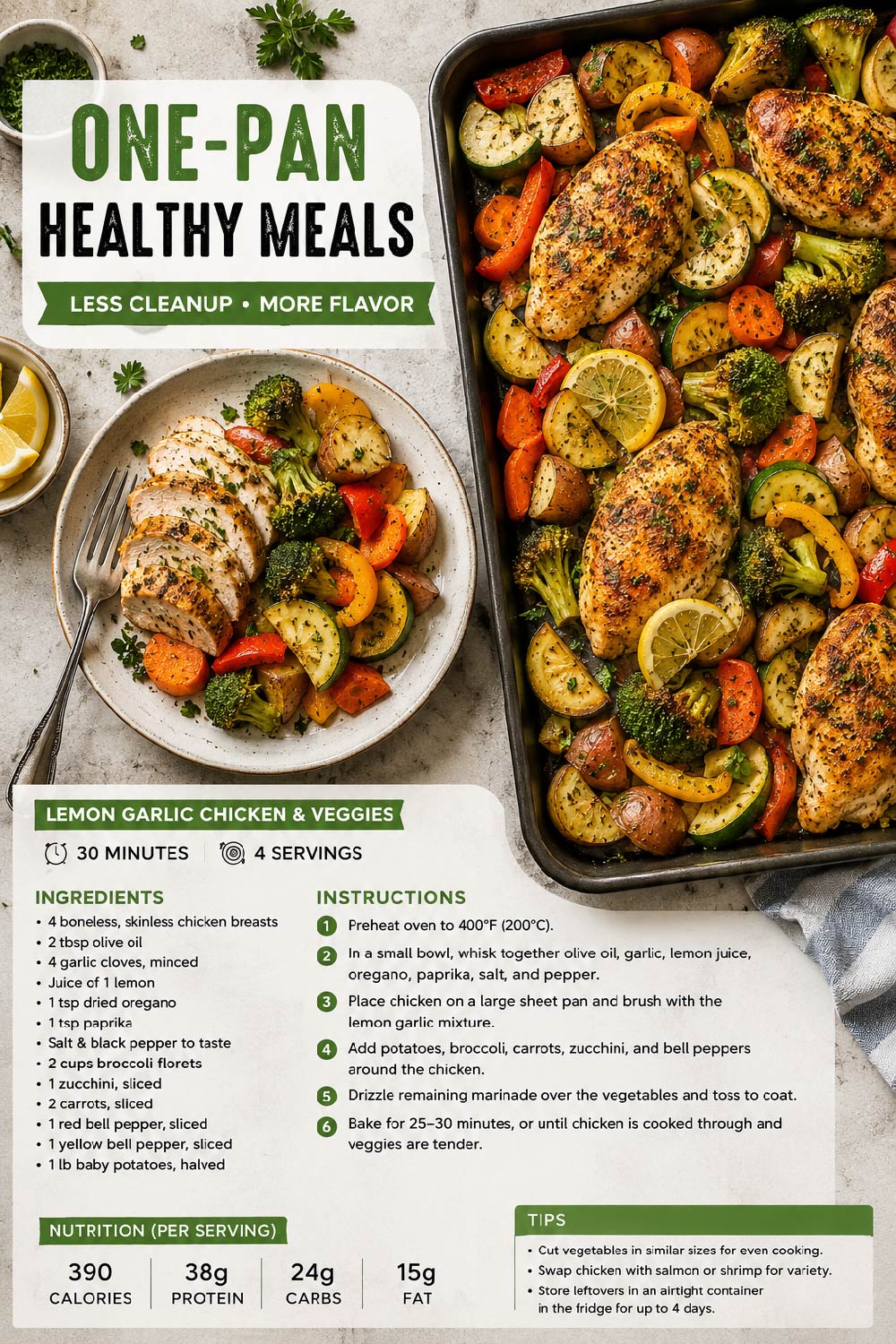
One-pan meals have become increasingly popular because they combine simplicity with excellent flavor and minimal cleanup. Instead of juggling multiple pots and pans, all ingredients cook together, allowing flavors to blend naturally while saving valuable time. This cooking method is especially useful for busy professionals, students, and families who want healthy dinners without a pile of dishes waiting afterward.
A classic sheet-pan chicken dinner combines chicken breasts, broccoli florets, zucchini, carrots, bell peppers, and red onions tossed with olive oil, garlic, paprika, oregano, and black pepper. Everything roasts together in the oven until the chicken is perfectly cooked and the vegetables become tender with lightly caramelized edges. Similar recipes work equally well with salmon, turkey meatballs, tofu, or shrimp, allowing you to vary your meals throughout the week while using the same simple cooking technique.
One-pan meals are also ideal for meal prep. Preparing a double batch provides multiple lunches or dinners for the coming days, reducing both cooking time and grocery expenses. Roasted vegetables maintain their flavor well when refrigerated, and proteins can easily be reheated without losing quality. Pairing these meals with cooked quinoa, brown rice, or whole wheat couscous creates balanced dinners that satisfy hunger while supporting long-term health goals.
20-Minute Family Dinners Everyone Will Love
Cooking for an entire family often feels challenging because meals must satisfy different tastes while remaining nutritious and affordable. Fortunately, many family-friendly recipes can be prepared in about twenty minutes without sacrificing flavor. The secret lies in choosing versatile ingredients that appeal to both adults and children while allowing easy customization.
Chicken fajita bowls are an excellent example. Seasoned chicken strips cook quickly alongside sliced peppers and onions before being served over brown rice with avocado, salsa, corn, black beans, and fresh cilantro. Family members can build their own bowls according to personal preferences, making dinner more enjoyable while encouraging children to try colorful vegetables. Whole wheat pasta tossed with lean turkey meatballs and homemade tomato sauce creates another comforting meal that's significantly healthier than many restaurant versions.
Homemade stir-fries also deserve a place in every busy household. Lean beef, chicken, shrimp, or tofu cook rapidly with frozen mixed vegetables and a light soy-ginger sauce. Served over brown rice or whole grain noodles, stir-fries provide excellent nutrition while requiring very little preparation. Even breakfast-for-dinner options like vegetable omelets with whole grain toast and fruit offer a balanced meal that's affordable, quick, and surprisingly satisfying. By focusing on simple recipes with wholesome ingredients, family dinners become opportunities to enjoy healthy food together instead of sources of daily stress.
Healthy Snacks That Keep You Energized
Healthy snacks bridge the gap between meals and help maintain consistent energy levels throughout the day. Instead of reaching for sugary treats or processed chips, choosing nutrient-dense snacks supports better concentration, prevents overeating at mealtimes, and contributes to overall nutritional balance. The best snacks combine protein, healthy fats, and fiber because these nutrients digest more slowly, keeping hunger under control.
Fresh fruit paired with natural peanut butter remains one of the simplest and most satisfying snack combinations. Apples with almond butter, bananas with peanut butter, or pear slices with walnuts provide natural sweetness alongside healthy fats and protein. Greek yogurt topped with berries and chia seeds delivers probiotics, calcium, and antioxidants while requiring almost no preparation. Hard-boiled eggs are another convenient snack because they can be prepared in batches and stored in the refrigerator for several days.
Vegetable sticks served with hummus offer crunch, flavor, and fiber without excessive calories. Carrots, cucumbers, celery, bell peppers, and cherry tomatoes all pair well with homemade or store-bought hummus. Roasted chickpeas seasoned with paprika or garlic powder create a crunchy alternative to potato chips, while homemade trail mix combining unsalted nuts, seeds, and a small amount of dried fruit makes an excellent portable snack for work or travel. Keeping these healthy options readily available makes nutritious choices much easier during busy days.
Best Practices for Meal Storage
Proper food storage plays a major role in successful meal preparation. Even the healthiest recipes lose their value if they spoil before being eaten. Investing in high-quality airtight containers helps preserve freshness, prevents leaks, and makes meals easier to transport to work or school. Glass containers are especially useful because they resist stains, can be reheated safely, and often last longer than plastic alternatives.
Most cooked proteins such as chicken, turkey, lean beef, and fish remain fresh in the refrigerator for up to four days when stored correctly. Cooked grains including rice and quinoa generally maintain quality for several days as well. Freezing portions of soups, stews, chili, and casseroles extends their shelf life for several months, providing convenient homemade meals whenever time becomes limited. Labeling containers with preparation dates ensures older meals are eaten first, reducing unnecessary food waste.
Cooling cooked food promptly before refrigeration is equally important. Allowing meals to sit at room temperature for extended periods increases the risk of bacterial growth. Reheating leftovers thoroughly before eating helps maintain food safety while restoring flavor and texture. By following these simple storage practices, meal prep becomes safer, more efficient, and far more practical for busy lifestyles.
Common Healthy Cooking Mistakes to Avoid
Many people begin healthy eating with enthusiasm but unknowingly make mistakes that reduce their long-term success. One of the most common errors is trying overly complicated recipes that require expensive specialty ingredients or lengthy preparation. When healthy cooking feels overwhelming, consistency becomes difficult. Starting with simple recipes allows confidence to grow while establishing sustainable habits.
Another frequent mistake involves eliminating entire food groups unnecessarily. Healthy eating doesn't require avoiding carbohydrates or fats completely. Whole grains, fruits, healthy oils, nuts, seeds, and avocados all contribute valuable nutrients that support energy, brain function, and heart health. Focusing on balanced portions rather than strict restrictions creates a healthier relationship with food and makes nutritious eating easier to maintain over time.
Skipping meal planning is another obstacle. Without prepared ingredients or a shopping list, it's easy to rely on convenience foods after a stressful day. Failing to include enough protein or vegetables also reduces meal satisfaction, often leading to unnecessary snacking later. Finally, overlooking hydration can affect energy and appetite, making people mistake thirst for hunger. Drinking enough water throughout the day complements healthy eating and supports overall wellness.
Conclusion
Healthy eating doesn't require gourmet cooking skills, expensive ingredients, or endless hours in the kitchen. With thoughtful planning, a well-stocked pantry, and a collection of reliable recipes, anyone can prepare nutritious meals that fit even the busiest schedule. Small changes—such as cooking extra portions, choosing whole foods, and keeping healthy snacks nearby—can make a significant difference in both physical health and daily energy levels.
The journey toward better nutrition isn't about perfection but consistency. Every balanced breakfast, homemade lunch, wholesome dinner, and nutritious snack contributes to healthier habits over time. By incorporating the strategies and recipes in this guide, you'll spend less time worrying about what to eat and more time enjoying delicious meals that fuel your body, support your goals, and fit seamlessly into your busy lifestyle.
Frequently Asked Questions
1. What is the fastest healthy meal I can make?
A smoothie with Greek yogurt, fruit, spinach, oats, and nut butter takes about five minutes and provides protein, fiber, vitamins, and healthy fats.
2. How can I eat healthy on a busy work schedule?
Meal planning, batch cooking, and keeping healthy snacks and frozen vegetables available make nutritious eating much easier during busy weeks.
3. Are frozen vegetables healthy?
Yes. Frozen vegetables are typically frozen shortly after harvest, helping preserve vitamins and minerals while offering excellent convenience.
4. How long should meal-prepped food stay in the refrigerator?
Most cooked meals remain fresh for 3–4 days when stored in airtight containers and refrigerated promptly.
5. What are the best protein sources for quick healthy meals?
Chicken breast, turkey, salmon, eggs, Greek yogurt, tofu, beans, lentils, cottage cheese, tuna, and shrimp are all excellent options for fast, nutritious meals.
Comments
0No comments yet — be the first to share your thoughts!