Sunday Meal Prep Ideas for Beginners: 10 Easy Meals
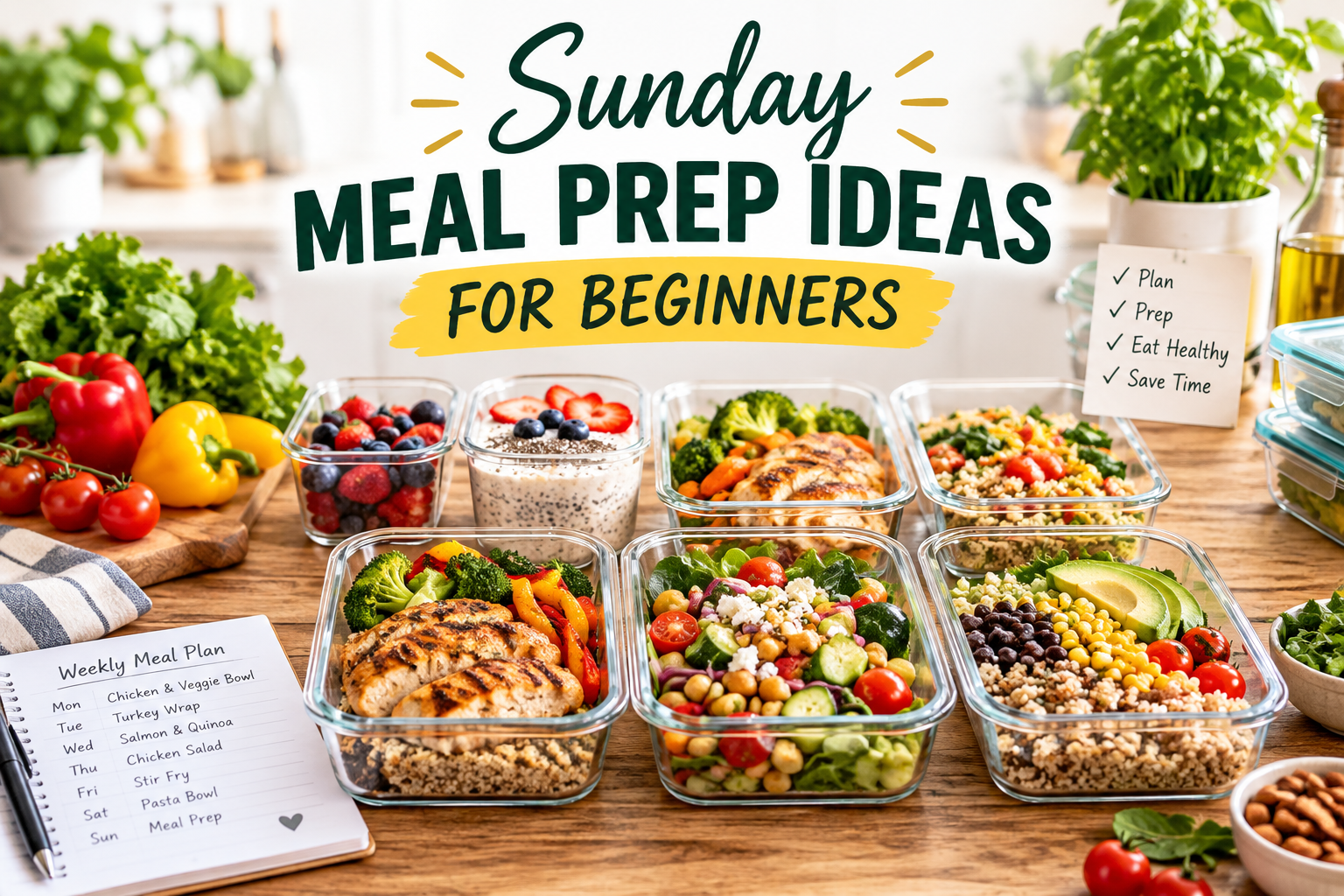
Discover 10 easy Sunday meal prep ideas for beginners, plus simple planning, storage, food safety, and tips for healthy meals all week.
Sunday Meal Prep Ideas for Beginners
Sunday meal prep can make the entire week feel easier. Instead of opening the refrigerator on Monday morning and wondering what to eat, you can already have breakfast, lunch, snacks, or dinner components ready to go. For busy people, that small amount of preparation can remove one more decision from an already packed schedule. The goal is not to spend your entire Sunday cooking complicated recipes. It is to create a simple system that makes healthy meals easier to reach for during busy weekdays.
If you are completely new to meal prepping, start small. You do not need seven breakfasts, seven lunches, seven dinners, and a refrigerator packed with identical containers. A better beginner strategy is to prepare a few versatile foods that can be combined in different ways. Cleveland Clinic describes batch cooking, ingredient preparation, and freezer meals as different valid approaches to meal prep, so there is no single method you have to follow.
The best Sunday meal prep ideas for beginners are therefore simple, flexible, nutritious, and realistic. Think overnight oats, roasted vegetables, cooked grains, chicken, wraps, salads, and easy snacks. Once you find a rhythm that works for your schedule, meal prep becomes less like a chore and more like giving your future self a helping hand.
What Is Sunday Meal Prep?
Sunday meal prep means using part of your Sunday to plan, prepare, cook, portion, and store food for the days ahead. You might cook complete meals, prepare individual ingredients, or use a combination of both. For example, you could cook chicken breasts, brown rice, and roasted vegetables separately and then turn them into different lunches throughout the week. You could also make a batch of overnight oats for breakfast and prepare chopped vegetables for quick snacks. The beauty of this approach is that you are not locked into one meal-prep style.
For beginners, ingredient prep can be easier than cooking five identical meals. You might roast a tray of vegetables, cook a grain, prepare a protein, wash salad greens, and make one simple dressing. During the week, those ingredients can become bowls, wraps, salads, or quick dinners. This approach also helps prevent boredom because the same ingredients can be seasoned or combined differently. The important thing is to reduce the amount of work you need to do when you are tired or short on time.
Meal prep also starts before you enter the kitchen. The USDA's MyPlate guidance recommends checking what you already have, writing down your meals, planning recipes, and considering your available time before shopping. That simple planning step can keep your Sunday session focused instead of turning it into an exhausting cooking marathon.
Why Sunday Is a Great Prep Day
Sunday works well for meal prep because it sits right before the busiest part of many people's weeks. You can take some time to look at your calendar, decide which meals you will need, shop for ingredients, and prepare food before Monday arrives. Instead of trying to cook after a long workday, you have already handled some of the most time-consuming tasks. That means Monday dinner does not have to begin with chopping vegetables, cooking grains, and figuring out what protein to use.
Still, Sunday is not a magical requirement. The best prep day is the day that fits your schedule. Cleveland Clinic notes that Sunday and Wednesday are popular meal-prep days but recommends choosing a day when you genuinely have enough time. If your weekends are already full, a shorter preparation session on another day may work much better.
The real benefit of Sunday meal prep is creating a repeatable weekly routine. Think of it like charging your phone before a busy day. You are not doing everything at once because you have to; you are preparing in advance so you have more energy and fewer decisions to make later. Once the routine becomes familiar, you can adjust the amount of food you prepare based on your schedule.
Benefits of Sunday Meal Prep for Beginners
One of the biggest benefits of meal prep is convenience. When healthy ingredients are already cooked and portioned, you do not need to start from zero every time you become hungry. A prepared lunch can go straight into your work bag, while a ready-to-heat dinner can save you from reaching for takeaway after a tiring day. Meal prep also makes it easier to build meals around foods you actually enjoy instead of buying whatever happens to be convenient.
Planning can also support healthier choices because it gives you an opportunity to think about your meals before hunger takes over. Healthline notes that having prepared food available can reduce reliance on convenience meals and may support more nutritious choices. That does not mean every meal needs to be perfectly balanced or meticulously measured. A practical goal is simply to have a few useful foods ready.
Another advantage is reduced food waste. When you plan meals before shopping, you are more likely to buy ingredients with a purpose. A bunch of spinach can become breakfast eggs, lunch wraps, and a dinner bowl rather than sitting forgotten at the back of the refrigerator. You can also build your weekly menu around foods that need to be used first. Over time, this approach can make grocery shopping feel more organized and intentional.
Save Time During Busy Weekdays
The biggest time-saving trick is to prepare ingredients that usually slow you down. Washing and chopping vegetables, cooking grains, preparing protein, and making sauces can take surprisingly long when you do them separately every day. Doing those tasks together on Sunday means your weekday meals can often be assembled in minutes.
Imagine coming home on Wednesday with no desire to cook. Instead of pulling out a cutting board, pan, ingredients, and spices, you open the refrigerator and find cooked chicken, roasted vegetables, and rice waiting for you. Add a quick sauce or dressing, warm everything, and dinner is nearly done. That is what good meal prep should accomplish: make healthy eating easier without making your life revolve around cooking.
You can also prep breakfast and lunch at the same time. Overnight oats can be assembled in several jars, while wraps can be filled with cooked chicken and vegetables. Hard-boiled eggs, fruit, yogurt, chopped vegetables, and homemade snack boxes can help fill the gaps between meals. Cleveland Clinic specifically includes overnight oats, chia pudding, yogurt parfaits, and smoothies among easy make-ahead breakfast options.
Make Healthy Eating Easier
Healthy eating becomes much easier when nutritious ingredients are convenient. You are more likely to add vegetables to dinner when they are already washed and roasted. You are more likely to eat a balanced lunch when the protein and grain are already cooked. Even a simple container of chopped fruit can make a better snack easier to choose.
A useful beginner formula is to build meals from a few basic components: protein + vegetables + high-fiber carbohydrate + healthy fat. That might mean chicken, broccoli, brown rice, and avocado. Another meal could use chickpeas, cucumber, quinoa, olive oil, and leafy greens. You can change seasonings, sauces, and combinations throughout the week without completely changing your grocery list.
The trick is not perfection. If your Sunday plan is so complicated that you dread repeating it next week, it is probably too complicated. A simple meal-prep routine you actually follow is much more valuable than an impressive plan that lasts one week.
How to Start Sunday Meal Prep
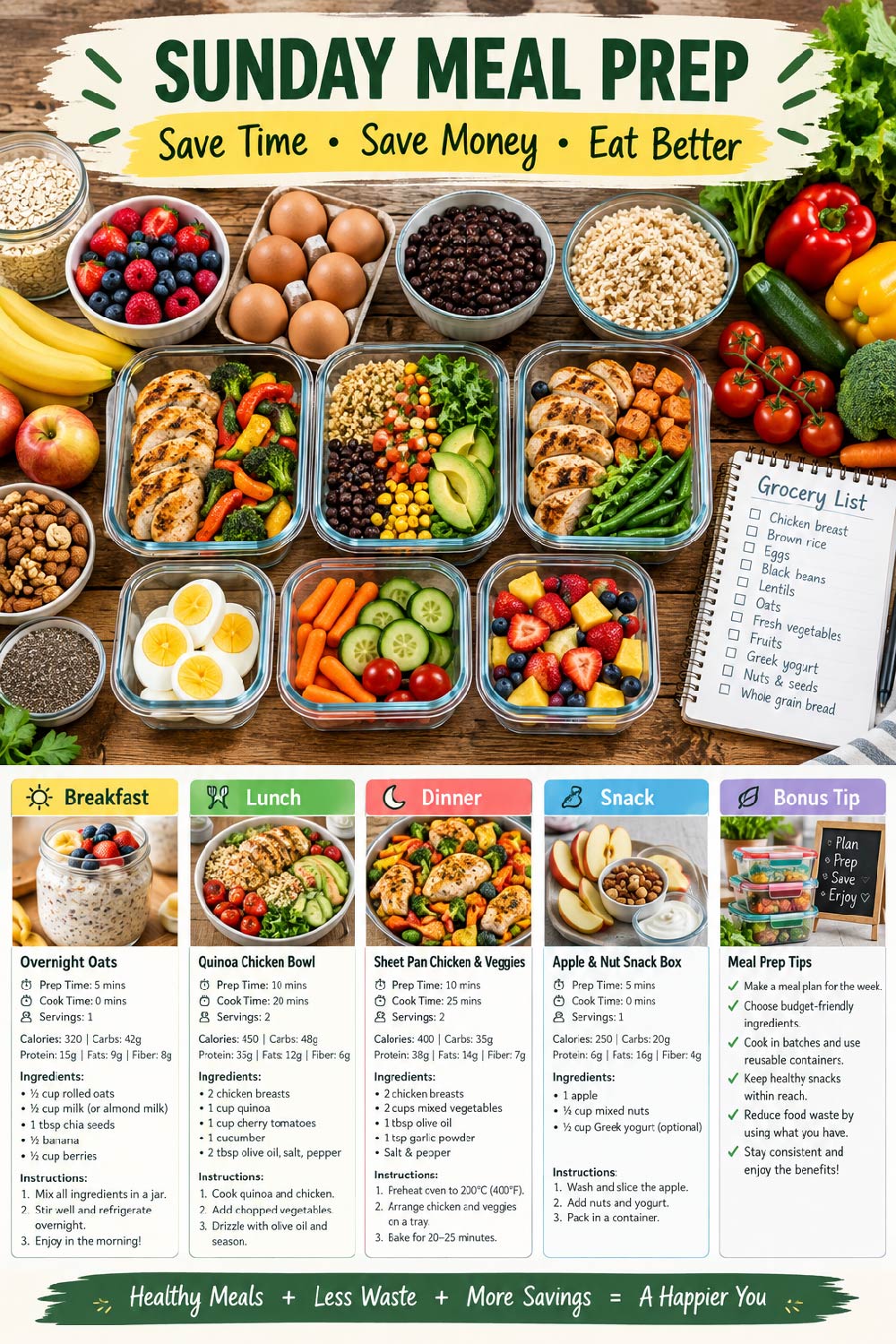
Your first Sunday meal-prep session should be intentionally easy. Instead of attempting ten recipes, choose one breakfast, one lunch, one dinner, and perhaps one snack. This gives you enough variety to learn the process without filling your kitchen with dishes.
Start by checking your refrigerator, freezer, and pantry. Look for ingredients that are already available and build meals around them. Then write a short grocery list for the remaining ingredients. MyPlate recommends checking what you already have before shopping and choosing meals based on your schedule and available preparation time.
Next, decide what needs to be cooked and what can simply be washed, chopped, portioned, or assembled. This distinction is important because meal prep does not always mean cooking everything. Sometimes the biggest time saver is having ingredients ready for quick cooking later. For example, you can chop peppers and onions, portion chicken, prepare a sauce, and cook rice ahead of time. Then a fresh skillet meal later in the week becomes much faster.
Plan Your Meals Before Shopping
Planning your meals first prevents random grocery shopping. Start by looking at your week. Are you working from home? Taking lunches to the office? Eating dinner with your family? Going out one evening? These details matter because you do not want to prepare five dinners if you already know you will eat out twice.
A beginner-friendly weekly plan might look like this: overnight oats for several breakfasts, chicken and rice bowls for lunches, a sheet-pan chicken dinner for Monday and Tuesday, and flexible ingredients for the remaining evenings. You can use leftovers creatively rather than preparing a completely different recipe every night.
Make your shopping list based on the plan. Include quantities that realistically match the number of people eating. If you live alone, you may not need a huge batch of everything. If you are cooking for a family, increase the quantities accordingly. This is where meal prep becomes personal rather than following a rigid internet schedule.
Choose Simple Recipes
The best beginner recipes are forgiving. They should not require ten unusual ingredients, complicated cooking techniques, or several hours of kitchen work. Choose recipes that use familiar ingredients and can be stored or reheated easily.
Think sheet-pan dinners, grain bowls, wraps, salads, soups, overnight oats, egg muffins, yogurt bowls, roasted vegetables, and simple pasta dishes. These foods can usually be adapted according to what you already have. If a recipe calls for broccoli but you have green beans, make the swap. If you prefer chickpeas to chicken, change the protein.
Simple recipes also make it easier to create variety. A batch of roasted vegetables can appear in a lunch bowl, a wrap, an omelet, or alongside dinner. Cooked rice can become a chicken bowl one day and a veggie stir-fry the next. This is much more flexible than preparing five identical containers and hoping you will still want the same meal by Friday.
10 Sunday Meal Prep Ideas for Beginners
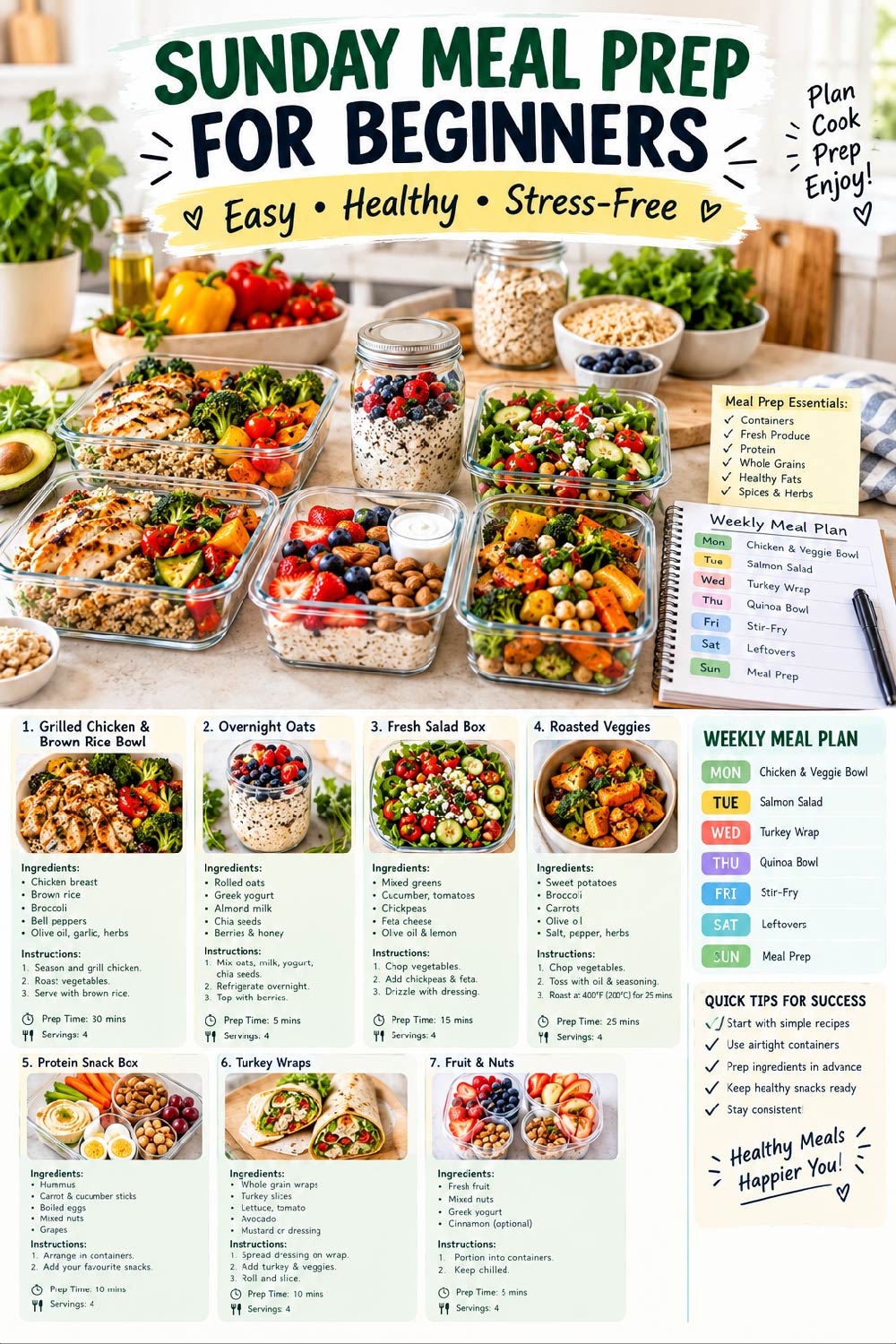
If you are searching for easy Sunday meal prep ideas, begin with recipes and components that store well and require minimal weekday effort. The following options are designed around familiar ingredients and flexible combinations. You do not need to make all ten at once. Choose two or three for your first Sunday and add more as you become comfortable.
Overnight Oats
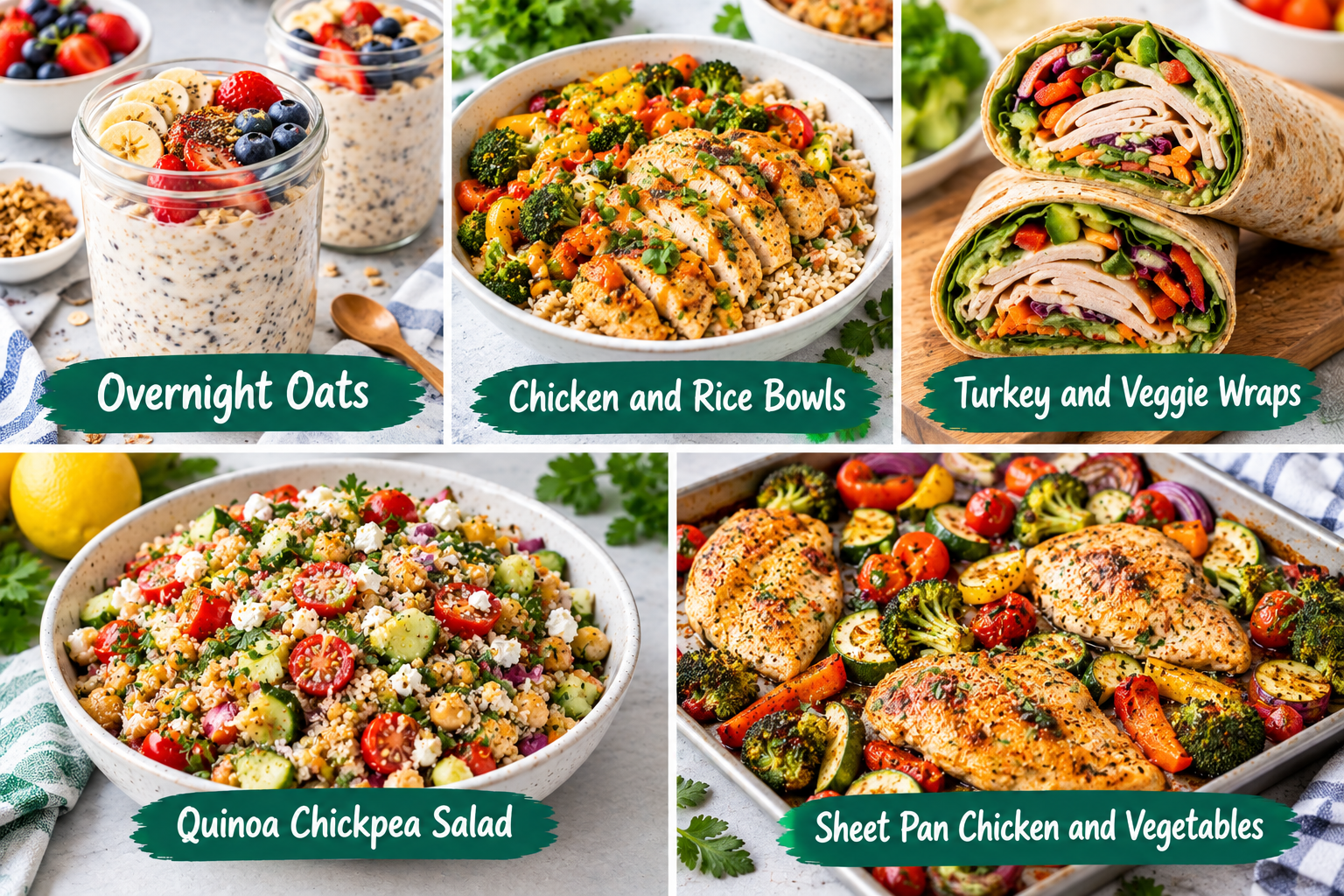
Overnight oats are one of the easiest breakfast options for beginners because there is no cooking required. Combine rolled oats with milk, Greek yogurt, chia seeds, and your preferred fruit, then refrigerate overnight. You can prepare several jars at once and change the flavors throughout the week using berries, banana, apple, cinnamon, or nut butter.
The best part is that breakfast is ready when you wake up. You do not have to cook eggs, wash a pan, or spend time deciding what to eat. Keep toppings such as nuts, seeds, and fresh fruit separate when you want more texture.
Chicken and Rice Bowls
Chicken and rice bowls are a classic meal-prep option because they are easy to customize. Cook a batch of seasoned chicken, prepare brown or white rice, and roast vegetables such as broccoli, carrots, peppers, or zucchini. Divide the ingredients into containers and add a sauce or dressing when you are ready to eat.
You can change the flavor throughout the week with different seasonings. Try lemon and herbs one day, a mild taco-style seasoning another day, or a simple yogurt-based sauce later in the week. This keeps one basic preparation from feeling repetitive.
Turkey and Veggie Wraps
Wraps are excellent for quick lunches because they require very little assembly. Fill whole-grain tortillas with sliced turkey, lettuce, cucumber, tomatoes, shredded carrots, and a simple spread or dressing. For better texture, keep wet ingredients separate until you are ready to eat.
You can prepare the vegetables in advance and portion the turkey into containers. Then assemble a fresh wrap in the morning rather than storing it fully assembled for several days. This helps prevent sogginess and gives you a crisp, satisfying lunch.
Quinoa Chickpea Salad
A quinoa chickpea salad is a useful vegetarian meal-prep option. Combine cooked quinoa with chickpeas, cucumber, tomatoes, bell peppers, parsley, and a simple lemon-olive oil dressing. The combination gives you a filling base that can work as lunch, a side dish, or part of a quick dinner.
You can also add feta, avocado, spinach, or roasted vegetables depending on your preferences. Prepare the dressing separately if you want the vegetables to remain crisp. A salad like this can also become a wrap filling or a bowl topping later in the week.
Sheet Pan Chicken and Vegetables
Sheet-pan meals are perfect when you want to cook several components at once. Place chicken and chopped vegetables on a baking tray, season everything, and roast until properly cooked. You can prepare enough for several meals while using only one main cooking tray.
Use vegetables that roast well, such as carrots, broccoli, cauliflower, peppers, onions, and zucchini. Pair the finished food with rice, quinoa, potatoes, or another grain. The combination is simple, but it gives you a strong foundation for healthy weekday meals.
Egg Muffin Cups
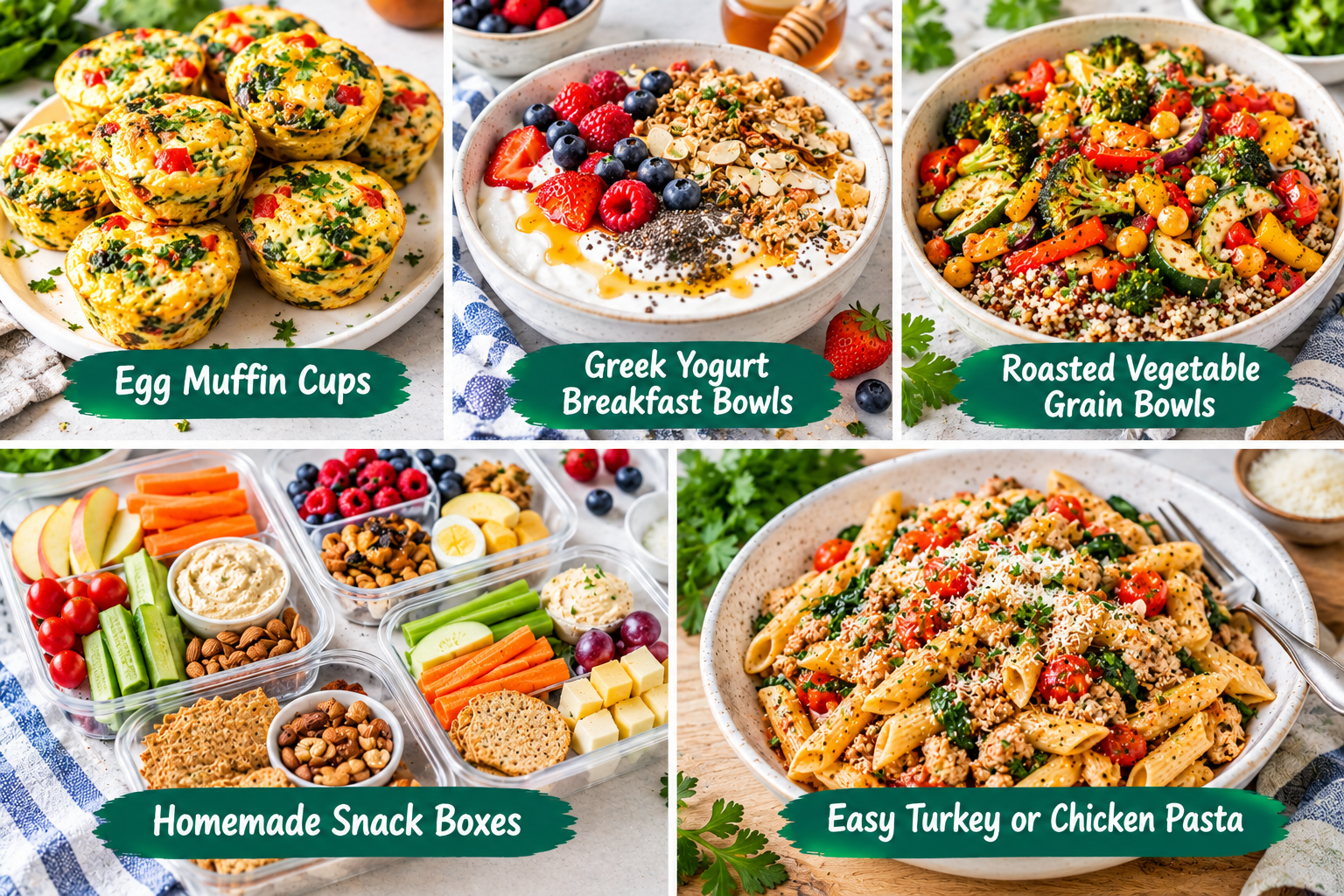
Egg muffin cups are a convenient breakfast or snack option. Whisk eggs with chopped spinach, bell peppers, onions, and a small amount of cheese, then bake in a muffin pan until set. Once cooled, portion them into containers for quick breakfasts.
They are especially helpful when mornings are rushed. Pair a few egg cups with whole-grain toast and fruit for a more complete breakfast. You can also change the vegetables each week so the recipe never feels exactly the same.
Greek Yogurt Breakfast Bowls
Greek yogurt bowls require almost no cooking, making them ideal for beginners. Portion Greek yogurt into containers and add berries, sliced banana, chia seeds, or nuts. Keep crunchy toppings separate if you want them to stay crisp.
This option is also easy to adjust based on what you have available. You can make one container with berries and another with banana and nut butter. It is a small example of how meal prep can create convenience without forcing you to eat exactly the same thing every morning.
Roasted Vegetable Grain Bowls
Cook a grain such as quinoa, brown rice, or farro and pair it with roasted vegetables. Add chickpeas, beans, chicken, or another protein source, then finish with a simple dressing. The result is a flexible bowl that can serve as lunch or dinner.
These bowls are particularly useful for clearing out vegetables in your refrigerator. Instead of letting a few carrots, peppers, or zucchini go unused, roast them together and turn them into several meals.
Homemade Snack Boxes
Snack boxes are another beginner-friendly idea because they require more assembly than cooking. Divide foods such as fruit, vegetables, cheese, yogurt, boiled eggs, nuts, or whole-grain crackers into small portions. Keep combinations interesting so you have something satisfying available when hunger strikes.
Prepared snack boxes can be useful for work, school, commuting, or afternoon cravings. They also help you avoid the common problem of reaching the end of the day extremely hungry because you did not plan a snack.
Easy Turkey or Chicken Pasta
Cook whole-grain or regular pasta and combine it with cooked chicken or turkey, vegetables, and a simple sauce. You can use tomato sauce, pesto, or a light olive-oil and herb dressing depending on your preference.
Divide the pasta into containers once it has cooled appropriately. If you plan to eat it later in the week, freeze portions that will not be used within the recommended refrigerator window. This gives you more variety without requiring another full cooking session.
How to Organize Your Sunday Meal Prep
Organization can turn meal prep from chaos into a smooth routine. Start by cleaning your counter and gathering your containers before cooking. Read through every recipe first so you know which ingredients need to be chopped, cooked, or prepared.
Then work in batches. Start with the longest cooking task, such as roasting chicken or vegetables. While those are cooking, prepare overnight oats, wash produce, chop salad ingredients, or make dressing. Once one task is finished, move directly to the next instead of constantly switching between unrelated jobs.
Think of your Sunday session as an assembly line. Cook, cool, portion, label, and store. Once you establish that sequence, you will naturally become faster. You can also keep a short checklist on your phone so you do not have to remember every task each week.
Do not forget to clean as you go. A giant pile of dishes at the end can make meal prep feel much harder than it actually was. A few minutes of cleanup between cooking stages can leave your kitchen in much better shape.
Meal Prep Storage and Food Safety
Food storage is one area where beginners should be especially careful. The USDA recommends using cooked leftovers within 3 to 4 days when refrigerated. That means a Sunday-prepared meal may not be appropriate to keep refrigerated all the way through Friday. For food you will not use within that window, freezing portions can be a practical option.
Use clean, suitable containers and divide large batches into smaller portions so food can be stored conveniently. Cleveland Clinic also recommends microwave-safe containers for hot lunches and suggests keeping sauces and dressings separately to prevent soggy meals.
Let food cool appropriately before storage and refrigerate perishable foods promptly rather than leaving them sitting out for long periods. Label containers with the food and preparation date so you know what should be eaten first. When in doubt about the safety of stored food, follow current food-safety guidance rather than relying only on smell or appearance.
A good beginner system is to keep the first few days' meals refrigerated and freeze later portions when appropriate. This gives you convenience while reducing the risk of keeping cooked food refrigerated longer than recommended.
Common Sunday Meal Prep Mistakes
One common mistake is trying to prepare too much food. Beginners sometimes imagine that successful meal prep means cooking every meal for an entire week. That can quickly become exhausting. Start with a manageable amount and increase it only when you know how much food you realistically eat.
Another mistake is preparing food you do not actually enjoy. Healthy meal prep should not feel like punishment. If you dislike plain chicken and broccoli, eating five containers of plain chicken and broccoli is unlikely to become a sustainable habit. Choose flavors and recipes you genuinely look forward to eating.
A third mistake is forgetting variety. Even nutritious meals can become boring when every container looks identical. Use different sauces, spices, vegetables, grains, or serving styles to create variety from the same basic ingredients.
Finally, do not make your Sunday prep session so complicated that you stop doing it. The purpose is to make weekdays easier, not to sacrifice your entire weekend. If you only have 60–90 minutes, prepare a few high-impact components. A small amount of preparation that you repeat every week is more useful than a huge session you never want to repeat.
Conclusion
The best Sunday meal prep ideas for beginners are not the most complicated recipes. They are the meals and ingredients that make your real week easier. Start with a small plan, choose foods you enjoy, prepare a few versatile components, and store everything safely. Overnight oats, chicken bowls, wraps, quinoa salads, roasted vegetables, egg cups, yogurt bowls, grain bowls, snack boxes, and simple pasta can give you plenty of places to begin.
Remember that meal prep does not have to mean eating identical meals every day. You can prepare ingredients instead of complete meals and combine them differently throughout the week. You can refrigerate some portions and freeze others, depending on when you plan to eat them. Most importantly, build a routine that fits your schedule rather than trying to copy someone else's perfect Sunday.
Once you find your rhythm, Sunday meal prep can become one of the easiest ways to support quick healthy meals for busy people. Your future Monday morning self will probably be very grateful that you did the work ahead of time.
FAQs
1. What should a beginner meal prep on Sunday?
A beginner can start with one breakfast, one lunch, one dinner, and one snack. Good options include overnight oats, chicken and rice bowls, roasted vegetables, wraps, yogurt bowls, and homemade snack boxes. Start with a small amount rather than preparing every meal for the entire week.
2. How many meals should I prep on Sunday?
There is no required number. For beginners, preparing 3 to 5 meals or several versatile ingredients is often easier than cooking an entire week's menu. Adjust the amount according to how many people you feed and how often you eat at home.
3. Is Sunday meal prep healthy?
Sunday meal prep can make healthy eating more convenient because you can plan meals around nutritious ingredients before your busy week begins. A balanced meal can include vegetables, protein, whole grains or other carbohydrates, and healthy fats. The quality of your meal prep depends on the foods and portions you choose.
4. How long does Sunday meal prep take?
A beginner session can vary considerably depending on the number of recipes. You can start with a short session focused on a few high-impact tasks rather than spending the entire day cooking. As you practice, you will become better at cooking multiple components at the same time.
5. How long does meal-prepped food last in the fridge?
According to the USDA, cooked leftovers should generally be used within 3 to 4 days when refrigerated. If you will not eat a portion within that period, freezing it can be a practical alternative when the food is suitable for freezing.
Comments
0No comments yet — be the first to share your thoughts!