Quick Chicken Stir-Fry Recipes for Families | Easy 30-Minute Meals
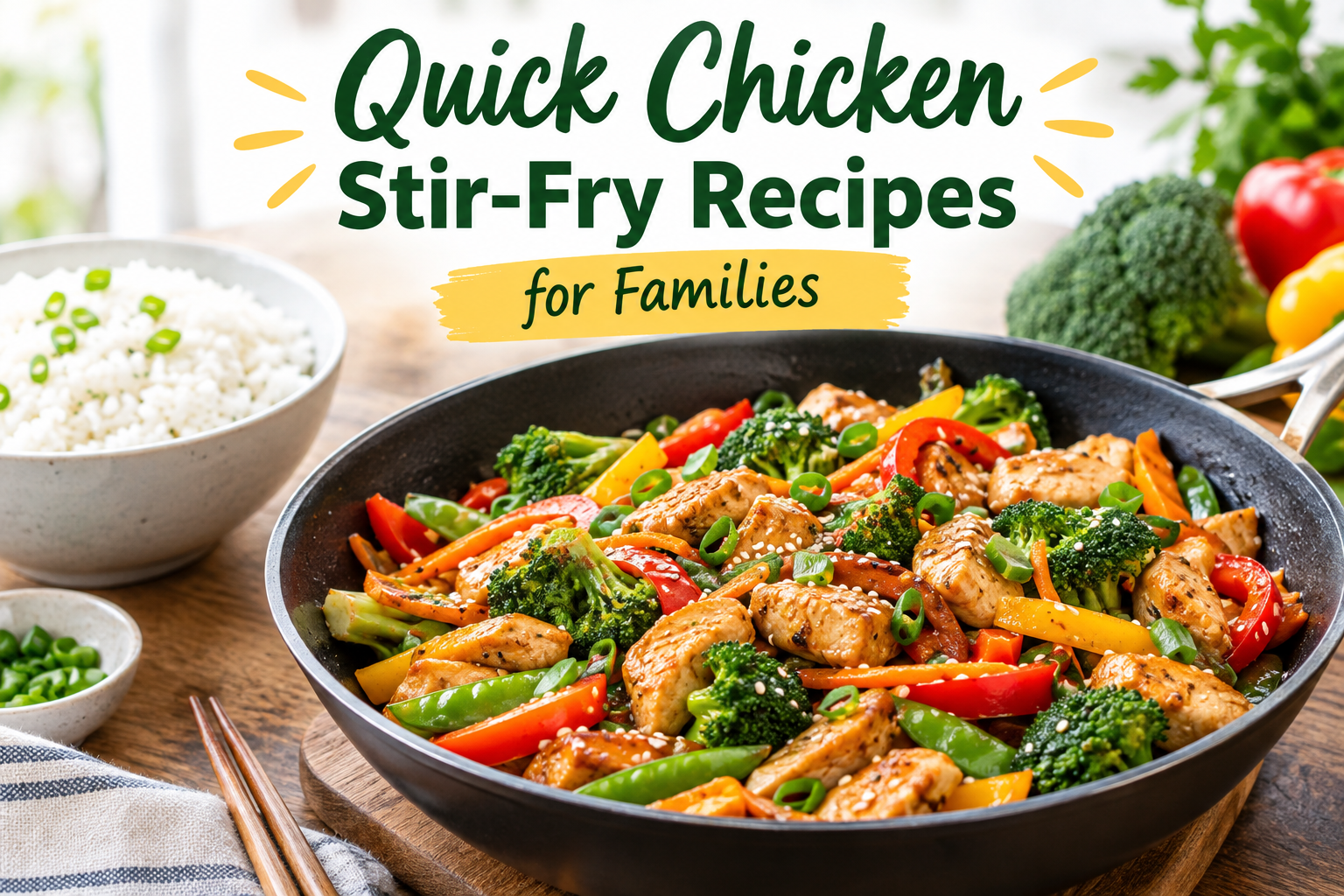
Discover quick chicken stir-fry recipes for families with tender chicken, colorful vegetables, and flavorful sauces. Easy, healthy weeknight dinners ready in 30 minutes.
Quick Chicken Stir-Fry Recipes for Families
When the evening gets busy, dinner can quickly become the last thing you want to think about. Between work, school, errands, homework, and everything else happening during the day, spending an hour in the kitchen may simply not be realistic. That is where quick chicken stir-fry recipes for families become incredibly useful. With tender chicken, colorful vegetables, a flavorful sauce, and a simple side such as rice or noodles, you can create a satisfying dinner without turning your kitchen into a full-time cooking station.
Chicken stir-fry is also wonderfully flexible. You do not need to follow one rigid formula every time you cook it. You can change the vegetables depending on what is in your refrigerator, adjust the sauce to suit your family's preferences, and use rice, noodles, quinoa, or another grain as the base. Current recipe trends continue to emphasize fast, one-pan family meals, with several recently published chicken stir-fry recipes designed to come together in roughly 20–30 minutes.
The best part is that stir-frying gives you plenty of opportunities to create a balanced meal. Lean chicken supplies protein, while vegetables such as broccoli, peppers, carrots, cabbage, mushrooms, and snow peas add color, texture, and variety. Instead of ordering takeout when everyone is hungry, you can have a homemade meal sizzling in the pan before the family has time to ask, “What's for dinner?”
Why Chicken Stir-Fry Is Perfect for Busy Families
Chicken stir-fry checks many of the boxes that families need from a weeknight dinner. It is fast, customizable, filling, and relatively easy to clean up afterward. A typical stir-fry uses one large skillet or wok, so you are not left staring at a mountain of dishes after dinner. Thinly sliced chicken also cooks quickly, which is one reason many modern chicken stir-fry recipes can be completed in about 30 minutes or less.
Another advantage is that stir-fry can work for different appetites at the same table. One child may prefer broccoli and carrots, another may reach for peppers and chicken, while adults might enjoy extra ginger, chili, or sesame. Instead of preparing separate dinners, you can keep the basic ingredients together and customize individual portions with toppings or sauce. Think of stir-fry as a blank canvas: the chicken and vegetables create the foundation, while the sauce provides the personality.
Fast Cooking Without Sacrificing Flavor
The secret to a fast stir-fry is preparation. Once the pan is hot, the actual cooking happens quickly, so you want your chicken, vegetables, aromatics, and sauce ready before anything goes into the skillet. Slice chicken into thin, bite-sized pieces rather than large chunks. Smaller pieces expose more surface area to the heat, helping them brown and cook efficiently.
Aromatics such as garlic and fresh ginger can make a simple dinner taste much more developed. You also do not need an elaborate sauce. Soy sauce, garlic, ginger, a little honey, rice vinegar, sesame oil, or chili can create a flavorful combination with only a handful of ingredients. Current family-friendly recipes commonly use flexible vegetables and simple sauces, reinforcing why stir-fry remains such a practical weeknight format.
A Simple Way to Add More Vegetables
One of the easiest ways to make family dinners more colorful is to turn vegetables into a major part of the meal rather than treating them as an afterthought. Broccoli, bell peppers, carrots, snow peas, mushrooms, cabbage, zucchini, onions, and green beans all work beautifully in stir-fries. You can use fresh vegetables when available or keep frozen stir-fry vegetables in the freezer for especially hectic nights.
The trick is to avoid cooking every vegetable for the same amount of time. Dense vegetables such as carrots and broccoli usually need more time, while snow peas, spinach, and thinly sliced peppers cook much faster. Adding vegetables in stages helps preserve some texture instead of producing a soft, watery mixture. A family-friendly chicken stir-fry recipe can therefore become a practical way to introduce different vegetables without making the meal feel like a plate of plain steamed produce. One family recipe source specifically highlights interchangeable vegetables as a useful way to adapt the dish to different preferences.
How to Build the Perfect Family Chicken Stir-Fry
A great stir-fry does not require complicated culinary techniques. It is more about understanding the order in which ingredients should enter the pan. Start with a hot skillet or wok and enough oil to prevent sticking. Cook the chicken until browned and cooked through, then move it temporarily to a plate if necessary. Next, cook the vegetables according to their density before bringing everything together with the sauce.
This method gives each ingredient a chance to develop flavor. If you put chicken, vegetables, and sauce into a cold pan simultaneously, the ingredients may steam instead of sear. You can still make a tasty meal that way, but the texture will usually be less appealing. A hot pan, quick movement, and prepared ingredients are the foundation of a satisfying stir-fry.
Choosing the Best Chicken
Boneless, skinless chicken breast is a popular choice because it is lean, easy to slice, and cooks quickly. Chicken thighs are another excellent option if your family prefers darker meat with a richer texture. Ground chicken can also be used when you want an especially quick dinner because there is no need to spend time slicing raw chicken into individual pieces. A current Food Network recipe, for example, uses ground chicken in a one-pan stir-fry that takes about 25 minutes.
For the best texture, slice chicken breast against the grain into thin strips. Keeping the pieces relatively uniform helps them cook at a similar rate. Avoid overcrowding the pan because too much chicken at once can reduce the pan temperature and make the meat release moisture rather than brown. If you are cooking a large family portion, it is often better to cook the chicken in batches.
Picking Colorful Stir-Fry Vegetables
A simple rule is to choose vegetables with different colors and textures. Red and yellow peppers bring sweetness, broccoli adds crunch, carrots provide natural sweetness, mushrooms create a savory element, and snow peas contribute freshness. Cabbage is inexpensive, cooks quickly, and can dramatically increase the volume of the meal without requiring much preparation.
You can also make your stir-fry seasonal. In warmer months, zucchini, peppers, green beans, and fresh corn can work beautifully. During cooler months, cabbage, carrots, mushrooms, and broccoli are dependable choices. If your refrigerator contains several vegetables that need to be used soon, stir-fry is one of the easiest ways to turn those leftovers into a coherent meal.
10 Quick Chicken Stir-Fry Recipes for Families
1. Classic Chicken and Vegetable Stir-Fry
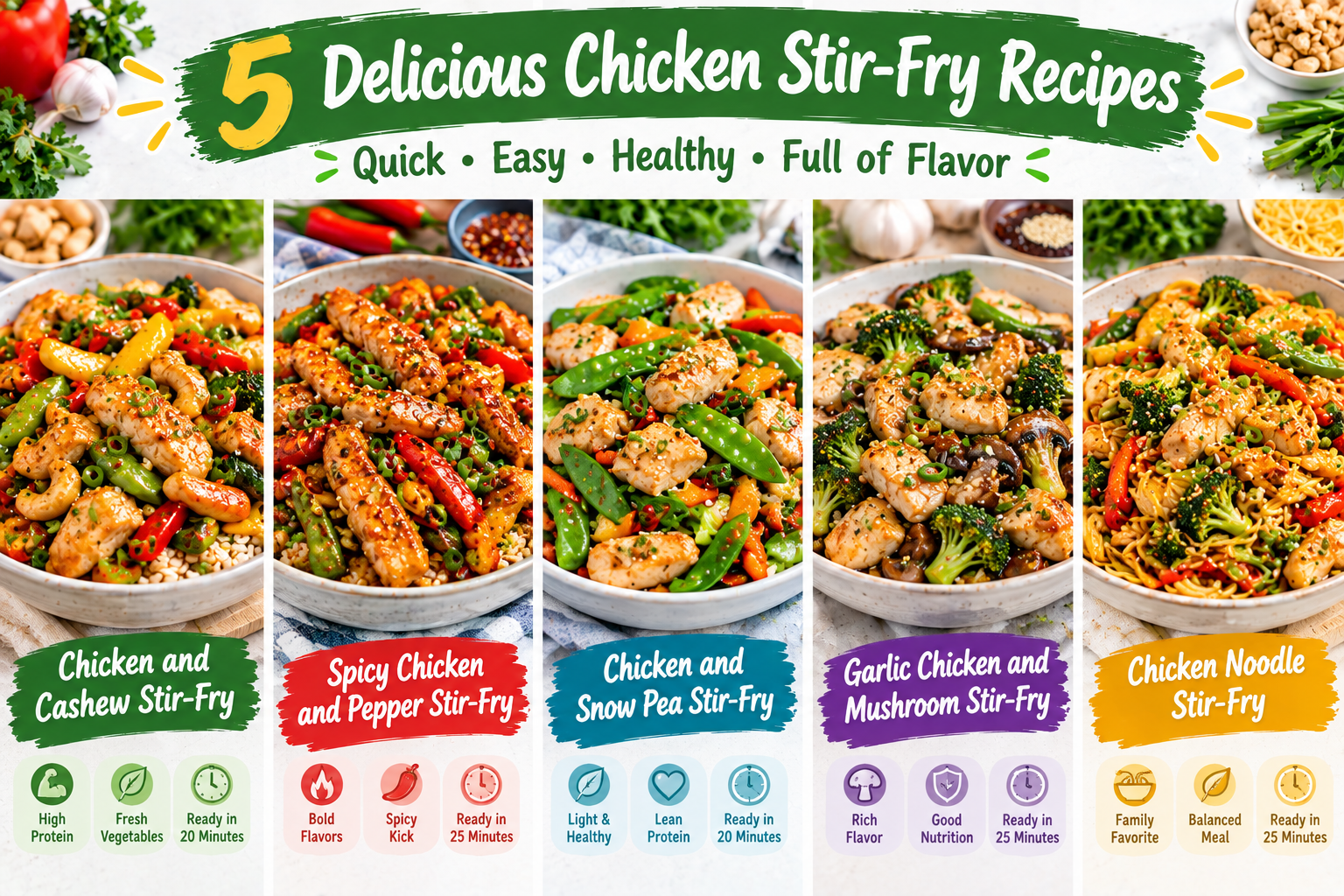
This is the recipe to make when you want something dependable that almost everyone can enjoy. Slice about 1 pound of boneless chicken breast into thin strips and pair it with broccoli, carrots, bell peppers, and onions. For the sauce, combine low-sodium soy sauce, minced garlic, fresh ginger, a small amount of honey, rice vinegar, and a little sesame oil. Cook the chicken first, remove it from the pan, stir-fry the vegetables, and then return the chicken with the sauce.
Serve it over brown rice, white rice, or quinoa depending on what your family prefers. You can also prepare extra rice earlier in the day to make dinner even faster. The combination of tender chicken, crisp vegetables, and a glossy savory sauce makes this a reliable introduction to homemade stir-fry. Similar family recipes use interchangeable vegetables, chicken, garlic, broccoli, carrots, onions, snow peas, and teriyaki-style sauce to create an adaptable meal.
2. Honey Garlic Chicken Stir-Fry
If your family prefers slightly sweet flavors, honey garlic chicken stir-fry is a fantastic choice. Combine low-sodium soy sauce with honey, minced garlic, ginger, rice vinegar, and a splash of water. The honey creates a lightly sweet glaze while garlic provides the savory punch that keeps the dish from tasting like dessert.
Use chicken breast or thighs with broccoli, carrots, and red bell pepper. Cook the chicken until golden, then add the vegetables and sauce near the end so the sauce coats everything without burning. Serve with steamed rice and sprinkle with sesame seeds or sliced green onions. For children who are sensitive to stronger flavors, leave out chili and allow adults to add crushed red pepper individually.
3. Teriyaki Chicken and Broccoli Stir-Fry
Teriyaki chicken is one of those family meals that feels like takeout but can be made easily at home. Start with thinly sliced chicken and broccoli, then create a simple sauce using low-sodium soy sauce, honey, garlic, ginger, rice vinegar, and a small amount of cornstarch mixed with water. The cornstarch helps the sauce become glossy and cling to the chicken and vegetables.
The key is not to drown the ingredients in sauce. You want enough to coat each piece without turning the entire pan into a pool of liquid. Serve the finished stir-fry over rice, cauliflower rice, or noodles. A family-friendly chicken stir-fry source also uses broccoli, carrots, snow peas, garlic, chicken, and teriyaki sauce, demonstrating how well these ingredients work together in a practical weeknight dinner.
4. Sweet and Sour Chicken Stir-Fry
Sweet and sour chicken gives the classic stir-fry a bright, tangy personality. Instead of relying on a heavy bottled sauce, combine pineapple juice, rice vinegar, low-sodium soy sauce, a small amount of honey, garlic, and cornstarch. Add chunks of pineapple, bell peppers, onions, and carrots for extra color and texture.
Cook the chicken separately before stir-frying the vegetables. Once the vegetables are crisp-tender, return the chicken to the pan and pour in the sauce. Stir until the sauce thickens and coats everything. This version is especially useful when you want something that feels different from traditional soy-and-ginger stir-fry. Recent recipe roundups continue to feature sweet and sour chicken stir-fry among quick 30-minute meal ideas.
5. Lemon Ginger Chicken Stir-Fry
For a lighter and fresher flavor, try lemon ginger chicken. The sauce can be made with fresh lemon juice, low-sodium soy sauce, grated ginger, garlic, a small amount of honey, and water. Pair it with chicken breast, broccoli, snap peas, carrots, and thinly sliced cabbage.
The lemon cuts through the savory soy sauce and gives the whole meal a bright finish. This is particularly good when you want a chicken dinner that does not taste overly rich. Serve it with brown rice or quinoa for a hearty meal, or use extra vegetables and skip the grain if your family prefers a lighter plate.
6. Chicken and Cashew Stir-Fry
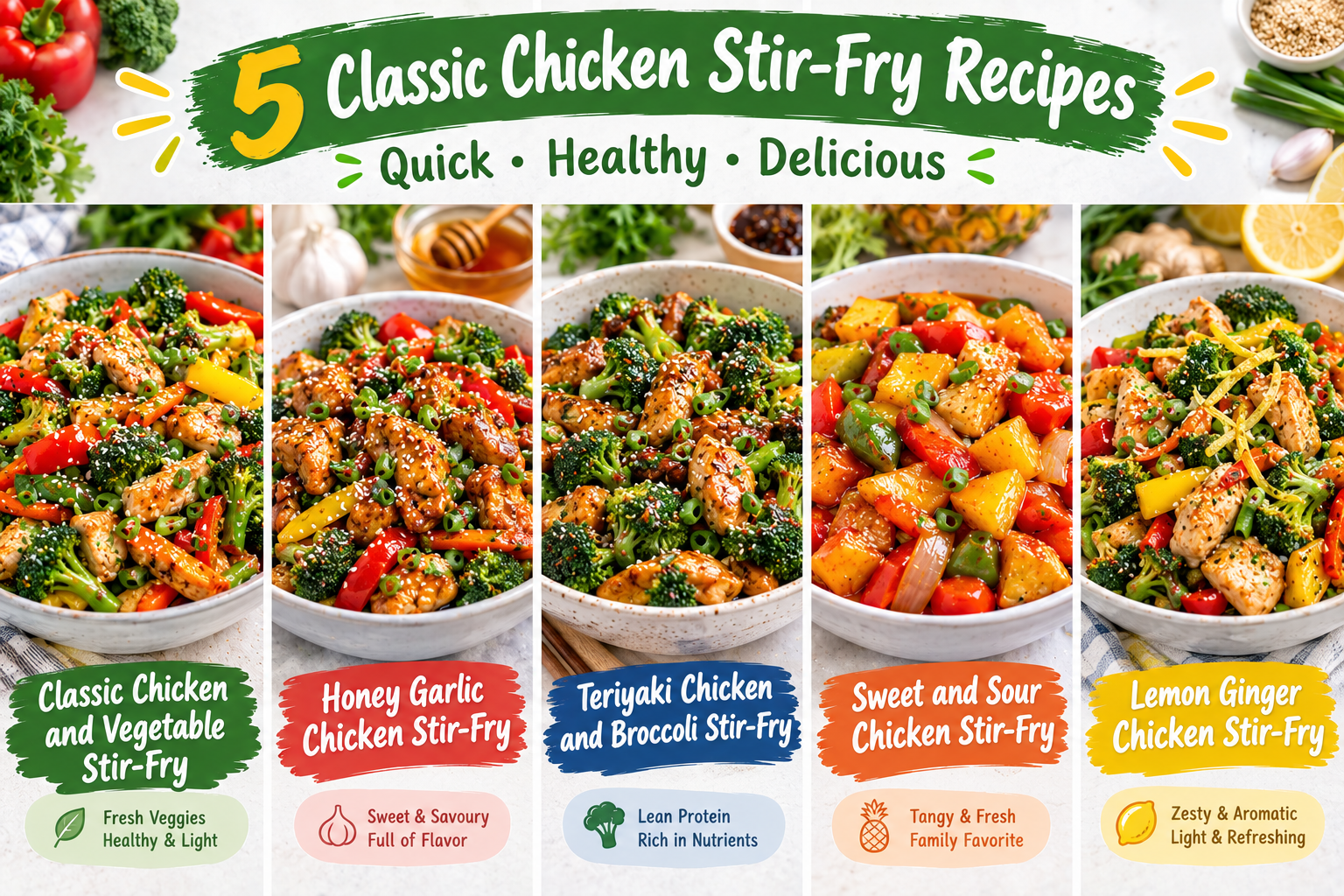
Chicken and cashew stir-fry adds a satisfying crunch that can make a simple vegetable dinner much more exciting. Use chicken breast or thigh meat, bell peppers, broccoli, onions, carrots, and unsalted cashews. The sauce can combine soy sauce, garlic, ginger, rice vinegar, and a small amount of honey.
Toast the cashews briefly in the dry skillet before cooking the rest of the ingredients, then remove them and add them back at the very end. This keeps their texture crisp. If you have children with nut allergies, simply leave out the cashews or replace them with toasted pumpkin seeds where appropriate. Serve over rice for an easy family dinner that feels a little more special.
7. Spicy Chicken and Pepper Stir-Fry
For families who enjoy heat, a spicy chicken and pepper stir-fry brings plenty of flavor without requiring a long ingredient list. Use chicken strips, red and yellow bell peppers, onions, garlic, ginger, and a sauce made from low-sodium soy sauce, rice vinegar, and a little chili paste or crushed red pepper.
The beauty of this recipe is that spice can be adjusted after cooking. Keep the main pan relatively mild if children are eating, then add chili oil, red pepper flakes, or hot sauce to adult portions. This approach lets one dinner work for different spice preferences instead of preparing separate meals. Serve it with rice to balance the heat and make the meal more filling.
8. Chicken and Snow Pea Stir-Fry
Snow peas provide a naturally crisp texture and cook in only a few minutes, making them ideal for quick dinners. Pair them with thin chicken strips, carrots, bell peppers, green onions, and mushrooms. A simple sauce of soy sauce, ginger, garlic, rice vinegar, and sesame oil is enough to bring the dish together.
Add the snow peas near the end so they remain bright and slightly crunchy. Overcooking them can make them limp, which takes away some of their appeal. This recipe is also a good option for meal prep because the vegetables can be chopped ahead of time and stored in the refrigerator until dinner.
9. Garlic Chicken and Mushroom Stir-Fry
Mushrooms bring an earthy, savory flavor that works beautifully with garlic and chicken. For this version, use sliced mushrooms, chicken breast, broccoli, onions, and spinach. The sauce can be as simple as low-sodium soy sauce, garlic, ginger, black pepper, and a splash of rice vinegar.
Cook the mushrooms until they release their moisture and develop some color before adding the other vegetables. Add spinach at the very end because it wilts quickly. The result is a comforting skillet meal with plenty of savory flavor and a surprisingly simple ingredient list.
10. Chicken Noodle Stir-Fry
When your family wants noodles instead of rice, chicken noodle stir-fry is the answer. Cook whole-wheat noodles, rice noodles, or another preferred noodle according to the package directions, then toss them with chicken, broccoli, carrots, peppers, cabbage, and a homemade stir-fry sauce.
The noodles absorb the sauce, making every bite flavorful. You can prepare the chicken and vegetables while the noodles cook, allowing both components to finish at nearly the same time. For extra protein, add an egg or edamame. For additional crunch, top individual bowls with green onions, sesame seeds, or chopped peanuts if appropriate for your household.
Easy Stir-Fry Sauces You Can Make at Home
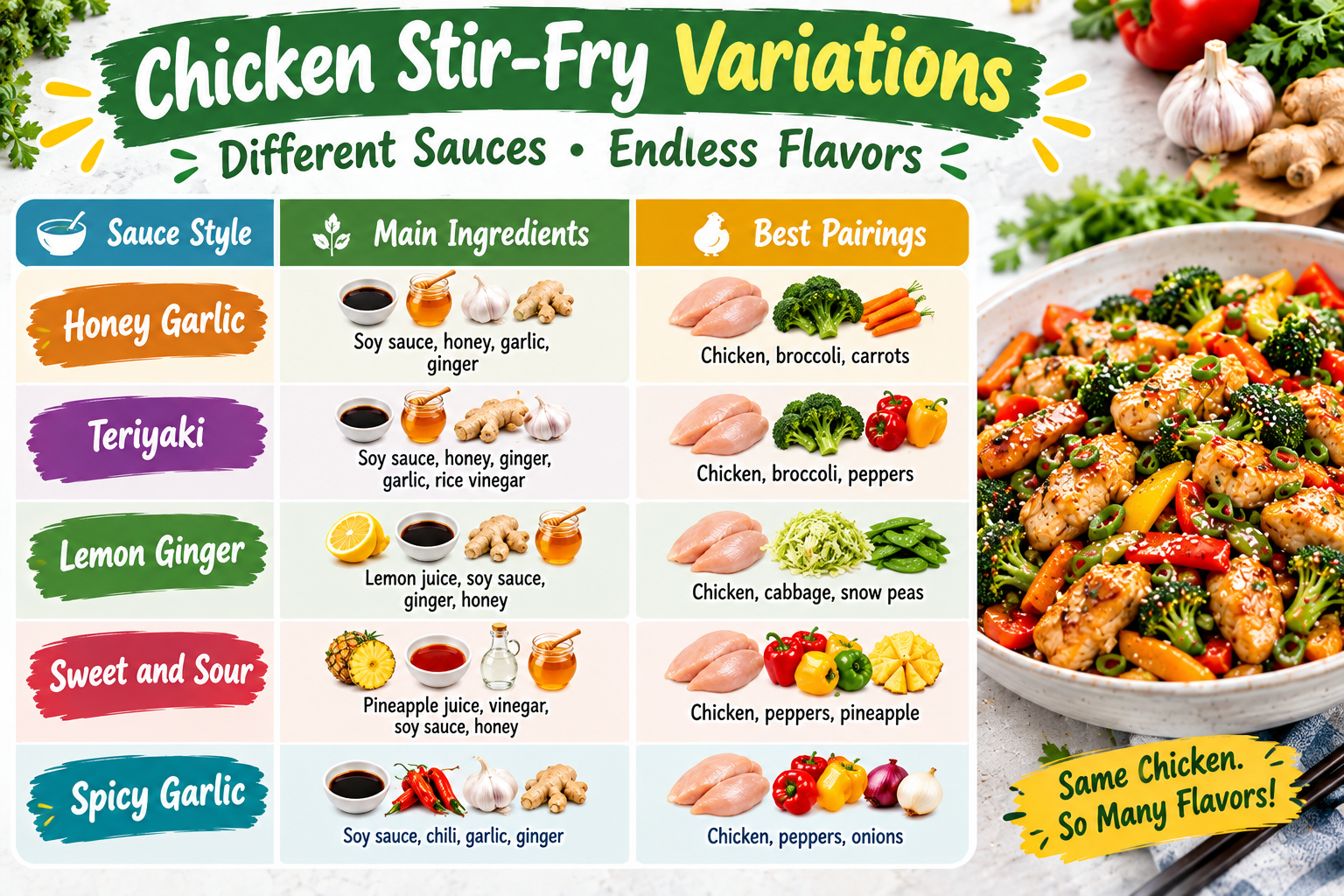
A homemade stir-fry sauce does not have to be complicated. A basic formula starts with a salty ingredient such as low-sodium soy sauce or tamari, an acidic ingredient such as rice vinegar or lime juice, an aromatic such as garlic or ginger, and an optional sweet element such as honey. Cornstarch mixed with cold water can be added when you want a thicker, glossy sauce.
You can adjust the balance according to your family's taste. If the sauce seems too salty, add water, lime juice, or a small amount of honey. If it tastes too sweet, increase the vinegar or add ginger. If it feels flat, garlic, ginger, sesame oil, or chili can add another layer of flavor.
What to Serve With Chicken Stir-Fry
Rice is the most obvious companion to chicken stir-fry, but it is far from the only option. Brown rice adds a nuttier flavor and can make the meal more substantial, while white rice is quick, familiar, and often popular with children. Quinoa works well when you want a grain with a different texture, and cauliflower rice can be used when you want to increase the vegetable component.
Noodles are another excellent choice. Rice noodles, whole-wheat noodles, soba, or other quick-cooking varieties can turn the same chicken-and-vegetable mixture into an entirely different dinner. You can even serve stir-fry over a bed of shredded cabbage or mixed greens if you prefer a lower-carbohydrate option.
The important thing is to consider the whole plate rather than obsessing over one ingredient. Chicken provides protein, vegetables provide variety and nutrients, and your chosen grain or noodle supplies energy and texture. That simple combination is one reason stir-fry works so well for family meals.
How to Make Chicken Stir-Fry Healthier
Making stir-fry healthier does not mean removing all the ingredients that make it enjoyable. Instead, focus on balance. Use a generous amount of vegetables, choose lean chicken when it suits your preference, and control the amount of oil and sauce. Low-sodium soy sauce can also help reduce the amount of sodium compared with standard versions, although the total sodium content will still depend on the complete recipe and portion size.
You can also make small swaps without changing the character of the meal. Replace some of the rice with extra vegetables, choose brown rice or another whole grain, use unsalted nuts, and make your own sauce so you can control the sweetness. Current recipe developers increasingly emphasize simple one-pan meals that combine protein, vegetables, and convenient preparation, showing that quick cooking and balanced ingredients do not have to be opposites.
Nutrition numbers will vary significantly depending on the chicken cut, sauce, oil, vegetables, and serving size, so recipe-specific calculations are preferable to assuming one universal calorie number. If you publish these recipes on a food blog, calculate nutrition based on the exact ingredients and quantities used in each recipe rather than copying numbers from another dish.
Tips for Making Family-Friendly Stir-Fry
The easiest way to make stir-fry less stressful is to do the preparation before heating the pan. Slice the chicken, chop the vegetables, mix the sauce, and prepare the rice or noodles first. Once the skillet becomes hot, everything should be within arm's reach. This prevents the common problem of burning garlic while you are still trying to chop the next vegetable.
Do not overload the pan. If you are cooking for a large family, use a very large skillet or cook the chicken in batches. Crowding traps steam and can make chicken and vegetables lose the browned texture that makes stir-fry so appealing. Current quick stir-fry recipes commonly rely on high-heat cooking and relatively short cooking times, which is another reason preparation matters so much.
You should also keep the sauce separate until the ingredients are almost finished. Adding sauce too early can cause vegetables to soften excessively and may make sweet ingredients scorch. Pour it in toward the end, toss everything together, and give it just enough time to coat the ingredients.
Finally, involve your family when possible. Let children choose between broccoli and snow peas, or between rice and noodles. Giving everyone a small choice can make dinner feel less like a negotiation and more like a shared meal.
How to Store and Reheat Leftover Stir-Fry
Chicken stir-fry is excellent for leftovers because the flavors often become even more integrated after resting. Allow the food to cool appropriately, then transfer it into shallow airtight containers and refrigerate it promptly. Keep rice, noodles, and stir-fry together or separately depending on how you plan to reheat them.
When reheating, use a skillet or microwave until the food is thoroughly hot. A skillet is especially useful because you can add a small splash of water to loosen the sauce and restore some moisture. Avoid repeatedly reheating the entire batch; instead, warm only the portion you plan to eat.
Leftovers can also become a completely different lunch. Add them to a wrap, serve them over salad greens, mix them with fresh rice, or turn them into a quick noodle bowl. That flexibility makes chicken stir-fry particularly useful for busy families trying to reduce food waste and simplify weekday meals.
Food Safety Tips for Chicken Stir-Fry
Because chicken is a poultry product, food safety should always be part of the cooking process. Use a food thermometer rather than relying only on color or texture to determine whether chicken is safely cooked. The USDA recommends cooking poultry to a minimum internal temperature of 165°F (74°C). This is especially important when cooking thick pieces or larger batches.
Keep raw chicken separate from ready-to-eat ingredients and use clean utensils for cooked food. If you marinate raw chicken, do not reuse the marinade as a sauce unless it has been properly cooked first. These simple habits help keep a fast family dinner both delicious and safe.
Conclusion
Quick chicken stir-fry recipes for families are one of those dinner ideas that deserve a permanent place in your weekly rotation. They combine tender chicken, colorful vegetables, flavorful sauces, and flexible sides in a format that can often be prepared in about 30 minutes. Recent recipes continue to show how effective this approach is for busy weeknights, with chicken stir-fries appearing in 20-, 25-, and 30-minute formats across current recipe publications.
The real advantage is flexibility. You can make the classic chicken-and-vegetable version one night, switch to honey garlic the next, then try lemon ginger, sweet and sour, cashew, or spicy pepper stir-fry later in the week. Change the vegetables, adjust the sauce, swap rice for noodles, and adapt the spice level for your family.
When dinner feels overwhelming, remember that you do not need a complicated recipe to put a satisfying meal on the table. A hot skillet, thinly sliced chicken, a handful of vegetables, and a simple homemade sauce can be enough. Keep those ingredients available, and you will always have a quick answer to the question: “What are we having for dinner tonight?”
FAQs
1. How long does chicken stir-fry take to make?
Most chicken stir-fries can be prepared in approximately 20–30 minutes when the chicken and vegetables are already chopped. Current recipes from established food publications commonly fall within this range, although preparation time depends on the recipe and cooking method.
2. What vegetables are best for chicken stir-fry?
Broccoli, bell peppers, carrots, snow peas, mushrooms, cabbage, onions, zucchini, and green beans are all excellent choices. You can mix fresh and frozen vegetables depending on what you have available. The most important thing is to cut vegetables into similarly sized pieces and add slower-cooking vegetables first.
3. Can I make chicken stir-fry ahead of time?
Yes. You can chop the chicken and vegetables and prepare the sauce several hours or even a day ahead, storing the components properly in the refrigerator. For the freshest texture, cook the stir-fry close to serving time, but leftovers can also be refrigerated and reheated.
4. Is chicken stir-fry healthy for families?
It can be a balanced family meal when prepared with a good proportion of vegetables, an appropriate serving of chicken, and a sensible amount of oil and sauce. Using low-sodium ingredients, controlling added sugar, and choosing whole grains can further support a healthier version.
5. What can I use instead of chicken in stir-fry?
You can replace chicken with turkey, shrimp, lean beef, tofu, tempeh, or beans depending on the recipe. Ground chicken is another convenient option when you want to skip slicing raw chicken. The vegetables and sauce can usually remain the same, making stir-fry an easy format to adapt to different dietary preferences.
Comments
0No comments yet — be the first to share your thoughts!