Light & Refreshing Meals for Hot Days: 20 Easy Ideas
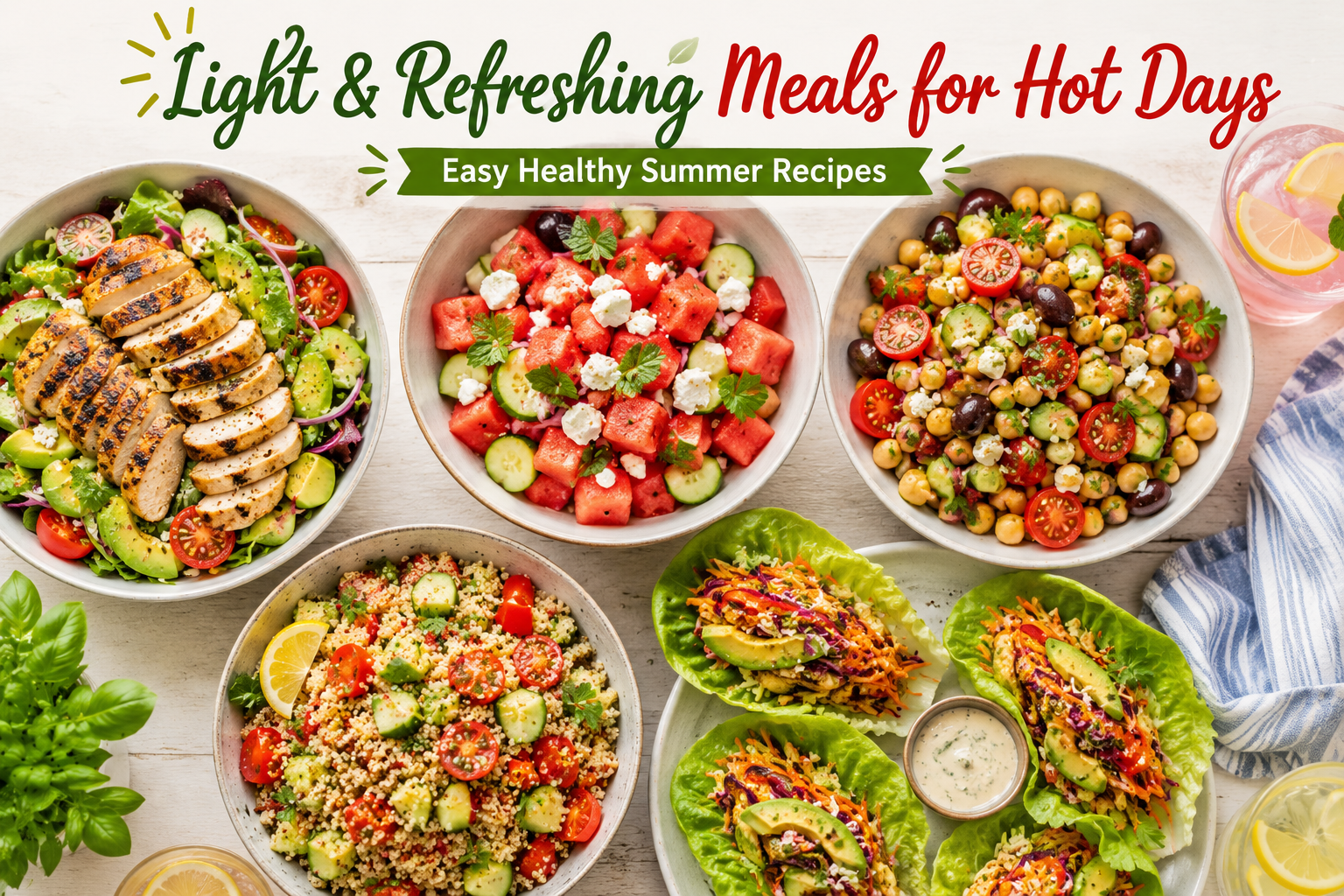
Discover 20 light and refreshing meals for hot days, including healthy salads, wraps, chilled soups, smoothies, and easy no-cook recipes for summer.
Light and Refreshing Meals for Hot Days
Why Light Meals Feel Better in Hot Weather
When the temperature climbs, a heavy meal can feel like carrying a full backpack on an already exhausting hike. Rich sauces, deep-fried foods, oversized portions, and long cooking sessions may be less appealing when you are already dealing with heat. Current health guidance on summer eating recommends choosing lighter meals built around fresh vegetables, fruits, lean proteins, whole grains, and healthy fats rather than skipping meals altogether. Johns Hopkins Aramco Healthcare specifically highlights fresh produce, lean proteins, moderate portions of whole grains, and healthy fats as practical components of balanced meals for hot weather.
The goal is not to eat as little as possible. It is to make your meals feel fresh, balanced, hydrating, and easy to digest while still providing enough protein, carbohydrates, fats, fiber, vitamins, and minerals. Think of your summer plate as a cool, colorful garden rather than a heavy winter casserole. Crisp cucumber, juicy tomatoes, watermelon, berries, leafy greens, yogurt, beans, grilled chicken, fish, and avocado can all become building blocks for satisfying meals that do not require hours beside a hot stove.
There is also a practical reason to focus on water-rich foods. Fruits and vegetables can contribute to overall fluid intake, and foods such as cucumbers, tomatoes, lettuce, citrus, and melons are naturally high in water. A refreshing meal therefore does more than satisfy hunger: it can make eating in hot weather feel easier and more enjoyable. Once you start combining hydrating produce with a reliable protein source and a little healthy fat, you can create meals that are light without being skimpy.
How Heat Can Affect Appetite and Energy
Hot weather can change the way meals sound and feel. Recent reporting on heat and appetite notes that people may experience reduced appetite as temperatures rise, while water-rich foods such as fruits and vegetables can become more appealing. That does not mean everyone needs fewer calories, and it certainly does not mean you should ignore hunger. Your individual needs still depend on your body, activity level, age, health, and daily routine.
A better approach is to make the food you already enjoy more summer-friendly. If you normally eat chicken, turn it into a chilled chicken and avocado salad instead of a heavy creamy dish. If you love pasta, serve a smaller portion with tomatoes, cucumber, herbs, beans, and a bright lemon dressing. If breakfast usually means yogurt and fruit, add chia seeds, nuts, or oats so the meal keeps you satisfied for longer.
The best light meals also reduce unnecessary kitchen heat. A summer lunch does not have to involve turning on the oven for an hour. You can use leftovers, pre-cooked grains, canned beans, rotisserie chicken, canned tuna, fresh vegetables, yogurt, and fruit to assemble a meal quickly. That makes these ideas particularly useful for busy people looking for quick healthy meals. You are not trying to create a complicated restaurant plate; you are building a practical meal that works with the weather.
What Makes a Meal Refreshing and Satisfying?
A refreshing meal usually combines several characteristics rather than relying on one magic ingredient. First, it should have plenty of fresh produce. Crisp vegetables and juicy fruits bring water, texture, color, and natural flavor. Second, it needs enough protein to make the meal satisfying. Greek yogurt, chicken, shrimp, tuna, eggs, beans, chickpeas, lentils, tofu, and fish can all work beautifully.
Third, consider the role of healthy fats. Avocado, olive oil, nuts, seeds, and similar ingredients add richness without requiring a heavy sauce. You only need a modest amount to make a bowl or salad feel complete. Finally, add an enjoyable source of carbohydrates when appropriate. Whole-grain bread, quinoa, brown rice, corn, whole-grain pasta, potatoes, and fruit can provide useful energy.
The U.S. MyPlate guidance emphasizes variety and recognizes vegetables as sources of nutrients including potassium, dietary fiber, folate, vitamin A, and vitamin C. That is useful when planning summer meals because colorful produce can form the foundation of almost every dish. Instead of asking, “What is the lowest-calorie food I can eat?” try asking, “How can I make this meal lighter while keeping it nutritious and satisfying?”
This shift makes summer eating much easier. A bowl of plain lettuce might be light, but it probably will not keep you satisfied. A giant serving of creamy pasta may be filling, but it can feel heavy in the heat. A salad containing leafy greens, grilled chicken, cucumber, tomatoes, avocado, a small portion of whole grains, and lemon dressing sits comfortably between those extremes.
The Best Ingredients for Hydrating Meals
Some of the easiest hot-weather ingredients are also naturally high in water. Cucumbers, tomatoes, lettuce, watermelon, melon, peaches, oranges, berries, and other fruits and vegetables can bring freshness to meals. A recent summer nutrition resource from Aga Khan University Hospital lists cucumber, cantaloupe, tomato, peach, watermelon, radish, and lettuce among water-rich foods.
Watermelon is especially useful for refreshing recipes because it is more than 90% water and works in both sweet and savory combinations. Try it with mint and feta, add it to a fruit bowl, or serve it beside grilled chicken. Cucumber is equally versatile. Slice it into salads, mix it with yogurt, add it to wraps, or blend it into a chilled soup.
Do not forget herbs and citrus. Lemon, lime, mint, basil, cilantro, parsley, dill, and coriander can make simple ingredients taste bright without relying on heavy sauces. A squeeze of lemon can transform beans, fish, chicken, vegetables, or grains. These small additions matter because refreshing food is often about flavor contrast: juicy vegetables, creamy avocado, crunchy seeds, tangy yogurt, fresh herbs, and a little acidity.
Fresh Summer Salads
Salads are one of the easiest answers when you need light and refreshing meals for hot days. They require little cooking, can be prepared ahead of time, and offer almost unlimited combinations. The key is to stop thinking of salad as a bowl of lettuce with a little dressing. A satisfying meal-sized salad should have a mixture of vegetables, protein, carbohydrates, healthy fats, and texture.
Start with a base such as romaine, spinach, mixed greens, arugula, cabbage, or chopped lettuce. Add two or three colorful vegetables such as cucumber, tomato, bell pepper, carrot, or radish. Then choose a protein: grilled chicken, tuna, salmon, shrimp, chickpeas, lentils, eggs, tofu, or beans. Add a small portion of quinoa, corn, whole-grain pasta, or potatoes if you want more carbohydrates.
The dressing can stay simple. Lemon juice, olive oil, black pepper, herbs, and a little mustard can create a bright homemade dressing in less than a minute. Yogurt-based dressings are another excellent choice when you want something creamy without using a large amount of mayonnaise.
Recent summer recipe coverage also shows how versatile salads can be, ranging from cucumber salads and Greek-style salads to grain-based, bean-based, seafood, and chicken options. That variety makes salads ideal for meal prep because you can change the ingredients without changing the basic formula.
Mediterranean Cucumber and Tomato Salad
A Mediterranean cucumber and tomato salad is practically a summer classic because it delivers crunch, acidity, freshness, and color in every bite. Start with chopped cucumber and ripe tomatoes, then add red onion, parsley, olives, and a little feta cheese. Finish with lemon juice, extra-virgin olive oil, dried oregano, black pepper, and a small pinch of salt.
This salad can work as a side dish, but you can easily turn it into lunch. Add chickpeas for plant-based protein or grilled chicken for a higher-protein option. You could also serve it with a small portion of whole-grain pita or quinoa. The result feels substantial without becoming overly rich.
One reason this style of salad works so well in summer is its texture. Cucumbers remain crisp, tomatoes add juiciness, feta brings creaminess, and herbs contribute aroma. You are essentially creating a balanced meal without needing a complicated recipe. It can also be assembled in advance, although keeping the dressing separate until serving can help preserve the crispness of the vegetables.
For busy weekdays, prepare the chopped vegetables in one container and the dressing in another. When lunchtime arrives, combine them, add your protein, and eat. That small amount of preparation can save you from reaching for a heavier convenience meal when the temperature is high and your energy is low.
Grilled Chicken and Avocado Salad
Grilled chicken and avocado make an excellent foundation for a light summer dinner because the chicken provides lean protein while avocado contributes creamy texture and healthy fat. Add mixed greens, cucumber, cherry tomatoes, sweet corn, and a handful of fresh herbs. A lemon-lime dressing keeps everything bright and prevents the salad from tasting dry.
The secret is not to overload the bowl. Too many ingredients can turn a refreshing salad into a complicated mixture where every flavor competes. Choose a few ingredients that complement each other. Creamy avocado works with crunchy cucumber, juicy tomatoes work with grilled chicken, and citrus dressing ties the whole bowl together.
You can make this meal even easier by preparing several portions of chicken at once. Store cooked chicken safely in the refrigerator, then use it in salads, wraps, grain bowls, or sandwiches throughout the week. This is one of the simplest ways to create quick healthy meals without cooking from scratch every day.
If you are making the salad for a family, place the ingredients in separate sections and let everyone build their own bowl. Children can choose their favorite vegetables, while adults can add extra herbs, beans, seeds, or dressing. That flexibility is one reason salad bowls are so useful during summer: one base can become several different meals.
Watermelon, Feta, and Mint Salad
Watermelon, feta, and mint create one of those combinations that sounds unusual until you taste it. The watermelon is sweet and juicy, the feta is salty and creamy, and mint adds a cool herbal note. A squeeze of lime or lemon brings everything together.
Because watermelon contains more than 90% water, it is a naturally refreshing ingredient for hot-weather meals. It can be eaten alone, but pairing it with feta gives the dish more character and makes it suitable as a side or light lunch component.
For a more substantial meal, add grilled shrimp or chicken on the side. You could also serve the salad with toasted whole-grain bread and a small portion of hummus. Another option is to add cucumber and a few pumpkin seeds for extra crunch.
This salad is especially useful when you do not want to cook. Keep the watermelon chilled, cut the ingredients shortly before serving, and assemble everything in minutes. If you are preparing it for an outdoor gathering, remember that perishable foods need careful temperature control. FDA guidance recommends keeping cold foods properly chilled and limiting the time perishable foods remain at room temperature to two hours, or one hour when temperatures exceed 90°F.
Chilled Greek Yogurt and Cucumber Bowl
A chilled Greek yogurt and cucumber bowl can function as breakfast, lunch, a snack, or a light dinner depending on what you add. Combine plain Greek yogurt with grated cucumber, lemon juice, dill, parsley, black pepper, and a little garlic. The result resembles a quick yogurt-based dip, but with a few additions it becomes a complete meal.
For protein and texture, add chickpeas, grilled chicken, boiled eggs, or toasted seeds. For carbohydrates, serve it with whole-grain pita. Tomatoes, radishes, shredded carrots, and leafy greens can add even more freshness.
Greek yogurt is particularly useful in summer because it is cold, creamy, and protein-rich. Choose plain yogurt and flavor it yourself so you can control the sweetness and seasoning. A savory yogurt bowl can also be a refreshing alternative when you are tired of traditional salads.
You can prepare the yogurt mixture several hours ahead and keep it refrigerated. Just remember that dairy-based foods should remain cold, especially during hot weather. A chilled bowl straight from the refrigerator can feel surprisingly satisfying when you want something substantial but do not want a hot meal.
Fresh Shrimp and Avocado Lettuce Wraps
Lettuce wraps are an excellent choice when you want a meal that feels substantial without using a heavy tortilla or large amount of bread. Shrimp cooks quickly, but you can also use pre-cooked shrimp for a no-fuss version. Combine it with diced avocado, cucumber, tomatoes, corn, cilantro, and a little lime juice.
The lettuce provides a crisp shell while the avocado adds creaminess. Shrimp supplies protein, and vegetables bring color and crunch. If you need more carbohydrates, add a small amount of cooked brown rice or quinoa to the filling.
These wraps are especially useful for hot evenings when you want to avoid turning on the oven. The shrimp can be cooked in a skillet in just a few minutes, and everything else can be assembled cold. You can even prepare the filling in advance and keep it chilled until dinner.
For meal prep, store the lettuce separately from the filling. This keeps the leaves crisp instead of soggy. When you are ready to eat, spoon the mixture into the lettuce leaves and add fresh lime. It is a simple example of how quick healthy meals for busy people can still feel colorful and satisfying.
No-Cook Chickpea and Vegetable Wraps
Chickpea wraps are perfect for days when cooking sounds like the last thing you want to do. Mash chickpeas lightly with lemon juice, Greek yogurt or hummus, black pepper, and herbs. Add cucumber, shredded carrot, tomato, spinach, and bell pepper, then roll everything into a whole-grain tortilla.
Chickpeas provide plant-based protein and fiber, while the vegetables bring freshness. You can also add avocado, pumpkin seeds, or a small amount of feta for additional flavor. The recipe is flexible enough to accommodate whatever vegetables are already in your refrigerator.
For a spicy version, add a little chili powder or hot sauce. For a Mediterranean twist, use hummus, olives, parsley, and cucumber. For a more family-friendly option, keep the seasoning mild and let everyone add their preferred toppings.
This is also a smart meal-prep recipe because chickpea filling can stay refrigerated and be used for several lunches. Assemble the wraps just before eating to prevent the tortilla from becoming too soft. The combination of creamy chickpeas, crunchy vegetables, and a bright dressing makes lunch feel fresh without requiring any serious kitchen work.
Cold Pasta Salad with Fresh Vegetables
Pasta salad does not have to mean a bowl swimming in mayonnaise. A lighter version uses whole-grain or regular pasta, plenty of fresh vegetables, a lean protein, herbs, and a simple vinaigrette. Try cherry tomatoes, cucumber, bell peppers, spinach, olives, and grilled chicken or chickpeas.
Cook the pasta ahead of time, cool it thoroughly, and toss it with the vegetables. A dressing made from olive oil, lemon juice, vinegar, garlic, oregano, and black pepper adds plenty of flavor without making the dish feel heavy.
Pasta provides carbohydrates, which can be useful when you are active or need an energizing lunch. The vegetables increase volume and variety, while protein makes the meal more satisfying. If you prefer a Mediterranean flavor profile, add feta and olives. If you want something sweeter, include chopped grapes or a few pieces of peach.
Cold pasta salad is also ideal for picnics and packed lunches, but food safety becomes especially important in warm conditions. FDA guidance says perishable foods should not sit unrefrigerated for more than two hours, or more than one hour when the temperature is above 90°F. Use an insulated cooler and plenty of ice when transporting chilled foods outdoors.
Tuna and White Bean Salad
Tuna and white bean salad is a simple pantry meal that can rescue you on a hot day when the refrigerator looks uninspiring. Combine canned tuna with drained white beans, chopped tomatoes, cucumber, red onion, parsley, and lemon juice. Add olive oil, black pepper, and a little Dijon mustard for a sharp, flavorful dressing.
The combination works because it balances soft beans with crisp vegetables and savory tuna. You can serve it over lettuce, spoon it onto whole-grain toast, or eat it straight from a bowl. Add avocado if you want more creaminess or chopped celery if you want extra crunch.
Canned beans are particularly useful for quick meals because they eliminate the soaking and cooking time associated with dried beans. Rinse them well before using to remove excess liquid and improve their texture.
This recipe also fits naturally into a healthy meal-prep routine. Prepare the bean and vegetable mixture ahead, then add tuna shortly before eating if preferred. Keep everything refrigerated and use clean utensils when portioning. The result is a high-protein, fiber-containing meal that feels much lighter than many traditional lunch options.
Refreshing Summer Grain Bowls
Grain bowls can be refreshing when you use the right proportions. The trick is to make vegetables and herbs the stars rather than letting grains dominate the bowl. Start with a modest serving of quinoa, brown rice, farro, or another whole grain. Add cucumber, tomatoes, leafy greens, carrots, peppers, corn, or other seasonal produce.
Then choose a protein such as chicken, salmon, shrimp, tofu, chickpeas, or beans. Add a small amount of avocado, seeds, or nuts and finish with lemon-herb dressing.
The beauty of a grain bowl is that you can prepare the components separately. Cook a batch of grains, wash your vegetables, prepare a protein, and make a dressing. During the week, assemble different combinations rather than eating exactly the same meal every day.
For a particularly refreshing version, use quinoa with cucumber, tomatoes, parsley, mint, chickpeas, and lemon. Serve it chilled or at room temperature. The flavor is bright, the texture is varied, and the meal can be ready in minutes if the components are already prepared.
Light Fish Tacos with Fresh Slaw
Fish tacos can become a surprisingly light dinner when you skip heavy sauces and focus on fresh toppings. Grill or pan-cook white fish with lime, garlic, cumin, and a small amount of olive oil. Place the fish in small corn or whole-grain tortillas and top with cabbage slaw, cucumber, tomato, cilantro, and avocado.
The slaw provides crunch while lime gives the meal a refreshing acidity. A simple yogurt-lime sauce can replace a heavy creamy dressing. If you enjoy heat, add sliced jalapeño or a small amount of hot sauce.
Fish is also a useful protein choice when you want something different from chicken. Pairing it with vegetables and a moderate portion of tortillas creates a balanced dinner that does not feel overly filling.
You can make the slaw several hours ahead and refrigerate it. Cook the fish shortly before serving for the best texture. On especially hot evenings, serve the tacos with a chilled cucumber salad or watermelon on the side rather than a heavy cooked side dish.
Easy Cold Soups for Hot Days
Cold soups are one of the most underrated summer meal ideas. Gazpacho is the obvious example, but you can create chilled soups using cucumber, yogurt, avocado, tomatoes, herbs, and other fresh ingredients. They require little cooking and can be prepared ahead, making them excellent for busy schedules.
A basic cucumber soup can combine cucumber, plain Greek yogurt, lemon juice, dill, mint, garlic, and black pepper. Blend until smooth and chill before serving. For a more substantial meal, pair it with whole-grain toast, chickpea salad, grilled shrimp, or a small sandwich.
Tomato gazpacho is another excellent choice. Blend ripe tomatoes with cucumber, bell pepper, onion, garlic, olive oil, vinegar, and herbs. Adjust the seasoning to taste and refrigerate until thoroughly chilled.
Cold soups are particularly appealing because they can be prepared in advance. Instead of cooking when the temperature is at its highest, prepare your soup earlier in the day and keep it refrigerated. When dinner arrives, all you need to do is pour, garnish, and eat.
Smoothies That Work as Light Meals
A smoothie can be a refreshing meal, but not every smoothie is balanced enough to keep you satisfied. Fruit juice, sweetened yogurt, and several servings of fruit can create a drink with plenty of sugar but relatively little protein or fiber. A better approach is to combine fruit with Greek yogurt, milk or a fortified alternative, chia seeds, oats, nut butter, or another nutrient-dense ingredient.
Try a berry protein smoothie with frozen berries, Greek yogurt, milk, chia seeds, and a small amount of nut butter. Another option is mango-spinach yogurt smoothie with frozen mango, spinach, plain yogurt, lime juice, and milk.
Frozen fruit provides a cold, creamy texture without requiring lots of ice. You can also freeze bananas, berries, peaches, and mango in advance so your smoothie ingredients are always ready.
If you are using smoothies as meal replacements frequently, pay attention to overall nutritional balance. A light meal should still provide enough protein, fiber, carbohydrates, and fat for your individual needs. The goal is not simply to make the coldest drink possible; it is to create something that keeps you energized.
Quick Fruit and Yogurt Parfaits
Fruit and yogurt parfaits are an easy option for breakfast, lunch on a very light day, or an afternoon meal when paired with additional protein and whole grains. Layer plain Greek yogurt with berries, peaches, mango, or melon. Add chia seeds, oats, walnuts, or pumpkin seeds for texture.
The beauty of parfaits is their simplicity. There is no stove, oven, or complicated preparation. You can assemble them in a glass jar, cover them, and refrigerate them for later.
For breakfast, add oats and chia seeds so the meal is more substantial. For a snack, keep the portion smaller and focus on fruit and yogurt. For a light lunch, pair the parfait with a boiled egg or a small whole-grain sandwich.
Use seasonal fruit whenever possible because it tends to bring excellent flavor without needing much added sweetness. If the fruit is naturally sweet, there is usually little reason to add a large amount of honey or sugar.
How to Add Enough Protein to Light Meals
One common mistake with light summer meals is removing so much food that protein disappears. A salad containing only lettuce, cucumber, and tomato may be refreshing, but it may not satisfy you for long. Protein can help make meals more filling, so include a reliable source whenever you are creating a main meal.
Good choices include grilled chicken, fish, shrimp, tuna, eggs, Greek yogurt, cottage cheese, tofu, tempeh, chickpeas, lentils, and beans. You can also add nuts and seeds, although they are more calorie-dense and are best used in sensible portions.
A useful formula is produce + protein + smart carbohydrate + healthy fat. For example, combine cucumber and tomatoes with grilled chicken, quinoa, and avocado. Or combine berries with Greek yogurt, oats, and chia seeds. The ingredients can change, but the structure remains useful.
This approach prevents the common cycle of eating a tiny “healthy” lunch and then becoming extremely hungry later. Light does not have to mean inadequate. The best summer meals are lighter in texture and preparation while still being nutritionally satisfying.
Simple Tips for Cooking Less in Hot Weather
One of the easiest ways to survive hot-weather cooking is to shift more preparation away from the hottest part of the day. Cook grains, eggs, chicken, or other ingredients in the morning or evening when the kitchen is cooler. Once cooked food has cooled safely, refrigerate it promptly and use it throughout the week.
Batch preparation can dramatically reduce cooking time. Wash and chop vegetables, portion fruit, prepare one dressing, cook a grain, and prepare a protein. These components can then become salads, wraps, bowls, sandwiches, and snack plates.
Another useful strategy is to rely on foods that need little or no cooking. Canned beans, tuna, pre-washed greens, Greek yogurt, hummus, whole-grain wraps, canned salmon, fresh fruit, and chopped vegetables can form the foundation of several meals.
You can also use appliances that generate less ambient heat than a large oven, depending on the recipe and your kitchen setup. The key is convenience. When your meals are easy to assemble, you are less likely to abandon healthy eating because the weather makes cooking unpleasant.
Food Safety Tips for Summer Meals
Hot weather makes food safety especially important. Perishable foods such as meat, poultry, seafood, eggs, dairy, leftovers, and prepared salads need appropriate refrigeration. The FDA recommends keeping refrigerators at or below 40°F (4°C), and it advises following the two-hour rule for foods requiring refrigeration, reducing that limit to one hour when temperatures are above 90°F.
For picnics, beach days, barbecues, and outdoor lunches, use an insulated cooler with sufficient ice or cold packs. Keep cold foods cold rather than allowing them to sit on a table for hours. If a perishable dish has been sitting outside beyond the recommended time, the safest choice is to discard it.
Clean preparation matters too. Wash hands, cutting boards, knives, and countertops regularly. Keep raw meat and seafood separate from ready-to-eat foods. The FDA's food-safety guidance emphasizes the basic sequence of Clean, Separate, Cook, and Chill.
A refreshing summer meal is only successful if it is safe to eat. A little planning goes a long way, particularly when you are serving food outdoors or preparing meals for several people.
How to Build a Simple Hot-Weather Meal Plan
Creating a summer meal plan does not require seven completely different recipes every week. Instead, choose a few versatile ingredients that can appear in different meals. For example, prepare grilled chicken, quinoa, chopped cucumber, tomatoes, mixed greens, hummus, Greek yogurt, and seasonal fruit.
Monday could become a chicken and cucumber salad. Tuesday might use the chicken in a whole-grain wrap. Wednesday could combine quinoa, chickpeas, tomatoes, avocado, and herbs in a grain bowl. Thursday could feature tuna and white bean salad, while Friday could be fish tacos with fresh slaw.
Breakfast can follow the same principle. Greek yogurt, berries, chia seeds, oats, bananas, and nut butter can become parfaits, overnight oats, or smoothies. Lunch can rotate between wraps, salads, and grain bowls.
This style of planning keeps your grocery list manageable while preventing boredom. You are essentially creating a summer ingredient toolkit rather than following a rigid menu. It works particularly well for busy people because the majority of the work happens once, while meals are assembled throughout the week.
Conclusion
The best light and refreshing meals for hot days are not about eating tiny portions or surviving on salads. They are about choosing foods that feel fresh, colorful, hydrating, satisfying, and practical when temperatures rise. Water-rich fruits and vegetables, lean proteins, whole grains, yogurt, beans, herbs, avocado, and simple citrus-based dressings give you an enormous number of combinations.
Start with a few reliable meals: cucumber and tomato salad, grilled chicken and avocado salad, watermelon and feta salad, shrimp lettuce wraps, chickpea wraps, tuna and white bean salad, chilled soup, or a balanced smoothie. Once you have a few basic formulas, you can swap ingredients according to what is available and what you enjoy.
The most useful summer meal is the one you will actually make. Keep preparation simple, use seasonal ingredients, prepare a few components ahead of time, and remember to refrigerate perishable foods promptly. With a little planning, even the hottest days can become an opportunity to eat meals that are fresh, nourishing, and genuinely enjoyable.
FAQs
1. What are the best light meals to eat on a hot day?
Salads, lettuce wraps, chilled soups, yogurt bowls, grain bowls, tuna and bean salads, smoothies, and fresh fruit-based meals are excellent choices. Combine water-rich produce with protein and a moderate amount of healthy fat or whole grains so the meal remains satisfying.
2. What foods are best for refreshing summer meals?
Cucumber, watermelon, tomatoes, lettuce, berries, peaches, citrus fruits, yogurt, fresh herbs, avocado, beans, chicken, fish, and shrimp are versatile choices. Water-rich fruits and vegetables can contribute to your overall fluid intake while adding flavor and nutrients.
3. Can I eat pasta on hot days?
Absolutely. Try a cold pasta salad with fresh vegetables, herbs, beans, chicken, tuna, or shrimp. Use a light lemon or vinegar-based dressing instead of a heavy creamy sauce to keep the meal fresher.
4. How can I make summer meals more filling without making them heavy?
Add a quality protein source such as chicken, fish, shrimp, Greek yogurt, eggs, beans, lentils, tofu, or chickpeas. Then include a moderate portion of whole grains or another carbohydrate and a small amount of healthy fat such as avocado, nuts, seeds, or olive oil.
5. How long can summer food sit outside?
FDA guidance recommends that perishable foods should generally not remain at room temperature for more than two hours, or more than one hour when the temperature is above 90°F. For outdoor meals, use a cooler with ice or cold packs and keep chilled foods cold until serving.
Comments
0No comments yet — be the first to share your thoughts!