How to Start Meal Prepping for Beginners: Easy Step-by-Step Guide
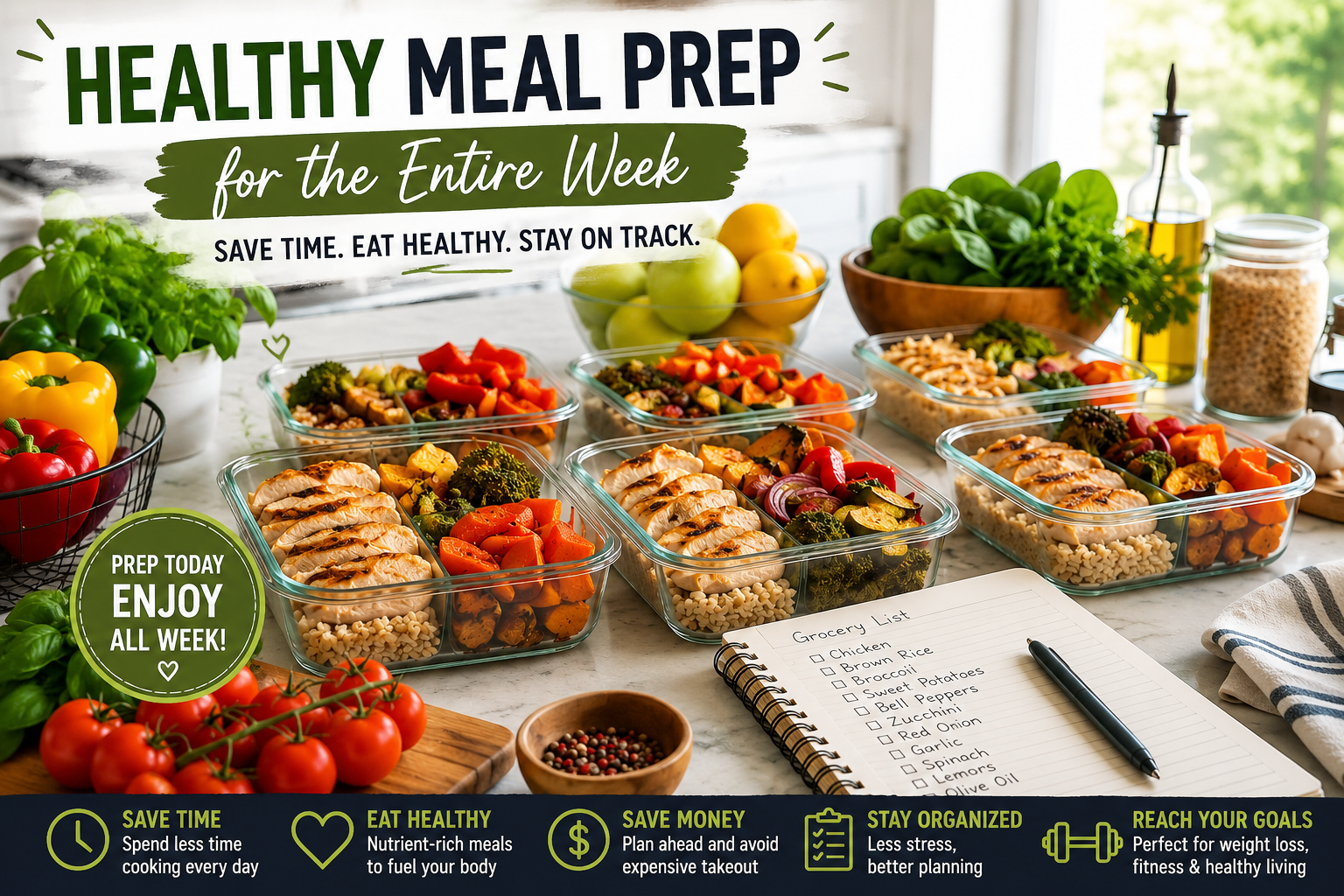
Learn how to start meal prepping for beginners with this easy step-by-step guide. Discover meal prep tips, essential tools, food safety, and simple meal ideas to save time, eat healthier, and reduce grocery costs
How to Start Meal Prepping for Beginners
How to Start Meal Prepping for Beginners
Have you ever opened your refrigerator after a long day and wondered what to cook? If so, you're not alone. Busy schedules often lead to unhealthy takeout meals, unnecessary grocery spending, and wasted food. That's exactly where meal prepping comes in. Instead of deciding what to eat every day, you prepare meals or ingredients ahead of time so healthy food is always ready when you need it.
Meal prepping has become one of the most effective habits for busy professionals, students, parents, and fitness enthusiasts. According to recent nutrition guidance, preparing meals in advance helps people make healthier food choices, reduce portion sizes, and avoid last-minute fast-food purchases. Experts also recommend eating refrigerated prepared meals within 3–4 days and frozen meals within 3–6 months when stored properly. These simple food safety practices make meal prepping both convenient and safe.
This beginner's guide explains everything you need to know—from choosing recipes and grocery shopping to cooking, storing, and avoiding common mistakes.
Benefits of Meal Prepping
Meal prepping offers much more than convenience. One of the biggest benefits is time savings. Spending two hours preparing meals on Sunday can save several hours throughout the week because cooking, cleaning, and deciding what to eat happen only once instead of every day.
It also helps reduce grocery costs. Planning meals before shopping means you buy only what you need, reducing impulse purchases and food waste. Government nutrition resources also recommend meal planning as an effective strategy for budgeting and minimizing leftovers.
Health is another major advantage. When healthy meals are already prepared, you're less likely to order fast food after a busy day. Portion control also becomes easier because meals are divided before you're hungry.
Essential Meal Prep Tools
Fortunately, you don't need an expensive kitchen to get started.
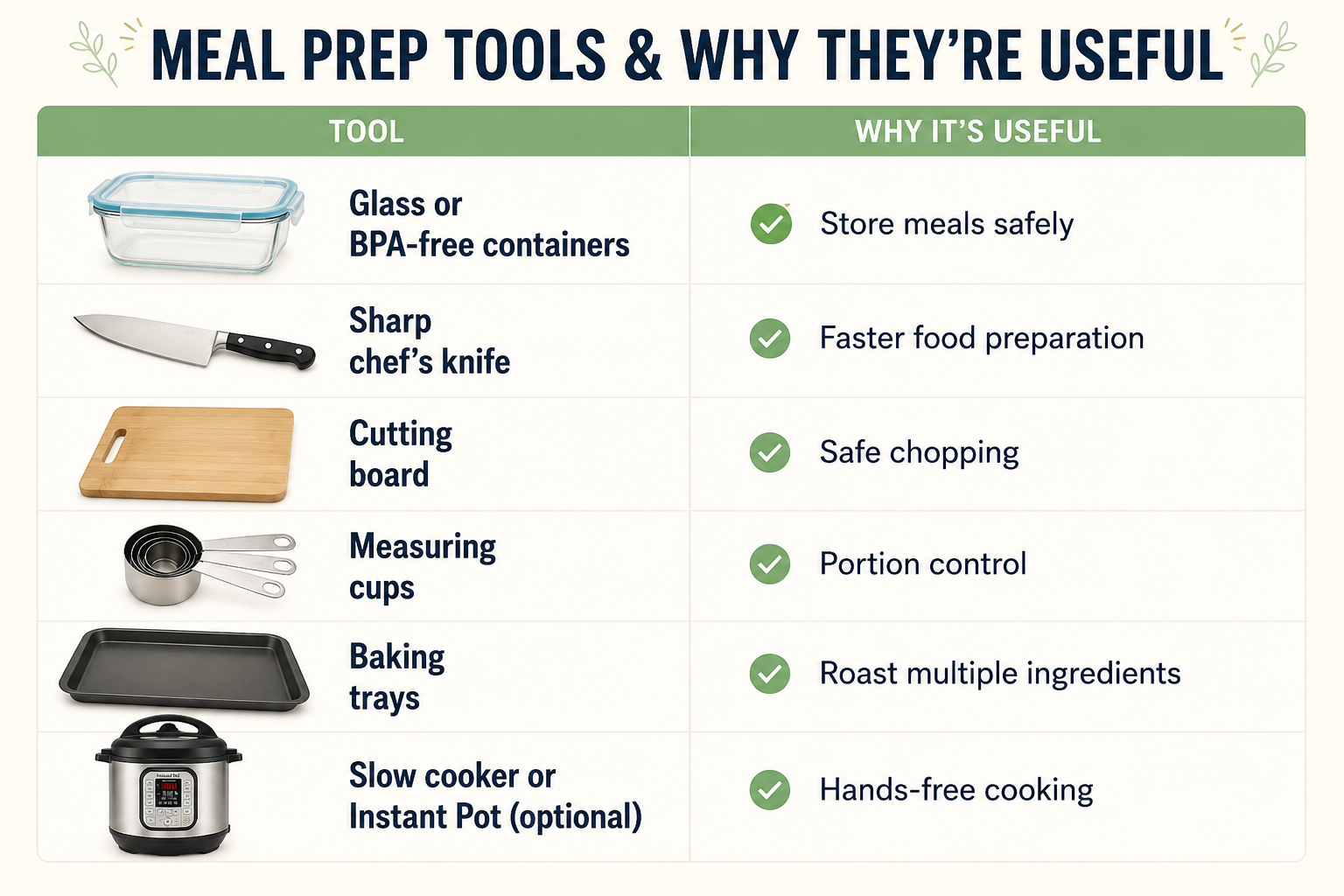
Good storage containers are one of the smartest investments because they keep food fresh and make transporting lunches much easier.
Step-by-Step Guide to Meal Prepping
Choose Simple Recipes
Many beginners fail because they start with complicated recipes requiring dozens of ingredients. Instead, choose meals with five to eight ingredients. Grilled chicken, roasted vegetables, rice, overnight oats, pasta salad, and chili are excellent beginner options.
Create a Grocery List
Check your pantry first before shopping. Write down every ingredient you need and organize the list by grocery store sections. This reduces shopping time and prevents forgotten items.
Shop Efficiently
Avoid shopping while hungry because impulse purchases become much more tempting. Buying seasonal produce and family-sized protein packs often lowers your grocery bill.
Prep Ingredients
Wash vegetables, chop onions, cook grains, marinate meat, and prepare sauces before cooking. Breaking the work into small tasks makes the entire process feel much easier.
Cook in Batches
Instead of cooking one meal at a time, prepare larger batches. Roast vegetables while rice cooks and chicken bakes. Using multiple appliances simultaneously saves considerable time.
Portion and Store
Allow food to cool slightly before transferring it into containers. Label containers with preparation dates. Refrigerate meals you'll eat within a few days and freeze the rest.
Food Safety Tips
Food safety should never be overlooked.
According to current nutrition recommendations:
Refrigerated meals should be eaten within 3–4 days.
Frozen meals remain best for 3–6 months.
Reheat leftovers until they reach 165°F (75°C).
Avoid reheating the same food multiple times.
Following these simple guidelines helps maintain both quality and safety.
Common Beginner Mistakes
Many people quit meal prepping because they make it unnecessarily difficult.
Common mistakes include:
Preparing too many meals at once.
Choosing recipes that don't freeze well.
Forgetting to label containers.
Buying ingredients without a plan.
Making identical meals for seven straight days.
Instead, prepare only three or four days of meals at first. As your confidence grows, expand your routine gradually.
Sample 3-Day Beginner Meal Prep Plan
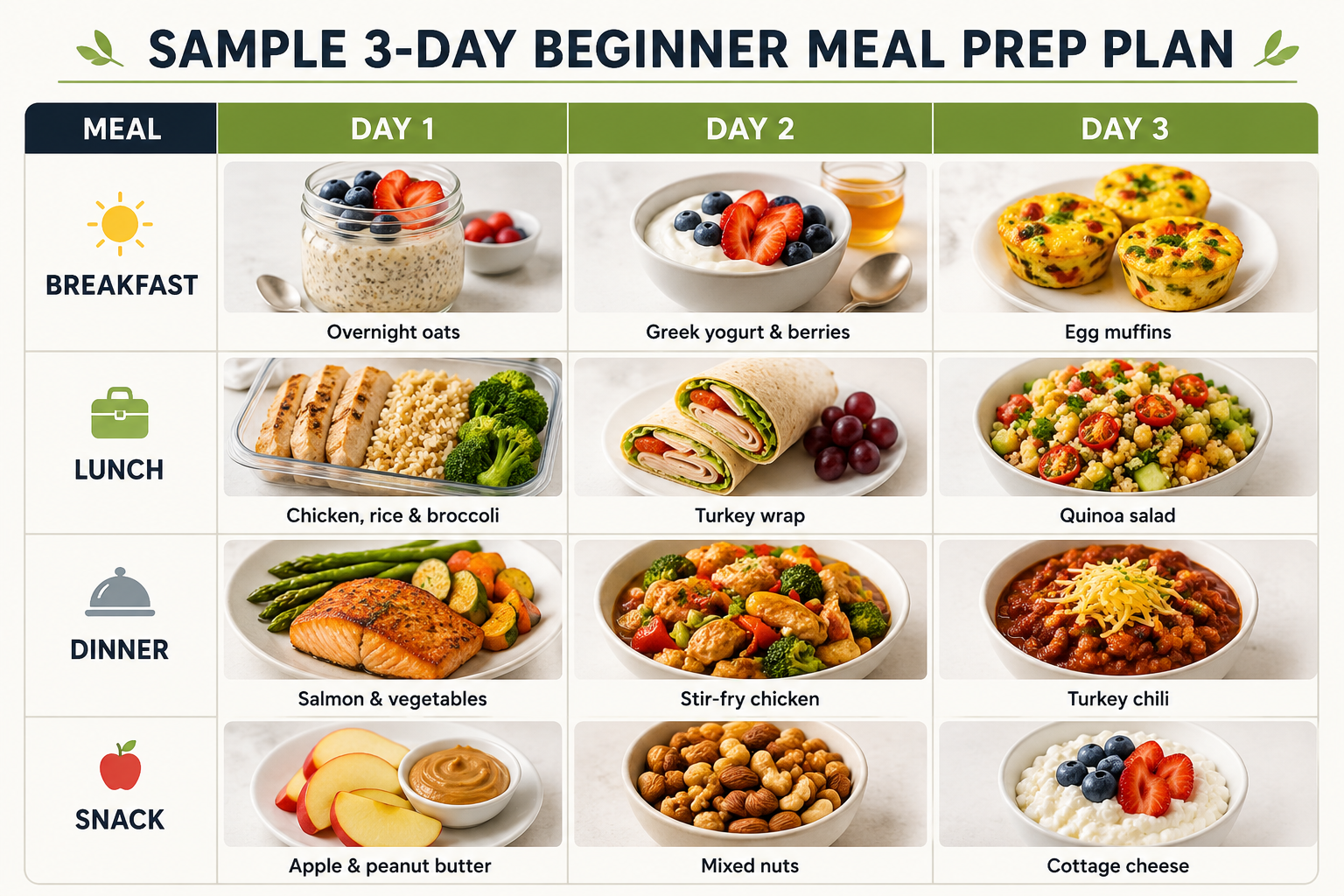
This simple rotation provides variety without overwhelming beginners.
Conclusion
Starting meal prepping doesn't require professional cooking skills or expensive equipment. The secret is beginning with small, manageable goals rather than trying to prepare every meal for an entire week. Focus on simple recipes, organize your shopping, cook in batches, and store food safely. As your routine develops, meal prepping becomes less of a chore and more of a lifestyle habit that saves time, reduces stress, supports healthier eating, and lowers grocery costs. Consistency matters far more than perfection, so don't be afraid to adjust your system until it fits your schedule.
FAQs
1. How many days should beginners meal prep for?
Start with 3–4 days of meals. Once you're comfortable, you can prepare additional freezer meals.
2. Is meal prepping good for weight loss?
Yes. Meal prepping supports portion control and reduces impulsive eating, making it easier to follow nutrition goals.
3. What foods should I avoid meal prepping?
Foods that become soggy quickly, such as fried foods or delicate leafy salads with dressing already added, are usually best prepared fresh.
4. Can I freeze meal-prepped meals?
Absolutely. Many soups, stews, cooked chicken, rice dishes, and casseroles freeze very well for several months.
5. How long does weekly meal prep take?
Most beginners spend 1.5–3 hours preparing meals for the week. With experience and better organization, that time often decreases significantly.
Comments
0No comments yet — be the first to share your thoughts!