High-Protein Low-Carb Meals for Weight Loss | 10 Easy Ideas
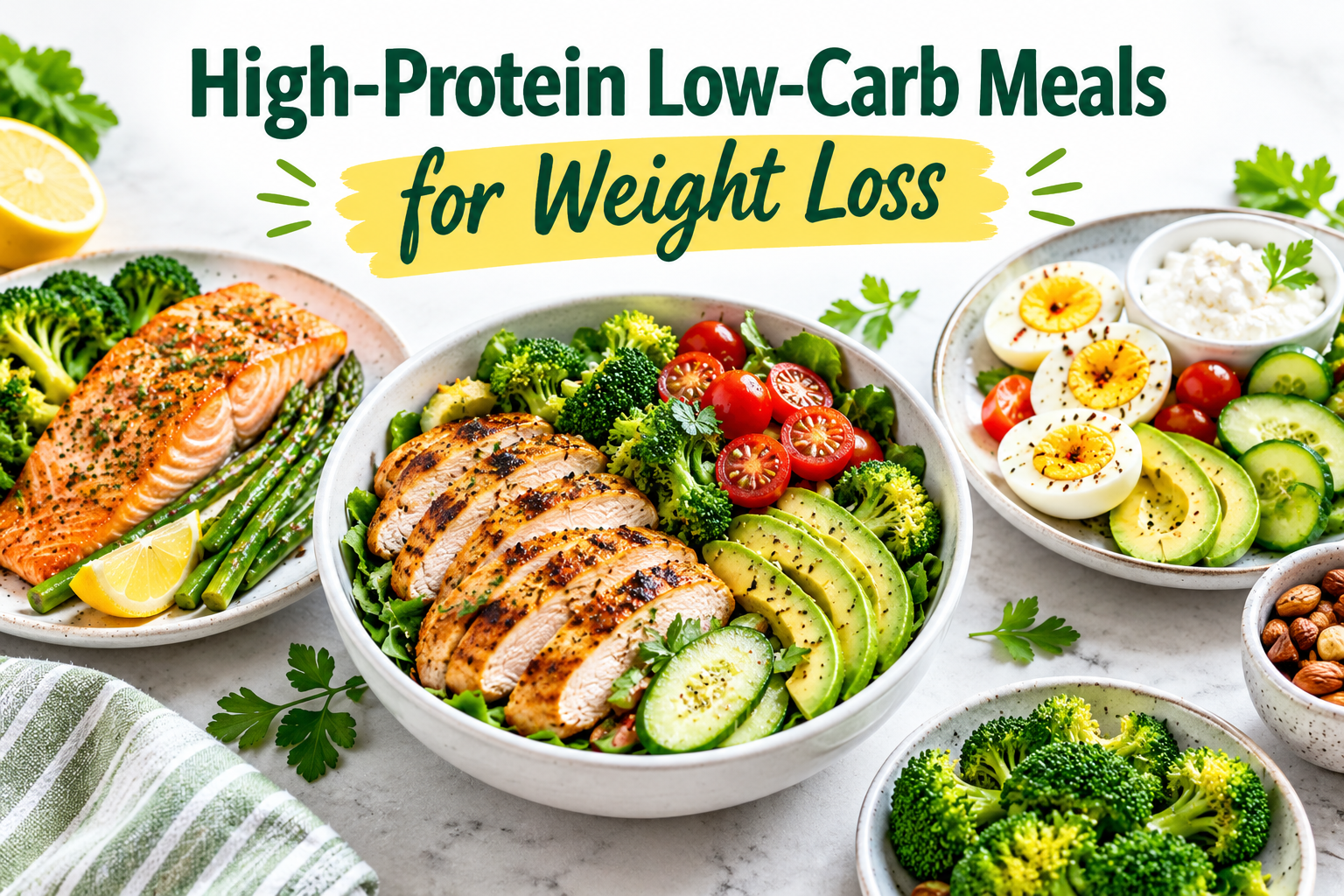
Discover 10 high-protein low-carb meals for weight loss, including easy chicken, salmon, turkey, shrimp, and egg recipes perfect for busy weeknights.
Why High-Protein Low-Carb Meals Can Support Weight Loss
If you're trying to lose weight without feeling like you're constantly hungry, high-protein low-carb meals can be a practical place to start. The basic idea is simple: build meals around protein-rich foods, fill the plate with non-starchy vegetables, include sensible amounts of healthy fats, and reduce heavily refined carbohydrate foods such as sugary cereals, pastries, sweets, white bread, and large portions of refined pasta or rice. This doesn't mean carbohydrates are automatically unhealthy or that you need to eliminate them completely. Instead, it means making the foods that provide protein, fibre, vitamins, minerals, and satisfying textures the main characters on your plate.
Protein is particularly useful because research suggests that higher-protein eating patterns can increase feelings of fullness. A systematic review involving people with overweight or obesity found that several studies reported enhanced fullness or satiety with higher protein intake, although the researchers also noted limitations in the evidence. Another meta-analysis of randomized trials found modest advantages for higher-protein diets in body weight and fat-mass reduction compared with standard-protein diets during energy restriction. The practical takeaway isn't that protein magically burns fat. Rather, a protein-rich meal may make it easier to manage appetite and stick with an appropriate calorie intake.
Protein and Fullness
Think of protein as the anchor of a meal. A breakfast made mostly from refined carbohydrates may leave you searching for another snack a short time later, while eggs with spinach and a side of Greek yogurt provide a combination that can feel considerably more substantial. Protein has been studied for its effects on appetite, and a meta-analysis of controlled trials found that acute protein intake reduced hunger while increasing fullness and satiety. This is one reason many weight-loss meals feature chicken, fish, eggs, lean beef, turkey, Greek yogurt, cottage cheese, tofu, or other protein-rich foods.
Still, more protein isn't automatically better. Your overall diet, calorie intake, activity level, food quality, and ability to maintain the eating pattern all matter. A useful meal should be satisfying enough to repeat tomorrow, not so restrictive that you abandon it after three days. That's why the recipes below combine protein with vegetables and flavour rather than relying on plain grilled meat day after day.
What Makes a Meal High in Protein and Low in Carbs?
A high-protein low-carb meal generally places a protein-rich food at the centre while limiting foods that contribute substantial carbohydrate without providing much protein or fibre. Chicken breast, turkey, eggs, salmon, tuna, prawns, lean beef, cottage cheese, and plain Greek yogurt can all work well. Vegetables such as spinach, broccoli, cauliflower, courgette, mushrooms, peppers, cucumber, lettuce, and asparagus can add volume and nutrients while keeping the carbohydrate load relatively modest. Healthy fats such as avocado, olive oil, nuts, and seeds can provide flavour and help make the meal more satisfying.
There is no single universally agreed definition of "low carb" that must apply to every person or every meal. That's important because nutrition is not a mathematical contest where the lowest carbohydrate number automatically wins. A meal containing vegetables and a modest amount of beans or whole grains can still fit comfortably into a balanced weight-loss diet, depending on the person's overall nutritional needs. The goal here is to provide meal ideas that are naturally lower in carbohydrates than traditional meals such as large pasta dishes, loaded sandwiches, sugary breakfasts, or rice-heavy bowls.
Choosing Better Protein Sources
When selecting protein, variety is your friend. Lean poultry and fish can be excellent options, while eggs and dairy products can make breakfast and snacks much easier. Fatty fish such as salmon also supplies omega-3 fats, while plant-based choices such as tofu can be useful when you want to reduce your reliance on meat.
Try to avoid turning "high protein" into an excuse to eat heavily processed foods all day. A protein bar can be convenient, but a meal containing salmon, vegetables, olive oil, and herbs gives you a very different nutritional package. Building meals from recognizable ingredients makes it easier to control portions and create food that actually tastes like food.
How Protein Fits Into a Weight-Loss Diet
Weight loss ultimately requires an energy deficit over time, but the route you take to create that deficit can make a major difference in hunger, enjoyment, and consistency. Higher-protein diets may help with appetite and body composition, but research does not show that simply cutting carbohydrates guarantees greater long-term weight loss for everyone. One systematic review of longer-term high-protein diets found that results were not consistently superior over extended periods. Another study comparing higher protein and lower carbohydrate combinations found that both higher protein and lower carbohydrate approaches can influence satiety, while the specific combinations did not necessarily produce dramatically different outcomes.
That means your best approach is usually the one you can maintain. If eating a protein-focused breakfast prevents constant snacking, that's useful. If replacing a giant portion of refined pasta with chicken and vegetables helps you feel satisfied with fewer calories, that's useful too. But if an extremely low-carb plan makes you miserable, eliminates foods you love, or becomes impossible to follow socially, it may not be the right strategy. Sustainable weight loss is less like flipping a switch and more like adjusting the steering wheel a little every day.
10 High-Protein Low-Carb Meals for Weight Loss
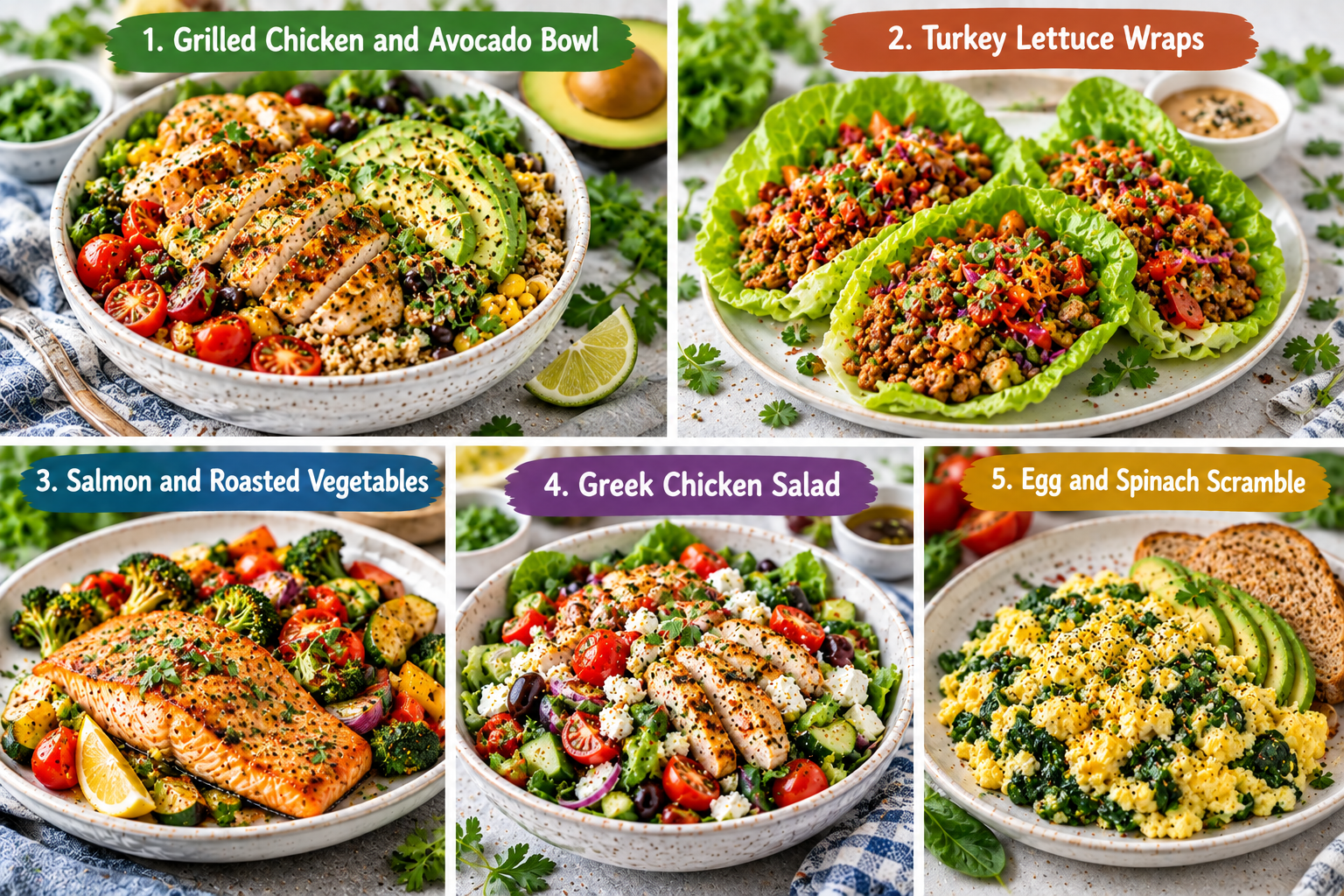
1. Grilled Chicken and Avocado Bowl
A grilled chicken and avocado bowl is one of those meals that looks simple but can become a reliable weeknight favourite. Start with sliced grilled chicken breast and add a generous handful of lettuce, cucumber, tomatoes, and shredded cabbage. Top it with avocado and a quick dressing made from lemon juice, olive oil, garlic, salt, and black pepper. If you want extra flavour, add smoked paprika, chilli flakes, fresh parsley, or coriander.
The beauty of this bowl is its flexibility. You can prepare several portions of chicken in advance and assemble the vegetables when you're ready to eat. Because the bowl doesn't depend on rice, pasta, or bread as its foundation, you can make the vegetables and protein the centre of the meal. The avocado adds creaminess, meaning you don't need a heavy dressing to make the dish enjoyable. For busy people, this is exactly the kind of meal that can turn healthy eating from a complicated project into a simple routine.
2. Turkey Lettuce Wraps
Turkey lettuce wraps are a quick option when you're craving something handheld without reaching for a traditional sandwich or tortilla wrap. Cook lean ground turkey with garlic, onion, paprika, black pepper, and a little low-sodium soy sauce. Spoon the cooked mixture into crisp lettuce leaves and top with cucumber, shredded carrot, spring onion, and a small amount of Greek yogurt sauce. The result is crunchy, savoury, fresh, and surprisingly filling.
You can make the turkey mixture ahead of time and store it in the refrigerator, making this meal especially useful for lunch. For a stronger flavour profile, add ginger, chilli, lime juice, or a small amount of sesame oil. If you prefer Mediterranean flavours, season the turkey with oregano, parsley, garlic, and lemon instead. The lettuce provides the wrap while the turkey provides the protein, creating a simple alternative to a conventional high-calorie sandwich.
3. Salmon and Roasted Vegetables
Salmon is an excellent centrepiece for a quick dinner because it cooks relatively quickly and needs very little seasoning. Place a salmon fillet on a baking tray, brush it lightly with olive oil, and season it with garlic, lemon zest, black pepper, and herbs. Roast it alongside broccoli, courgette, asparagus, or cauliflower until the fish is cooked through and the vegetables are tender.
This meal has a useful balance of protein, vegetables, and healthy fats without requiring a complicated recipe. You can also change the seasoning depending on your mood. Try lemon and dill for a fresh flavour, paprika and garlic for something warmer, or mustard and herbs for a sharper finish. Because roasted vegetables develop caramelized edges in the oven, they can make a simple meal feel much more satisfying than steamed vegetables served without seasoning.
4. Greek Chicken Salad
A Greek-inspired chicken salad can transform ordinary leftovers into a lunch you'll actually look forward to eating. Combine sliced grilled chicken with lettuce, cucumber, tomatoes, red onion, olives, and a modest portion of feta cheese. Finish it with lemon juice, oregano, black pepper, and extra-virgin olive oil. The combination of salty feta, juicy vegetables, herbs, and tender chicken creates plenty of flavour without requiring a heavy creamy dressing.
This recipe is particularly useful for meal prep because the chicken can be cooked in advance. Keep the dressing separate until you're ready to eat so the vegetables remain crisp. If you're serving this as a complete lunch, use enough chicken to make the protein substantial rather than treating the chicken as a small garnish. You can also add roasted peppers, fresh parsley, or a few pumpkin seeds for extra texture.
5. Egg and Spinach Scramble
Eggs are one of the easiest ways to create a protein-focused breakfast without spending much time in the kitchen. Whisk two or three eggs with black pepper and cook them gently in a non-stick pan. Add fresh spinach and mushrooms, then finish with a small amount of grated cheese if desired. Serve with sliced tomatoes or avocado rather than toast if you want to keep the meal lower in carbohydrates.
The secret to a good scramble is not rushing it. Medium-low heat gives the eggs a softer texture and helps prevent them from becoming dry and rubbery. You can also turn this into a refrigerator-cleanout meal by adding leftover chicken, turkey, peppers, courgette, or herbs. For busy mornings, the entire meal can be ready in roughly 10 minutes, making it far easier to maintain than an elaborate breakfast recipe.
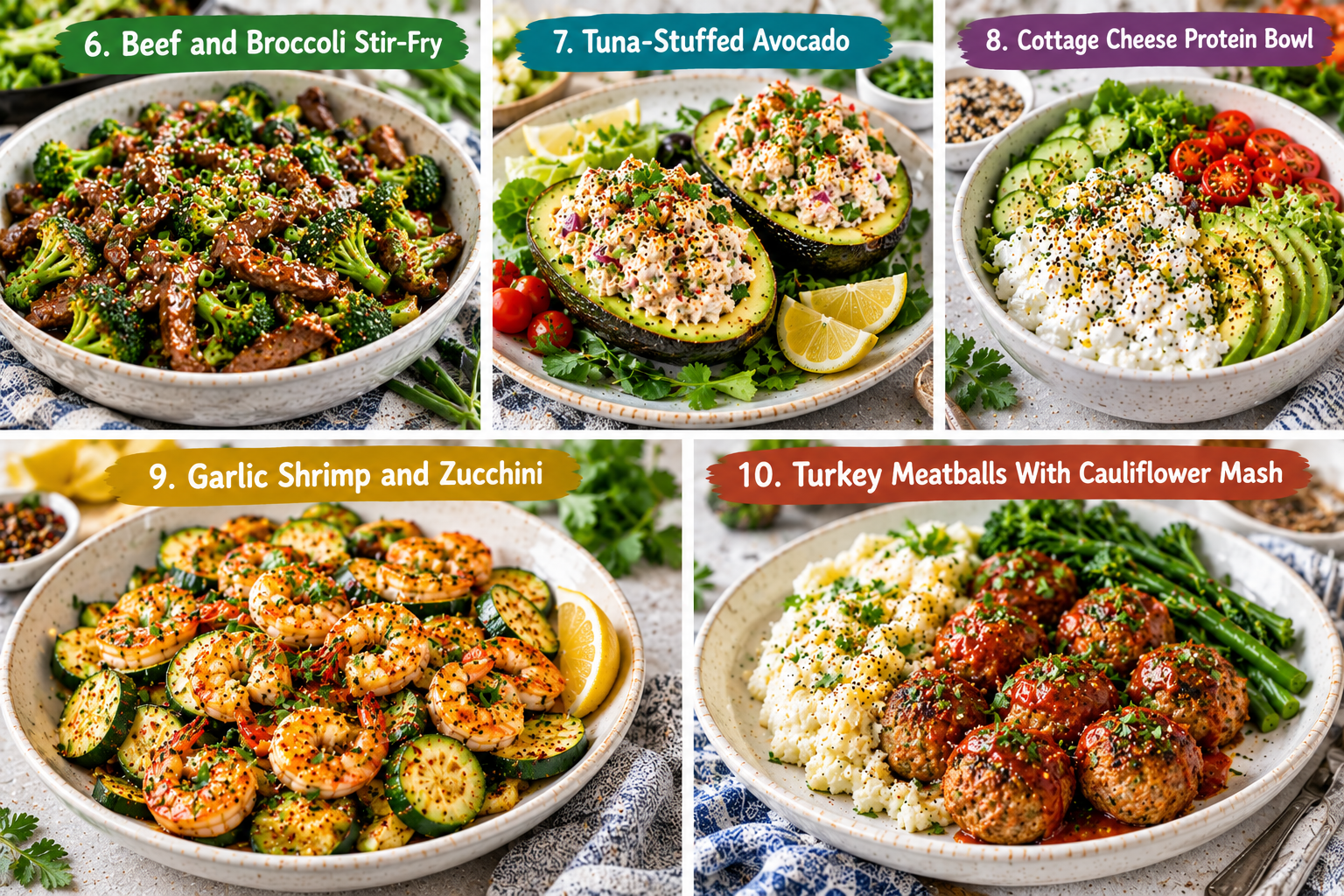
6. Beef and Broccoli Stir-Fry
Beef and broccoli is a classic combination that works beautifully as a lower-carb dinner when served without a large portion of rice or noodles. Slice lean beef thinly and cook it quickly in a hot pan with broccoli, garlic, ginger, and a small amount of low-sodium soy sauce. Add chilli flakes if you like heat and finish with a squeeze of lime. The result is savoury, aromatic, and packed with texture.
The trick is to avoid drowning the stir-fry in a sugary sauce. Many takeaway-style sauces contain substantial amounts of added sugar, which can turn a naturally balanced combination into a much heavier meal. At home, you control the ingredients and can build flavour with garlic, ginger, chilli, vinegar, citrus, and herbs. If you want additional volume, add mushrooms, cabbage, courgette, or peppers.
7. Tuna-Stuffed Avocado
For a lunch that requires almost no cooking, try tuna-stuffed avocado. Mix canned tuna with Greek yogurt, mustard, lemon juice, chopped celery, black pepper, and fresh herbs. Spoon the mixture into half an avocado and serve with cucumber or a simple leafy salad. It's creamy and satisfying without needing bread, crackers, or mayonnaise-heavy dressing.
This recipe is especially convenient on days when you have very little time. The tuna mixture can be prepared in advance and refrigerated, although the avocado is best cut close to serving time. You can adjust the texture by adding finely chopped pickles, spring onions, celery, or cucumber. If you prefer a spicier version, add chilli flakes or a small amount of hot sauce.
8. Cottage Cheese Protein Bowl
A savoury cottage cheese bowl is an underrated high-protein meal that works for breakfast, lunch, or a quick snack. Spoon cottage cheese into a bowl and add cucumber, tomatoes, boiled eggs, herbs, black pepper, and a drizzle of olive oil. For extra crunch, sprinkle a small amount of pumpkin or sunflower seeds on top.
The bowl takes only a few minutes to assemble, which makes it ideal for busy mornings or afternoons when cooking feels like too much effort. You can also create a sweet version with plain cottage cheese, berries, cinnamon, and a few chopped nuts, although the savoury version is particularly useful when you want something that feels like a proper meal. Choose a cottage cheese variety that fits your nutritional preferences and check the label for sodium if that is a concern.
9. Garlic Shrimp and Zucchini
Shrimp and zucchini make an excellent quick dinner because both cook rapidly. Heat a little olive oil in a pan, add garlic and shrimp, and cook until the shrimp are opaque and cooked through. Add spiralized zucchini or thin zucchini strips and toss briefly so they remain tender rather than watery. Finish with lemon juice, parsley, black pepper, and chilli flakes.
This meal provides the comforting experience of a noodle-style dish without relying on a large serving of traditional pasta. If you're cooking for a family with different nutritional preferences, you can serve regular pasta separately and place the shrimp and zucchini mixture over it, while keeping your own portion focused on the protein and vegetables. That kind of flexibility is often more realistic than trying to make everyone follow exactly the same plate.
10. Turkey Meatballs With Cauliflower Mash
Turkey meatballs with cauliflower mash can satisfy the craving for a hearty comfort-food dinner while keeping the meal relatively low in carbohydrates. Mix lean ground turkey with garlic, parsley, onion, black pepper, paprika, and an egg, then form small meatballs and bake or pan-cook them until fully cooked. For the mash, steam cauliflower until tender and blend it with Greek yogurt, garlic, black pepper, and a small amount of Parmesan if desired.
The result is creamy, savoury, and filling without relying on a mountain of mashed potatoes. You can serve the meatballs with steamed green beans or roasted broccoli for additional vegetables. A simple tomato and herb sauce also works well, provided you choose one without a large amount of added sugar. This is the kind of meal that demonstrates why lower-carb eating doesn't have to mean giving up comfort food.
How to Build Your Own High-Protein Low-Carb Meals
Once you understand the basic formula, you don't need a recipe every time you cook. Start with a substantial serving of protein, then add two or more vegetables for colour, texture, and volume. Add a moderate amount of healthy fat for flavour and satisfaction, then use herbs, spices, citrus, vinegar, mustard, garlic, ginger, or chilli to make the meal interesting. This simple framework can turn leftovers into a completely different dinner.
Imagine your plate as a three-part puzzle. The first piece is protein, such as chicken, fish, eggs, turkey, lean beef, tofu, cottage cheese, or Greek yogurt. The second piece is vegetables, which can include leafy greens, broccoli, cauliflower, courgette, mushrooms, peppers, asparagus, or cabbage. The final piece is flavour: avocado, olive oil, seeds, herbs, spices, lemon, or a homemade dressing. Once those three pieces are in place, you can create dozens of combinations without relying on packaged diet food.
Best Low-Carb Vegetables to Add
Non-starchy vegetables are especially useful when you're building lower-carb meals because they can add substantial volume and variety. Broccoli, cauliflower, spinach, lettuce, cucumber, courgette, mushrooms, asparagus, cabbage, and green beans can all work in different recipes. Roasting, grilling, sautéing, steaming, and air-frying can completely change the character of the same vegetable.
Don't underestimate seasoning. Plain steamed broccoli can become boring quickly, while roasted broccoli with garlic, lemon, black pepper, and Parmesan can feel like something you'd happily serve at dinner. Variety is not just about nutrition; it's also about adherence. If your meals taste good, you're much more likely to keep making them.
Meal Prep Tips for Busy Weekdays
Meal prep doesn't have to mean spending your entire Sunday cooking twelve identical containers of food. A more flexible approach is to prepare a few building blocks that can be mixed and matched throughout the week. Cook a batch of chicken or turkey, wash and chop vegetables, prepare a dressing, boil some eggs, and keep convenient protein sources such as canned tuna or Greek yogurt available. Then assemble different meals depending on what you feel like eating.
For example, Monday could be a chicken avocado bowl, Tuesday could become a Greek chicken salad, and Wednesday could use the remaining chicken in lettuce wraps. The protein stays similar, but the sauces and vegetables change the experience. You can also prepare vegetables in advance and roast a fresh batch of protein when needed. This approach reduces decision fatigue without forcing you to eat exactly the same meal every day.
Common Mistakes to Avoid
One of the biggest mistakes is assuming that low carb automatically means low calorie. Cheese, oils, nuts, avocado, creamy sauces, and fatty cuts of meat can all fit into a balanced diet, but portions still matter because these foods can be energy-dense. Another common mistake is eating too little protein and then wondering why a vegetable-heavy meal doesn't keep you satisfied. If your goal is weight loss, the meal needs to work in the real world, not just look healthy in a photograph.
It's also easy to become overly restrictive. Cutting every carbohydrate-containing food can make a diet unnecessarily difficult and may remove nutritious foods that you enjoy. A moderate, sustainable approach can be more useful than chasing the lowest possible carbohydrate intake. Research on longer-term high-protein diets has found that weight-loss advantages are not always consistent over extended periods, which reinforces the importance of choosing an approach you can maintain.
Another issue is relying too heavily on processed "diet" products. Protein cookies, bars, shakes, and packaged snacks can have a place in a busy lifestyle, but they shouldn't automatically replace whole-food meals. Whenever possible, build your meals around recognizable ingredients and use convenience foods strategically rather than making them the foundation of your diet.
Conclusion
High-protein low-carb meals for weight loss don't need to be complicated, expensive, or painfully restrictive. The simplest approach is to build meals around a quality protein source, add plenty of vegetables, include sensible portions of healthy fats, and use herbs and spices to keep everything enjoyable. Research suggests protein can support fullness and may offer modest benefits for body weight and body composition, but it isn't a magic ingredient that overrides overall calorie intake or lifestyle habits.
The best weight-loss meal is ultimately one you can eat repeatedly without feeling deprived. Start with a few recipes you genuinely enjoy, such as grilled chicken and avocado bowls, salmon with roasted vegetables, turkey lettuce wraps, egg scrambles, or garlic shrimp with zucchini. Prepare a few ingredients ahead of time, experiment with different seasonings, and adjust portions according to your needs. Instead of thinking of healthy eating as a temporary diet, think of it as building a kitchen routine that makes the healthier choice the easier choice.
Frequently Asked Questions
Are high-protein low-carb meals good for weight loss?
They can be useful for weight loss when they help you maintain an appropriate calorie intake while providing satisfying, nutrient-rich foods. Research suggests higher protein intake can increase fullness and may provide modest advantages for weight and fat loss in some energy-restricted diets. However, the diet still needs to be nutritionally balanced and sustainable.
How much protein should I eat for weight loss?
There isn't one protein target that works for everyone. Protein needs can vary according to body size, age, activity level, health status, and total calorie intake. Some research on weight-management diets has examined intakes around 1.2 g/kg of body weight per day, while other evidence suggests different levels may be appropriate in different circumstances. If you have kidney disease or another medical condition that affects protein requirements, discuss your diet with a qualified healthcare professional rather than adopting a high-protein diet independently.
Can I eat carbs and still lose weight?
Absolutely. Weight loss does not require eliminating carbohydrates. Vegetables, fruit, legumes, and whole grains can provide fibre and important nutrients, and the amount that works best depends on your overall diet and personal preferences. The recipes in this article are lower in carbohydrates, but "lower carb" should not be confused with "zero carb."
What are the best high-protein foods for a low-carb diet?
Good options include chicken breast, turkey, eggs, salmon, tuna, shrimp, lean beef, cottage cheese, plain Greek yogurt, tofu, and other minimally processed protein-rich foods. Pair these foods with vegetables and appropriate portions of healthy fats to create a more complete meal. Variety is important because no single protein source provides everything your body needs.
Can I meal prep high-protein low-carb meals?
Yes. Chicken, turkey meatballs, boiled eggs, roasted vegetables, cooked broccoli, chopped salad vegetables, tuna mixtures, and homemade dressings can all make meal preparation easier. Store cooked foods safely and use appropriate refrigeration practices. Preparing components rather than identical meals can also make your week more flexible and reduce boredom.
Comments
0No comments yet — be the first to share your thoughts!