High-Protein Breakfasts for Fat Loss: 10 Healthy Ideas
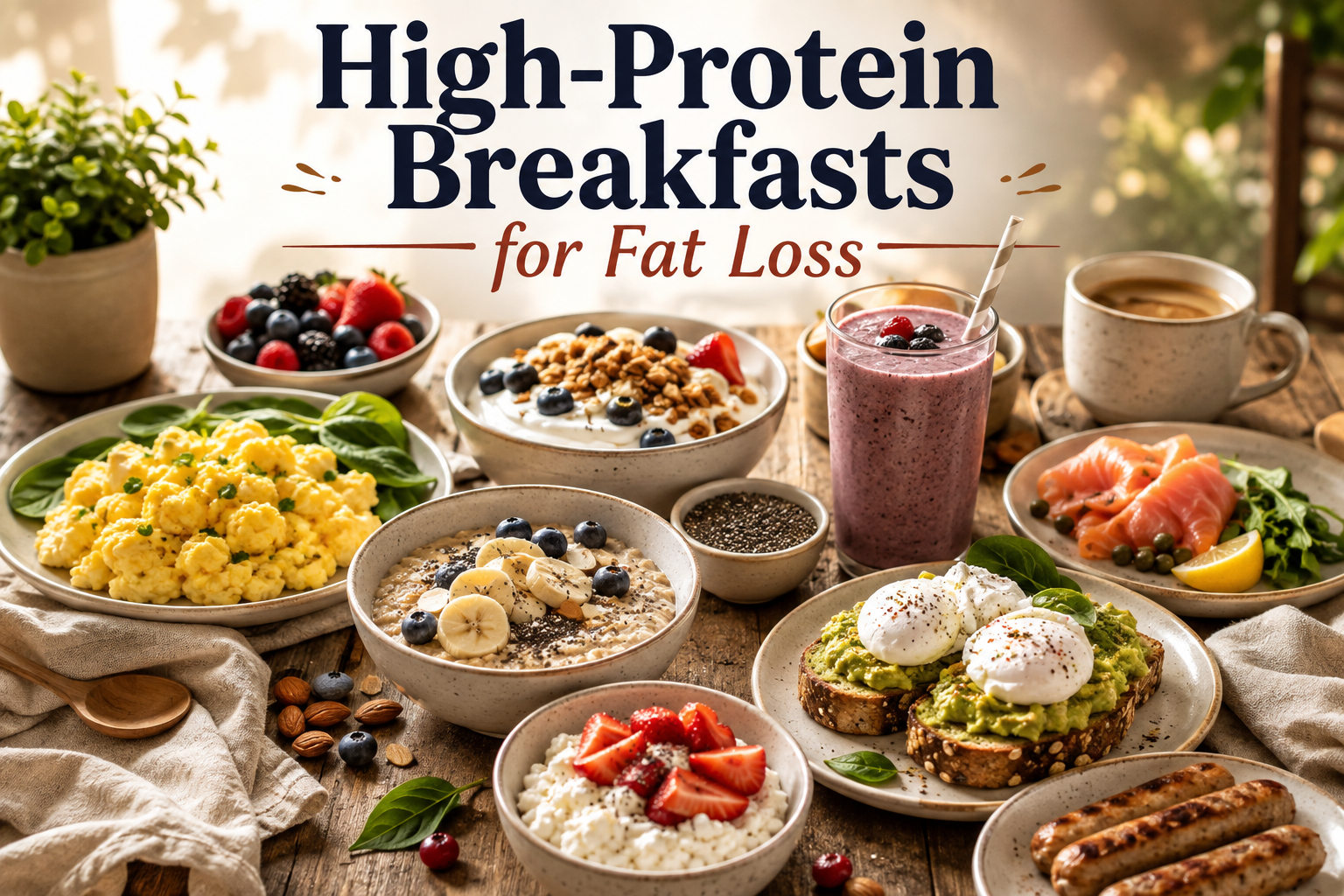
Discover the best high-protein breakfasts for fat loss, including eggs, Greek yogurt, protein oats, cottage cheese, and easy recipes with 25–35g of protein
High-Protein Breakfasts for Fat Loss
Why Protein Is Essential for Fat Loss
When you're trying to lose fat, breakfast can either set you up for success or leave you hungry before lunchtime. A high-protein breakfast is one of the simplest ways to support your weight-loss goals because it keeps you feeling satisfied while helping your body maintain lean muscle mass. Research consistently shows that increasing protein intake can improve satiety, reduce overall calorie consumption, and slightly increase the number of calories your body burns through digestion. These benefits make protein a valuable nutrient for anyone aiming to lose fat without feeling deprived. Nutrition experts and recent dietary guidance continue to recommend prioritizing protein-rich foods throughout the day, especially at breakfast, to help manage hunger and preserve muscle during calorie restriction.
Unlike sugary cereals or pastries that often lead to an energy crash, protein-rich meals provide more stable energy. Think of protein as slow-burning fuel rather than a quick spark. Your body digests it more slowly, giving you longer-lasting fullness and reducing the temptation to snack between meals. Pairing protein with fiber-rich foods like vegetables, oats, or berries creates an even more satisfying breakfast that supports healthy eating habits over time.
How Protein Helps Burn More Calories
Protein has the highest thermionic effect of food (TEF) among the three macro nutrients. This means your body uses more energy digesting and processing protein than it does carbohydrates or fats. While this doesn't dramatically increase calorie burn on its own, it contributes to overall energy expenditure and can support long-term fat loss when combined with a balanced diet and regular exercise.
Another important benefit is muscle preservation. During weight loss, losing muscle can slow your metabolism. Consuming enough protein—particularly spread evenly throughout the day—helps protect lean muscle tissue. More muscle means your body burns more calories at rest, making fat loss easier to maintain over time.
Protein and Appetite Control
Hunger is often the biggest challenge during a fat-loss journey. Protein helps increase hormones associated with fullness while reducing levels of the hunger hormone hireling. As a result, people who eat protein-rich breakfasts often report fewer cravings later in the day.
Imagine starting your morning with eggs and Greek yogurt instead of a sugary donut. Several hours later, you're likely to feel energized and satisfied rather than desperately searching for snacks. That difference can significantly reduce daily calorie intake without requiring constant willpower.
How Much Protein Should You Eat at Breakfast?
Protein needs vary depending on body size, age, activity level, and goals. Many healthy adults benefit from consuming approximately 1.2–1.6 grams of protein per kilogram of body weight per day when pursuing fat loss while maintaining muscle, especially if they exercise regularly.
Rather than eating most of your protein at dinner, spreading intake across meals appears to support muscle protein synthesis more effectively. Breakfast is an excellent opportunity to begin reaching your daily protein target.
Daily Protein Recommendations
General dietary guidelines recommend at least 0.8 g/kg/day, but active individuals and those aiming for fat loss often benefit from higher intakes. Athletes, resistance trainers, and older adults frequently require more protein to support muscle maintenance.
Consistency matters more than perfection. Building protein into every meal makes it easier to meet your daily goal without relying heavily on supplements.
Ideal Protein Per Meal
Many dietitians recommend aiming for approximately 25–35 grams of protein at breakfast. This amount is generally sufficient to increase fullness and stimulate muscle protein synthesis in many adults.
Examples include eggs paired with cottage cheese, Greek yogurt topped with nuts and seeds, or overnight oats mixed with protein powder. These combinations provide balanced nutrition while keeping breakfast enjoyable and practical.
Best High-Protein Foods for Breakfast
Building a satisfying breakfast starts with choosing ingredients that are naturally rich in protein while also providing vitamins, minerals, and healthy fats. The beauty of protein-rich breakfasts is their flexibility. Whether you prefer sweet meals, savory dishes, or something quick before work, there are plenty of nutritious options that fit your lifestyle. Combining several protein sources with fiber-rich carbohydrates creates a balanced meal that provides long-lasting energy, supports muscle recovery, and helps reduce cravings throughout the day. Instead of relying on highly processed breakfast foods loaded with sugar, focusing on whole foods makes it much easier to stay full and maintain a calorie deficit without constantly feeling hungry.
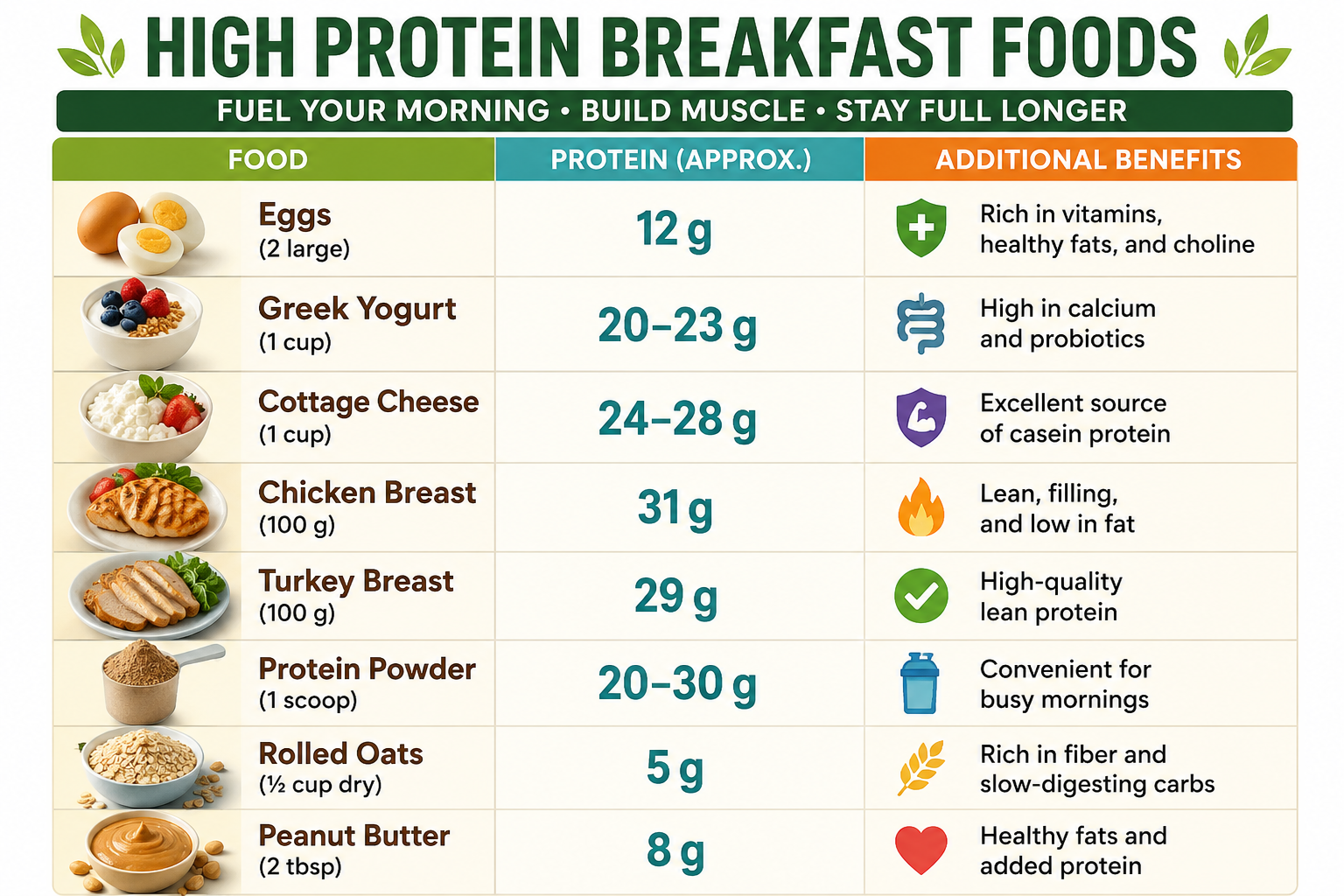
Below is a comparison of some of the best high-protein breakfast foods.
Eggs
Eggs remain one of the most nutritious breakfast choices available. They contain complete protein, meaning they provide all nine essential amino acids your body needs. They're also incredibly versatile—you can boil, scramble, poach, or bake them depending on your preference. Despite old myths about cholesterol, current research shows that eggs can be part of a healthy diet for most people. Pairing eggs with vegetables such as spinach, mushrooms, tomatoes, or peppers increases fiber intake while adding valuable vitamins and minerals.
Greek Yogurt
Plain Greek yogurt is a favorite among dietitians because it delivers a large amount of protein with relatively few calories. It also contains probiotics that support gut health and calcium for strong bones. Adding fresh berries, chia seeds, walnuts, or almonds transforms it into a satisfying breakfast packed with antioxidants and healthy fats. Choosing unsweetened varieties helps avoid unnecessary added sugars.
Cottage Cheese
Cottage cheese is often overlooked but deserves a place in any fat-loss meal plan. It contains slow-digesting casein protein that helps keep you feeling full for longer periods. It pairs well with fresh fruit for a sweet breakfast or sliced cucumber, tomatoes, and herbs for a savory option. Its creamy texture and mild flavor make it easy to include in smoothies or spread on whole-grain toast.
Lean Chicken and Turkey
Although many people associate chicken and turkey with lunch or dinner, they work surprisingly well at breakfast. Adding grilled chicken to an egg scramble or using sliced turkey in a breakfast wrap significantly boosts protein intake while keeping calories relatively low. These lean meats provide iron, zinc, and B vitamins that support energy production throughout the day.
Protein Oats
Traditional oatmeal is already a nutritious breakfast, but adding protein powder, Greek yogurt, egg whites, or cottage cheese creates a much more filling meal. Protein oats combine complex carbohydrates with high-quality protein, making them an excellent option before work or after a morning workout. Topping them with berries, cinnamon, flaxseed, and chopped nuts adds texture, flavor, and additional nutrients.
Top High-Protein Breakfast Recipes
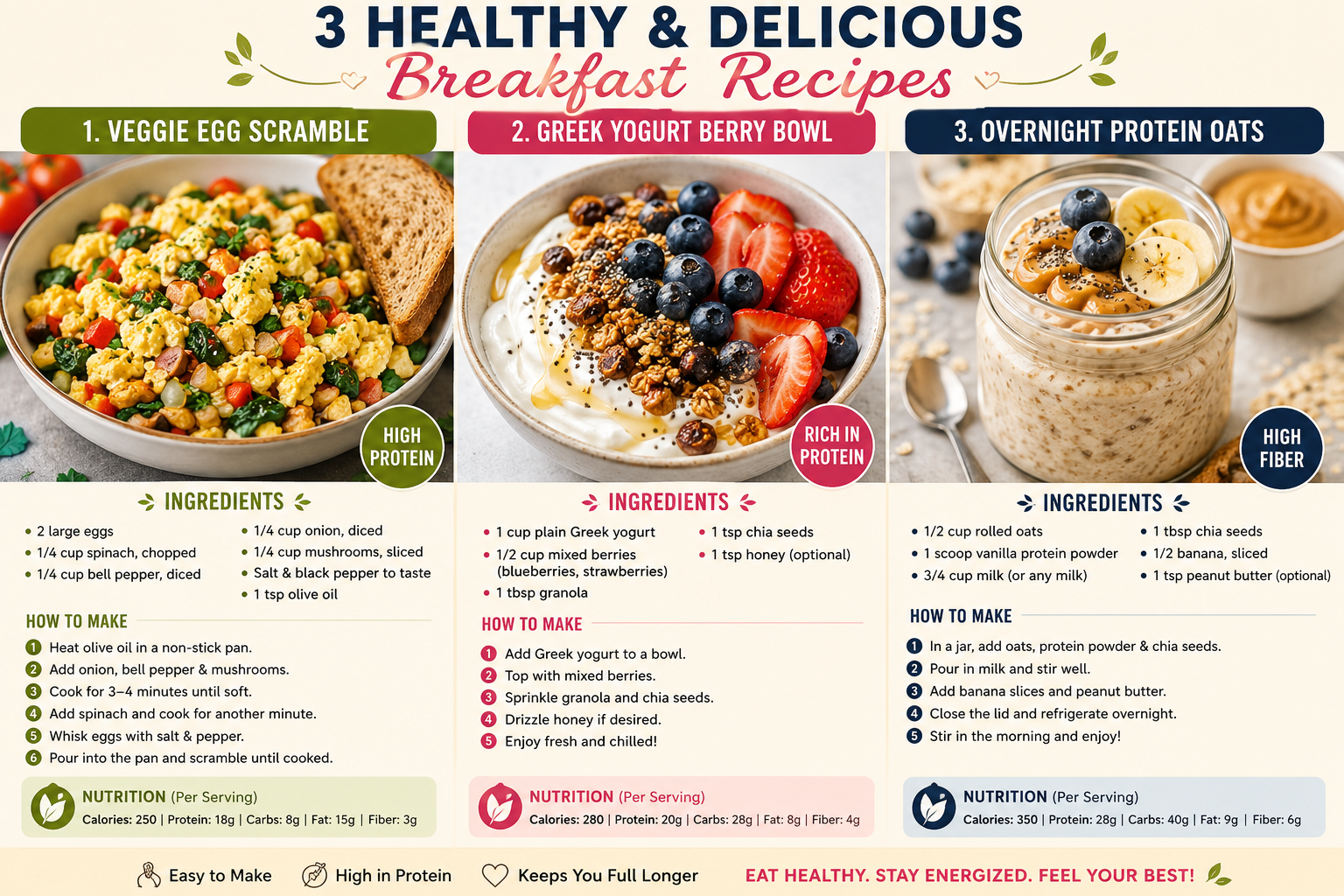
Eating healthy doesn't mean spending hours in the kitchen. Many protein-packed breakfasts take less than 15 minutes to prepare, while others can be made the night before for maximum convenience. These recipes combine lean protein with healthy carbohydrates and fiber to keep you energized throughout the morning.
Veggie Egg Scramble
A veggie egg scramble is one of the fastest healthy breakfasts you can make. Whisk together two whole eggs with two egg whites, then cook them with spinach, diced tomatoes, mushrooms, onions, and bell peppers in a non-stick pan. Sprinkle a little feta cheese on top for extra flavor. Serve alongside one slice of whole-grain toast or half an avocado for healthy fats. This meal provides roughly 28–32 grams of protein while delivering plenty of vitamins and minerals.
Greek Yogurt Berry Bowl
If mornings are busy, a Greek yogurt bowl comes together in less than five minutes. Start with one cup of plain Greek yogurt, then add fresh strawberries, blueberries, raspberries, chia seeds, and a handful of chopped almonds. A light drizzle of honey is optional if you prefer extra sweetness. This breakfast is creamy, refreshing, and naturally high in protein while supplying antioxidants and fiber that support digestive health.
Overnight Protein Oats
Overnight oats are perfect for meal prep. Combine rolled oats, milk of choice, vanilla protein powder, chia seeds, cinnamon, and Greek yogurt in a jar before bedtime. Refrigerate overnight, then top with banana slices, berries, or peanut butter in the morning. The oats soften overnight, creating a creamy texture without any cooking required. It's an excellent grab-and-go breakfast for busy weekdays.
Common Mistakes to Avoid
Many people unknowingly make breakfast choices that slow their progress, even when trying to eat healthier. Avoiding these common mistakes can make a noticeable difference in hunger levels, energy, and long-term weight-loss success.
Skipping Breakfast
Skipping breakfast isn't automatically harmful, but many people become excessively hungry later in the day, leading to overeating at lunch or dinner. If you're naturally hungry in the morning, eating a protein-rich breakfast can help regulate appetite and improve concentration throughout the day. Consistency is usually more effective than extreme dieting strategies.
Eating Too Many Sugary Foods
Breakfast cereals, flavored yogurts, pastries, sweet coffee drinks, and muffins often contain large amounts of added sugar while providing very little protein. These foods digest quickly, causing rapid spikes and crashes in blood sugar that leave you hungry again within a couple of hours. Replacing them with whole-food protein sources creates more stable energy and better supports fat loss.
Conclusion
A high-protein breakfast is one of the easiest habits to build when your goal is fat loss. It helps reduce hunger, supports muscle preservation, provides lasting energy, and makes it easier to maintain a healthy calorie deficit without feeling constantly deprived. By choosing foods like eggs, Greek yogurt, cottage cheese, lean poultry, and protein oats, you create balanced meals that nourish your body while satisfying your appetite.
Remember that no single breakfast will magically burn fat. Lasting results come from combining nutritious meals with regular exercise, quality sleep, proper hydration, and consistency over time. Small improvements made every morning often lead to significant changes after weeks and months of healthy habits.
FAQs
1. What is the best protein-rich breakfast for weight loss?
A breakfast containing 25–35 grams of protein, such as eggs with vegetables and Greek yogurt, is an excellent choice because it promotes fullness and supports muscle maintenance.
2. Can I lose fat by eating eggs every morning?
Yes. Eggs are nutrient-dense, high in protein, and can support fat loss when included as part of a balanced calorie-controlled diet.
3. Is oatmeal good for fat loss?
Yes. Oatmeal provides complex carbohydrates and fiber. Adding protein sources like Greek yogurt or protein powder makes it even more filling.
4. Are protein shakes enough for breakfast?
A protein shake can be a convenient option, but pairing it with fruit, oats, or nuts creates a more balanced meal that provides additional fiber and nutrients.
5. How many grams of protein should breakfast contain?
Most adults aiming for fat loss benefit from consuming around 25–35 grams of protein at breakfast, depending on their overall daily protein requirements.
Comments
0No comments yet — be the first to share your thoughts!