Healthy Taco Bowls for Meal Prep | Easy & High-Protein
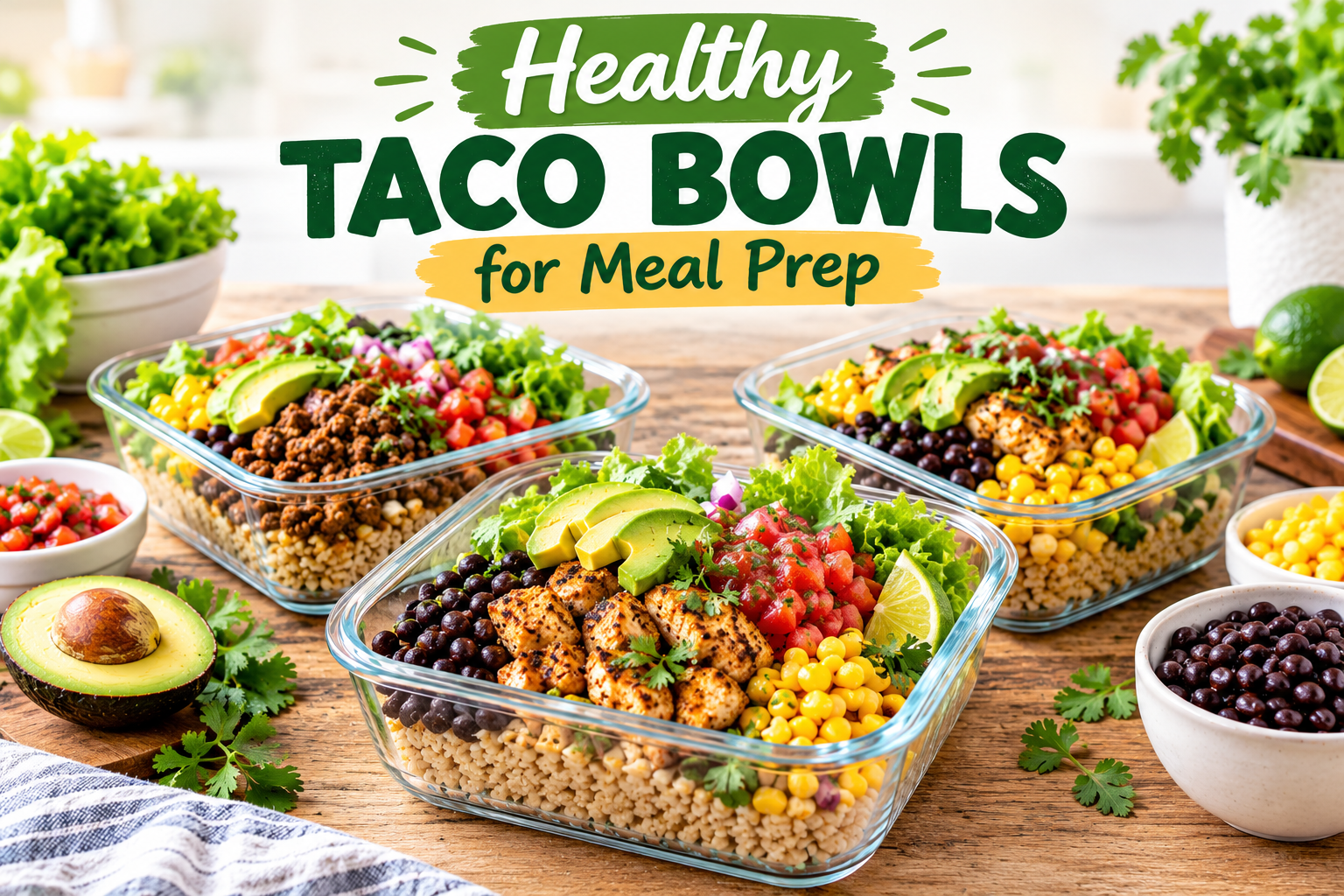
Make healthy taco bowls for meal prep with lean protein, black beans, brown rice, veggies, salsa, and avocado. Easy, filling, nutritious, and ready for busy weeknights.
Healthy Taco Bowls for Meal Prep
If you want a lunch or dinner that tastes exciting on day four instead of feeling like another boring container of leftovers, healthy taco bowls for meal prep are an excellent place to start. They combine seasoned protein, wholesome grains, beans, colourful vegetables, fresh toppings, and a little something creamy into one satisfying meal. The best part is that you can prepare several portions at once, refrigerate them, and have a ready-to-heat meal waiting when your schedule gets hectic. That makes taco bowls especially useful for busy workdays, quick family dinners, and anyone trying to make healthier eating feel practical rather than restrictive. A taco bowl is also wonderfully flexible. You can use chicken, lean beef, turkey, black beans, tofu, or another protein you enjoy, then change the vegetables, grains, salsa, and toppings depending on what you have available. USDA nutrition guidance similarly encourages meals that bring together vegetables, grains, and protein foods, while beans can contribute to both the vegetable and protein food groups.
The real magic is in the balance. Instead of building a bowl around a huge serving of rice and then adding a few toppings, think of the bowl as a colourful little ecosystem where every ingredient has a job. The protein helps make the meal filling, beans add texture and fibre, vegetables bring colour and freshness, and brown rice or another whole grain provides a satisfying base. Salsa, lime, cilantro, avocado, and Greek yogurt can then provide the punchy flavours that make the whole thing taste like something you would happily order at a restaurant. A recent USDA example of a nutrient-dense burrito bowl demonstrates how simple swaps, such as choosing brown rice, adding vegetables, using reduced-sodium beans, and selecting grilled chicken, can substantially change the nutritional profile of a bowl.
Why Taco Bowls Are Perfect for Meal Prep
Meal prep works best when the food remains enjoyable after storage, and taco bowls have a natural advantage because many of their components hold up well. Cooked rice, seasoned chicken, beans, roasted peppers, corn, and onions can all be prepared in advance without becoming unpleasantly soft when handled correctly. You can also keep certain fresh toppings separate, which means your bowl can taste freshly assembled even after several days in the refrigerator. This is one reason bowl-style meals have become such a useful solution for busy households: you prepare the foundation once and then make small changes when it is time to eat. A recent meal-prep guide from Good Housekeeping also highlights preparing complete meals or individual components ahead of time as a practical way to save time during busy weeks.
Another advantage is portion control without obsessing over every bite. When you prepare your meals yourself, you decide how much rice, protein, vegetables, beans, cheese, and sauce goes into each container. That gives you far more control than grabbing an oversized takeaway meal when hunger strikes. A healthy taco bowl can also fit different eating preferences without requiring a completely separate recipe for everyone in the household. One person can have chicken, another can choose black beans, and someone else can add extra vegetables or avocado. The recipe becomes more like a template than a rigid set of rules, which is exactly what makes it useful for real life.
Ingredients You Need for Healthy Taco Bowls
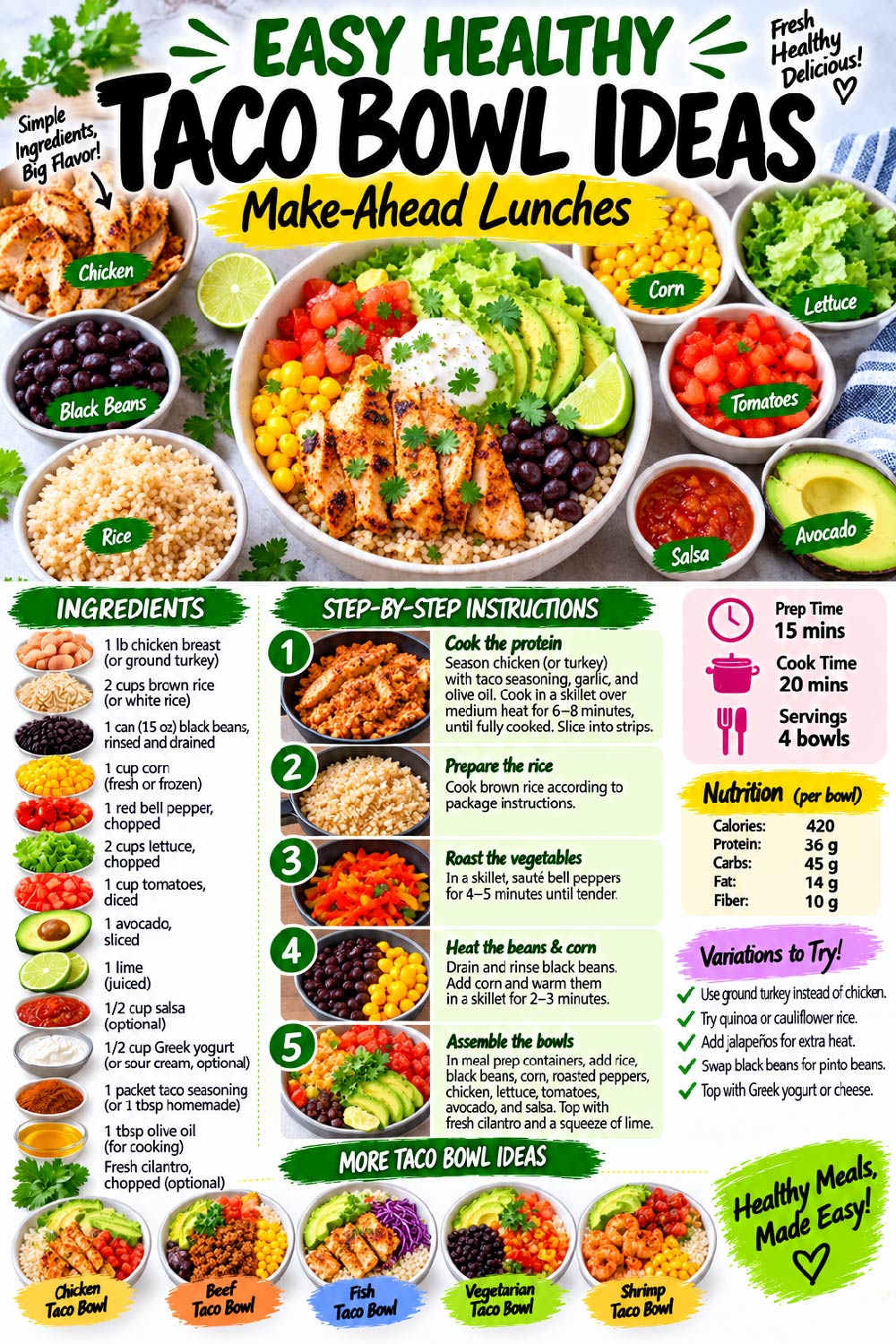
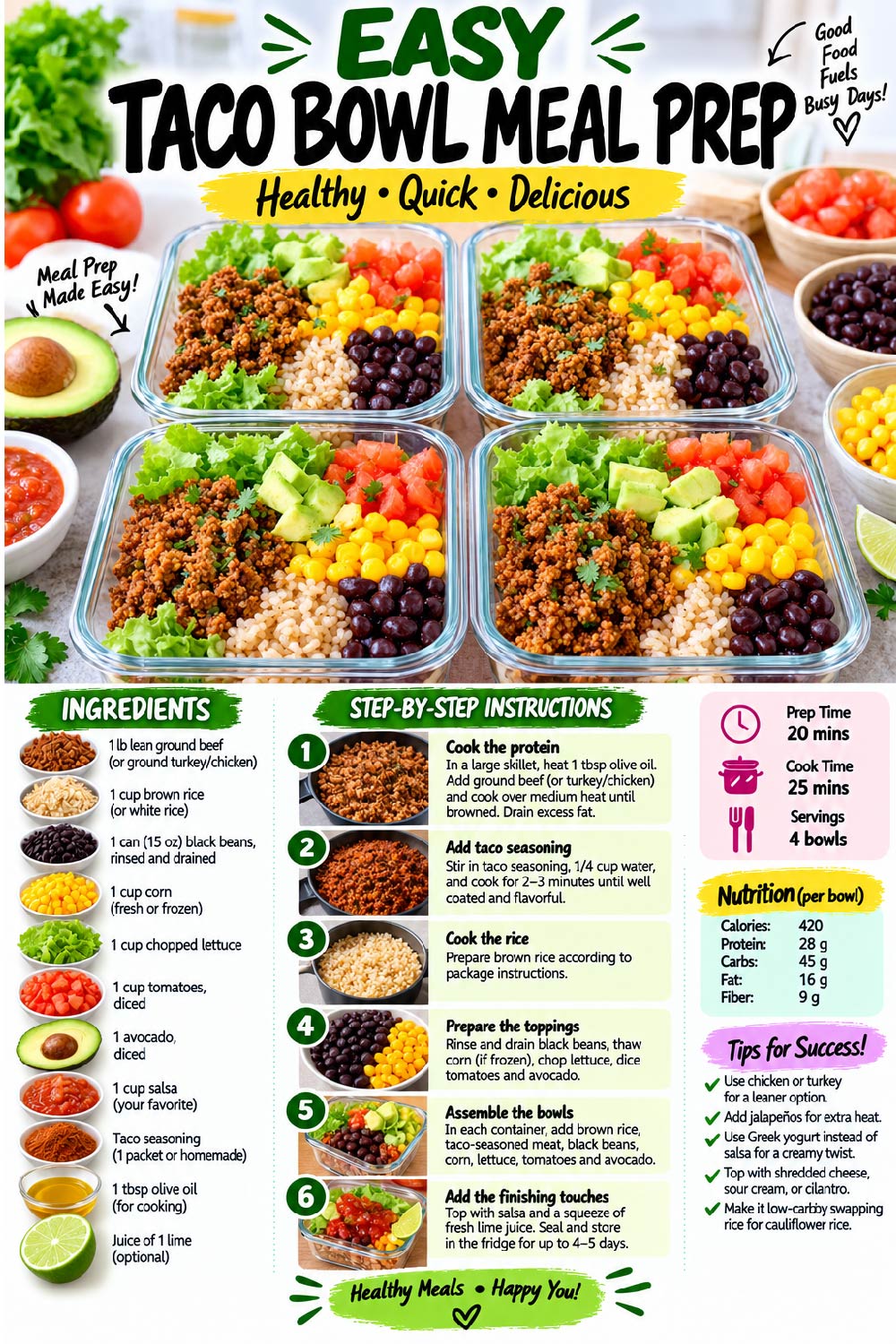
The ingredient list for these healthy taco bowls is simple, affordable, and easy to adapt. For four meal-prep servings, start with 1½ cups cooked brown rice, 1 pound lean ground chicken or turkey, 1 can black beans drained and rinsed, 1 cup corn, 1 red bell pepper, 1 small red onion, 1 tablespoon olive oil, and your favourite taco seasoning. You can make your own seasoning with chili powder, ground cumin, smoked paprika, garlic powder, onion powder, dried oregano, black pepper, and a small amount of salt. For toppings, prepare salsa, fresh lime juice, chopped cilantro, sliced avocado, shredded lettuce, and plain Greek yogurt. A small amount of shredded cheddar or Monterey Jack cheese can also work if you enjoy cheese in your taco bowls.
The beauty of this ingredient combination is that every part can be adjusted. Brown rice is a hearty option, but quinoa, farro, cauliflower rice, or a mixture of grains can work too. Black beans are an inexpensive choice, although pinto beans or kidney beans can easily take their place. For vegetables, bell peppers and onions are reliable because they cook quickly and develop a slightly sweet flavour, but zucchini, tomatoes, spinach, cabbage, mushrooms, or roasted sweet potato can join the party. USDA guidance identifies beans, peas, lentils, and many vegetables as useful components of a varied diet, so adding colourful produce and beans is an easy way to make the bowl more nutrient-dense.
How to Make the Taco Bowl Base
Begin by preparing the brown rice according to the package instructions. While it cooks, chop the bell pepper and red onion into bite-sized pieces. Heat the olive oil in a large skillet over medium-high heat, then add the vegetables and cook until they begin to soften. Add the lean ground chicken or turkey and break it apart with a wooden spoon. Sprinkle in the taco seasoning and continue cooking until the meat is fully cooked and nicely coated with the spices. If the mixture looks dry, add a small splash of water or low-sodium broth and stir until the seasoning creates a light, savoury coating around the meat.
Next, add the rinsed black beans and corn to the skillet. Stir everything together for a few minutes so the beans warm through and the flavours have a chance to mingle. You are not trying to turn the mixture into a stew; you simply want everything hot, seasoned, and evenly combined. Once the rice is ready, fluff it with a fork and allow excess steam to escape before assembling the containers. This step matters because packing very hot ingredients into sealed containers can create condensation, which can affect the texture of your meal. A USDA-supported burrito bowl recipe also uses rice, black beans, peppers, onion, lean meat, and taco-style seasonings, showing how naturally these ingredients work together in a balanced bowl.
How to Assemble Meal Prep Taco Bowls
Once all the cooked components are ready, divide the rice between four airtight meal-prep containers. Add the seasoned chicken and bean mixture next, followed by the cooked peppers and onions if you have kept them separate. The goal is to create roughly similar portions rather than making every container look perfectly identical. If you prefer more vegetables, increase them and reduce the rice slightly. If you need a more substantial meal, add a little extra protein or grain. Meal prep should support your routine, not force you to eat exactly the same portion regardless of your hunger or needs.
Keep fresh toppings such as avocado, lettuce, cilantro, salsa, lime juice, and Greek yogurt separate whenever possible. A small sauce container inside or alongside the main container works particularly well for salsa and yogurt-based toppings. Add avocado shortly before eating because it can brown and soften during storage. When you're ready for lunch, reheat the rice, meat, beans, and vegetables until hot, then finish the bowl with fresh toppings. That contrast between warm savoury ingredients and cool crunchy toppings is what keeps the meal interesting. A similar Nutrition.gov burrito-bowl recipe recommends toppings such as lettuce, Greek yogurt, salsa, jalapeño, avocado, or guacamole and advises refrigerating leftovers promptly and using them within four days.
Healthy Taco Bowl Nutrition
Nutrition will vary depending on the exact brands, quantities, protein, toppings, and serving sizes you use, but a bowl made with lean ground chicken, brown rice, black beans, vegetables, salsa, avocado, and Greek yogurt can provide a useful combination of protein, carbohydrates, fibre, and fats. For the recipe as written, an estimated serving provides approximately 520 calories, 37g protein, 59g carbohydrates, 15g fat, and 12g fibre before optional extra cheese. These numbers are estimates rather than laboratory-tested values, so readers with specific nutritional requirements should calculate the recipe using the exact products and quantities they use at home.
The nutritional strength of this bowl comes from the combination rather than one miracle ingredient. Lean poultry provides protein, beans contribute protein and fibre, vegetables add vitamins and minerals, and brown rice provides carbohydrates for energy. Avocado contributes unsaturated fat and creaminess, while Greek yogurt can add protein without requiring a large amount of mayonnaise or sour cream. USDA guidance notes that protein foods include poultry, beans, peas, lentils, nuts, seeds, soy products, seafood, and eggs, and encourages variety among protein choices.
How to Keep Taco Bowls Fresh
The biggest meal-prep mistake is treating every ingredient as though it has the same shelf life and texture. Cooked rice and seasoned meat can be stored together, but watery salsa, lettuce, avocado, and creamy toppings are better kept separate. Allow cooked ingredients to cool appropriately before sealing them, then refrigerate them promptly. Nutrition.gov's burrito bowl guidance recommends refrigerating leftovers within two hours and using them within four days, which provides a useful benchmark for refrigerated meal prep.
Airtight containers are your best friend here. If you are preparing four lunches, use four individual containers rather than one giant container that you repeatedly open and close throughout the week. This helps maintain quality and makes grabbing lunch much easier. Labeling the containers with the preparation date can also remove the guesswork. If you know you will not eat all the portions within the recommended refrigerator window, freeze suitable portions instead of allowing them to sit forgotten at the back of the fridge.
Best Proteins for Taco Bowls
Chicken is one of the easiest choices because it is lean, mild, and works beautifully with smoky taco spices. Ground turkey is another convenient option and cooks quickly in a skillet. Lean ground beef gives the bowl a richer, more traditional taco flavour, while black beans can make the meal vegetarian without sacrificing the satisfying texture that makes taco bowls so enjoyable. You could also use grilled chicken strips, shredded leftover roast chicken, tofu, tempeh, or seasoned lentils.
The protein you choose can completely change the personality of the bowl. Chicken with lime and cilantro feels fresh, while lean beef with smoky paprika and cumin creates a deeper flavour. Black beans with roasted vegetables make a hearty vegetarian combination, especially when topped with avocado and salsa. USDA guidance recommends varying protein choices and identifies beans, peas, lentils, nuts, seeds, soy products, poultry, meat, seafood, and eggs as protein-food options.
Best Vegetables for Meal Prep Taco Bowls
Bell peppers and onions are classic because they become sweeter and more flavourful when cooked. Corn adds a little sweetness and pleasant chewiness, while tomatoes contribute freshness when added near serving time. Shredded cabbage is another excellent meal-prep vegetable because it stays crisp longer than delicate lettuce. Roasted zucchini, mushrooms, spinach, carrots, and sweet potatoes can also work surprisingly well with taco seasoning.
Think of your vegetables as the colour palette of the bowl. If everything is beige, the meal may look less appetising even when it tastes good. Try combining green lettuce or cilantro, red peppers, yellow corn, purple cabbage, and bright red salsa. USDA MyPlate guidance encourages variety in vegetables and recognises different vegetable groups, including dark green, red and orange, beans and peas, starchy vegetables, and other vegetables.
Easy Taco Bowl Toppings
Toppings are where a basic meal-prep bowl becomes something you actually look forward to eating. Fresh salsa provides acidity and heat, while lime juice cuts through the richness of avocado and cheese. Greek yogurt can create a creamy element similar to sour cream, and fresh cilantro adds a bright herbal note. For extra crunch, try shredded cabbage, diced radishes, toasted pumpkin seeds, or crushed baked tortilla strips.
You do not need every topping at once. In fact, choosing two or three can make the bowl cleaner and easier to prepare. A spoonful of salsa and sliced avocado may be enough for one day, while another day could feature Greek yogurt, jalapeño, and cilantro. This simple rotation keeps the same meal-prepped base from feeling repetitive. The USDA's burrito bowl recipe also suggests flexible toppings and specifically mentions lettuce, plain yogurt, salsa, jalapeños, avocado, and guacamole.
How to Make Taco Bowls Lower in Calories
If your goal is to create a lighter taco bowl, you do not need to remove everything you enjoy. Start by looking at the ingredients that add the most calories without providing much volume, such as large amounts of cheese, sour cream, creamy sauces, and oversized portions of rice. Increase vegetables and keep a satisfying portion of lean protein and beans. Salsa, lime, fresh herbs, cabbage, tomatoes, and peppers can add enormous flavour for relatively little energy.
Portion size matters just as much as ingredient choice. Instead of treating rice as the entire foundation of the bowl, make it one part of the meal alongside protein, beans, and vegetables. A USDA example comparing a typical burrito bowl with a more nutrient-dense version illustrates how changes such as reducing white rice, adding vegetables, choosing reduced-sodium beans, using grilled chicken, and replacing some higher-calorie toppings can lower the overall calorie total.
How to Make High-Protein Taco Bowls
For a higher-protein version, increase the lean chicken or turkey and keep black beans in the recipe. Greek yogurt is another easy addition because it provides creaminess while contributing protein. You can also sprinkle a modest amount of cheese over the bowl rather than using a large portion. If you prefer vegetarian meals, combine black beans with lentils, tofu, or another plant-based protein source.
The trick is not simply piling more meat into the container. A satisfying high-protein meal still needs vegetables, fibre, and a carbohydrate source that fits your needs. The result should feel like a complete meal rather than a protein experiment. This is why taco bowls are so useful: the same basic structure can be adjusted for different nutritional goals without creating an entirely different recipe.
Vegetarian Healthy Taco Bowls
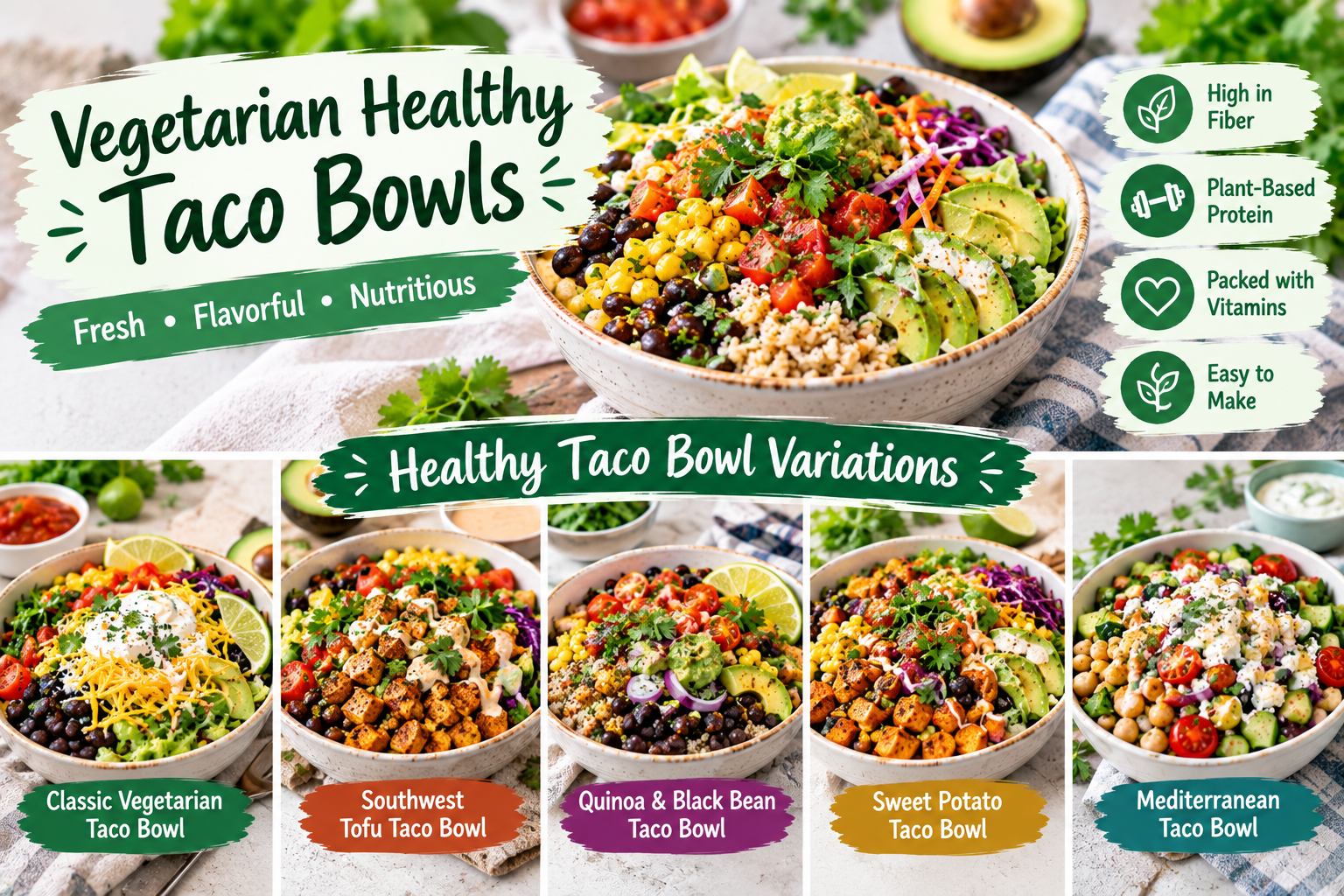
A vegetarian taco bowl can be just as filling and flavourful as one made with meat. Replace the chicken with black beans and add extra corn, peppers, onions, and perhaps cooked lentils or seasoned tofu. Brown rice gives the bowl a hearty base, while avocado and salsa add richness and freshness. A squeeze of lime at the end ties everything together.
Beans are especially useful in vegetarian taco bowls because USDA guidance recognises beans, peas, and lentils as part of the protein foods group as well as the vegetable group. This makes them a convenient ingredient for building a satisfying plant-forward meal. If you are preparing vegetarian bowls for several days, keep fresh toppings separate and add them just before eating for the best texture.
Healthy Taco Bowl Variations
Once you have the basic recipe mastered, you can create several variations without changing your meal-prep routine. Try a chicken fajita bowl with extra peppers and onions, a black bean taco bowl with corn and avocado, or a turkey taco bowl with cabbage and pico de gallo. For a lower-carbohydrate option, replace some or all of the rice with cauliflower rice and add extra vegetables. For a Mediterranean-inspired twist, keep the chicken but swap the taco seasoning for herbs and add cucumber, tomato, and a yogurt sauce.
You can also change the grain. Quinoa provides a slightly nutty flavour, while brown rice gives you the classic bowl experience. Farro adds chewiness, and cauliflower rice keeps the meal lighter. Sweet potato is another excellent base when you want something naturally sweet against spicy taco-seasoned protein. The important thing is to preserve the basic formula: protein + vegetables + satisfying carbohydrate + beans or another fibre-rich ingredient + flavourful toppings.
Common Meal Prep Mistakes to Avoid
One common mistake is adding all the toppings before refrigerating the bowls. Salsa can make rice soggy, lettuce can wilt, and avocado can lose its fresh appearance. Another mistake is making the same flavour profile every single day. Even if the recipe is delicious, eating exactly the same bowl five times can lead to food boredom. Prepare a flexible base, then change the toppings and sauces throughout the week.
Another issue is under-seasoning. Healthy food does not need to taste bland, and reducing unnecessary ingredients should never mean removing flavour. Use cumin, chili powder, smoked paprika, garlic, lime, cilantro, salsa, jalapeño, and other spices to create layers of flavour. If you are watching sodium, choose reduced-sodium canned beans and rinse them thoroughly; Nutrition.gov specifically recommends rinsing beans as one way to reduce sodium.
Healthy Taco Bowl Meal Prep Schedule
A simple Sunday meal-prep routine can make these bowls surprisingly easy. Cook your rice first because it requires the longest passive cooking time. While it cooks, chop the vegetables and prepare the taco seasoning. Brown the protein, add the vegetables, beans, and corn, and then divide everything between containers. Once the cooked components are handled safely, refrigerate the meals and keep toppings such as avocado, lettuce, salsa, and yogurt separate.
The entire process can usually be completed in roughly 30 to 40 minutes depending on your cooking method and whether you use pre-cooked rice or frozen vegetables. USDA meal-planning resources also recommend time-saving strategies such as using frozen produce, keeping convenient ingredients available, and cooking ahead so meals are ready when busy days arrive. The idea is simple: spend a little more time once, then make your future lunches almost effortless.
Conclusion
Healthy taco bowls for meal prep are proof that eating well does not have to mean spending hours in the kitchen or surviving on bland leftovers. With lean protein, beans, whole grains, colourful vegetables, and fresh toppings, you can create a meal that is practical, filling, flexible, and genuinely enjoyable. The basic recipe is easy enough for a busy weekday but versatile enough to keep you from feeling like you are eating the exact same meal every day. Prepare the cooked components in advance, store fresh toppings separately, and change the sauces or vegetables whenever you want a different flavour.
The biggest advantage is that taco bowls work with your life rather than against it. You can make them higher in protein, vegetarian, lighter, spicier, more vegetable-heavy, or completely different from one week to the next. Start with the basic chicken and black bean version, then experiment with quinoa, roasted sweet potatoes, cabbage, avocado, salsa, or your favourite homemade taco seasoning. When healthy food is this convenient and customisable, meal prep starts to feel less like a chore and more like giving your future self a helping hand.
Frequently Asked Questions
Are taco bowls good for meal prep?
Yes, taco bowls are particularly well suited to meal prep because their main ingredients hold up well in the refrigerator. Cooked rice, seasoned meat, beans, corn, and cooked vegetables can be portioned into individual containers and reheated when needed. Fresh ingredients such as avocado, lettuce, salsa, and Greek yogurt are best stored separately and added just before eating. For food safety, refrigerated leftovers should be handled promptly and followed according to reliable food-storage guidance; Nutrition.gov's comparable burrito-bowl recipe recommends refrigeration within two hours and use within four days.
Can I make healthy taco bowls without rice?
Absolutely. Rice is convenient, but it is not mandatory. You can use quinoa, farro, cauliflower rice, roasted sweet potato, or a mixture of vegetables as your base. Choosing a different base is also an easy way to keep your weekly meals interesting. The most important thing is to build the bowl around a combination of protein, vegetables, and a carbohydrate or grain that works for your individual eating preferences.
What is the best protein for a healthy taco bowl?
Lean chicken and turkey are convenient choices because they cook quickly and pair naturally with taco seasoning. Black beans, lentils, tofu, and tempeh are useful vegetarian alternatives. Lean beef can also work if you prefer a richer taco flavour. USDA guidance encourages variety in protein choices rather than relying on one source all the time.
How long do healthy taco bowls last in the fridge?
For a comparable rice-and-bean burrito bowl, Nutrition.gov recommends refrigerating leftovers within two hours and using them within four days. Keep fresh toppings separate when possible so the main components maintain better texture. If you do not expect to eat the portions within the recommended refrigerator window, freezing appropriate components can be a better option.
Can I freeze taco bowls?
You can freeze many of the cooked components, particularly rice, seasoned meat, beans, and cooked vegetables. Fresh toppings such as lettuce, avocado, salsa, and Greek yogurt are generally better added after reheating rather than frozen with the meal. For the best texture, freeze the cooked base in suitable airtight freezer containers and add fresh toppings after the meal has been reheated
Comments
0No comments yet — be the first to share your thoughts!