Healthy Shrimp Recipes for Busy Nights | Quick & Easy
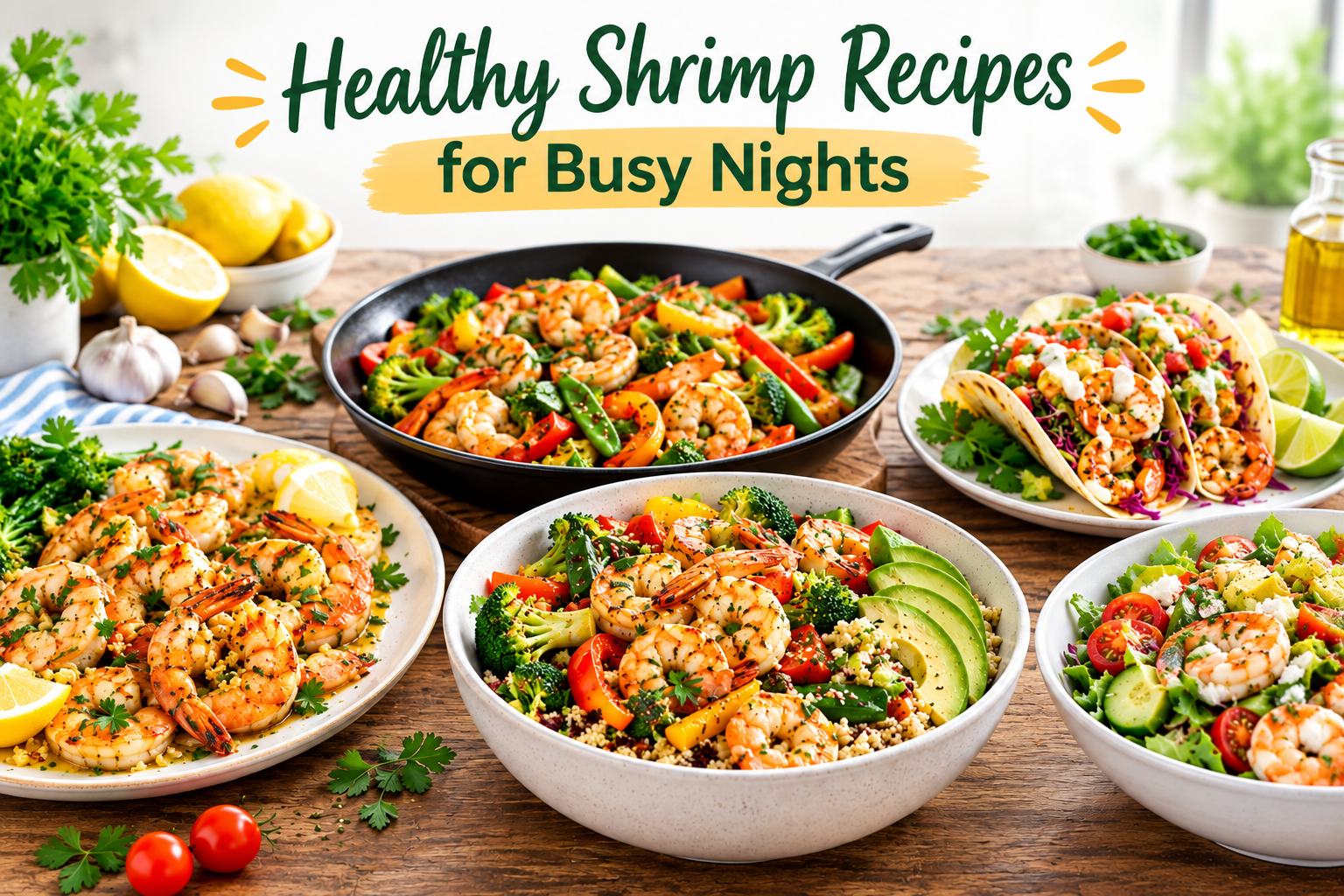
Try these healthy shrimp recipes for busy nights, including stir-fries, tacos, pasta, bowls, and sheet-pan dinners. Quick, easy, and protein-rich meals.
Healthy Shrimp Recipes for Busy Nights
Busy evenings have a way of making dinner feel harder than it really needs to be. You finish work, deal with errands, help the family, or simply run out of energy, and suddenly the thought of chopping vegetables and standing over the stove feels like a marathon. That is where healthy shrimp recipes for busy nights can make a real difference. Shrimp cooks remarkably quickly, works with everything from vegetables and whole grains to pasta and tacos, and can turn a handful of simple ingredients into a satisfying dinner without hours in the kitchen. Current recipe collections continue to highlight shrimp as a particularly useful option for quick weeknight meals, with many recipes designed around 15- to 30-minute cooking times.
Shrimp is also naturally rich in protein without bringing a large amount of fat to the plate. Food Network reports that a 3-ounce serving of shrimp provides about 83 calories, 18 grams of protein, and 1 gram of fat, along with nutrients such as selenium and vitamin B12. That makes shrimp a convenient foundation for balanced meals when you pair it with vegetables, whole grains, beans, or other nutrient-dense foods. The recipes below focus on that exact idea: plenty of flavor, straightforward ingredients, minimal cleanup, and realistic preparation for nights when your schedule is already packed.
Why Shrimp Is Perfect for Busy Weeknight Dinners
Shrimp has one major advantage over many other proteins: speed. A chicken breast may need considerable cooking time depending on its thickness, while shrimp can become tender and fully cooked in just a few minutes. Mayo Clinic Press specifically describes shrimp as a high-protein, low-calorie shellfish that cooks in minutes and makes a practical choice for weeknight dinners. This means you can build dinner around shrimp even when you have only a short window between arriving home and sitting down to eat.
Another advantage is versatility. Think of shrimp as a blank canvas rather than a single-style ingredient. Add garlic, lemon, and herbs and you have a Mediterranean-inspired dinner; add ginger, vegetables, and a light soy-based sauce and you have a stir-fry; add chili, lime, avocado, and tortillas and dinner suddenly feels like taco night. Current recipe roundups feature everything from shrimp pasta and stir-fries to salads, skewers, tacos, bowls, and one-pan meals, showing just how easily shrimp fits into different cuisines and meal styles.
A Fast-Cooking Source of Protein
Protein is one reason shrimp works particularly well in quick meals. You do not need a complicated recipe to turn shrimp into a substantial dinner. A modest serving combined with vegetables and a satisfying carbohydrate such as quinoa, brown rice, whole-wheat pasta, or potatoes can create a balanced plate without relying on heavy sauces.
The trick is to keep the cooking method simple. A hot skillet, a small amount of olive oil, garlic, spices, and a squeeze of lemon can transform shrimp in minutes. The American Heart Association also features shrimp in a simple stir-fry that provides 25 grams of protein and 8 grams of fiber per serving, demonstrating how shrimp can become part of a high-protein, vegetable-forward dinner.
Fresh or Frozen Shrimp Both Work
Do not assume you need fresh shrimp from the seafood counter every time you want a quick dinner. Frozen shrimp can be extremely convenient, especially when you are planning meals around a busy schedule. You can keep a bag in the freezer and use it whenever you need a fast protein source.
For the best texture, thaw frozen shrimp safely in the refrigerator when possible. Mayo Clinic Press recommends thawing frozen shrimp overnight in the refrigerator before cooking and choosing uncooked shrimp without sauces when purchasing frozen products. If you forget to thaw them, check the package directions for a safe faster-thawing method rather than leaving seafood sitting at room temperature.
How to Choose Shrimp for Healthy Recipes
Choosing shrimp does not have to be complicated. Start with the type of meal you are making and the amount of time you have. Peeled and deveined shrimp can save several minutes of preparation, which matters when dinner needs to happen quickly. Larger shrimp are useful for grilling, skewers, and sheet-pan meals, while smaller shrimp can work beautifully in fried rice, pasta, salads, and stir-fries.
Look at the ingredient list when purchasing packaged or frozen shrimp. Plain shrimp gives you the most control over seasoning, oil, and sauces. This is particularly useful if you are trying to keep a meal lighter or manage sodium. Once you have a plain protein base, you can build the flavor yourself with herbs, citrus, spices, garlic, ginger, or a small amount of a flavorful sauce.
What to Look for When Buying Shrimp
For everyday healthy dinners, peeled and deveined shrimp are often the most convenient option. If you have more time and want to save money, shell-on shrimp can work too, although preparation takes longer. Look for shrimp that has been properly refrigerated or frozen and follow storage instructions on the package.
You can also choose shrimp according to the recipe. Jumbo shrimp are visually appealing and hold up well on skewers or a sheet pan, whereas medium shrimp are convenient for pasta, bowls, and stir-fries. There is no single “best” size; the important thing is matching the shrimp to your cooking method and avoiding overcooking.
How to Thaw and Prepare Frozen Shrimp
If your shrimp are frozen, refrigerator thawing is the easiest planned approach. Place the shrimp in the refrigerator ahead of time so they are ready when you start dinner. Pat thawed shrimp dry with paper towels before cooking because excess surface moisture can prevent good browning in a skillet.
Once prepared, season them lightly before cooking. Shrimp do not need an elaborate marinade to taste great. Garlic, black pepper, paprika, lemon zest, chili flakes, or Italian herbs can provide plenty of flavor while keeping the ingredient list manageable.
10 Healthy Shrimp Recipes for Busy Nights
The following ideas are designed around the realities of weeknight cooking. They emphasize quick preparation, vegetables, whole-food ingredients, and simple cooking techniques. Nutrition values will vary according to ingredient brands and portion sizes, so treat any estimates as general guidance rather than laboratory measurements.
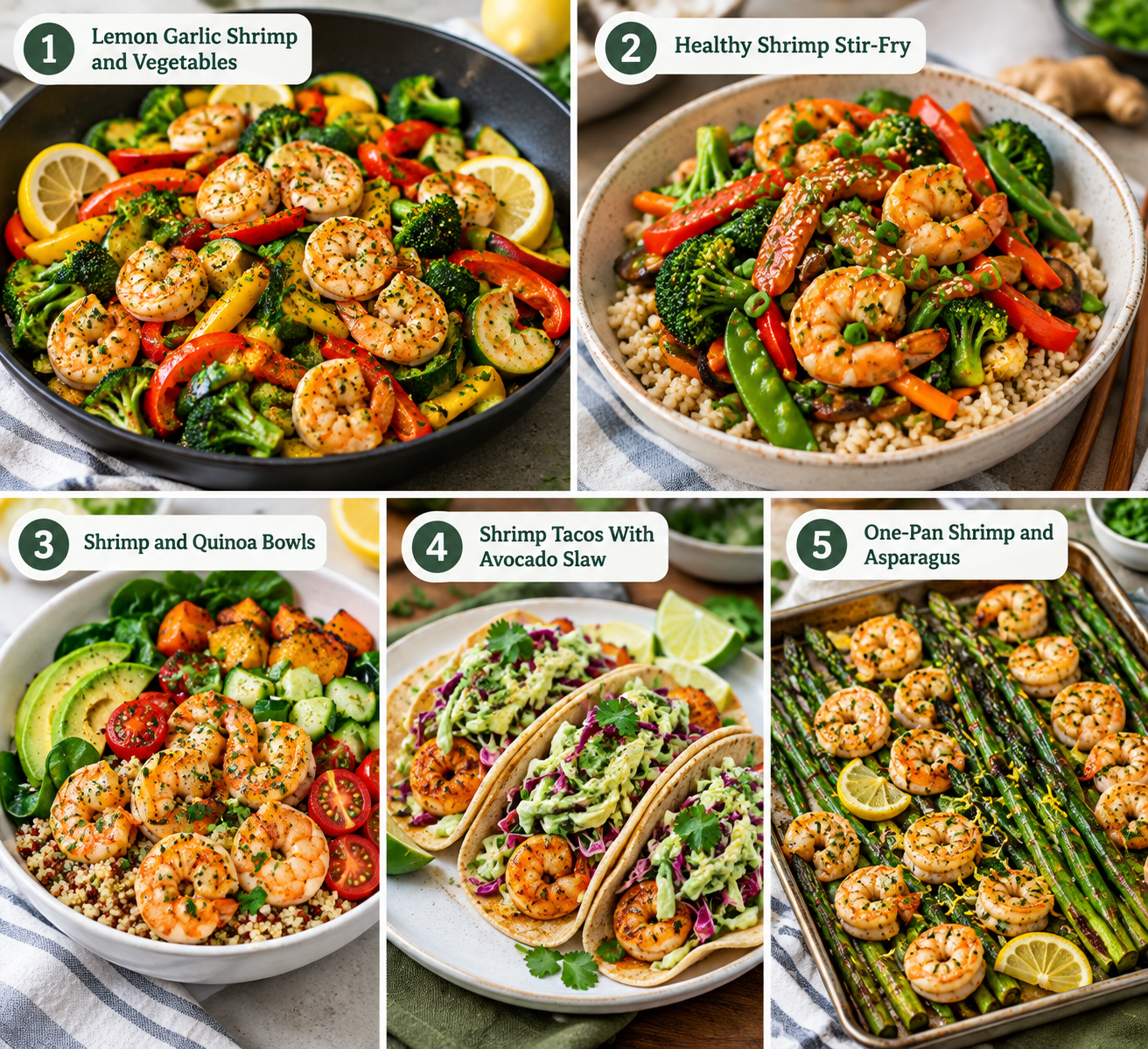
1. Lemon Garlic Shrimp and Vegetables
Few combinations are as reliable as lemon, garlic, shrimp, and vegetables. Heat a little olive oil in a large skillet, add minced garlic, and cook the shrimp until they become opaque and reach a safe cooked temperature. Add broccoli, zucchini, bell peppers, or asparagus, then finish everything with fresh lemon juice and black pepper.
This dinner works particularly well because the ingredients cook quickly without requiring multiple pans. You can serve it as-is for a lighter meal or add brown rice, quinoa, or roasted baby potatoes when you want something more substantial. A similar lemon-garlic shrimp concept is currently featured by Health eCooks as a five-ingredient, heart-conscious recipe, illustrating how a short ingredient list can still deliver a complete flavor profile.
Quick tip: Use pre-cut vegetables to reduce preparation time even further.
2. Healthy Shrimp Stir-Fry
When you need dinner quickly, a stir-fry is hard to beat. Start with a large skillet or wok and cook shrimp with broccoli, bell peppers, carrots, snap peas, or mushrooms. Add a simple sauce made from low-sodium soy sauce, fresh ginger, garlic, lime juice, and a small amount of honey if you want sweetness.
Serve your stir-fry over brown rice, quinoa, or cauliflower rice depending on your preference. The American Heart Association describes a simple chicken-or-shrimp stir-fry as a meal that can feed a family in about 10 minutes when ingredients are prepared beforehand.
The beauty of this dinner is flexibility. If you have half a bell pepper sitting in the refrigerator, use it. If your broccoli needs to be used, throw it in. Stir-fries are essentially the weeknight equivalent of cleaning out your refrigerator while still creating something that tastes intentional.
3. Shrimp and Quinoa Bowls
For a balanced dinner that also works well for meal prep, try shrimp and quinoa bowls. Cook quinoa in advance, then quickly sauté shrimp with garlic, paprika, lemon juice, and black pepper. Add cucumber, tomatoes, spinach, roasted vegetables, or avocado to create layers of texture and flavor.
Quinoa provides a satisfying whole-grain-style base while vegetables add color and fiber. Shrimp supplies the protein without requiring a long cooking time. A recent dietitian-reviewed lemon-garlic shrimp and quinoa recipe from Health eCooks also pairs shrimp with quinoa as a nutrient-dense combination and is designed to be prepared in about 30 minutes.
For meal prep, store the shrimp, quinoa, and vegetables in separate sections when possible. Add dressing or lemon juice shortly before eating so the vegetables stay fresh and crisp.
4. Shrimp Tacos With Avocado Slaw
Tacos can absolutely fit into a healthy weeknight routine. Season shrimp with cumin, smoked paprika, chili powder, garlic powder, and lime juice. Cook them in a hot skillet for just a few minutes, then tuck them into small whole-grain or corn tortillas.
Instead of a heavy creamy topping, make a quick avocado slaw using shredded cabbage, avocado, lime juice, cilantro, and a pinch of salt. The cabbage adds crunch while avocado brings creaminess without requiring a rich sauce. Add sliced tomatoes, jalapeño, or a spoonful of plain Greek yogurt if desired.
This is also an excellent family-style dinner because everyone can assemble their own tacos. Put the shrimp, tortillas, slaw, and toppings on the table and let everyone build a plate. It feels more like a fun meal than a rushed weeknight dinner.
5. One-Pan Shrimp and Asparagus
One-pan dinners are a busy cook's best friend because they reduce both cooking time and cleanup. Arrange shrimp and asparagus on a baking sheet, drizzle lightly with olive oil, and season with garlic, lemon zest, paprika, black pepper, and herbs.
Bake until the shrimp are cooked through and the asparagus is tender-crisp. Current recipe collections include shrimp-and-asparagus dishes that can be prepared in around 20 minutes, reinforcing why this combination is popular for fast weeknight meals.
You can turn this into a more complete dinner by adding baby potatoes or serving it alongside quinoa. For even faster preparation, use small potatoes that have been partially cooked beforehand. The result is a colorful meal with very little hands-on work.
6. Mediterranean Shrimp Skillet
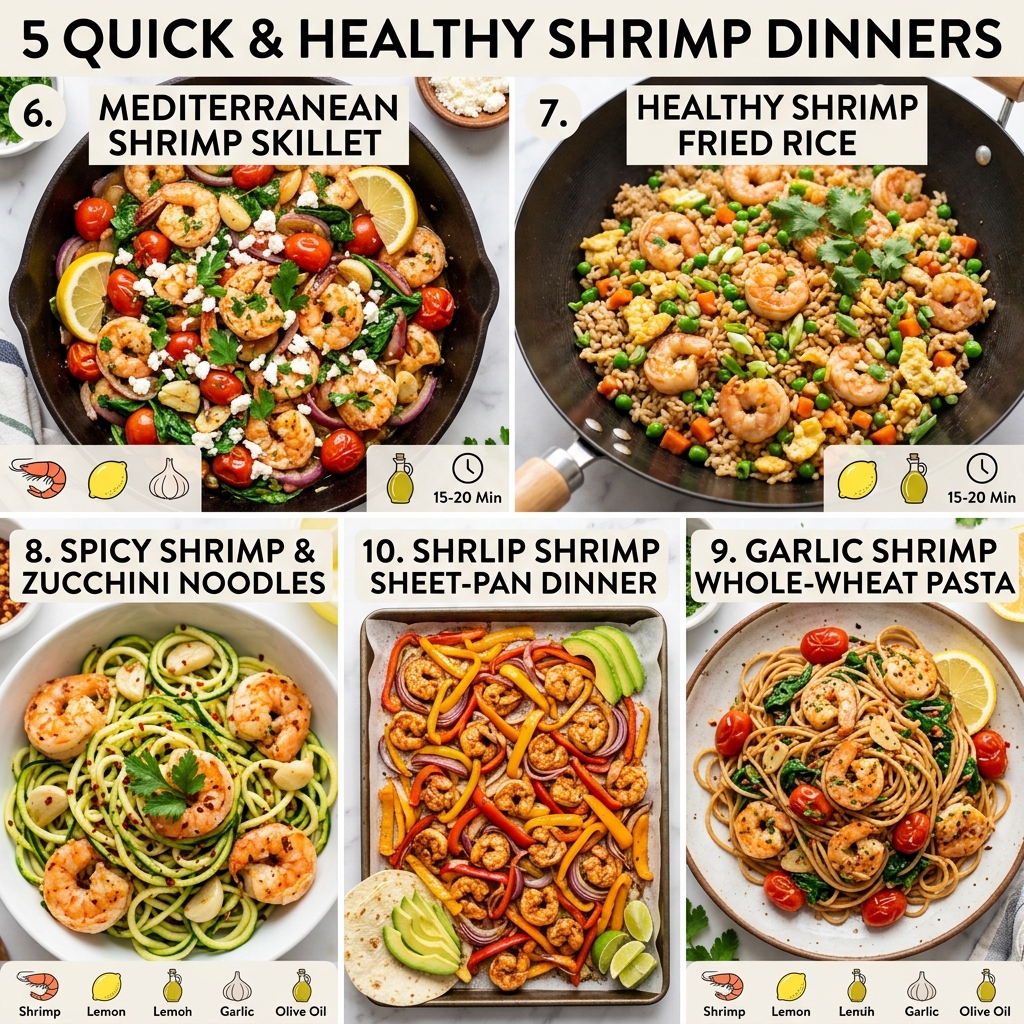
If you love bright flavors, make a Mediterranean shrimp skillet with tomatoes, spinach, garlic, onions, lemon, and herbs. Sauté the vegetables first, add shrimp, and finish with lemon juice and fresh parsley. A small amount of feta can provide a salty, creamy contrast.
This recipe is especially useful when you want something that tastes restaurant-inspired without requiring restaurant-level effort. The combination of vegetables, lean protein, herbs, and citrus creates a meal that feels fresh rather than heavy.
Serve it with whole-grain pita, quinoa, brown rice, or a simple green salad. You can also spoon the shrimp and vegetables over couscous for an especially quick dinner.
7. Healthy Shrimp Fried Rice
Fried rice is an excellent way to turn leftover cooked rice into a complete dinner. Use cold cooked brown rice or white rice, then stir-fry it with shrimp, peas, carrots, scrambled egg, green onions, garlic, and a modest amount of low-sodium soy sauce.
The secret is not drowning the rice in oil or sauce. A hot pan and a relatively small amount of cooking oil allow the ingredients to develop flavor while keeping the dish lighter. You can also increase the vegetables substantially to make the meal more filling without relying on a huge amount of rice.
This recipe is ideal for busy nights because much of the work can happen before dinner. If you already have cooked rice and chopped vegetables in the refrigerator, the entire meal comes together rapidly.
8. Spicy Shrimp and Zucchini Noodles
For a lighter, vegetable-forward dinner, combine shrimp with zucchini noodles. Sauté garlic and red pepper flakes in olive oil, add shrimp, and then toss in spiralized zucchini. Finish with lemon juice and fresh parsley.
The zucchini noodles cook quickly, so watch them carefully. You want them tender but not watery. If you prefer a more substantial dish, combine half zucchini noodles with half whole-wheat spaghetti.
This recipe is particularly useful when you want a satisfying dinner without a heavy cream sauce. The garlic and chili provide strong flavor, while lemon cuts through the richness of the olive oil and keeps the dish bright.
9. Garlic Shrimp Whole-Wheat Pasta
Pasta night does not have to mean a heavy meal. Cook whole-wheat spaghetti or another whole-grain pasta while you sauté shrimp with garlic, olive oil, cherry tomatoes, spinach, and chili flakes.
Reserve a little pasta water before draining. Toss the pasta with the shrimp mixture and add a splash of pasta water to create a silky coating without needing a large quantity of cream or cheese. Finish with lemon juice and parsley.
The combination gives you carbohydrates for energy, protein from shrimp, and vegetables for additional texture and nutrients. If your family prefers traditional pasta, simply use regular spaghetti and increase the vegetable portion.
10. Shrimp Fajita Sheet-Pan Dinner
Sheet-pan fajitas are another excellent solution when you want bold flavor with minimal effort. Toss shrimp, sliced bell peppers, and onions with olive oil, chili powder, cumin, paprika, garlic, and lime juice. Spread everything across a sheet pan and cook until the shrimp are done and the vegetables are tender.
Serve the mixture in tortillas, over brown rice, or on a large salad. You can add avocado, salsa, cilantro, or plain Greek yogurt as toppings.
The biggest advantage is cleanup. Instead of cooking several components separately, the protein and vegetables cook together. That makes this recipe especially useful when you want a homemade dinner but have no interest in washing a mountain of dishes afterward.
Tips for Making Healthy Shrimp Dinners Faster
The fastest shrimp dinners usually begin before you start cooking. Keep a few versatile ingredients available at all times: frozen shrimp, microwaveable or pre-cooked whole grains, frozen vegetables, garlic, lemons, herbs, and a few basic spices. With those ingredients on hand, dinner becomes a matter of combining components rather than starting from zero.
Meal prep can also make a huge difference. Cook a batch of quinoa or brown rice once and use it across several meals. Wash and chop vegetables ahead of time. Prepare a simple sauce using lemon juice, garlic, herbs, and olive oil and keep it refrigerated for a short period according to food-safety guidance.
Smart Meal Prep and Easy Ingredient Swaps
Do not feel locked into a recipe. If asparagus is expensive or unavailable, use broccoli. If quinoa is not your favorite, use brown rice. If you have spinach instead of kale, make the substitution.
Here are a few easy swaps:
· Use frozen vegetables when fresh vegetables are inconvenient.
· Replace rice with quinoa, couscous, or cauliflower rice.
· Use corn tortillas instead of flour tortillas.
· Replace heavy creamy sauces with Greek yogurt-based sauces.
· Add beans or chickpeas to bowls for extra fiber.
· Use lemon, lime, herbs, garlic, and spices to create flavor without relying heavily on sauces.
These small changes make healthy cooking more realistic. You do not need a perfect refrigerator or a complicated meal plan. You need ingredients that can work together in several different ways.
Common Mistakes to Avoid When Cooking Shrimp
The biggest mistake people make with shrimp is overcooking it. Shrimp cook quickly, and leaving them in the pan too long can turn them rubbery and tough. Watch the shrimp rather than blindly following a long cooking time because size, starting temperature, and cooking method can all affect how quickly they cook.
Another common problem is overcrowding the pan. If you place too many wet shrimp into a small skillet, they may steam rather than develop the flavorful browning you want. Pat them dry before cooking and use a large enough pan to give them room.
Finally, do not assume that a recipe becomes healthy simply because it contains shrimp. A large amount of butter, creamy sauce, refined carbohydrates, or salty processed ingredients can dramatically change the nutritional profile of a dish. Shrimp is a useful lean protein, but the overall meal matters. Building your plate around shrimp, vegetables, whole grains, and moderate amounts of healthy fats is a much more reliable approach.
Conclusion
Healthy shrimp recipes for busy nights prove that nutritious home cooking does not need to take hours. Shrimp cooks in minutes, provides substantial protein, and works across a remarkable range of flavors, from lemon-garlic skillet meals to spicy tacos, stir-fries, pasta, bowls, and sheet-pan dinners. Current nutrition and recipe sources continue to recognize shrimp as a convenient high-protein option for quick meals, with Food Network reporting approximately 18 grams of protein in a 3-ounce serving and Mayo Clinic Press highlighting its quick cooking time.
The key is to keep your approach simple. Stock frozen shrimp, prepare a few versatile vegetables and grains ahead of time, and rely on strong flavor builders such as garlic, lemon, lime, ginger, herbs, and spices. Once you have those basics, a busy evening does not have to end with takeout. Sometimes the best dinner is the one that gets from skillet to table before you have time to wonder what you should cook.
FAQs
1. Are shrimp healthy for a weeknight dinner?
Shrimp can be a nutritious choice because it is relatively low in calories and high in protein. Food Network lists approximately 83 calories, 18 grams of protein, and 1 gram of fat for a 3-ounce serving. The overall nutrition of your meal still depends on the sauces, cooking fats, grains, and other ingredients you serve with it.
2. How long does shrimp take to cook?
Shrimp generally cook very quickly, which is one of their biggest advantages for weeknight dinners. Mayo Clinic Press specifically notes that shrimp cook in minutes. The exact time varies with shrimp size and cooking method, so cook until the shrimp are opaque and safely cooked rather than relying only on the clock.
3. Can I use frozen shrimp for healthy shrimp recipes?
Yes. Frozen shrimp can be a convenient option for busy households. Mayo Clinic Press recommends thawing frozen shrimp in the refrigerator before cooking and choosing plain uncooked shrimp when possible. Keeping a bag in the freezer can make last-minute dinners much easier.
4. What vegetables go well with shrimp?
Shrimp pairs well with broccoli, asparagus, zucchini, bell peppers, spinach, tomatoes, snap peas, carrots, cabbage, and mushrooms. Because shrimp cooks quickly, choose vegetables that can either cook rapidly or be partially prepared in advance. This makes stir-fries, skillet dinners, bowls, and sheet-pan meals particularly convenient.
5. What is the easiest healthy shrimp dinner?
A simple lemon garlic shrimp and vegetable skillet is one of the easiest options. Cook shrimp with a small amount of olive oil, garlic, your favorite quick-cooking vegetables, lemon juice, and black pepper. Serve it alone for a lighter meal or add brown rice, quinoa, or whole-grain pasta when you want a more filling dinner.
Comments
0No comments yet — be the first to share your thoughts!