Healthy Make-Ahead Dinner Recipes for Busy Weeknights
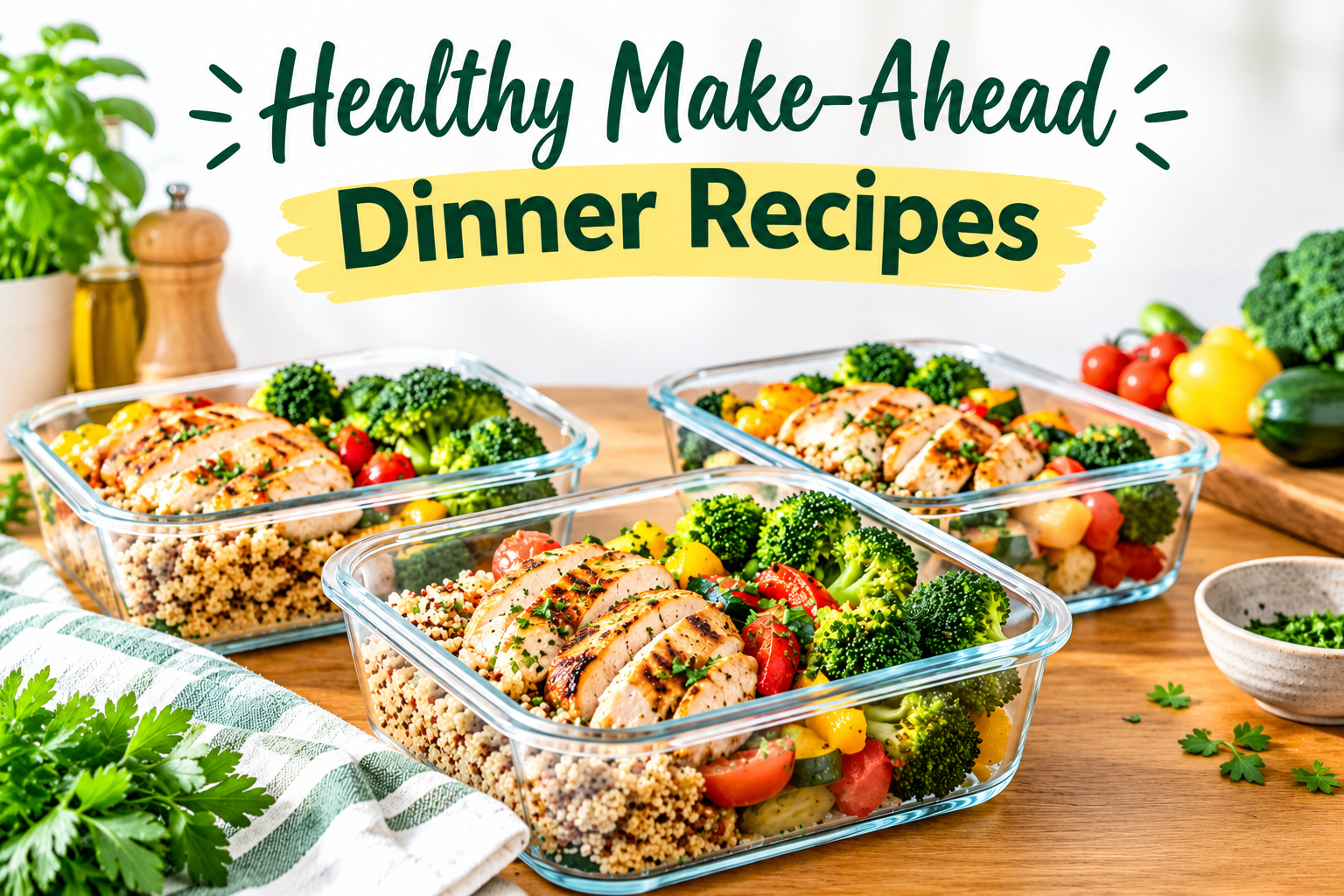
Discover 10 healthy make-ahead dinner recipes for busy weeknights. Easy meal prep ideas with chicken, vegetables, beans, salmon, and whole grains.
Healthy Make-Ahead Dinner Recipes
Busy evenings can make healthy eating feel harder than it really needs to be. After work, school, errands, commuting, or taking care of family, the last thing you may want to do is start chopping vegetables and cooking an entire dinner from scratch. That is where healthy make-ahead dinner recipes can completely change your routine. Instead of waiting until everyone is hungry to decide what is for dinner, you prepare part or all of the meal earlier, refrigerate or freeze it, and simply finish or reheat it when you need it.
Make-ahead cooking does not have to mean eating the same boring meal every night. With the right recipes, you can prepare flavorful chicken bowls, hearty chili, vegetable curry, pasta bakes, salmon meals, and family-friendly casseroles that remain satisfying after reheating. USDA guidance also encourages planning meals, preparing ingredients ahead, and using leftovers creatively to save time and money.
The recipes below are designed around practical ingredients that work well for meal prep, busy weeknights, family dinners, and packed schedules. You can prepare several portions at once, divide them into containers, and have dinner ready when the evening gets hectic.
Why Make-Ahead Dinners Are a Smart Choice
A good make-ahead dinner is like having a backup plan waiting in your refrigerator. When dinner is already prepared, you are much less likely to reach for takeaway food simply because you are tired or short on time. The biggest advantage is not just convenience; it is the ability to make thoughtful food choices when you actually have the energy to think about them. During a weekend or quieter afternoon, you can wash vegetables, cook grains, prepare proteins, make sauces, and assemble complete meals without the pressure of a hungry family waiting at the table.
Make-ahead dinners can also make grocery shopping easier because you know what you are going to cook before you enter the store. Instead of buying random ingredients that eventually sit unused, you can build your shopping list around a handful of recipes. USDA meal-planning guidance specifically recommends planning how ingredients can be mixed and matched and using leftovers in new meals. This approach can reduce food waste while giving you more flexibility throughout the week.
Save Time on Busy Weeknights
The real magic of make-ahead cooking happens on the evenings when your schedule gets chaotic. Imagine coming home at 6:30 p.m. and knowing that dinner only needs to be reheated rather than cooked from scratch. That difference can turn a stressful evening into a much calmer one. Instead of spending 45 minutes preparing food, washing cutting boards, and cleaning pans, you may only need to reheat a prepared meal and add a simple salad or piece of fruit.
Batch cooking is particularly useful when several meals use similar ingredients. You might roast a large tray of vegetables, cook several chicken breasts, prepare quinoa or brown rice, and make one flavorful sauce. Those components can then become different dinners throughout the week. One night you can build a Mediterranean bowl, another night you can use the chicken in fajita bowls, and later you can combine vegetables with grains and beans.
Make Healthy Eating More Convenient
Healthy food needs to be convenient if you want it to become part of your normal routine. A beautifully planned recipe that requires an hour of cooking every night may sound appealing on Sunday but become difficult by Wednesday. Make-ahead recipes solve that problem by moving some of the work to a time when you have more energy.
The key is to prepare foods that actually hold up well. Soups, stews, curries, chili, casseroles, cooked grains, roasted vegetables, and many chicken dishes are particularly useful because their flavors can develop as they sit. Fresh toppings can be added later to bring back texture and brightness. A squeeze of lemon, chopped herbs, avocado, Greek yogurt, or a crunchy salad can make a reheated meal feel much fresher.
What Makes a Make-Ahead Dinner Healthy?
A make-ahead dinner should not simply be a large quantity of food cooked in advance. The goal is to create a balanced meal that provides protein, fiber, vegetables, healthy carbohydrates, and satisfying fats without relying heavily on excess sodium, added sugar, or saturated fat. USDA healthy food preparation guidance recommends including a variety of fruits, vegetables, grains, protein foods, and dairy or fortified alternatives while limiting added sugars, saturated fat, and sodium.
A practical plate might include a lean protein such as chicken, turkey, fish, beans, lentils, tofu, or eggs; several servings of colorful vegetables; a fiber-rich carbohydrate such as quinoa, brown rice, oats, potatoes, or whole-grain pasta; and a modest amount of healthy fat from ingredients such as olive oil, avocado, nuts, or seeds. This combination makes dinner more satisfying and gives you plenty of opportunities to change flavors without completely changing your shopping list.
Build Meals Around Protein, Vegetables, and Whole Grains
Protein is especially useful in make-ahead meals because it helps turn a side dish into a complete dinner. Chicken, turkey, salmon, beans, lentils, tofu, and Greek yogurt can all contribute protein while fitting into different eating styles. Vegetables add color, texture, vitamins, minerals, and fiber, while whole grains and starchy vegetables provide carbohydrates that can make the meal feel substantial.
You do not need to make every dinner complicated. A simple formula works surprisingly well: one protein + two vegetables + one high-fiber carbohydrate + one flavorful sauce. For example, chicken, broccoli, roasted peppers, brown rice, and a lemon-herb dressing can become a complete meal with very little effort. Another combination could be black beans, sweet potato, spinach, quinoa, and avocado-lime salsa.
Choose Better Cooking Methods and Flavor Boosters
How you cook your ingredients matters just as much as which ingredients you choose. Baking, roasting, grilling, steaming, sautéing, and slow cooking can produce flavorful meals without requiring deep frying. USDA guidance also recommends methods such as baking, grilling, broiling, and roasting as alternatives to frying.
Flavor does not have to come from excessive salt or heavy sauces. Garlic, ginger, lemon, lime, smoked paprika, cumin, chili flakes, fresh herbs, black pepper, vinegar, mustard, and spice blends can transform basic ingredients. This is especially important for meal prep because strong but fresh flavors help prevent prepared meals from becoming boring after several servings.
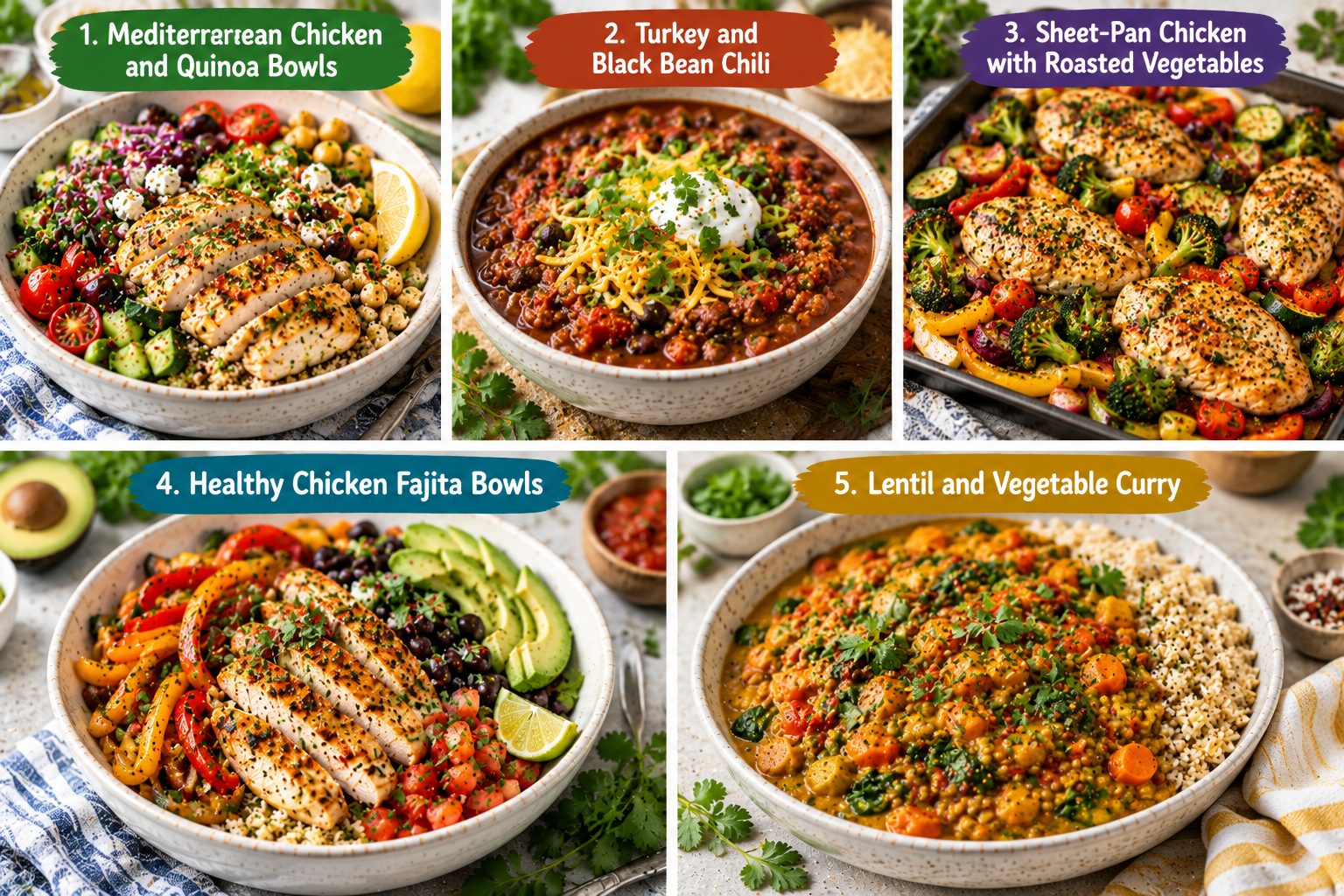
1. Mediterranean Chicken and Quinoa Bowls
Mediterranean chicken and quinoa bowls are an excellent starting point if you want a make-ahead dinner that feels fresh rather than heavy. Cooked quinoa forms the base, while seasoned chicken provides protein and roasted vegetables add sweetness and texture. You can include cucumber, cherry tomatoes, spinach, red onion, olives, or roasted peppers depending on what you have available.
For a simple version, season chicken breast with garlic, oregano, paprika, black pepper, lemon juice, and olive oil before baking or grilling. Cook quinoa separately and let both components cool before assembling the meal. Add roasted zucchini, peppers, and broccoli, then finish with a small container of tzatziki or lemon-yogurt sauce. The result is colorful, filling, and easy to portion into individual containers.
How to Prep and Store Them
Keep wetter ingredients separate when possible. Store the quinoa, chicken, and roasted vegetables together, but place cucumber, fresh greens, or sauce in separate compartments if you want the best texture. When you are ready to eat, add the fresh ingredients after reheating.
This meal is also easy to customize. Swap quinoa for brown rice, use chickpeas instead of some of the chicken, or replace the vegetables with whatever is in season. Mediterranean-style meal prep remains popular because it naturally combines vegetables, legumes, whole grains, lean proteins, and healthy fats. Current recipe collections also continue to emphasize these ingredients for practical, balanced meals.
2. Turkey and Black Bean Chili
Turkey and black bean chili is one of the easiest healthy make-ahead dinner recipes because it often tastes even better after sitting overnight. The combination of lean ground turkey, black beans, tomatoes, onions, peppers, and spices creates a hearty meal without requiring complicated preparation. You can make a large pot on the weekend and portion it into individual containers for several dinners.
Start by browning lean ground turkey with onion and garlic. Add diced tomatoes, black beans, bell peppers, chili powder, cumin, smoked paprika, and a little broth. Let everything simmer until the vegetables are tender and the flavors come together. You can serve the chili with brown rice, baked sweet potato, whole-grain tortilla chips, or a simple green salad.
The best part is flexibility. If you prefer a vegetarian dinner, replace the turkey with extra beans, lentils, or plant-based mince. If you want more vegetables, add zucchini, corn, spinach, or carrots. For a fresh finish, top your bowl with avocado, chopped cilantro, plain Greek yogurt, or a squeeze of lime.
3. Sheet-Pan Chicken with Roasted Vegetables
Sheet-pan dinners are perfect for people who want to meal prep without filling the kitchen with dirty dishes. Chicken, broccoli, carrots, bell peppers, onions, and baby potatoes can all roast together on one large tray. Season everything with olive oil, garlic powder, paprika, Italian herbs, black pepper, and lemon zest before placing it in the oven.
The trick is to cut ingredients into similar-sized pieces so they cook more evenly. If you use vegetables that cook faster than potatoes or carrots, add them later in the roasting process. Once everything is cooked, divide the meal into containers and add a small serving of sauce or dressing when you are ready to eat.
This style of cooking also makes it easy to change the flavor profile. Use cumin and coriander for a Middle Eastern-inspired version, taco seasoning for a Tex-Mex bowl, or rosemary and garlic for a classic roast dinner. One basic method can therefore create several completely different meals.
4. Healthy Chicken Fajita Bowls
Chicken fajita bowls bring the fun of fajitas into a meal-prep-friendly format. They combine seasoned chicken, sautéed peppers and onions, brown rice or quinoa, black beans, and fresh toppings. Instead of assembling tortillas at dinner time, everything is prepared in advance and stored in individual containers.
Season sliced chicken with chili powder, cumin, paprika, garlic, lime juice, and black pepper. Cook it in a large skillet, then sauté sliced peppers and onions until tender with a little caramelization. Prepare brown rice and divide it between containers before adding chicken, vegetables, and black beans.
Keep salsa, avocado, fresh cilantro, and lime wedges separate until serving. This small step makes a big difference because fresh toppings provide the contrast that reheated food sometimes lacks. You can also transform leftovers into wraps, salads, stuffed baked potatoes, or quesadillas.
5. Lentil and Vegetable Curry
A lentil and vegetable curry is an excellent vegetarian make-ahead dinner because lentils provide plant-based protein and fiber while absorbing the flavors of the sauce. You can use red or green lentils depending on the texture you prefer. Add tomatoes, spinach, carrots, cauliflower, peas, or sweet potato for a colorful and nutrient-rich meal.
Cook onion, garlic, and ginger until fragrant, then add curry powder, turmeric, cumin, and other spices. Stir in lentils, tomatoes, and vegetable broth, and simmer until the lentils are tender. Add spinach near the end so it stays vibrant and does not become overcooked.
Serve the curry with brown rice, quinoa, or a modest portion of whole-grain naan. It reheats well and can be frozen in individual portions. If the curry thickens in the refrigerator, simply add a small splash of water or broth when reheating.
6. Turkey Meatballs with Whole-Wheat Pasta
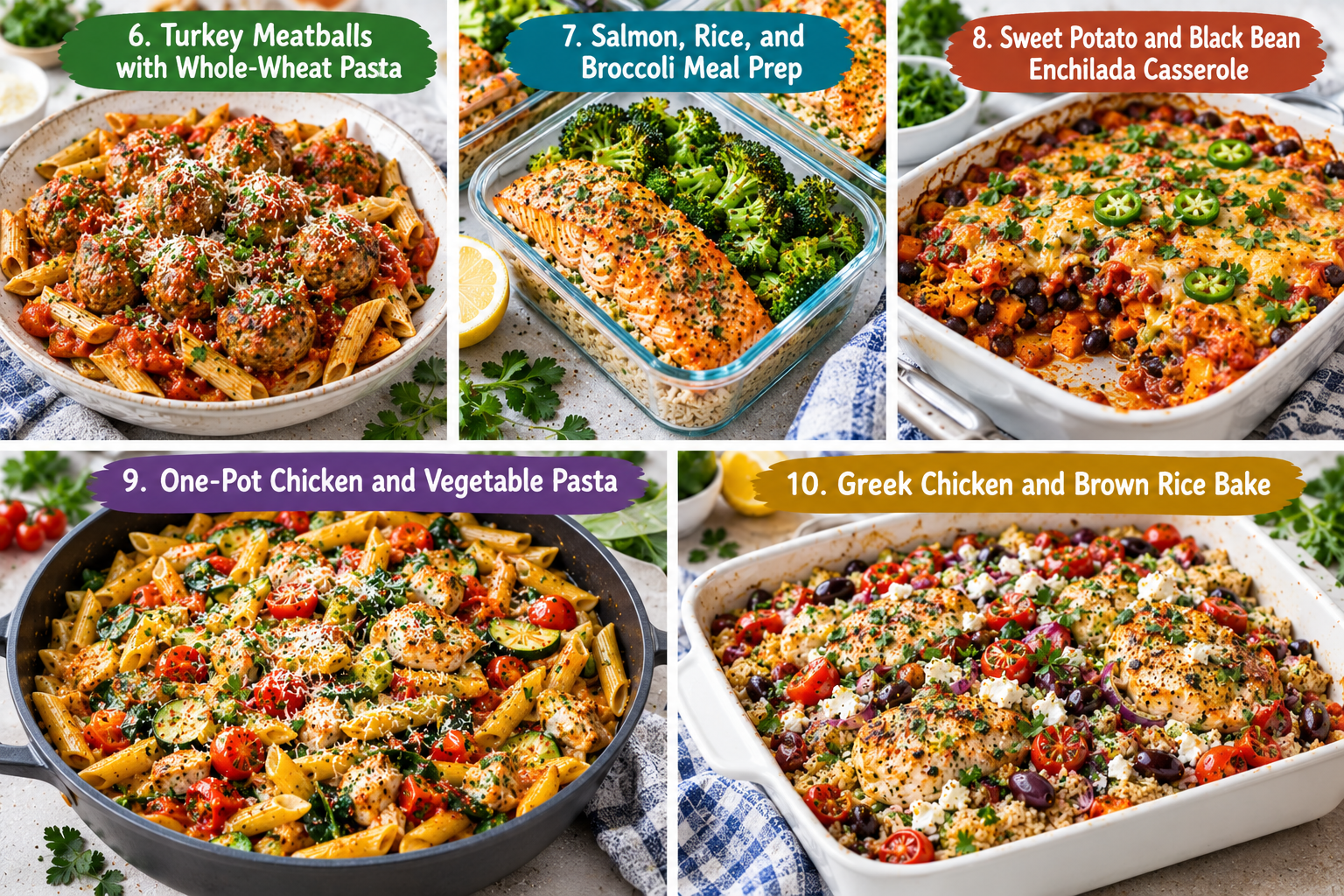
Turkey meatballs with whole-wheat pasta are a family-friendly option that can be prepared in a large batch. Lean turkey is combined with garlic, herbs, egg, breadcrumbs, and seasonings before being baked until cooked through. Baking the meatballs instead of deep frying keeps the preparation simple and reduces the need for extra oil.
Prepare a tomato sauce with crushed tomatoes, onion, garlic, basil, oregano, and black pepper. Toss the sauce with whole-wheat pasta and portion it with several turkey meatballs. You can also add spinach, mushrooms, zucchini, or roasted peppers to increase the vegetable content.
For better texture after reheating, slightly undercook the pasta rather than cooking it until very soft. It will continue cooking when reheated. Another useful trick is to store a little extra tomato sauce separately and add it before reheating if the pasta appears dry.
7. Salmon, Rice, and Broccoli Meal Prep
Salmon, rice, and broccoli create a simple dinner that looks and tastes much more interesting than typical meal-prep food. Salmon provides protein and is naturally rich in omega-3 fatty acids, while broccoli adds fiber and micronutrients. Brown rice, quinoa, or another whole grain can round out the meal.
Season salmon with lemon, garlic, black pepper, paprika, and a small amount of olive oil. Roast or bake it until cooked through, while steaming or roasting broccoli separately. Divide the salmon, broccoli, and cooked grain into containers and refrigerate promptly.
Because fish can become dry when over-reheated, use gentle reheating. You can also eat the salmon cold or at room temperature in a grain salad. A lemon-yogurt sauce, tahini dressing, or herb sauce can be stored separately and added just before serving.
8. Sweet Potato and Black Bean Enchilada Casserole
If you want a vegetarian dinner that feels like comfort food, try a sweet potato and black bean enchilada casserole. Sweet potatoes provide natural sweetness and a soft texture, while black beans add protein and fiber. Corn tortillas, enchilada sauce, peppers, onions, and a moderate amount of cheese bring everything together.
Roast diced sweet potatoes until tender. Layer them with black beans, sautéed peppers and onions, tortillas, enchilada sauce, and cheese in a baking dish. Bake until bubbling and lightly golden, then allow the casserole to cool before dividing it into portions.
This recipe is especially useful for families because everyone can customize the toppings. Add avocado, cilantro, Greek yogurt, salsa, or pickled onions after reheating. You can also freeze individual portions for evenings when cooking feels impossible.
9. One-Pot Chicken and Vegetable Pasta
One-pot chicken and vegetable pasta is designed for the nights when you want maximum convenience with minimum cleanup. Chicken breast or boneless chicken thigh can be combined with whole-wheat pasta, tomatoes, zucchini, spinach, mushrooms, and a flavorful broth-based sauce. Everything cooks in one pot, making preparation easier.
Begin by sautéing onion and chicken with garlic and Italian herbs. Add chopped vegetables, tomatoes, broth, and pasta, then simmer until the pasta is tender and the chicken is cooked through. Stir in spinach near the end and finish with lemon juice or a small amount of Parmesan.
When preparing pasta for meal prep, avoid overcooking it. A slightly firm texture will hold up better after refrigeration and reheating. You can also reserve a little cooking liquid or sauce to loosen the dish later.
10. Greek Chicken and Brown Rice Bake
A Greek chicken and brown rice bake combines familiar ingredients in one comforting dish. Chicken, brown rice, tomatoes, spinach, zucchini, lemon, garlic, oregano, and feta create a balanced combination of savory and fresh flavors. It is an excellent choice when you want a dinner that can be prepared in one baking dish.
Mix cooked or partially cooked brown rice with vegetables, herbs, lemon juice, and seasoning. Add seasoned chicken pieces and bake until the chicken reaches a safe internal temperature and the rice is tender. Finish with a modest amount of feta and fresh herbs.
The dish can be portioned directly from the baking dish once it has cooled. For a lower-carbohydrate variation, replace some of the rice with cauliflower rice or additional vegetables. For extra protein, add chickpeas to the rice mixture.
How to Store and Reheat Make-Ahead Dinners Safely
Meal prep is only useful when the food is handled safely. USDA guidance states that perishable foods and leftovers should generally be refrigerated within two hours, or within one hour when the surrounding temperature is above 90°F (32°C). Properly refrigerated leftovers are generally safe for about three to four days.
Use shallow containers when possible so food can cool more efficiently. Keep your refrigerator at 40°F (4.4°C) or below, and your freezer at 0°F (-17.7°C) or below, according to USDA storage guidance. Label containers with the preparation date so you know which meals should be eaten first.
When reheating leftovers, USDA recommends heating them thoroughly to 165°F (73.9°C). In a microwave, cover the food and stir or rotate it during heating so that cold spots are minimized. Remember that reheating food does not make food that was improperly stored safe; some bacteria can produce toxins that are not destroyed by reheating.
Make-Ahead Dinner Meal Prep Tips for Busy Families
The easiest way to make meal prep sustainable is to stop trying to cook everything at once. Choose two or three main dinners rather than preparing seven completely different recipes. Cook a large batch of one grain, roast a tray of vegetables, prepare one or two proteins, and then combine them in different ways.
Think of your refrigerator as a collection of building blocks rather than a collection of finished meals. Cooked chicken can become a rice bowl, salad, wrap, or pasta dish. Roasted vegetables can accompany salmon one night and become part of a grain bowl the next. This approach gives you variety without requiring a completely different shopping list every day.
It is also smart to keep a few emergency ingredients available. Frozen vegetables, canned beans, whole-grain pasta, canned tomatoes, eggs, tuna, brown rice, and low-sodium broth can rescue a week when your original meal-prep plan does not go perfectly. Healthy eating does not require perfection; it requires enough convenient options that the healthier choice is usually the easier choice.
How to Freeze Make-Ahead Dinners
Freezing can take make-ahead cooking to another level because it allows you to prepare meals weeks in advance rather than only several days ahead. Chili, soups, stews, curries, casseroles, meatballs, and many cooked grain dishes generally freeze well. Foods with delicate fresh vegetables, creamy sauces, or crispy coatings may change texture after freezing, so they are often better prepared fresh or refrigerated.
Divide meals into individual portions before freezing. This makes thawing faster and prevents you from repeatedly freezing and thawing the same large container. Use freezer-safe containers or bags and leave enough space for food to expand as it freezes.
For safe thawing, USDA recommends the refrigerator, cold water, or microwave rather than leaving frozen food at room temperature. Refrigerator-thawed leftovers should generally be used within three to four days, while microwave-thawed food should be reheated to 165°F.
Conclusion
Healthy make-ahead dinner recipes can turn chaotic weeknights into something much easier to manage. The secret is not complicated cooking; it is preparation that works with your schedule. When you have nutritious meals already waiting in the refrigerator or freezer, dinner becomes a simple decision instead of another task competing for your attention.
Start with two recipes from this list rather than trying to transform your entire routine overnight. A batch of turkey chili and Mediterranean chicken bowls, for example, can give you several easy dinners with different flavors. Once you become comfortable with meal prep, you can experiment with salmon bowls, lentil curry, enchilada casseroles, turkey meatballs, and freezer-friendly dishes.
The most useful make-ahead dinner is the one you will actually enjoy eating. Choose foods you like, add plenty of vegetables, include a satisfying protein source, use whole grains or other high-fiber carbohydrates when they fit your eating style, and keep fresh toppings separate when necessary. With a little planning, healthy meal prep dinners can become one of the easiest ways to make busy weeknights calmer, more affordable, and more delicious.
Frequently Asked Questions
1. What are the best healthy make-ahead dinners for busy weeknights?
The best choices are meals that maintain their texture and flavor after refrigeration or freezing. Turkey chili, lentil curry, chicken bowls, casseroles, meatballs, and grain-based meal-prep bowls are particularly practical. They can be portioned ahead and reheated when needed.
2. How many days can make-ahead dinners stay in the refrigerator?
USDA guidance says properly refrigerated leftovers are generally safe for three to four days. Refrigerate perishable foods promptly and keep the refrigerator at 40°F (4.4°C) or below.
3. Can healthy make-ahead dinners be frozen?
Yes. Chili, soups, curries, meatballs, casseroles, and many cooked grain-based meals freeze particularly well. Portion them before freezing and thaw them safely in the refrigerator, cold water, or microwave according to USDA guidance.
4. How do I stop meal-prep dinners from becoming boring?
Use different sauces, herbs, spices, and toppings. The same cooked chicken and vegetables can become a Mediterranean bowl with lemon and herbs, a fajita bowl with cumin and lime, or a salad with a yogurt-based dressing. Keeping fresh toppings separate also improves texture.
5. What temperature should leftovers reach when reheated?
USDA recommends reheating leftovers to 165°F (73.9°C) throughout. When using a microwave, cover the food and stir or rotate it during heating to help distribute the heat evenly.
Comments
0No comments yet — be the first to share your thoughts!