Healthy Homemade Soup Recipes: 10 Easy & Nutritious Ideas
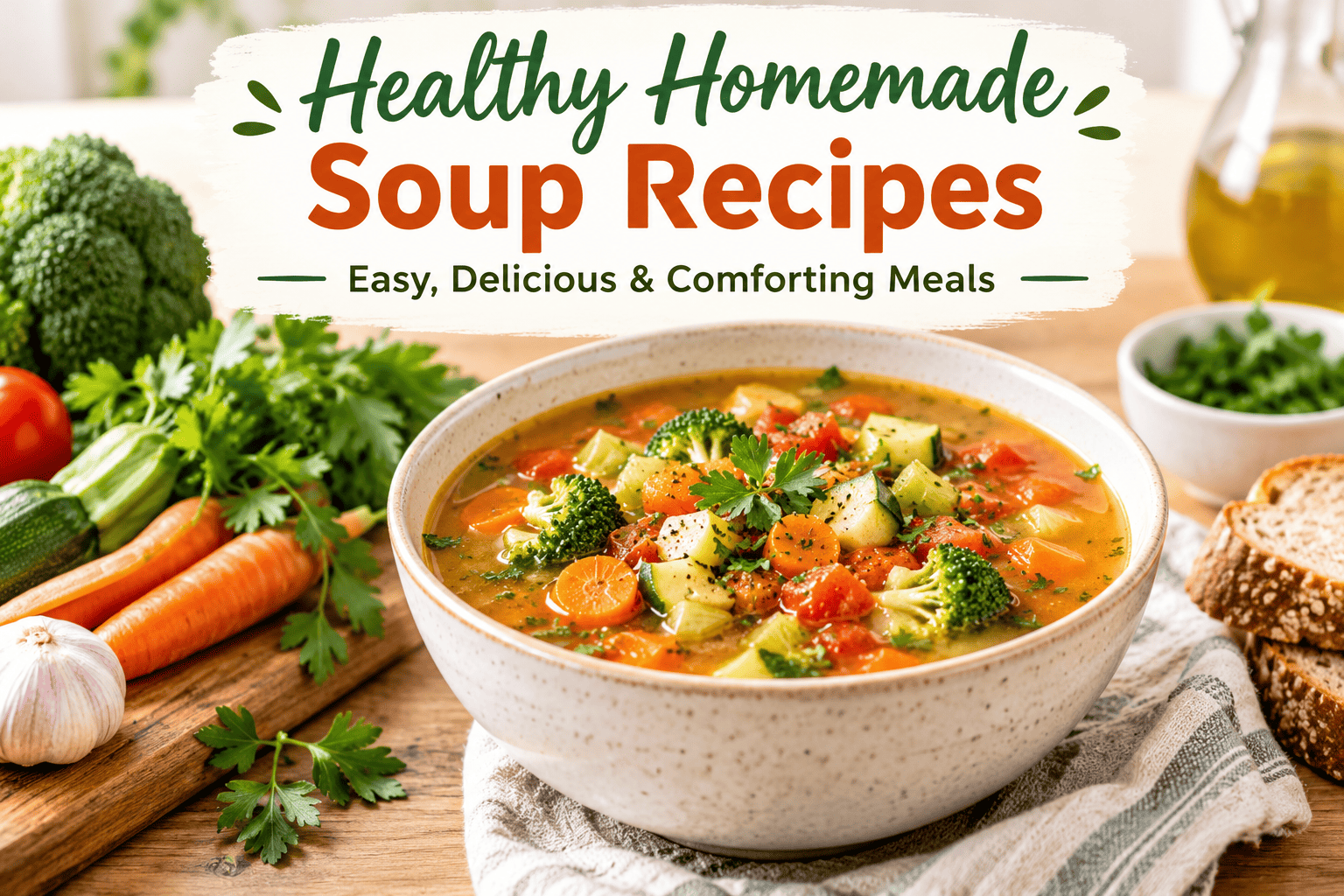
Discover 10 healthy homemade soup recipes that are easy, nutritious, and perfect for busy weeknights. Try delicious chicken, lentil, bean, vegetable, and creamy soups.
Healthy Homemade Soup Recipes: 10 Easy, Nourishing Bowls for Busy Days
There is something wonderfully practical about a big pot of homemade soup. You can throw vegetables, beans, lean protein, herbs, and a flavorful broth into one pot, let everything simmer, and end up with a comforting meal that can feed your family for several days. That is exactly why healthy homemade soup recipes are such a useful addition to a busy-weeknight meal plan. Instead of relying on a takeaway simmer, and end up with a comforting meal that can feed your family for several days. That is exactly why healthy homemade soup recipes are such a useful addition to a busy-weeknight meal plan. Instead of relying on a takeaway meal or a highly processed convenience food when you are tired, you can reach into the refrigerator and warm up a bowl that contains ingredients you actually recognize. Current U.S. dietaryent-dense foods such as vegetables, protein foods, fruits, whole grains, and healthy fats while encouraging people to reduce excess sodium, added sugars, unhealthy fats, and highly processed foods. citeturn0search12turn0search3
Soup also gives you enormous flexibility. You can make a light vegetable soup for lunch, a protein-packed chicken soup for dinner, or a thick lentil soup when you want something especially satisfying. Beans and lentils can provide plant-based protein and fiber, while leafy greens, carrots, tomatoes, squash, peppers, and other vegetables bring dutrients to the bowl. USDA recipe resources also highlight soups built around vegetables, beans, chicken, lentils, and other everyday ingredients, showing how easily soup can become a balanced meal. citeturn0search0turn0search4
The best part? You do not need complicated cooking skills. Most of these easy healthy soup recipes use simple supermarket ingredients and straightforward cooking methods. Whether you are cooking for one, feeding a family, preparing lunches for work, or simply trying to eat more vegetables, these homemade soup ideas give you plenty of options.
Why Homemade Soup Is a Healthy Choice
Homemade soup can make healthy eating feel much easier because it combines several food groups in one convenient meal. A single bowl can contain vegetables, protein, legumes, whole grains, and healthy fats without requiring you to prepare five separate dishes. For example, a chicken and vegetable soup can combine lean chicken with carrots, celery, onions, tomatoes, and broth, while a lelegumes with tomatoes, leafy greens, herbs, and spices. USDA's current dietary guidance encourages greater consumption of vegetables, beans and peas, and whole grains, while also emphasizing lower sodium intake. citeturn0search3
Another advantage is control. When you make soup yourself, you decide how much salt, oil, cream, cheese, and processed ingredients go into the pot. That matters because some commercial soups can contain substantial amounts of sodium, while homemade versions allow you to use low-sodium broth, no-salt-added beans, fresh vegetables, herbs, garlic, lemon juice, and spices to create flavor without depending entirely on salt. Rinsing canned beans is another easy way to make your recipe work better for a lower-sodium eating pattern. Homemade soup can also be economical because ingredients such as lentils, beans, carrots, onions, potatoes, frozen vegetables, canned tomatoes, and grains are generally versatile pantry staples.
Soup is also an excellent way to reduce food waste. That slightly tired carrot hiding in the refrigerator does not necessarily belong in the trash; it might be perfect for a vegetable soup. Leftover cooked chicken can become chicken and rice soup, extra spinach can be stirred into white bean soup, and leftover roasted vegetables can become a blended soup. Think of your soup pot as a blank canvas rather than a strict recipe. Once you understand the basic structure, you can adapt it to the ingredients already available in your kitchen.
Nutrient-Dense Ingredients Make a Difference
The nutritional quality of soup depends heavily on what you put inside it. A broth full of vegetables, beans, lean protein, and herbs is very different from a soup dominated by cream, cheese, processed meats, and refined carbohydrates. That does not mean cr ingredients are forbidden; it simply means balance matters. Current dietary guidance focuses on nutrient-dense whole foods and reducing highly processed foods, excess sodium, added sugars, and unhealthy fats. citeturn0search12
A useful strategy is to think in layers. Start with an aromatic base such as onion, garlic, celery, or leek. Add several vegetables for color and variety, then include a protein source such as chicken, turkey, beans, lentils, chickpeas, tofu, or another suitable ingredient. Finish with herbs, spices, lemon juice, vinegar, or fresh greens to create a bright flavor. If you want the soup to be more filling, add a sensible portion of brown rice, barley, quinoa, whole-wheat pasta, potatoes, or another grain or starchy vegetable.
This approach makes it easier to create a satisfying meal without turning the recipe into a complicated nutrition project. Ap recipe, for example, combines sweet potato, kale, beans, tomatoes, and other ingredients to create a nutrient-packed meal and specifically notes that additional vegetables can be added according to preference. citeturn0search0 The lesson is simple: healthy soup does not have to mean boring soup. You can build flavor and nutrition at the same time.
How to Build a Balanced Healthy Soup
A balanced soup usually needs three main components: vegetables, a protein source, and a flavorful liquid base. From there, you can add whole grains, beans, potatoes, noodles, herbs, spices, or healthy fats depending on the recipe. This simple formula is particularly useful when you do not have a recipe in front of you. Imagine you have some chicken, frozen vegetables, and a carton of broth in your kitchen. Instead of wondering what dinner could possibly be, you already have the foundation of a healthy homemade soup.
The liquid does not need to be complicated. Low-sodium chicken or vegetable broth works well, while crushed tomatoes can create a rich tomato base. Water can also work when paired with enough aromatics and seasonings. Garlic, onion, black pepper, cumin, paprika, thyme, oregano, rosemary, turmeric, ginger, chili flakes, lemon, and fresh herbs can transform a basic broth into something much more exciting.
Texture is another important consideration. Some people love chunky soups where every spoonful contains visible vegetables and protein. Others prefer smooth, creamy soups. You can achieve creaminess without relying entirely on heavy cream by blending cooked vegetables, beans, lentils, or a small amount of Greek yogurt into the soup. A partially blended soup can also provide the best of both worlds: creamy broth with plenty of texture.
Choose a Lean Protein
Protein can turn a light vegetable soup into a satisfying lunch or dinner. Chicken breast, lean turkey, beans, lentils, chicite beans are all useful choices depending on your dietary preferences. A USDA quick chicken and vegetable soup, for example, provides protein alongside vegetables and has a relatively simple preparation method. citeturn0search4
You do not necessarily need a huge amount of meat to make soup satisfying. Beans and lentils can provi fiber, making them particularly useful in vegetarian soups. A USDA lentil vegetable soup combines lentils with vegetables such as celery and onion, demonstrating how legumes can form the heart of a hearty soup. citeturn0search6
For busy households, cooked leftovers are especially convenient. Yesterday's roast chicken can become today's soup, while leftover turkey can be combined with white beans and vegetables. This is one reason soup is such an effective meal-prep option: you can repurpose ingredients that have already been cooked rather than starting from scratch every time.
Add Plenty of Vegetables
Vegetables are where homemade soup can really shine. Instead of choosing only one vegetable, combine several varieties with different colors and textures. Carrots provide sweetness, celery contributes freshness, tomatoes add acidity, leafy greens add color, and squash or sweet potato can make the broth naturally rich and satisfying.
Current durages greater vegetable consumption and highlights different vegetable groups, including dark-green vegetables, red and orange vegetables, starchy vegetables, beans and peas, and other vegetables. citeturn0search3turn0search11 Soup makes it remarkably easy to combine several of these groups in a single meal.
Frozen vegetables are perfectly practical too. You do not have to chop everything from scratch. Frozen peas, spinach, mixed vegetables, corn, or green beans can be added directly to many soups near the end of cooking. Canned tomatoes and beans can also save time, particularly on busy weeknights. If using canned vegetables or beans, look for lower-sodium options when available and rinse canned beans before adding them.
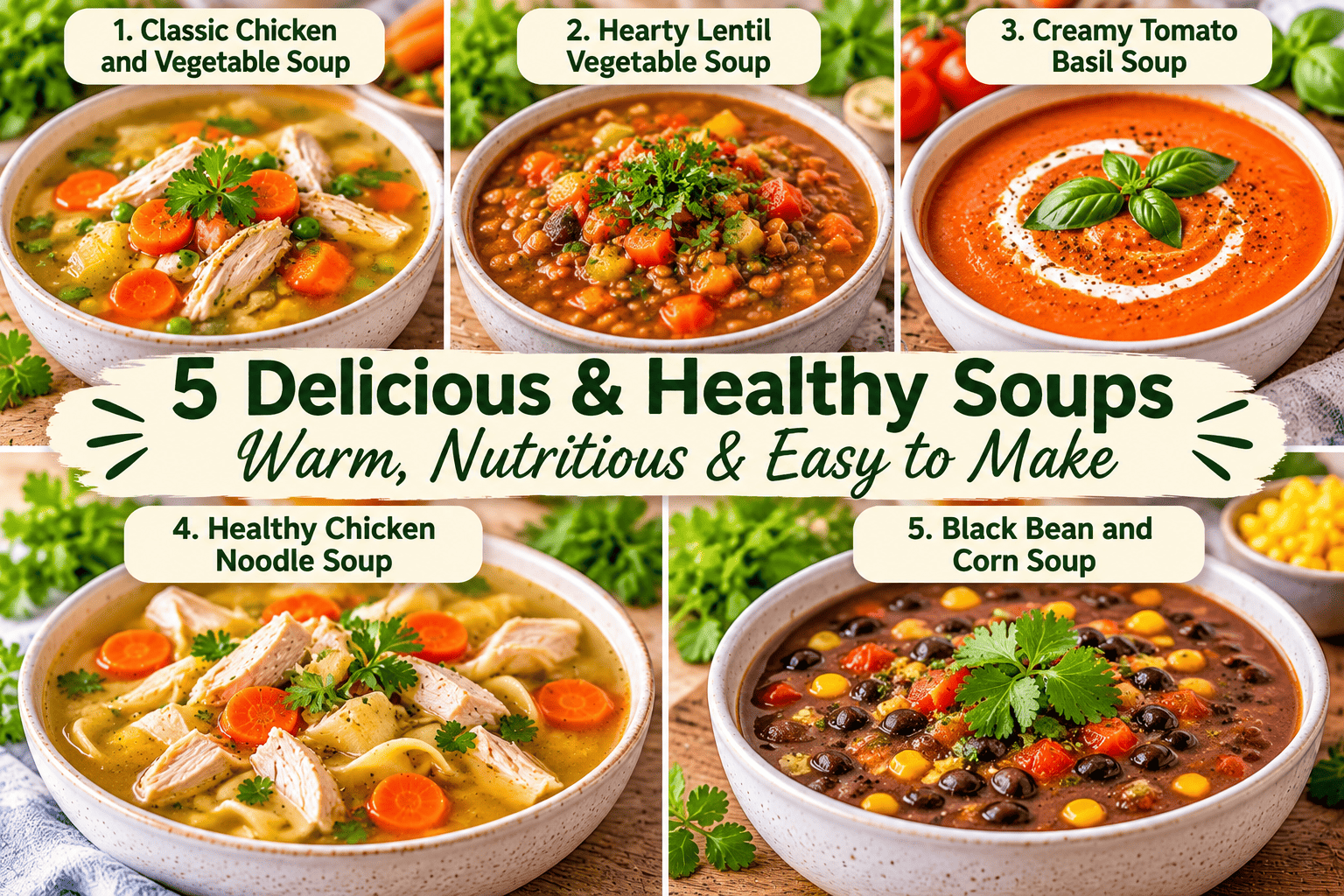
1. Classic Chicken and Vegetable Soup
Classic chicken and vegetable soup is one of those recipes that never really goes out of style. It is warm, comforting, simple, and flexible enough to fit almost any busy-weeknight schedule. Start with onion, celery, carrots, and garlic, then add diced chicken breast and a low-sodium chicken broth. A handful of peas, green beans, spinach, or chopped tomatoes can increase the vegetable content without changing the basic character of the soup.
For extra flavor, season the pot with thyme, black pepper, parsley, and a small amount of lemon juice near the end. The lemon is a particularly useful trick because acidity can make a soup taste brighter without requiring a large amount of salt. If you want a more substantial dinner, add brown rice, barley, or a small amount of whole-wheat pasta.
The method is straightforward. Sauté the onion, celery, carrots, and garlic in a little olive oil until fragrant, add broth and seasonings, then simmer until the vegetables begin to soften. Add chicken and cook until it reaches a safe internal temperature, followed by quick-cooking vegetar spinach. USDA's quick chicken and vegetable soup is similarly built around tomatoes, potatoes, broth, onion, and other ingredients and provides a useful example of how quickly a one-pot soup can come together.
2. Hearty Lentil Vegetable Soup
Lentil vegetable soup is an excellent choice when you want something inexpensive, filling, and plant-forward. Lentils cook into a naturally hearty texture, so you do not need cream or large amounts of oil to make the soup feel substantial. Combine lentils with carrots, celery, onion, tomatoes, garlic, vegetable broth, and herbs for a classic version, or add spinach and kale toward the end for extra greens.
The flavor can go in several directions. Keep it traditional with thyme and bay leaf, make it smoky with paprika and cumin, or give it a Mediterranean character with oregano, lemon, and parsley. A splash of vinegaso wake up the flavors. The USDA's lentil vegetable soup uses lentils, tomato sauce, celery, onion, garlic, pepper, bay leaf, and vinegar, showing how inexpensive pantry ingredients can create a satisfying bowl. citeturn0search6
Lentil soup is particularly convenient for meal prep because its flavor often becomes deeper after resting. Prepare a large pot at the beginning of the weto individual containers for lunches. A preserved USDA MyPlate version lists about 8.2 grams of fiber and 8.9 grams of protein per serving, although nutrition will vary according to ingredients and portion size.
3. Creamy Tomato Basil Soup
Creamy tomato soup can absolutely fit into a balanced eating pattern when you build it around tomatoes and use richer ingredients thoughtfully. Begin with canned crushed tomatoes, fresh onion, garlic, vegetable broth, and dried oregano. Simmer everything until the vegetables are tender, then blend until smooth. Fresh basil added toward the end gives the soup a bright, aromatic finish.
For creaminess, you have several choices. A small amount of milk can soften the acidity of the tomatoes without making the soup excessively rich. Greek yogurt can add creaminess and protein, although it should be stirred in gently after reducing the heat to prevent curdling. Blended white beans are another clever option because they thicken the soup while adding fiber and plant-based protein.
If you enjoy tomato soup with grilled cheese, you can still make that pairing work. Choose whole-grain bread and a moderate amount of cheese, then serve a generous bowl of tomato soup alongside it. The goal is not to remove every enjoyable ingredient; it is to create a meal where the vegetables and nutrient-dense foods have a meaningful role.
4. Healthy Chicken Noodle Soup
Chicken noodle soup is a comfort-food classic for a reason. The combination of warm broth, tender chicken, vegetables, and noodles is satisfying without requiring a complicated recipe. To make a more balanced homemade version, start with plenty of carrots, celery, onions, and shredded chicken, then use a moderate amount of noodles.
Whole-wheat noodles can increase the whole-grain content, while egg noodles can be used when you prefer a traditional texture. You can also replace some of the noodles with zucchini, spinach, cabbage, or other vegetables. Fresh parsley, thyme, epper provide plenty of flavor.
A recent USDA-derived nutrition listing for a quick chicken and vegetable soup shows how a broth-based soup can combine protein, vegetables, and relatively modest amounts of fat. citeturn0search4 The exact nutrition of your chicken noodle soup will depend on the ingredients, so homemade preparation gives you the advantage of controlling the balance.
5. Black Bean and Corn Soup
Black bean and corn soup is a colorful, budget-friendly option that works especially well when you want a vegetarian dinner. Black beans provide a hearty base, while corn adds sweetness and texture. Add diced tomatoes, onion, garlic, bell pepper, vegetable broth, cumin, smoked paprika, and a squeeze of lime for a Southwestern-inspired bowl.
You can blend a portion of the beans into the broth while leaving the rest whole. This creates a thicker soup without needing cream or flour. Top each serving with fresh cilantro, diced avocado, plain Greek yogurt, or a small amount of shredded cheese if desired.
This recipe is also highly adaptable. Add chopped zucchini, spinach, carrots, or sweet potato depending on what you have available. Beans are especially soup because they contribute both texture and nutritional value. Current dietary guidance places beans and peas among the vegetable groups worth emphasizing, making bean-based soups an easy way to include them.
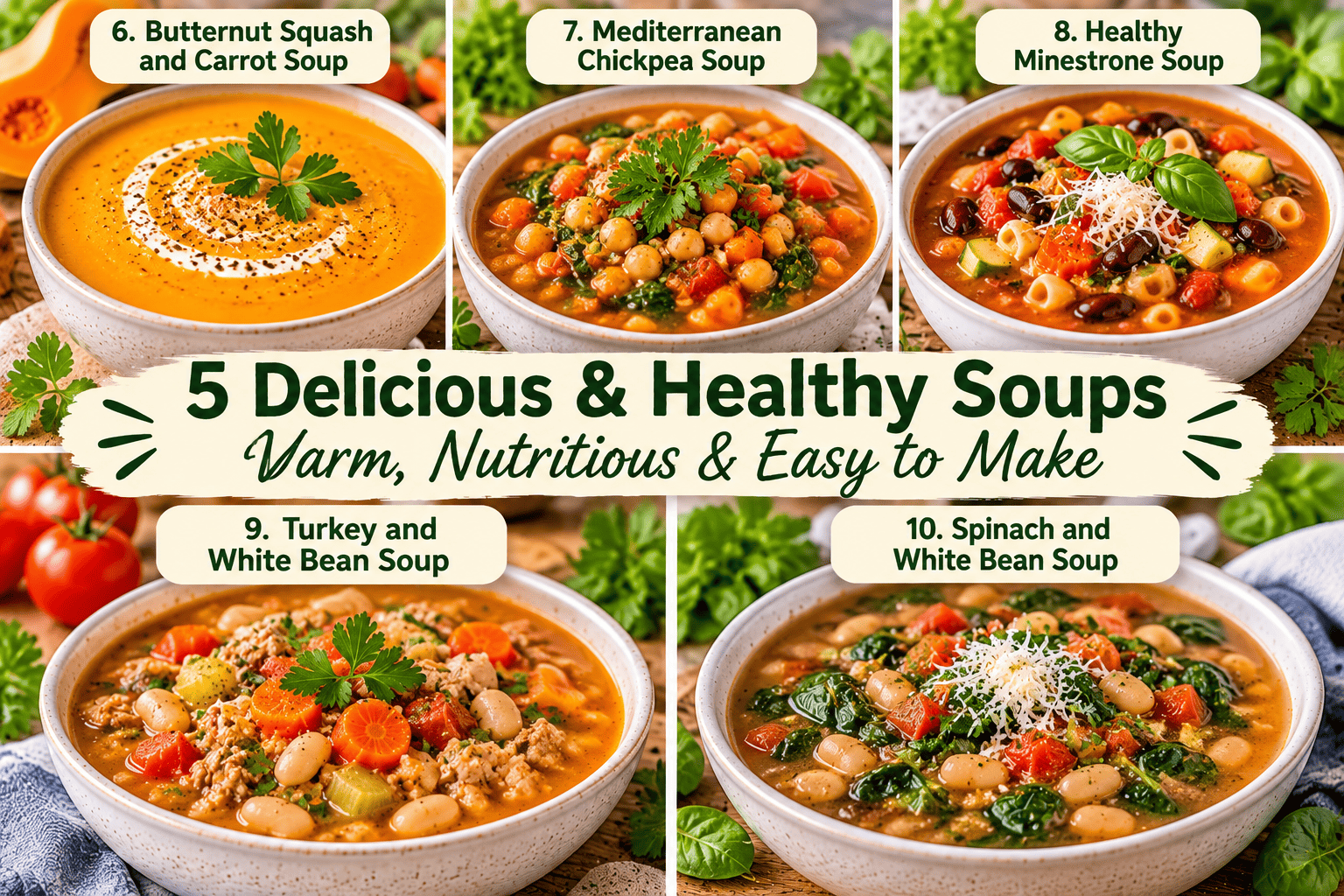
6. Butternut Squash and Carrot Soup
Butternut squash and carrot soup is naturally sweet, silky, and satisfying. It is a fantastic choice when you want a smooth soup without relying heavily on cream. Roast or sauté butternut squash, carrots, onion, and garlic, then simmer them with vegetable broth until tender. Blend everything until smooth and finish with black pepper, ginger, and a pinch of nutmeg.
For a richer flavor, roasting the vegetables first can bring out their natural sweetness. If time is limited, however, you can cook everything directly in a soup pot. A small spoonful of olive oil can add richness, while pumpkin seeds or toasted chickpeas can provide a crunchy topping.
This soup works especially well in autumn and winter, but there is no reason to limit it to cold weather. It can be portioned into containers for lunches, served as a starter, or paired with whole-grain toast and a protein source for a complete dinner.
7. Mediterranean Chickpea Soup
Mediterranean chickpea soup brings together chickpeas, tomatoes, spinach, garlic, onion, herbs, and lemon for a bright and satisfying meal. Start by cooking onion and garlic in olive oil, then add diced tomatoes, chickpeas, broth, oregano, and black pepper. Let everything simmer so the flavors have time to develop, then stir in spinach near the end.
The final touch is lemon juice. It adds acidity that balances the earthy chickpeas and tomatoes, while fresh parsley gives the soup a clean finish. If you want additional protein, add shredded chicken or serve the soup with Greek yogurt on the side.
Chickpeas also make a large quantity of meat. Recent recipe collections continue to feature chickpea and bean soups as convenient, fiber-rich meal options, reflecting the versatility of legumes in healthy cooking.
8. Healthy Minestrone Soup
Minestrone is practically a celebration of vegetables. A healthy homemade version can include zucchini, carrots, celery, tomatoes, green beans, spinach, cannellini beans, and a small amount of whole-wheat pasta. The exact ingredients do not need to be fixed, which makes minestrone perfect for using seasonal vegetables or leftovers.
Build the flavor base with onion, garlic, celery, and olive oil. Add tomatoes and broth, then simmer the harder vegetables before adding beans, pasta, and quick-cooking greens. Finish with basil or parsley and a little Parmesan if you enjoy it.
The trick with minestrone is not to overload it with pasta. Think of pasta as one component rather than the entire meal. A larger proportion of vegetables keeps the soup hearty while making the bowl more nutrient-dense. USDA resources also include minestrone among standardized soup recipes, demonstrating its continued place in practical institutional meal planning.
9. Turkey and White Bean Soup
Turkey and white bean soup is an excellent way to turn leftover cooked turkey into another complete meal. Combine shredded turkey with cannellini beans, carrots, celery, onion, spinach, and low-sodium broth. Season with thyme, rosemary, garlic, and black pepper for a savory flavor profile.
White beans have a soft texture that makes them particularly good in soup. You can leave them whole for texture or mash a small portion into the broth to create natural thickness. Add spinach during the final few minutes so it stays vibrant and tender.
This recipe is especially useful after holidays when you have leftover turkey in the refrigerator. Instead of eating the same leftovers for several days, transform them into a completely different meal. Add cooked barley or brown rice if you want more carbohydrates, or keep the soup vegetable-and-bean focused for a lighter option.
10. Spinach and White Bean Soup
Spinach and white bean soup is one of the quickest options on this list because canned beans and fresh spinach require very little preparation. Start with onion and garlic, add low-sodium vegetable broth and white beans, then season with oregano, black pepper, and red pepper flakes. Simmer for a few minutes before adding several large handfuls of spinach.
A squeeze of lemon at the end makes the soup taste fresh rather than heavy. You can also add diced tomatoes, carrots, celery, or zucchini if you want more vegetables. For additional protein, stir in cooked chicken or serve the soup with a side of eggs, grilled chicken, or whole-grain toast.
This kind of soup demonstrates why healthy cooking does not have to be complicated. Beans, leafy greens, and a few seasonings can become dinner in a surprisingly short time. Recent healthy recipe collections have also highlighted combinations such as kale and white beans as high-fiber, satisfying meal ideas.
How to Make Soup Healthier Without Losing Flavor
The easiest way to improve homemade soup is to focus on flavor rather than simply removing ingredients. If a soup tastes bland, the answer is not always more salt. Try garlic, onion, black pepper, smoked paprika, cumin, chili flakes, fresh herbs, lemon juice, lime juice, vinegar, ginger, or roasted vegetables. These ingredients create layers of flavor that can make a simple soup taste surprisingly sophisticated.
Sodium deserves partiGuidelines for Americans identify reducing sodium consumption as an important nutrition goal and emphasize eating real, nutrient-dense foods while reducing highly processed foods and excess sodium. citeturn0search3turn0search12 Choose low-sodium or no-salt-added canned ingredients when practical, rinse canned beans, and taste the soup before adding extra salt.
You can also improve the texture without loading the recipe with heavy cream. Blend cooked vegetables, lentils, beans, or squash directly into the broth. Use Greek yogurt as a finishing ingredient when appropriate. Add a small amount of olive oil for richness, or top the soup with toasted seeds, fresh herbs, or whole-grain croutons for contrast.
Most importantly, remember that healthy soup should still be enjoyable. If you make a recipe so restrictive that nobody wants to eat it, you have missed the point. Good food should nourish you and make you look forward to dinner.
Healthy Soup Meal Prep and Storage Tips
Soup is one of the best foods for meal preparation because most recipes are naturally designed for batch cooking. Instead of making one dinner portion, prepare a large pot and divide it into individual servings. Let the soup cool appropriately before refrigerating, then store portions in airtight containers. Keeping individual servings ready makes weekday lunches much easier because you only need to reheat one container rather than prepare an entire meal from scratch.
Many soups also freeze well, particularly broth-based vegetable, chicken, bean, and lentil soups. Cream-based soups can sometimes change texture after freezing, so if you know you plan to freeze the soup, consider adding dairy after reheating rather than before freezing. Pasta can also become soft when stored for a long time, so you may prefer to cook it separately and add it when serving.
Label your containers with the recipe name and date so older portions are used first. Keep a few different varieties in rotation so meal prep does not become repetitive. For example, you could prepare lentil soup for vegetarian lunches, chi for quick dinners, and tomato soup for lighter meals. USDA recipe resources specifically describe soup as a versatile make-ahead meal, with some vegetable soups suitable for stovetop or slow-cooker preparation. citeturn0search0
A useful meal-prep strategy is to freeze soup in individual portions rather than one giant container. That way, you can defrost exactly what you need. Pair reheated soup with a simple side such as whole-grain toast, a small salad, or fruit when you need a larger meal. The goal is to make healthy eating convenient enough that it competes successfully with less nutritious convenience foods.
Conclusion
Healthy homemade soup recipes are one of the simplest ways to make nutritious eating more practical. A good soup does not require expensive ingredients, complicated equipment, or hours of preparation. With a few vegetables, a protein source, beans or lentils, a flavorful broth, and the right herbs and spices, you can create a satisfying meal that works for breakfast, lunch, dinner, or meal prep.
The biggest advantage is flexibility. You can make chicken vegetable soup when you want a classic comfort meal, lentil soup when you want something plant-based, tomato soup when you want something simple, or black bean soup when you want bold flavor. You can also adapt almost every recipe based on what you already have in your kitchen.
Frequently Asked Questions
Are homemade soups good for a healthy diet?
Homemade soups can be an excellent part of a balanced diet when they are built around vegetables, legumes, lean proteins, whole grains, and other nutrient-dense ingredients. The major advantage is control: you choose the ingredients and can adjust sodium, saturated fat, and portion siups can also make it easier to include more plant foods in your meals. Current U.S. dietary guidance encourages nutrient-dense foods and greater intake of vegetables, beans, peas, and whole grains. citeturn0search3turn0search12
What can I add to soup for more protein?
There are plenty of options. Chicken, turkey, lean beef, tofu, lentils, chickpeas, black beans, kidney beans, white beans, and Greek yogurt can all contribute protein depending on the recipe. You can also combine ingredients, such as chicken with white beans or lentils with chickpeas. The best choice depends on your dietary preferences and the overall balance of the meal.
How can I make soup creamy without heavy cream?
Try blending cooked vegetables such as butternut squash, cauliflower, carrots, potatoes, or tomatoes. Beans and lentils can also create a creamy texture while contributing fiber and plant-based protein. Greek yogurt can be stirred into some soups after cooking, while a small amount of milk can soften tomato or vegetable soups. These techniques can give you a rich texture without making heavy cream the main source of creaminess.
Can I make healthy soup in under 30 minutes?
Absolutely. Quick soups are easiest when you use canned beans, canned tomatoes, frozen vegetables, pre-cooked chicken, quigrains. A USDA quick chicken and vegetable soup, for example, uses a relatively short cooking process, while federal recipe resources also categorize many recipes as suitable for 30 minutes or less. citeturn0search4turn0search7
What is the best healthy soup for meal prep?
Lentil soup, bean soup, chicken vegetable soup, minestrone, and many broth-based vegetable soups are excellent meal-prep choices. They can be prepared in large batches, portioned into containers, and refrigerated or frozen for later meals. Lentil and bean soups are particularly useful when you want a vegetarian option that remains hearty and satisfying.
Comments
0No comments yet — be the first to share your thoughts!