Healthy Homemade Pizza Recipes: Easy & Delicious Ideas

Discover healthy homemade pizza recipes that are easy, delicious, and perfect for busy weeknights. Enjoy nutritious toppings, wholesome crusts, and family-friendly flavors.
Healthy Homemade Pizza Recipes
Pizza night does not have to mean ordering a greasy takeaway or giving up on your healthy eating goals. With the right ingredients, healthy homemade pizza recipes can be just as satisfying, flavorful, and comforting as traditional pizza. The best part is that you control everything—from the crust and sauce to the amount of cheese and toppings. That makes homemade pizza especially useful when you are trying to prepare quick meals for busy weeknights without making dinner feel boring.
A healthier pizza is really about balance rather than removing everything you love. You can use a whole-wheat crust for more fiber, load your pizza with colorful vegetables, choose lean proteins, and use cheese in a sensible amount. The USDA MyPlate pizza guide also recommends choosing whole-grain bases, lighter sauces, vegetables, lean proteins, and dairy options with less saturated fat when building a healthier pizza.
The recipes below give you plenty of ways to enjoy pizza while adding more nutritious ingredients to your plate. Whether you want a vegetarian dinner, a high-protein pizza, a quick family meal, or a lower-carb option, there is something here for your next pizza night.
Why Make Homemade Pizza?
Homemade pizza gives you something restaurant pizza cannot always provide: complete control over the ingredients. When you make the pizza yourself, you decide how thick the crust should be, how much sauce goes on top, which vegetables you want to use, and how much cheese is enough. That flexibility makes it much easier to create a meal that fits your preferences. You can also prepare the dough or toppings ahead of time, which makes homemade pizza surprisingly practical for busy families.
Another advantage is that homemade pizza can become an easy way to use ingredients already sitting in your refrigerator. A handful of spinach, leftover cooked chicken, mushrooms, bell peppers, tomatoes, or roasted vegetables can all become delicious pizza toppings. Instead of thinking of pizza as a meal that revolves around cheese and refined carbohydrates, think of the crust as your canvas. Vegetables, lean protein, herbs, and a flavorful sauce can turn that canvas into a balanced meal.
The American Heart Association includes whole-wheat and cauliflower-crust pizzas among healthier pizza approaches, with recipes that pair vegetables and lean ingredients with controlled portions of cheese.
What Makes a Pizza Healthy?
There is no single ingredient that magically turns pizza into a healthy meal. Instead, the overall combination matters. A good starting point is a crust that provides satisfying carbohydrates, followed by a tomato-based sauce, plenty of vegetables, a protein source if desired, and a moderate amount of cheese. This approach allows you to enjoy the familiar flavors of pizza while making room for ingredients that contribute fiber, protein, vitamins, minerals, and other nutrients.
Portion size matters too. Even nutritious ingredients can contribute a lot of calories when used in very large quantities. You do not need to cover the entire crust with cheese to make it taste good; herbs, garlic, roasted vegetables, tomato sauce, chili flakes, and a small amount of flavorful cheese can provide plenty of character. The USDA specifically recommends toppings that are lower in sodium, added sugars, and saturated fat when building a healthier pizza.
Choosing the Best Pizza Crust
Your crust creates the foundation for the entire pizza, so it deserves some attention. Traditional white-flour crust can certainly fit into an overall balanced diet, but using whole-wheat dough can increase the fiber content and add a heartier texture. If you are short on time, whole-wheat pita, naan, or another suitable whole-grain flatbread can also work as a convenient shortcut.
The goal is not to make the crust complicated. A homemade whole-wheat crust can be prepared with flour, yeast, water, oil, and seasonings, while ready-made whole-grain dough can save considerable time. The American Heart Association's whole-wheat Margherita recipe, for example, combines whole-wheat flour with a tomato-based sauce, part-skim mozzarella, ricotta, and tomatoes.
Whole-Wheat Pizza Crust
Whole-wheat dough is one of the easiest upgrades for homemade pizza. It has a slightly nutty flavor and works particularly well with bold toppings such as roasted vegetables, chicken, mushrooms, spinach, and peppers. If you are making dough from scratch, you can also add garlic, rosemary, oregano, or Italian seasoning directly into the dough for extra flavor.
Do not worry if your first whole-wheat crust is not perfectly round. Homemade pizza is supposed to be practical, and a rustic shape can actually make dinner feel more special. Roll or stretch the dough to your preferred thickness, prick the center lightly if necessary, and avoid piling on so many wet toppings that the middle becomes soggy.
Cauliflower and Alternative Crusts
Cauliflower crust can be useful when you want an alternative to conventional flour-based dough. It can also be a great way to increase the vegetable component of your meal. The American Heart Association's cauliflower-crust pizza uses cauliflower combined with egg whites and cheese, then adds tomato sauce and cooked vegetables; the recipe provides 190 calories, 16 grams of protein, and 7 grams of fiber per serving.
For the easiest shortcut, try whole-wheat pita or another whole-grain flatbread. This is especially useful when you want healthy pizza recipes under 30 minutes. Because thinner bases cook quickly, they are ideal for lunches, individual dinners, and quick family meals.
How to Build a Balanced Homemade Pizza
Think of your pizza as a collection of building blocks. Start with the crust, add a thin layer of sauce, spread vegetables across the surface, include a protein if you want one, and finish with a reasonable amount of cheese. This method prevents one ingredient from dominating the meal.
A useful combination is one whole-grain base + one flavorful sauce + several vegetables + a protein + moderate cheese. You can change those components depending on what you have available. The USDA's healthier pizza guide suggests choosing two to five fruit or vegetable toppings and includes options such as spinach, mushrooms, peppers, onions, zucchini, broccoli, tomatoes, and artichokes.
Choosing a Better Sauce
Tomato sauce is an easy choice because tomatoes naturally bring acidity and sweetness to pizza. Look for sauces with simple ingredients and compare sodium levels if you are trying to keep your meal lower in sodium. You can also make your own by combining crushed tomatoes with garlic, basil, oregano, black pepper, and a small amount of olive oil.
You do not need a thick layer of sauce. Too much can make the crust wet and prevent it from becoming crisp. A thin, even layer is usually enough to give the pizza a rich tomato flavor while allowing the toppings and crust to remain distinct.
Adding Vegetables and Lean Protein
Vegetables are one of the simplest ways to make pizza more colorful, flavorful, and satisfying. Bell peppers provide sweetness, mushrooms add savory flavor, spinach cooks down beautifully, and onions develop a delicious sweetness as they roast. Broccoli, zucchini, tomatoes, artichokes, eggplant, and even roasted carrots can work depending on the style of pizza you are making.
For protein, consider grilled chicken, turkey, tofu, beans, shrimp, tuna, or other lean options. The USDA pizza guide specifically lists grilled chicken, beans, tofu, shrimp, lean turkey, salmon, and other lean proteins as possible toppings.
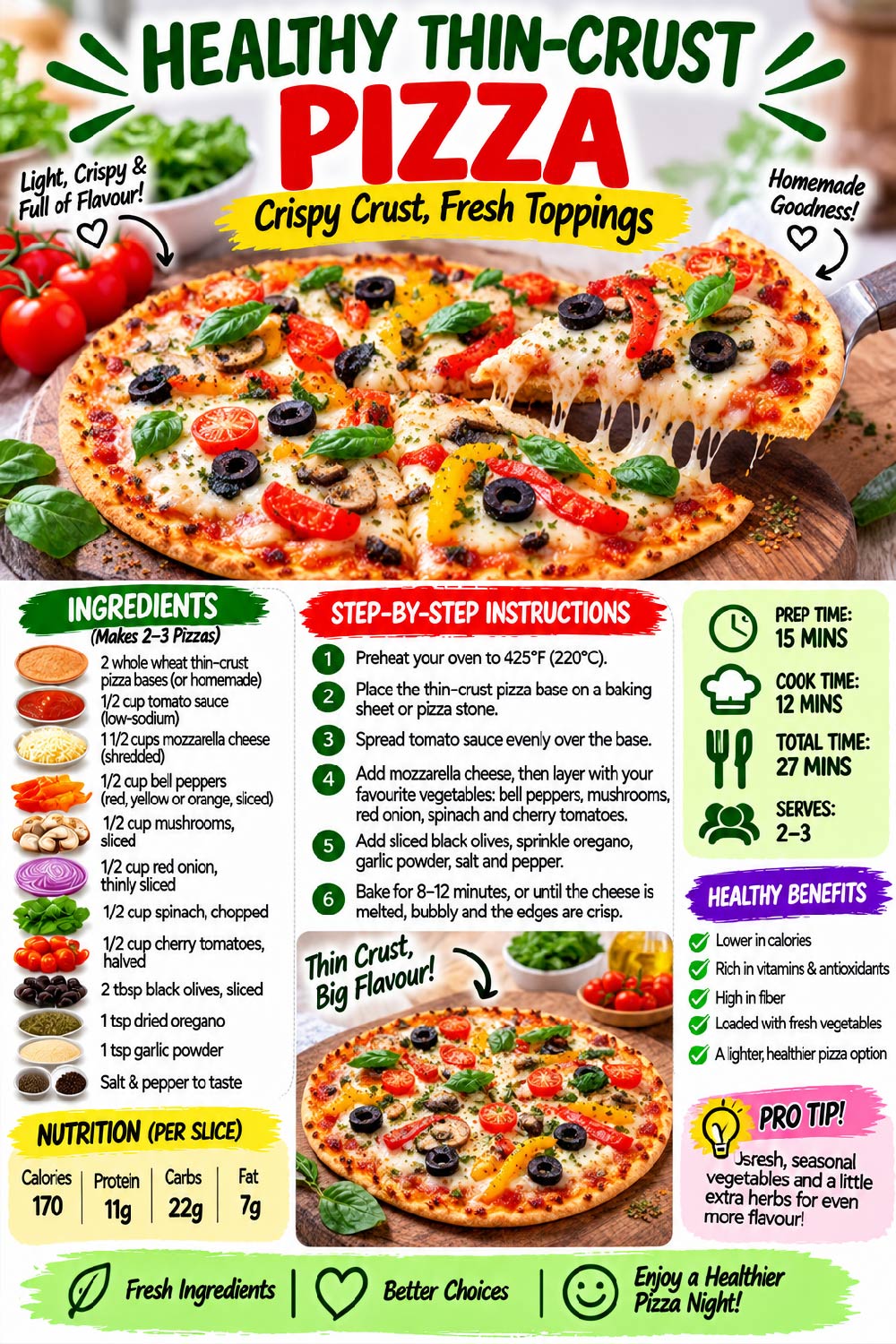
10 Healthy Homemade Pizza Recipes
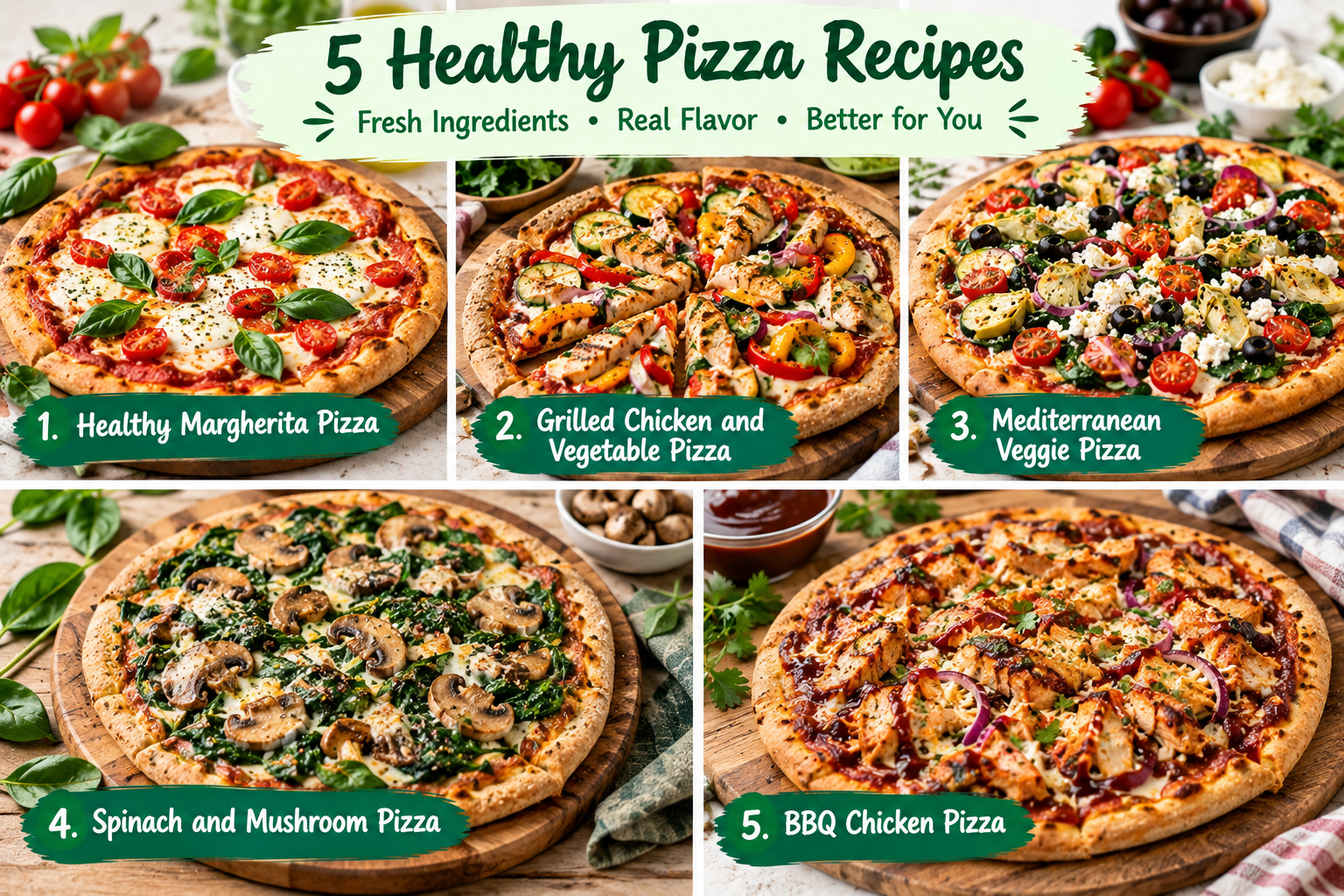
1. Healthy Margherita Pizza
Margherita pizza proves that healthy pizza does not need a long ingredient list. Start with a whole-wheat crust and spread a thin layer of homemade tomato sauce across the surface. Add fresh tomato slices, part-skim mozzarella, fresh basil, black pepper, and a small drizzle of olive oil. Bake until the crust is crisp and the cheese is bubbling, then add a few fresh basil leaves just before serving.
The combination of tomato, basil, and mozzarella creates a classic flavor profile that feels fresh rather than heavy. For an even more wholesome meal, serve it alongside a large green salad dressed with lemon juice and olive oil. The American Heart Association's whole-wheat Margherita recipe demonstrates that a portion-controlled pizza can be made with whole-wheat crust, part-skim cheese, tomato, and fresh herbs; its listed serving contains 170 calories, 8 grams of protein, and 2 grams of fiber.
Best for: Family pizza night and simple vegetarian dinners.
2. Grilled Chicken and Vegetable Pizza
If you want a pizza that feels like a complete dinner, grilled chicken and vegetables are an excellent combination. Spread tomato sauce over a whole-wheat crust, then add pieces of cooked grilled chicken, sliced bell peppers, red onion, mushrooms, and spinach. Sprinkle a moderate amount of part-skim mozzarella over the top and finish with oregano and black pepper.
This pizza is especially useful for meal prep because leftover grilled chicken can go directly onto the crust. You can also roast the vegetables earlier in the week and store them in the refrigerator until pizza night. The result is a protein-rich pizza with several different textures and flavors in every bite. Pair it with a simple cucumber and tomato salad to make the meal feel even more substantial.
Best for: High-protein dinners and leftover chicken.
3. Mediterranean Veggie Pizza
Bring Mediterranean-inspired flavors to pizza night with tomatoes, spinach, bell peppers, red onion, olives, and a little feta. Use a thin whole-wheat crust and a light tomato sauce as the base. After baking, add fresh herbs and a small squeeze of lemon for brightness.
The combination of vegetables and feta makes this pizza colorful and satisfying without needing a huge amount of cheese. You can also add chickpeas for extra plant-based protein or grilled chicken if you prefer a meat-based version. Since Mediterranean-style ingredients are naturally flavorful, you can rely more on herbs, garlic, lemon, and vegetables instead of heavy sauces.
Best for: Vegetarian meals and Mediterranean-inspired dinners.
4. Spinach and Mushroom Pizza
Spinach and mushrooms are a simple combination that works beautifully on homemade pizza. Begin with whole-wheat dough and a thin tomato sauce base, then add sliced mushrooms, fresh spinach, garlic, mozzarella, and a sprinkle of Italian herbs. Because mushrooms release moisture during cooking, sautéing them briefly before adding them to the pizza can help keep the crust crisp.
For extra flavor, add a small amount of Parmesan after the pizza comes out of the oven. You can also add grilled chicken or white beans if you want more protein. The earthy mushrooms, wilted spinach, garlic, and melted cheese create a comforting pizza that feels hearty without requiring processed meat toppings.
Best for: Vegetarian weeknight dinners.
5. BBQ Chicken Pizza
BBQ chicken pizza can be made healthier without losing the smoky, sweet flavor that makes it popular. Use a whole-wheat crust and spread a thin layer of barbecue sauce over the base. Add shredded cooked chicken, red onion, bell peppers, and a moderate amount of mozzarella, then bake until the crust is crisp and the cheese melts.
Because barbecue sauce can contain added sugar and sodium, use it as a flavor accent rather than flooding the crust with sauce. You can also mix a small amount of barbecue sauce with plain tomato sauce to create a lighter topping. Finish with fresh cilantro or green onion for a fresh contrast.
Best for: Families who enjoy bold flavors.
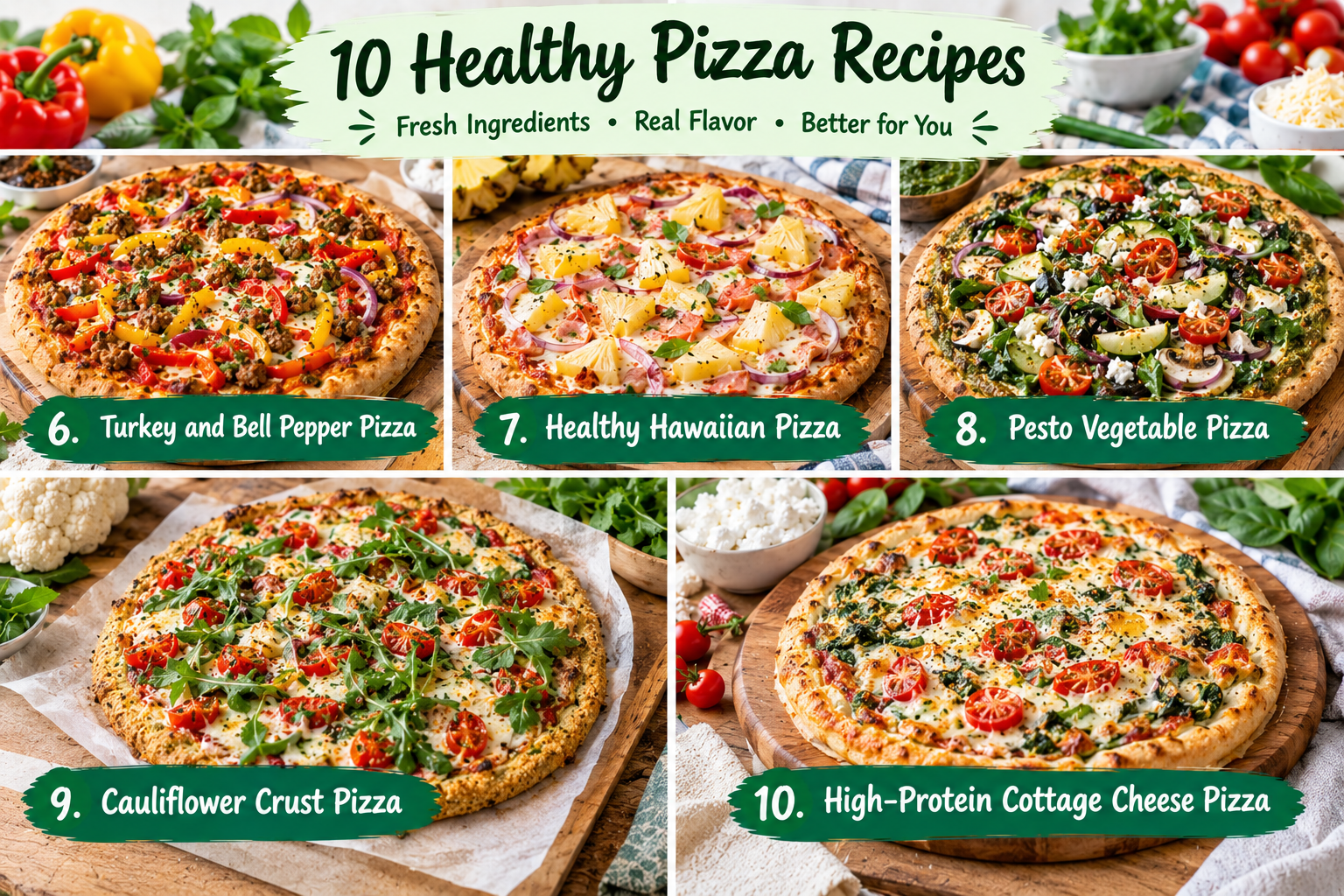
6. Turkey and Bell Pepper Pizza
Lean ground turkey can make an excellent pizza topping when seasoned properly. Cook the turkey with garlic, oregano, black pepper, and a pinch of chili flakes before adding it to your pizza. Spread tomato sauce over the crust, then layer on the cooked turkey, red and green bell peppers, onions, and mozzarella.
The peppers bring sweetness and crunch, while the seasoned turkey adds protein and a savory flavor. Preparing the turkey ahead of time makes this pizza particularly convenient on busy evenings. Store the cooked meat in the refrigerator and assemble your pizza whenever you need a quick meal.
Best for: High-protein family dinners.
7. Healthy Hawaiian Pizza
Hawaiian pizza becomes a little more balanced when you focus on portion control and add extra vegetables. Start with a whole-wheat crust and tomato sauce, then add a small amount of lean ham or turkey ham, pineapple chunks, red onion, and mozzarella. You can also add bell peppers or mushrooms for more vegetables.
Pineapple brings natural sweetness and acidity that balances the savory toppings. If you are watching sodium, compare the labels on processed meat products and use a smaller amount. The key is to make pineapple and vegetables major components rather than letting processed meat and cheese take over the entire pizza.
Best for: Sweet-and-savory pizza lovers.
8. Pesto Vegetable Pizza
Pesto can turn an ordinary vegetable pizza into something special, but because pesto is concentrated and flavorful, a little goes a long way. Spread a thin layer of pesto over your crust instead of using a heavy coating. Add zucchini, cherry tomatoes, mushrooms, spinach, and a small amount of mozzarella.
Bake until the vegetables are tender and the crust is golden. The basil, garlic, and olive oil in the pesto provide plenty of flavor, so you do not need a large amount of cheese. If you want additional protein, add grilled chicken, white beans, or tofu.
Best for: Quick vegetarian lunches and dinners.
9. Cauliflower Crust Pizza
For an alternative crust, cauliflower pizza is a popular choice. Finely process cauliflower, then combine it with egg whites, a small amount of cheese, and seasonings to form a crust. Bake the crust until firm and golden before adding sauce and toppings.
The American Heart Association's cauliflower-crust vegetable pizza combines cauliflower with egg whites and cheese and tops it with mushrooms, zucchini, bell peppers, onion, basil, and mozzarella. Another AHA cauliflower-crust recipe provides 206 calories, 20 grams of protein, and 6 grams of fiber per serving.
Because cauliflower crust can be more delicate than traditional dough, allow it to bake thoroughly before adding toppings. This helps create a firmer base that is easier to slice and serve.
Best for: Vegetable-focused and alternative-crust meals.
10. High-Protein Cottage Cheese Pizza
Cottage cheese can be used creatively to add protein to pizza. Blend cottage cheese with herbs and garlic to create a creamy base, or use it as part of a topping mixture alongside mozzarella. Spread it over a whole-wheat crust, then add spinach, tomatoes, mushrooms, and grilled chicken.
The mild flavor of cottage cheese makes it easy to combine with stronger ingredients such as garlic, basil, chili flakes, and roasted vegetables. For a crisp finish, avoid adding too much moisture to the crust and bake at a high temperature. This pizza is a great option when you want something filling but still enjoy the comfort-food feeling of pizza night.
Best for: High-protein meals and fitness-friendly dinners.
Tips for Making Healthier Pizza at Home
The easiest way to make better pizza is to focus on ingredient quality and balance rather than perfection. Start by choosing a whole-grain crust when possible, use a moderate amount of sauce, and make vegetables a major part of your toppings. If you enjoy cheese, keep it—you simply do not need to cover every inch of the pizza with a thick layer. Part-skim mozzarella, ricotta, feta, or a small amount of Parmesan can provide plenty of flavor.
Another useful trick is to pre-cook vegetables that contain a lot of water. Mushrooms, zucchini, spinach, and some fresh vegetables can release moisture while baking, which may leave your crust soft. A quick sauté or roast can improve both texture and flavor. The USDA also recommends draining and patting wet toppings dry before adding them to pizza.
For busy weeknights, prepare components in advance. Keep cooked chicken, roasted vegetables, pizza sauce, and shredded cheese in the refrigerator so you can assemble a pizza in minutes. Flatbread and pita pizzas are particularly convenient because they eliminate the need to wait for dough to rise. The American Heart Association also lists whole-wheat pita as a quick alternative crust option in its cauliflower-pizza recipe.
Finally, pay attention to toppings that can quickly increase sodium, saturated fat, or added sugars. Processed meats, large quantities of cheese, and salty sauces can change the nutritional profile of an otherwise vegetable-packed pizza. Using herbs, garlic, chili flakes, fresh vegetables, and acidic ingredients such as lemon can help you create a flavorful pizza without relying entirely on salty or heavy toppings.
Conclusion
Healthy homemade pizza recipes are a practical way to enjoy one of the world's favorite comfort foods while having more control over what goes into your meal. A whole-wheat crust, light tomato sauce, colorful vegetables, lean protein, and a reasonable amount of cheese can create a pizza that is both satisfying and nutritious. You also have plenty of flexibility: choose cauliflower crust when you want an alternative base, use pita for a quick dinner, or make traditional whole-wheat dough when you have more time.
The real secret is not making pizza complicated. Keep a few versatile ingredients in your kitchen, prepare leftovers strategically, and experiment with different combinations of vegetables and proteins. With these ideas, pizza night can become a regular part of a balanced eating routine rather than something you feel you need to avoid.
FAQs
1. Is homemade pizza healthier than store-bought pizza?
Homemade pizza can be healthier because you have control over the crust, sauce, cheese, toppings, and portion size. Choosing whole-grain bases, vegetables, lean proteins, and moderate amounts of cheese can help create a more balanced meal.
2. What is the healthiest crust for homemade pizza?
There is no single best crust for everyone. Whole-wheat crust is a practical choice when you want more whole grains and fiber, while cauliflower crust can provide a vegetable-based alternative. Whole-wheat pita or flatbread is also useful when you need a quick pizza.
3. What vegetables are best for healthy pizza?
Popular choices include bell peppers, mushrooms, spinach, onions, tomatoes, broccoli, zucchini, artichokes, and eggplant. Combining several vegetables gives your pizza more color, texture, and flavor.
4. How can I make pizza higher in protein?
Add lean toppings such as grilled chicken, turkey, shrimp, tofu, beans, or cottage cheese. Using a protein-rich crust or adding protein-rich ingredients alongside vegetables can also make the meal more filling.
5. Can I make healthy pizza in under 30 minutes?
Yes. Use whole-wheat pita, naan, or another ready-made flatbread as the crust, then add tomato sauce, vegetables, lean protein, and cheese. Bake until the crust is crisp and the cheese has melted. This shortcut is ideal for busy weeknight dinners.
Comments
0No comments yet — be the first to share your thoughts!