Easy Plant-Based Meals for Beginners: 10 Simple Recipes
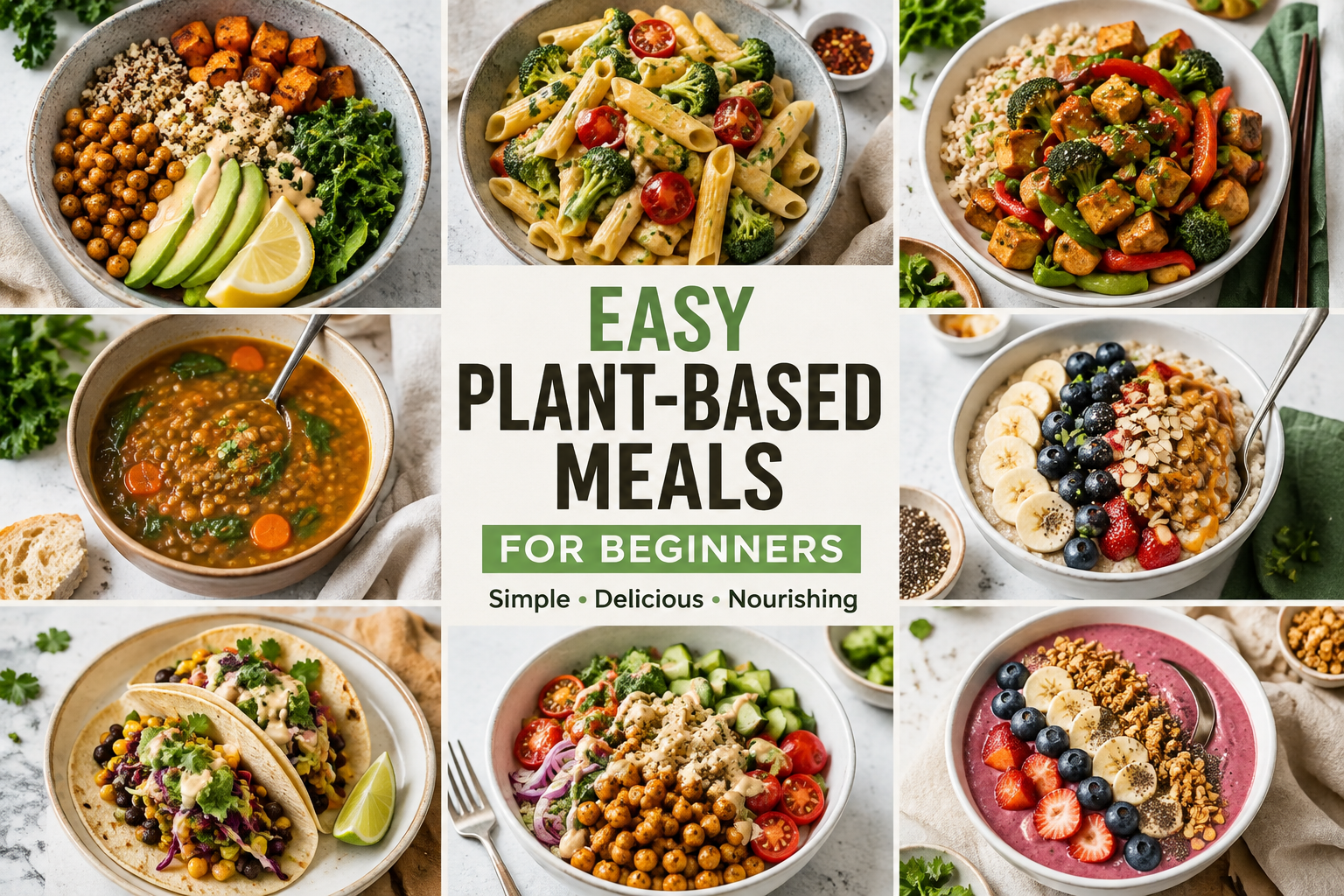
Discover 10 easy plant-based meals for beginners, from overnight oats and lentil soup to black bean tacos and quinoa bowls. Simple, healthy, and budget-friendly recipes.
Easy Plant-Based Meals for Beginners
Switching to a plant-based diet doesn't mean giving up delicious food or spending hours in the kitchen. In fact, today's beginner-friendly recipes are easier, healthier, and more affordable than ever. Health experts continue to recommend eating more fruits, vegetables, legumes, whole grains, nuts, and seeds because these foods are rich in fiber, vitamins, minerals, and antioxidants that support long-term health. Research from the Mayo Clinic also highlights that replacing some meat-based meals with plant-based options can improve heart health while often reducing grocery costs.
If you've always thought plant-based cooking was complicated, you're about to discover the opposite. Many beginner meals require fewer than ten ingredients and can be prepared in under 30 minutes. Recent meal plans developed by registered dietitians also emphasize quick, high-fiber, protein-rich recipes designed specifically for busy lifestyles.
Whether your goal is improving your health, saving money, losing weight, or simply eating more vegetables, this guide will help you build confidence in the kitchen with simple, satisfying meals.
What Is a Plant-Based Diet?
A plant-based diet focuses primarily on foods that come from plants. That includes vegetables, fruits, beans, lentils, peas, whole grains, nuts, seeds, herbs, and healthy oils. Unlike strict vegan diets, a plant-based lifestyle doesn't necessarily require eliminating all animal products. Many people simply reduce their intake of meat and dairy while making plants the center of every meal.
This flexible approach makes it much easier for beginners to stick with their new eating habits. Instead of worrying about perfection, you focus on progress. One day you might enjoy oatmeal with berries for breakfast, a chickpea salad for lunch, and vegetable stir-fry for dinner. Another day you may include yogurt or eggs while still eating mostly plants.
Health organizations consistently recommend increasing plant foods because they naturally provide more dietary fiber and beneficial nutrients while reducing saturated fat intake. Studies have associated plant-forward eating patterns with a lower risk of heart disease, type 2 diabetes, obesity, and certain chronic illnesses.
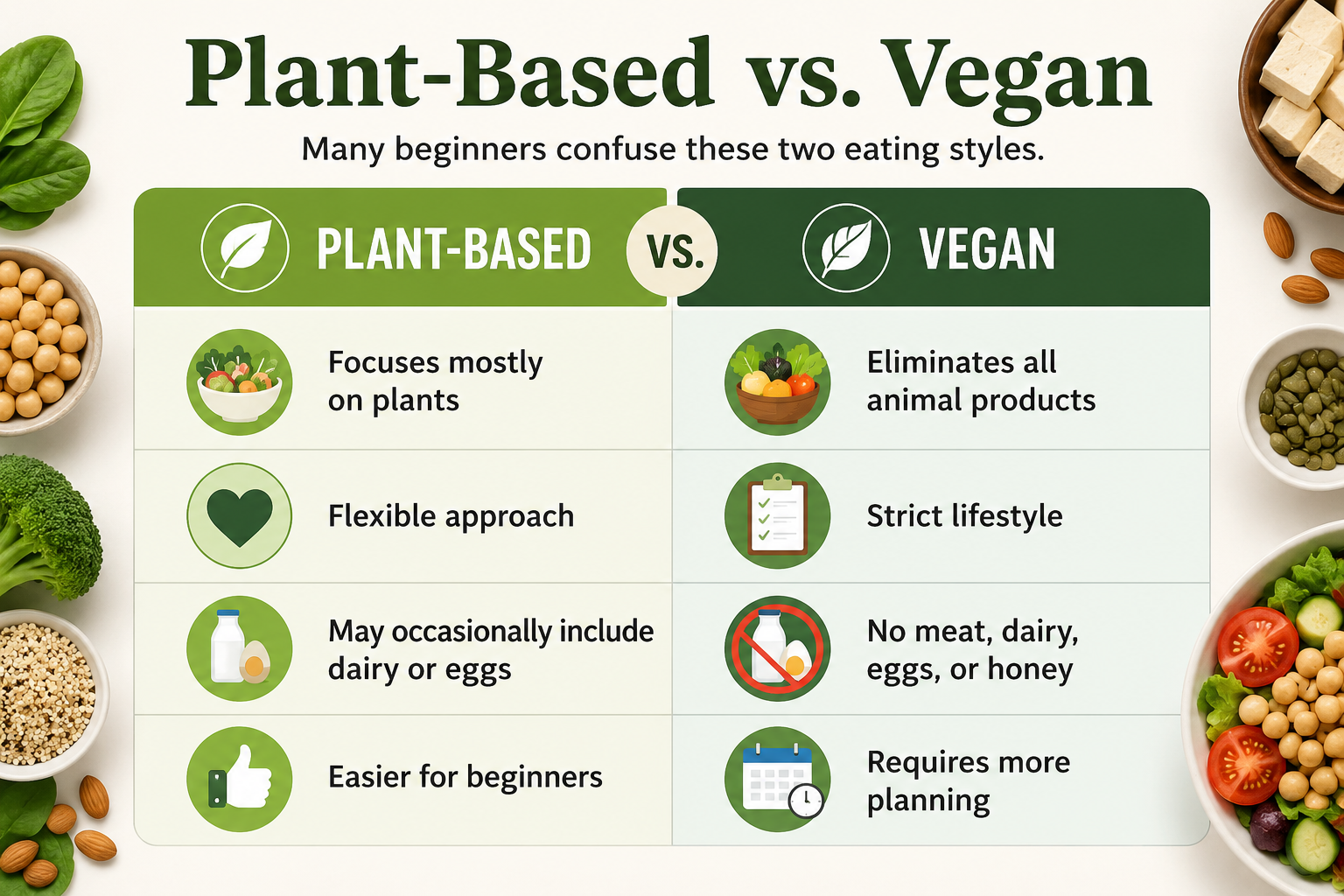
Choosing the approach that fits your lifestyle often leads to greater long-term success.
Why More People Are Choosing Plant-Based Meals
There are many reasons people are embracing plant-based eating. Some want to improve their health, while others are motivated by environmental concerns or grocery savings. Plant proteins such as beans and lentils are generally less expensive than meat, making them an excellent option for families on a budget.
Benefits of Eating More Plant-Based Foods
One of the biggest advantages of eating more plants is the incredible variety of nutrients they provide. Colorful vegetables, fruits, legumes, and whole grains deliver vitamins, minerals, antioxidants, and fiber that support nearly every system in your body. Instead of focusing on what you're removing from your diet, think about everything you're adding.
A high-fiber diet promotes healthy digestion and helps you feel full for longer periods. This can naturally reduce overeating without strict calorie counting. Registered dietitians also emphasize pairing fiber-rich foods with plant proteins like beans, lentils, tofu, and edamame for satisfying meals that maintain energy throughout the day.
Eating more plant-based meals may also benefit your wallet. Dry beans, rice, oats, potatoes, frozen vegetables, and lentils are among the most affordable foods available. With a few pantry staples, you can prepare dozens of nutritious meals without spending a fortune.
For many people, increased energy is another pleasant surprise. Meals rich in whole grains, vegetables, and legumes provide slow-releasing carbohydrates that fuel the body steadily instead of causing dramatic blood sugar spikes.
Essential Pantry Staples
Creating easy plant-based meals becomes simple once your pantry is stocked with versatile ingredients.
Whole Grains
Whole grains provide long-lasting energy and pair well with almost every vegetable or protein source. Brown rice, quinoa, oats, barley, whole wheat pasta, and bulgur are excellent choices for beginners.
Beans, Lentils, and Chickpeas
These foods are nutritional powerhouses. They're packed with protein, fiber, iron, and essential minerals while remaining incredibly affordable. Canned beans save time, while dried beans offer even greater value.
Nuts, Seeds, and Healthy Fats
Almonds, walnuts, peanuts, chia seeds, flaxseeds, pumpkin seeds, peanut butter, tahini, and avocado all contribute healthy fats that improve meal satisfaction.
Herbs, Spices, and Flavor Boosters
Flavor transforms simple ingredients into exciting meals. Keep garlic powder, onion powder, paprika, cumin, oregano, basil, black pepper, soy sauce, nutritional yeast, curry powder, lemon juice, and olive oil on hand.
Community discussions among experienced plant-based cooks consistently point to sauces and seasonings as the secret to preventing meal boredom. Simple combinations like tahini-lemon dressing, peanut sauce, or soy yogurt with herbs can dramatically change the flavor of familiar ingredients.
Kitchen Tools That Make Cooking Easier
You don't need expensive appliances to enjoy plant-based cooking.
A quality non-stick skillet handles stir-fries, tofu, and vegetables with ease. A medium saucepan is perfect for soups, oats, pasta, and rice. A sharp chef's knife speeds up vegetable preparation, while a cutting board keeps everything organized.
A blender opens the door to smoothies, creamy soups, homemade hummus, and healthy sauces. Meal prep containers make storing leftovers simple, allowing you to prepare several meals in advance.
Many beginner meal plans recommend preparing grains and beans in larger batches to reduce cooking time throughout the week. This strategy makes healthy eating much more convenient during busy schedules
10 Easy Plant-Based Meals for Beginners
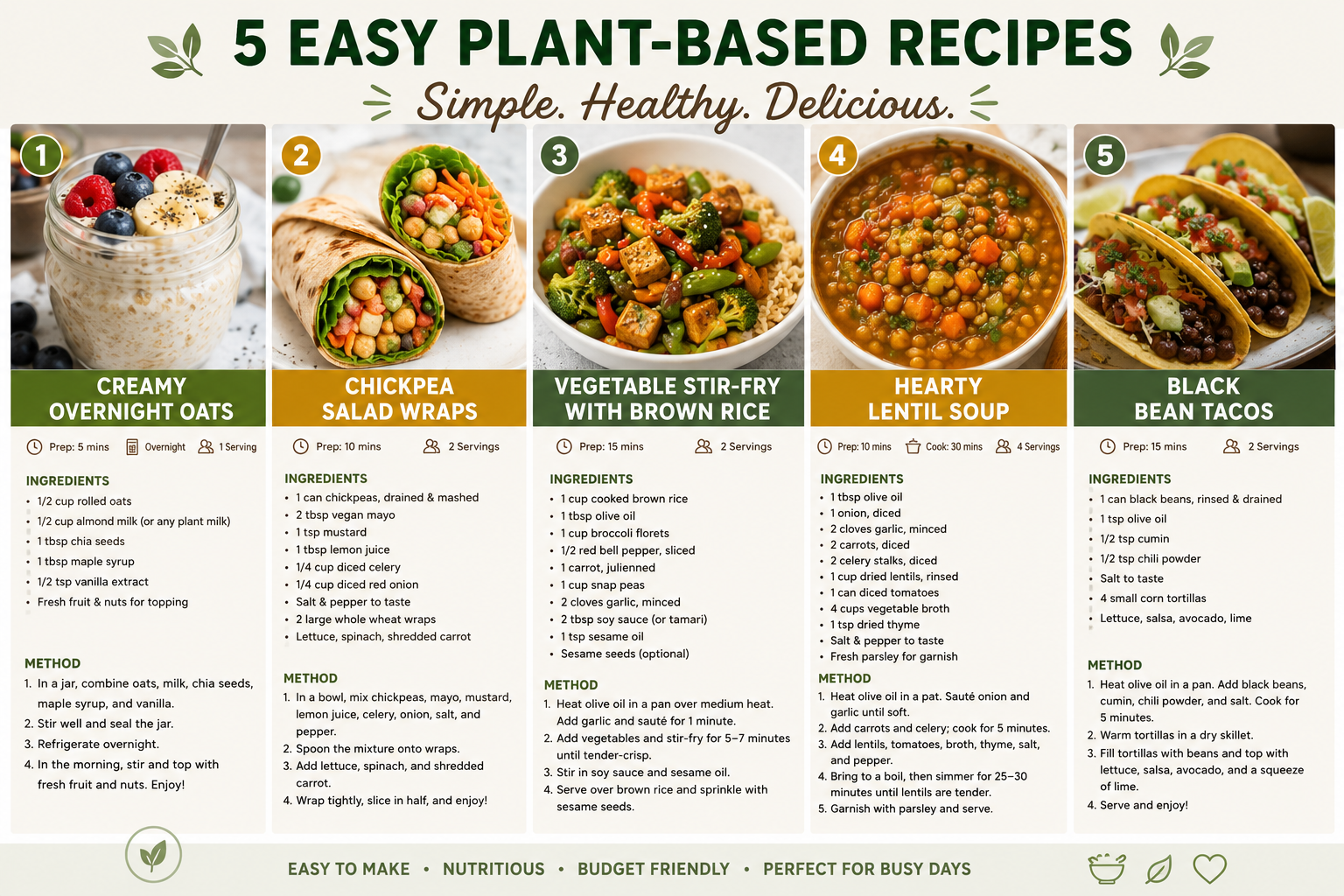
Transitioning to a plant-based lifestyle becomes much easier when you have a collection of simple, reliable recipes that don't require advanced cooking skills or hard-to-find ingredients. The meals below are designed for busy beginners who want nutritious, flavorful dishes that can be prepared with everyday pantry staples. Most take less than 30 minutes to make, are budget-friendly, and provide a satisfying balance of carbohydrates, protein, healthy fats, and fiber.
1. Creamy Overnight Oats
Overnight oats are one of the easiest breakfasts you can prepare. Simply combine rolled oats, your favorite plant-based milk, chia seeds, and a touch of maple syrup in a jar before bedtime. By morning, the oats become soft and creamy without any cooking. Top with fresh berries, sliced banana, chopped nuts, or peanut butter for added flavor and nutrition. This breakfast is rich in fiber and keeps you feeling full throughout the morning.
2. Chickpea Salad Wraps
Mash canned chickpeas with a fork and mix them with diced celery, red onion, parsley, lemon juice, vegan mayonnaise or mashed avocado, salt, and pepper. Spoon the mixture into whole-wheat tortillas or lettuce leaves and add sliced tomatoes and spinach. These wraps are perfect for lunch because they're portable, filling, and packed with plant protein. They can also be prepared in advance for meal prep.
3. Vegetable Stir-Fry with Brown Rice
A vegetable stir-fry is one of the most flexible meals you can make. Sauté broccoli, carrots, bell peppers, mushrooms, snap peas, and onions in a little sesame oil. Add garlic, ginger, and low-sodium soy sauce for flavor, then serve over cooked brown rice or quinoa. If you'd like extra protein, add tofu or edamame. This colorful meal is loaded with vitamins and comes together in about 25 minutes.
4. Hearty Lentil Soup
Lentil soup is comforting, affordable, and ideal for beginners. Simmer green or brown lentils with onions, carrots, celery, garlic, diced tomatoes, vegetable broth, thyme, and bay leaves until tender. The result is a hearty soup that's high in protein and fiber while being naturally low in saturated fat. Make a large batch and freeze individual portions for quick weekday lunches.
5. Black Bean Tacos
Black bean tacos prove that healthy meals don't have to be complicated. Warm canned black beans with cumin, paprika, garlic powder, and chili powder, then spoon them into corn or whole-wheat tortillas. Top with shredded lettuce, diced tomatoes, avocado, salsa, and fresh cilantro. Add a squeeze of lime for a bright finish. These tacos are ready in under 20 minutes and are a favorite among both adults and children.
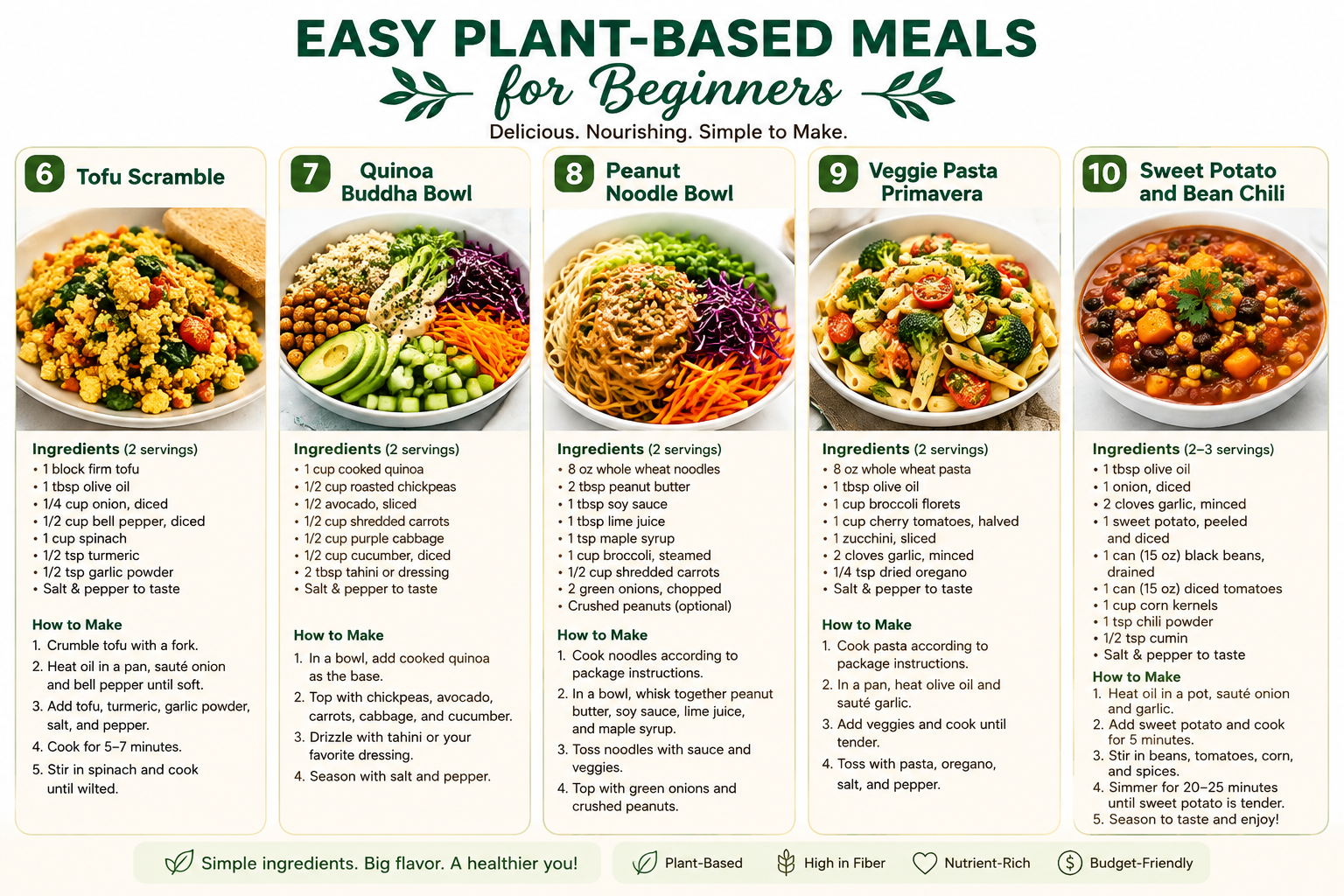
6. Tofu Scramble
If you're looking for a plant-based alternative to scrambled eggs, tofu scramble is an excellent choice. Crumble firm tofu into a skillet and cook it with turmeric, nutritional yeast, garlic powder, black pepper, spinach, mushrooms, and diced peppers. Serve with whole-grain toast or roasted potatoes for a satisfying breakfast. The turmeric gives the tofu a golden color while nutritional yeast adds a savory, cheesy flavor.
7. Quinoa Buddha Bowl
Buddha bowls are perfect for using leftover ingredients. Start with cooked quinoa as the base, then add roasted sweet potatoes, chickpeas, cucumber, shredded carrots, avocado, and mixed greens. Drizzle everything with a homemade tahini dressing made from tahini, lemon juice, garlic, and water. This balanced meal offers protein, healthy fats, and plenty of colorful vegetables in every bite.
8. Peanut Noodle Bowl
Cook whole-wheat noodles or rice noodles according to the package directions. Toss them with shredded cabbage, carrots, cucumber, green onions, and edamame. Mix peanut butter, soy sauce, lime juice, garlic, ginger, and a little maple syrup to create a creamy sauce. The combination of crunchy vegetables and rich peanut dressing makes this meal incredibly satisfying while remaining beginner-friendly.
9. Veggie Pasta Primavera
Whole-wheat pasta becomes a nutritious dinner when paired with fresh vegetables. Sauté zucchini, broccoli, cherry tomatoes, spinach, mushrooms, and garlic in olive oil before tossing them with cooked pasta. Add a splash of vegetable broth and sprinkle nutritional yeast on top for extra flavor. This dish is colorful, comforting, and easy to customize with seasonal vegetables.
10. Sweet Potato and Bean Chili
Sweet potato chili is a hearty one-pot meal that's ideal for colder months or meal prep. Combine diced sweet potatoes, kidney beans, black beans, tomatoes, onions, garlic, vegetable broth, chili powder, cumin, and smoked paprika in a large pot. Simmer until the sweet potatoes are tender and the flavors have blended together. Serve with brown rice, cornbread, or sliced avocado for a complete meal.
Tips for Staying Consistent with Plant-Based Eating
The secret to success isn't perfection—it's consistency. Start by replacing one or two meals each week instead of changing your entire diet overnight. As you become comfortable with new recipes and ingredients, gradually increase the number of plant-based meals you prepare.
Meal planning is another powerful habit. Choose a few recipes for the week, prepare grains and beans in advance, and keep chopped vegetables ready in the refrigerator. Having healthy ingredients available makes it much easier to cook at home instead of relying on takeout.
Don't be afraid to experiment with herbs, spices, and homemade sauces. Flavor is what keeps meals exciting, and small changes can completely transform familiar ingredients. Whether it's a creamy tahini dressing, spicy salsa, or homemade peanut sauce, these additions help prevent menu fatigue.
Finally, remember that progress matters more than perfection. Every plant-based meal you enjoy is a positive step toward healthier eating habits. Celebrate small wins, try new recipes regularly, and find meals you genuinely look forward to eating.
Conclusion
Starting a plant-based lifestyle doesn't have to be complicated or expensive. With a well-stocked pantry, a few basic cooking tools, and simple recipes like overnight oats, lentil soup, black bean tacos, and quinoa bowls, anyone can enjoy delicious meals while increasing their intake of fruits, vegetables, legumes, and whole grains.
The beauty of plant-based eating lies in its flexibility. You don't have to eliminate all animal products overnight to experience the benefits. Even replacing a few meals each week with wholesome plant-based options can improve your diet, expand your cooking skills, and introduce you to exciting new flavors.
As you gain confidence in the kitchen, you'll discover that plant-based meals are not only nutritious but also satisfying, affordable, and easy to prepare. Start with one recipe, build from there, and enjoy the journey toward a healthier, more balanced way of eating.
Frequently Asked Questions
1. Is a plant-based diet suitable for beginners?
Yes. A plant-based diet is beginner-friendly because it focuses on simple whole foods such as vegetables, fruits, beans, lentils, whole grains, nuts, and seeds. Start gradually by replacing a few meals each week.
2. Where do plant-based eaters get protein?
Excellent plant-based protein sources include lentils, beans, chickpeas, tofu, tempeh, edamame, quinoa, nuts, seeds, and whole grains.
3. Are plant-based meals expensive?
Not at all. Many staple foods like rice, oats, beans, lentils, potatoes, and frozen vegetables are among the most affordable grocery items, making plant-based eating budget-friendly.
4. Can I meal prep plant-based recipes?
Absolutely. Soups, chili, grain bowls, overnight oats, pasta dishes, and roasted vegetables all store well in the refrigerator and are ideal for weekly meal preparation.
5. What should I buy first when starting a plant-based diet?
Begin with versatile essentials such as oats, brown rice, quinoa, canned beans, lentils, chickpeas, frozen vegetables, fresh fruit, leafy greens, plant-based milk, nuts, seeds, olive oil, garlic, onions, and your favorite herbs and spices. These ingredients can be used to create dozens of simple and nutritious meals.
Comments
0No comments yet — be the first to share your thoughts!