25+ Meatless Lunch Ideas for Busy Days | Quick & Healthy
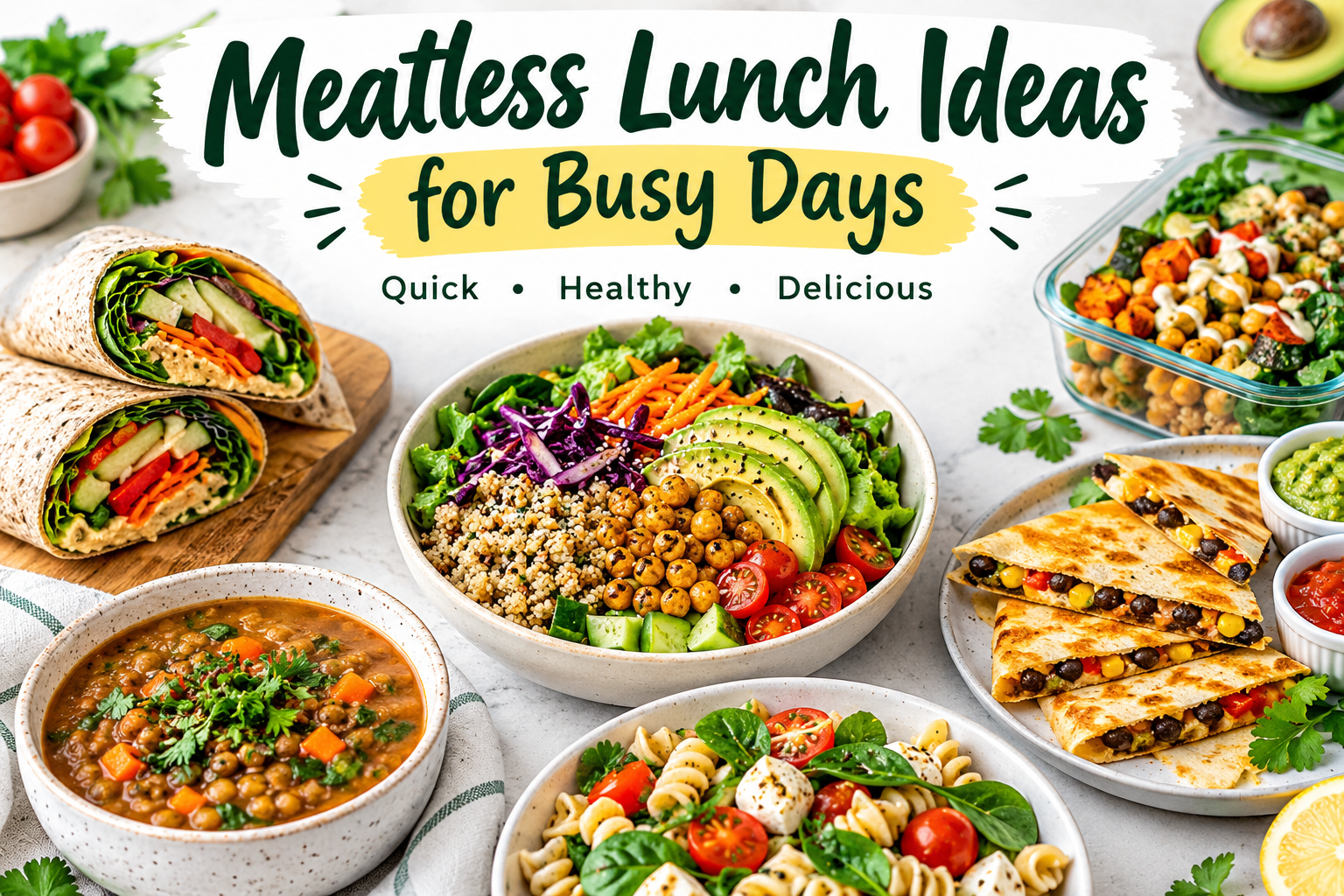
Discover easy meatless lunch ideas for busy days, including wraps, salads, bowls, soups, and sandwiches. Quick, healthy, filling recipes for work and home.
Why Meatless Lunches Are Perfect for Busy Days
When your day is packed with meetings, errands, school runs, deadlines, or household responsibilities, lunch can easily become an afterthought. You may grab a takeaway meal, eat whatever is closest, or skip a proper lunch altogether and then feel hungry again an hour later. Meatless lunch ideas for busy days offer a practical alternative because they can be built around simple ingredients such as beans, lentils, chickpeas, eggs, tofu, Greek yogurt, whole grains, vegetables, nuts, and seeds. The goal is not to create complicated vegetarian meals that require an entire afternoon in the kitchen. Instead, think of meatless lunches as flexible combinations that can be assembled quickly, packed ahead of time, and adjusted according to whatever you already have in the refrigerator.
A good meatless lunch can also be surprisingly satisfying when it contains a sensible combination of protein, fiber, complex carbohydrates, and healthy fats. Harvard's Nutrition Source identifies legumes as useful sources of protein, fiber, folate, iron, and other nutrients, while noting that beans and other plant proteins can be incorporated into a healthy eating pattern. That makes chickpeas, black beans, lentils, peas, and soy foods especially useful when you are trying to create a filling lunch without meat. You do not need to follow a strict vegetarian or vegan diet to enjoy these meals, either. Simply replacing meat at lunchtime a few days a week can make your routine more varied while giving you plenty of opportunities to eat more plant foods.
The Benefits of Adding More Plant Foods
Going meatless does not automatically make every lunch healthy. A plate of refined carbohydrates, sugary sauces, and heavily processed vegetarian foods can still leave you hungry and provide little nutritional value. Harvard research and nutrition guidance emphasize the importance of food quality, encouraging vegetables, fruits, whole grains, beans, nuts, seeds, and other minimally processed foods rather than assuming that every product labeled vegetarian is automatically nutritious. This distinction matters when planning quick lunches because convenience foods can sometimes look like healthy shortcuts while being high in sodium, refined carbohydrates, or added ingredients.
The easiest strategy is to build your lunch around recognizable foods that work together. For example, combine whole-grain bread with hummus and vegetables, or toss quinoa with chickpeas, cucumber, tomatoes, and a simple dressing. Fiber-rich ingredients can also help make a meal more satisfying. Harvard notes that fiber can help with hunger and blood-sugar regulation and is found naturally in foods such as whole grains, fruits, vegetables, legumes, and nuts. When you combine these ingredients with a protein source and a little healthy fat, you get a lunch that feels more substantial without requiring meat.
How to Build a Filling Meatless Lunch
The secret to a satisfying meatless lunch is balance rather than simply removing meat from a familiar recipe. Imagine your lunch as a four-part puzzle. Start with a protein-rich ingredient, add a fiber-rich carbohydrate or grain, pile on vegetables or fruit, and finish with a source of healthy fat or a flavorful dressing. This approach gives you countless combinations without forcing you to follow a strict recipe every day. A quinoa bowl can become a chickpea bowl, a wrap can become a sandwich, and leftover roasted vegetables can become the filling for almost anything.
Protein deserves particular attention because it is often the first thing people worry about when they reduce meat. Harvard's Nutrition Source explains that adults have a baseline protein requirement of about 0.8 grams per kilogram of body weight per day, although individual needs vary with factors such as age, activity, and other circumstances. You can get protein from many meatless ingredients, including lentils, beans, chickpeas, tofu, tempeh, eggs, Greek yogurt, cottage cheese, nuts, seeds, and quinoa. Rather than obsessing over one ingredient, mix different protein-containing foods throughout your day.
Choose a Protein-Rich Base
A protein-rich base makes a huge difference when you want lunch to carry you comfortably through the afternoon. Lentils and beans are particularly convenient because canned versions can be rinsed and used immediately, while cooked dried legumes can be prepared in larger batches. Tofu is another useful option because it absorbs sauces and seasonings beautifully, making it easy to transform into stir-fries, wraps, bowls, or salads. If you eat dairy or eggs, Greek yogurt, cottage cheese, boiled eggs, and cheese can also add protein without requiring meat.
You do not have to make every lunch high-protein in an extreme way. The more useful goal is to make sure your meal contains a meaningful protein source alongside vegetables and a satisfying carbohydrate. For example, a simple salad made entirely from lettuce and cucumber may look healthy but may not keep you full for long. Add chickpeas, lentils, quinoa, pumpkin seeds, boiled eggs, or tofu, and suddenly the same salad becomes a much more complete meal.
Add Fiber, Healthy Fats, and Color
Once you have your protein source, add ingredients that bring texture, flavor, and nutritional variety. Fiber-rich foods such as vegetables, fruits, beans, whole grains, seeds, and nuts can help make a meal more satisfying, and Harvard recommends emphasizing these foods as part of a healthy eating pattern. Healthy fats can come from avocado, olive oil, tahini, nuts, seeds, or natural nut butter. Colorful vegetables such as spinach, peppers, carrots, tomatoes, cabbage, broccoli, and cucumber also make simple lunches more appealing.
Texture matters more than many people realize. Creamy hummus beside crunchy cucumber, chewy quinoa with juicy tomatoes, or warm lentils with crisp greens can make an ordinary lunch feel restaurant-worthy. A quick squeeze of lemon, a spoonful of salsa, fresh herbs, or a yogurt-based dressing can completely change the character of the meal. That flexibility is what makes easy vegetarian lunch ideas practical for busy households.
Quick Meatless Lunch Ideas
The best quick lunches are recipes you can make without a long ingredient list or specialized cooking equipment. The following ideas are designed around common supermarket ingredients and can work for office lunches, school lunches, work-from-home days, or quick meals between errands. Some can be prepared in advance, while others take only a few minutes to assemble. You can also swap ingredients according to availability, which means you do not have to make another grocery-store trip just because you are missing one vegetable.
These recipes are deliberately flexible. If you have whole-wheat tortillas but no bread, make a wrap. If you have leftover rice, turn it into a bowl. If you have canned beans, vegetables, and a simple dressing, make a salad. The trick is to stop thinking about lunch as a completely new recipe every day and start thinking of it as a collection of building blocks.
Chickpea Avocado Wrap
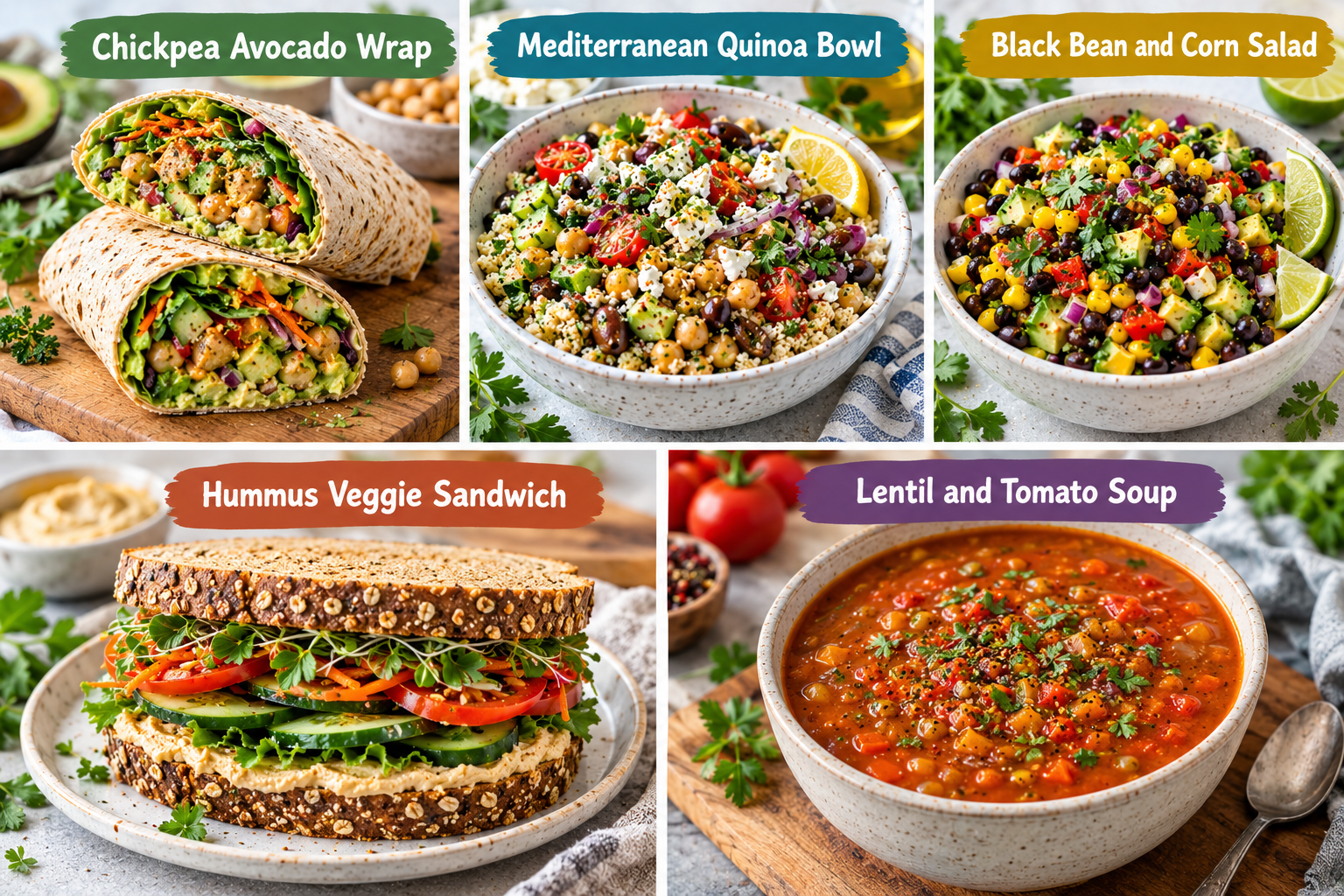
A chickpea avocado wrap is one of the easiest meatless lunches to assemble when you need something fast and portable. Mash chickpeas with avocado, lemon juice, a pinch of salt, black pepper, and a little garlic powder. Spread the mixture over a whole-grain tortilla, then add spinach, shredded carrot, cucumber, and tomato before rolling it tightly. The chickpeas provide plant-based protein and fiber, while avocado adds creaminess and healthy fat without requiring mayonnaise.
This wrap is particularly useful for meal prep because the chickpea filling can be made ahead and stored in the refrigerator. If you want extra flavor, add chopped fresh herbs, chili flakes, or a spoonful of hummus. You can also replace the avocado with hummus when you want a longer-lasting filling. The result is a colorful lunch that feels fresh rather than like another boring packed meal.
Mediterranean Quinoa Bowl
A Mediterranean quinoa bowl is ideal when you want something filling but fresh. Start with cooked quinoa and add cucumber, cherry tomatoes, spinach, chickpeas, olives, and a small amount of feta cheese. Finish it with lemon juice, olive oil, black pepper, and dried oregano. Quinoa provides a hearty grain base, while chickpeas add additional protein and fiber.
This lunch is also excellent for meal prep because the individual ingredients can be prepared separately and combined when needed. Keep the dressing in a small container until lunchtime to prevent the vegetables from becoming soggy. You can also add roasted peppers, parsley, shredded carrots, or leftover roasted vegetables. With a few simple changes, the same basic bowl can become a completely different lunch later in the week.
Black Bean and Corn Salad
When you need a lunch that requires almost no cooking, try a black bean and corn salad. Combine drained black beans, sweetcorn, chopped tomatoes, red onion, cucumber, and fresh coriander or parsley. Add lime juice, a little olive oil, cumin, black pepper, and chili powder, then toss everything together. Serve it alone, spoon it into a whole-grain wrap, or pair it with brown rice for a more substantial meal.
Black beans are especially useful in meatless lunches because legumes provide protein and fiber in one ingredient. Harvard's nutrition guidance lists beans and other legumes among valuable plant-based protein foods and highlights their fiber and micronutrient content. This salad also holds up well in the refrigerator, making it a smart choice when you want to prepare several lunches at once.
Hummus Veggie Sandwich
A hummus veggie sandwich proves that lunch does not need complicated ingredients to taste good. Spread hummus generously over two slices of whole-grain bread, then layer cucumber, tomato, spinach, grated carrot, roasted peppers, and avocado. Add black pepper, lemon juice, or a sprinkle of seeds for extra flavor and texture. The creamy hummus balances the crunchy vegetables and creates a sandwich that is much more interesting than a plain salad.
For busy mornings, prepare the vegetables the night before and store them in a sealed container. Then assembling lunch takes only a few minutes. You can also change the hummus flavor to keep things interesting, using roasted red pepper, garlic, or spicy hummus. If you need more protein, add sliced boiled egg, cottage cheese, or a sprinkle of pumpkin seeds.
Lentil and Tomato Soup
A warm bowl of lentil and tomato soup can be comforting on colder days and surprisingly easy to prepare in batches. Simmer cooked lentils with chopped tomatoes, onion, garlic, carrots, vegetable stock, paprika, cumin, and black pepper until the vegetables are tender. You can blend part of the soup for a creamy texture while leaving some lentils whole. Serve it with whole-grain toast for a simple lunch that feels hearty without meat.
Lentils are particularly useful because one cup of cooked lentils contains about 18 grams of protein and 15 grams of fiber, according to Harvard's Nutrition Source. Those numbers make lentils a practical ingredient for people looking to create filling meatless meals. Make a large pot on the weekend, divide it into containers, and you have several lunches ready to go.
Caprese Pasta Salad
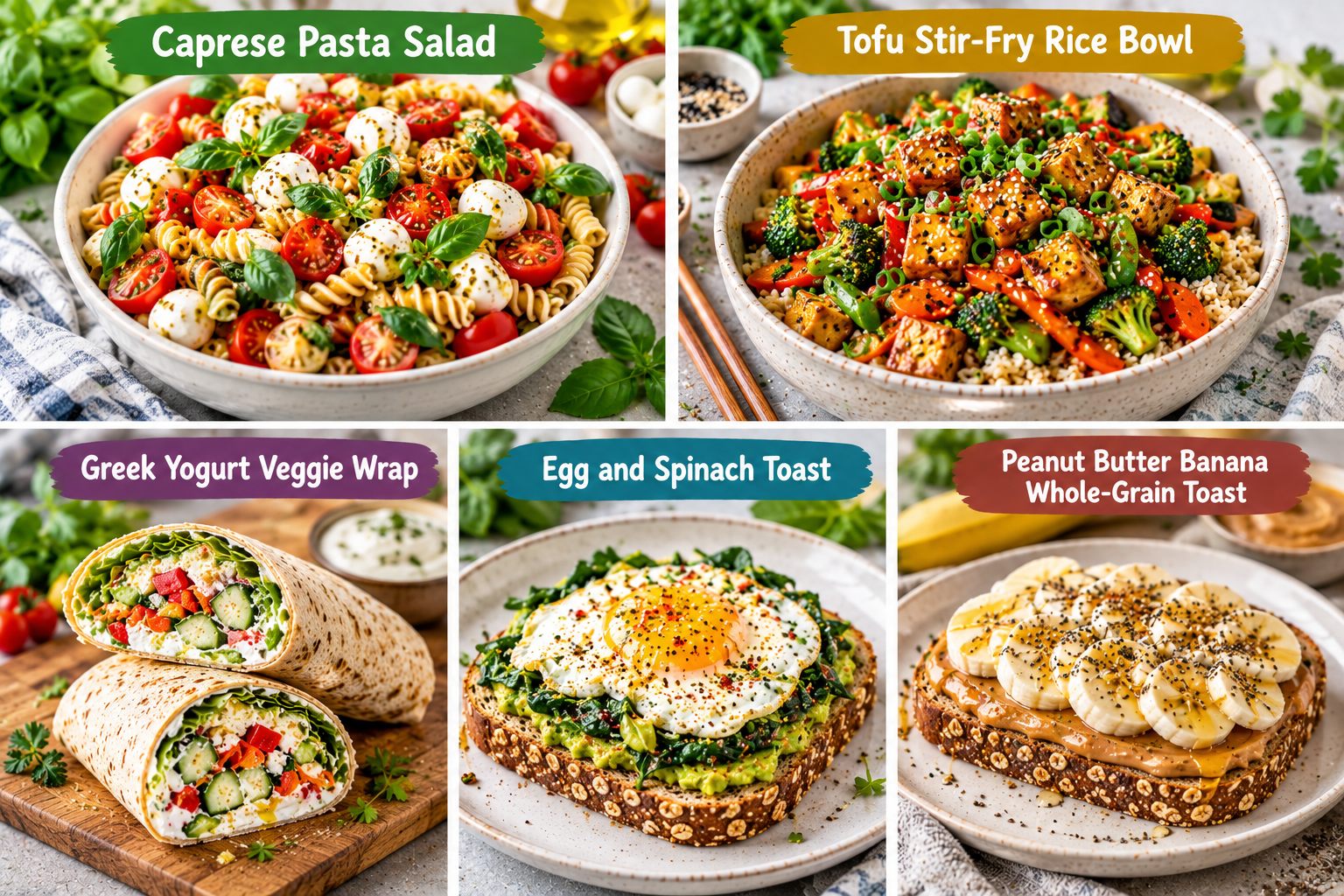
A Caprese pasta salad combines pasta with cherry tomatoes, mozzarella, fresh basil, and a simple olive oil dressing. Choose whole-wheat pasta when you want more fiber and a more substantial texture. Once the pasta has cooled, toss it with the tomatoes, mozzarella, basil, olive oil, lemon juice, black pepper, and a small splash of balsamic vinegar. It can be eaten cold or at room temperature, making it convenient for work lunches where reheating is not possible.
For extra vegetables, add spinach, cucumber, roasted peppers, or steamed broccoli. You can also add white beans or chickpeas if you want more plant-based protein. This is a useful example of how a familiar pasta salad can become a more balanced lunch by adding legumes and vegetables rather than relying heavily on cheese.
Tofu Stir-Fry Rice Bowl
A tofu stir-fry rice bowl is a great choice when you have leftover rice in the refrigerator. Cut firm tofu into cubes and pan-fry until golden, then add vegetables such as broccoli, bell peppers, carrots, and snap peas. Toss everything with a quick sauce made from low-sodium soy sauce, ginger, garlic, lime juice, and a small amount of sesame oil. Serve over brown rice or another whole grain.
Tofu is a soy food that can provide substantial protein, and Harvard's nutrition guidance specifically includes soy foods among plant-based protein options. The beauty of this recipe is its flexibility. You can use whatever vegetables need to be eaten, change the sauce, or replace rice with quinoa or noodles.
Greek Yogurt Veggie Wrap
If you eat dairy, a Greek yogurt veggie wrap can provide a creamy and protein-rich alternative to mayonnaise-based wraps. Mix plain Greek yogurt with lemon juice, garlic, black pepper, and herbs to create a simple spread. Add spinach, cucumber, grated carrot, tomatoes, roasted peppers, and chickpeas to a whole-grain tortilla. Roll it tightly and cut it in half for an easy packed lunch.
Greek yogurt works particularly well because it adds a creamy texture while also contributing protein. You can make the yogurt spread in advance and use it for sandwiches, grain bowls, or vegetable dips throughout the week. If you want a vegan version, replace the Greek yogurt with hummus or an unsweetened plant-based yogurt that suits your dietary preferences.
Egg and Spinach Toast
For an extremely fast lunch, make egg and spinach toast. Toast whole-grain bread while quickly scrambling or frying one or two eggs with fresh spinach. Place the eggs over the toast and add sliced tomatoes, avocado, chili flakes, or a spoonful of cottage cheese. The entire meal can be prepared quickly and works especially well when you need something substantial without spending much time cooking.
Eggs provide a convenient source of protein, while whole-grain bread and vegetables add carbohydrates, fiber, and micronutrients. If you are packing lunch rather than eating at home, prepare the egg mixture and take it with toasted bread separately so the bread stays crisp. This is also a useful option for people who enjoy meatless meals but do not want every lunch to be completely plant-based.
Peanut Butter Banana Whole-Grain Toast
For days when you need lunch in almost no time, peanut butter banana whole-grain toast can save the day. Spread natural peanut butter over whole-grain toast and top it with sliced banana and a sprinkle of chia seeds or ground flaxseed. If you prefer more savory flavors, add cinnamon and a small pinch of salt rather than extra sweeteners. Pair the toast with plain Greek yogurt or a glass of milk if you want additional protein.
This idea works particularly well for busy mornings when lunch needs to be packed quickly. Peanut butter provides protein and fat, while banana contributes carbohydrate and whole-grain bread provides a fiber-rich base. Harvard's nutrition guidance includes nuts and seeds among useful plant protein foods and recommends focusing on healthier protein sources as part of an overall balanced diet.
How to Meal Prep Meatless Lunches
Meal prepping does not have to mean cooking seven identical containers of food every Sunday. A more flexible approach is to prepare a few basic ingredients that can be mixed and matched during the week. Cook a batch of quinoa, brown rice, or whole-wheat pasta; rinse several cans of beans or chickpeas; wash and chop vegetables; and prepare one or two simple dressings. Once those ingredients are ready, you can build different lunches in minutes instead of starting from zero every day.
Try preparing components rather than finished meals. For example, roasted vegetables can become a quinoa bowl on Monday, a wrap on Tuesday, and a pasta salad on Wednesday. Cooked lentils can be used in soup, salads, or grain bowls. A container of hummus can become a sandwich spread, vegetable dip, or bowl topping. This method gives you the convenience of meal prep without the boredom that often causes people to abandon their healthy eating plans.
Easy Ways to Keep Vegetarian Lunches Interesting
Even healthy lunches can become boring when you repeat the same flavors every day. One of the easiest ways to prevent that is to rotate sauces and seasonings rather than constantly buying new ingredients. Try lemon-tahini dressing for Mediterranean bowls, salsa and lime for Mexican-inspired salads, soy-ginger sauce for tofu bowls, or yogurt-herb dressing for wraps. The base ingredients can stay similar while the flavor profile changes completely.
Texture is another simple trick. Combine creamy hummus with crunchy vegetables, soft beans with toasted seeds, or chewy grains with fresh herbs and crisp greens. Harvard's guidance encourages variety among vegetables and fruits because different foods provide different combinations of nutrients and plant compounds. So instead of buying a huge amount of one vegetable, rotate several colors throughout the week. A lunch with green spinach, red peppers, orange carrots, purple cabbage, and yellow corn is naturally more visually appealing and gives you a broader mix of plant foods.
Common Mistakes to Avoid
One common mistake is assuming that meatless means healthy automatically. A vegetarian lunch built around refined bread, fried foods, sugary sauces, and heavily processed snacks may not offer the balanced nutrition you are looking for. Harvard researchers have emphasized that the quality of plant-based foods matters, with healthier plant-based patterns emphasizing whole grains, vegetables, fruits, nuts, and legumes rather than refined grains and sugary foods. Think about what you are adding, not only what you are removing.
Another mistake is forgetting protein and fiber. A lunch consisting of a small green salad may leave you searching for snacks shortly afterward. Add beans, lentils, tofu, eggs, Greek yogurt, cottage cheese, nuts, seeds, or quinoa to make the meal more substantial. Fiber-rich foods such as legumes, whole grains, vegetables, fruits, and nuts can also support fullness and digestive health. Finally, avoid making every lunch complicated. The best quick meatless lunch ideas are the ones you will actually prepare repeatedly because they fit your schedule.
Conclusion
Finding satisfying meatless lunch ideas for busy days does not require becoming a professional meal planner or spending hours cooking. With a handful of reliable ingredients—beans, lentils, chickpeas, tofu, eggs, Greek yogurt, whole grains, vegetables, fruit, nuts, and seeds—you can create dozens of lunches that are quick, filling, and flavorful. The key is to build meals around balance rather than simply removing meat. A protein-rich base, fiber-filled carbohydrate, colorful vegetables, and a little healthy fat can turn a basic lunch into something you genuinely look forward to eating.
Start small if your schedule is hectic. Pick two recipes from this list, prepare a few ingredients on the weekend, and rotate them with simple sandwiches, salads, bowls, or leftovers. You may find that meatless lunches become one of the easiest ways to add variety to your weekly routine. And when lunchtime arrives on one of those impossibly busy days, you will already have a delicious answer waiting in the refrigerator instead of reaching for the nearest takeaway menu.
FAQs About Meatless Lunch Ideas
1. What is a good high-protein meatless lunch?
Good options include lentil soup, chickpea wraps, tofu rice bowls, black bean salads, quinoa bowls, egg and spinach toast, and Greek yogurt wraps. Combining more than one protein-containing ingredient can make a lunch especially satisfying.
2. What can I eat for a meatless lunch at work?
Choose portable options such as hummus sandwiches, chickpea wraps, quinoa bowls, pasta salads, bean salads, overnight grain bowls, or lentil soup in a suitable insulated container. Cold lunches are especially convenient when your workplace does not have a microwave.
3. Are meatless lunches filling?
They can be very filling when they contain enough protein, fiber, and healthy fats. Beans, lentils, chickpeas, tofu, whole grains, nuts, seeds, vegetables, and fruit are useful ingredients for creating satisfying meals.
4. How can I prepare vegetarian lunches quickly?
Meal prep a few ingredients rather than complete meals. Cook grains, prepare beans or lentils, chop vegetables, and make one or two dressings in advance. Then combine them differently throughout the week so you can assemble lunch in just a few minutes.
5. Can meatless lunches help me eat healthier?
Replacing some meat-based meals with meals centered on vegetables, legumes, whole grains, nuts, and seeds can be part of a healthy eating pattern. Harvard's nutrition guidance emphasizes overall food quality and recommends prioritizing healthy plant foods rather than assuming that simply eliminating meat guarantees a nutritious diet.
Comments
0No comments yet — be the first to share your thoughts!