15 Healthy Sandwich Ideas for Lunch | Easy & Filling
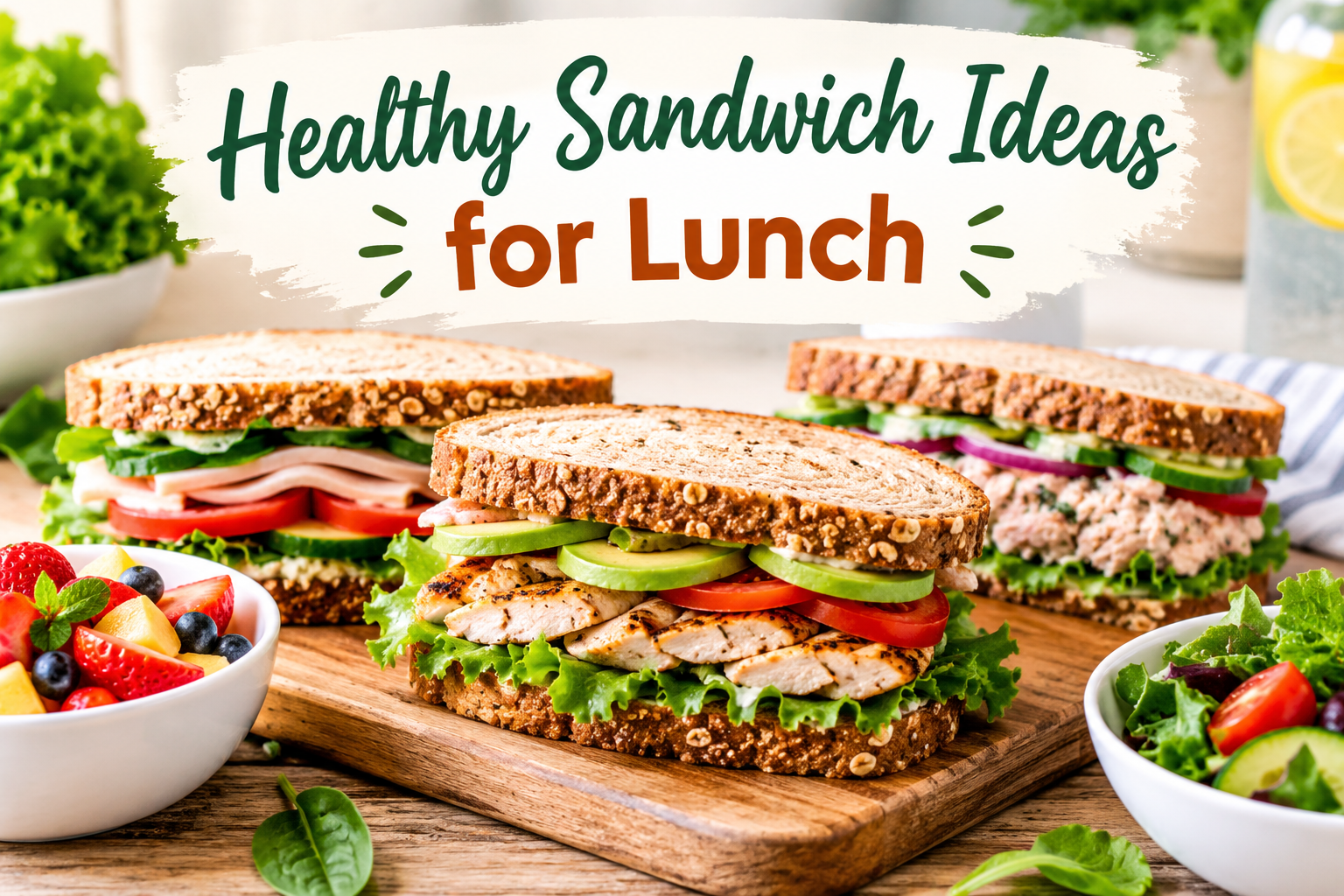
Discover 15 healthy sandwich ideas for lunch, from chicken and avocado to tuna, chickpeas, eggs, and more. Easy, nutritious, filling, and perfect for meal prep.
Healthy Sandwich Ideas for Lunch
Finding a lunch that is quick, satisfying, nutritious, and easy to carry can feel harder than it should be. That is exactly why healthy sandwich ideas for lunch remain such a practical choice for busy weekdays. A good sandwich can be prepared in minutes, packed for work or school, customized around your favorite ingredients, and made filling enough to keep you going through the afternoon. The trick is understanding that not every sandwich needs to be loaded with processed meat, heavy sauces, or excessive cheese. With the right combination of whole grains, lean protein, vegetables, fruit, and flavorful spreads, a sandwich can become a genuinely balanced meal.
The USDA's MyPlate guidance recommends building a better sandwich by starting with grains, adding protein, piling on produce, and choosing smarter spreads. It specifically suggests options such as whole-grain bread, chicken, tuna, salmon, eggs, nut butters, beans, spinach, tomatoes, carrots, apples, pears, hummus, avocado, Greek yogurt, and mustard. The American Heart Association similarly recommends fiber-rich whole-grain breads, vegetables and fruits, leaner proteins, and attention to sodium and saturated fat when creating healthier sandwiches.
So, what should you actually put between those two slices of bread? Below, you will find 15 healthy sandwich ideas for lunch, from creamy chicken and avocado to Mediterranean chickpeas, tuna, eggs, salmon, and even a naturally sweet peanut butter and banana combination. These ideas are designed to be simple enough for busy mornings while still giving your lunch variety and plenty of flavor.
Why Healthy Sandwiches Make an Easy Lunch
A sandwich is almost like a blank canvas. You can change the bread, protein, vegetables, spread, seasoning, and toppings depending on what you have available. That flexibility makes sandwiches especially useful when you are trying to eat well without spending a lot of time cooking. Instead of thinking of a sandwich as a processed lunch from a convenience store, think of it as a compact meal containing several food groups.
A balanced sandwich can provide complex carbohydrates for energy, protein for satisfaction, vegetables for vitamins and minerals, and healthy fats for flavor and staying power. The American Heart Association recommends including a mix of lean proteins, whole grains, fruits, vegetables, and low-fat or fat-free dairy when packing lunch. This is particularly helpful for people who work long hours and need something that can be prepared ahead of time and eaten at a desk, in a break room, or on the go.
Another advantage is portion control. When you make a sandwich at home, you decide how much sauce, cheese, meat, and bread goes into it. You are not relying on a restaurant to determine the portion size for you. You can also add a side of fruit, raw vegetables, yogurt, or a small handful of unsalted nuts to create a more complete lunch.
What Makes a Sandwich Healthy?
The healthiest sandwiches generally have a simple structure: whole-grain carbohydrate + protein + vegetables or fruit + a sensible spread. That does not mean every ingredient needs to be low-calorie or fat-free. Healthy eating is about the overall combination rather than turning lunch into a plate of bland ingredients.
Start with a bread that contributes something nutritionally, such as whole-wheat or another whole-grain option. Then choose protein from chicken, turkey, tuna, salmon, eggs, beans, chickpeas, cottage cheese, or nut butter. Add colorful produce such as spinach, cucumber, tomatoes, peppers, shredded carrots, lettuce, avocado, apples, or sprouts. Finally, use a flavorful spread such as hummus, mustard, mashed avocado, Greek yogurt, or a small amount of nut butter.
Fiber is another useful consideration. The American Heart Association explains that fiber can support digestive health, help with fullness, and is found in foods including whole grains, vegetables, fruits, beans, nuts, and seeds. That means your sandwich can become an easy way to increase fiber simply by choosing whole-grain bread and adding plant foods.
How to Build a Balanced Healthy Sandwich
Creating a healthy sandwich does not require a complicated recipe. A useful approach is to think in layers. First choose your base, then your protein, followed by vegetables or fruit, and finally the sauce or spread that ties everything together.
This method also makes meal planning easier. If you prepare cooked chicken, boiled eggs, tuna filling, hummus, chopped vegetables, or sliced fruit at the beginning of the week, you can assemble different sandwiches without making an entirely new lunch every day. MyPlate specifically encourages using leftovers and produce already available in your refrigerator to make sandwiches more affordable and practical.
Choose a Better Bread
Bread is the foundation of a sandwich, so it deserves attention. Look for whole-grain or whole-wheat bread when possible. Whole-grain pita, tortillas, naan, rolls, English muffins, and sandwich bread can all work.
Whole grains can provide more fiber than refined grains, and MyPlate recommends making at least half of your grains whole grains. If you prefer sourdough, rye, seeded bread, or a different style, you can still build a nutritious sandwich around it. The key is to look at the ingredient and nutrition information rather than assuming that bread with a brown color is automatically whole grain.
Add a Protein-Rich Filling
Protein can make lunch feel more substantial. Good sandwich choices include grilled chicken, turkey, tuna, salmon, eggs, chickpeas, black beans, cottage cheese, Greek yogurt, hummus, and nut butter.
If you use deli meat, pay attention to sodium. The American Heart Association notes that processed deli meats can be high in sodium and recommends choosing lower-sodium varieties when available. You can also reduce your dependence on deli meat by using leftover roasted chicken, homemade tuna salad, hard-boiled eggs, or mashed beans.
Load Up on Vegetables
This is where a sandwich can become much more exciting. Instead of stopping at lettuce and tomato, experiment with cucumber, spinach, roasted peppers, shredded carrots, red onion, sprouts, cabbage, avocado, and sliced radishes.
Vegetables add crunch, color, freshness, and texture. They can also help make a sandwich feel larger without relying entirely on cheese or creamy sauces. The American Heart Association recommends adding vegetables such as cucumber, spinach, and bell peppers to sandwiches as part of a healthier eating pattern.
15 Healthy Sandwich Ideas for Lunch
The best healthy sandwich is one you will actually enjoy eating. These ideas cover different flavors and dietary preferences so you do not have to eat the same turkey sandwich every day.
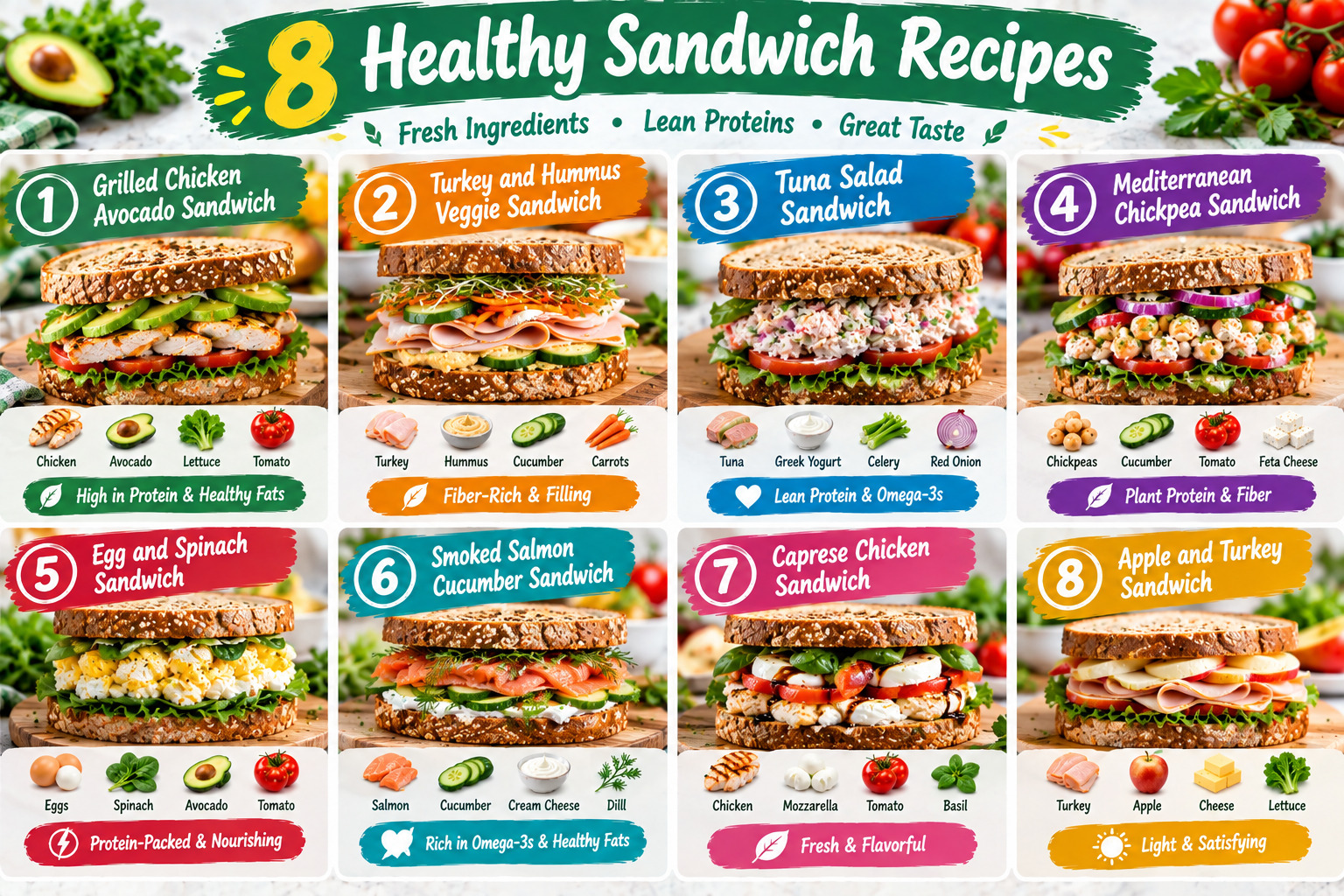
1. Grilled Chicken Avocado Sandwich
A grilled chicken avocado sandwich is a great choice when you want something filling without relying on a heavy sauce. Start with two slices of whole-grain bread and add sliced grilled chicken breast, mashed avocado, tomato, spinach, and cucumber. Season the chicken with black pepper, garlic powder, paprika, and a squeeze of lemon before grilling for extra flavor.
The avocado creates a naturally creamy texture, so you may not need mayonnaise. The chicken supplies protein, while the vegetables add freshness and crunch. For an especially busy morning, cook several chicken breasts ahead of time and store them in the refrigerator so assembling lunch takes only a few minutes.
2. Turkey and Hummus Veggie Sandwich
For a fast lunch, combine lower-sodium turkey, hummus, cucumber, tomato, spinach, and shredded carrot on whole-wheat bread. Hummus gives the sandwich a creamy texture while adding a plant-based component to the meal.
The vegetables make every bite crunchy and fresh, while turkey provides a convenient source of protein. If you are watching sodium, compare turkey labels and select the lower-sodium option. You can also replace turkey with grilled chicken when you want to reduce your reliance on processed meat.
3. Tuna Salad Sandwich
A homemade healthy tuna salad sandwich can be considerably more customizable than a typical deli version. Mix tuna packed in water with plain Greek yogurt, mustard, black pepper, diced celery, and a little lemon juice. Spoon the mixture onto whole-grain bread and add lettuce, cucumber, or tomato.
Using Greek yogurt instead of a large amount of mayonnaise creates a creamy filling while keeping the recipe simple. The American Heart Association also suggests low-sodium canned tuna as a practical sandwich ingredient and recommends using plain yogurt instead of mayonnaise in tuna or chicken mixtures.
4. Mediterranean Chickpea Sandwich
For a vegetarian lunch, mash chickpeas with hummus, lemon juice, chopped cucumber, tomato, parsley, and a little black pepper. Spread the mixture over whole-grain bread or tuck it into a whole-wheat pita.
This sandwich has a Mediterranean-inspired combination of creamy chickpeas, fresh vegetables, and bright lemon. It is especially useful for meal prep because the chickpea filling can be prepared in advance. Add spinach or shredded cabbage immediately before eating for extra crunch.
5. Egg and Spinach Sandwich
A simple egg and spinach sandwich can turn breakfast ingredients into an excellent lunch. Scramble or slice two cooked eggs and place them between whole-grain bread with fresh spinach, tomato, and a thin layer of mashed avocado.
Eggs are convenient because they can be prepared ahead of time. For additional flavor, add black pepper, paprika, chives, or a small amount of hot sauce. If you prefer a warm sandwich, toast the bread and heat the egg before assembling.
6. Smoked Salmon Cucumber Sandwich
Smoked salmon pairs beautifully with cucumber and creamy yogurt. Spread whole-grain bread with plain Greek yogurt mixed with lemon and dill, then add smoked salmon, cucumber slices, spinach, and black pepper.
The result is fresh, cool, and satisfying without needing a complicated recipe. Because smoked salmon can be relatively high in sodium, portion size and the rest of the day's meals are worth considering if you are trying to limit sodium.
7. Caprese Chicken Sandwich
Turn the classic Caprese combination into a protein-rich lunch by layering grilled chicken, fresh tomato, mozzarella, basil, and spinach on whole-grain bread. Add a small drizzle of balsamic vinegar or balsamic glaze for acidity and sweetness.
This sandwich is particularly good when tomatoes and basil are fresh. The mozzarella adds creaminess, while chicken gives the sandwich enough substance for lunch. If you want to reduce the amount of saturated fat, use a smaller portion of cheese and increase the vegetables.
8. Apple and Turkey Sandwich
Sweet and savory ingredients can make lunch much more interesting. For this sandwich, combine sliced turkey with thin apple slices, spinach, mustard, and a small amount of sharp cheese on whole-grain bread.
The crisp apple contrasts beautifully with the soft bread and turkey. Mustard adds plenty of flavor without requiring a heavy sauce. You can also add a thin layer of hummus for extra creaminess.
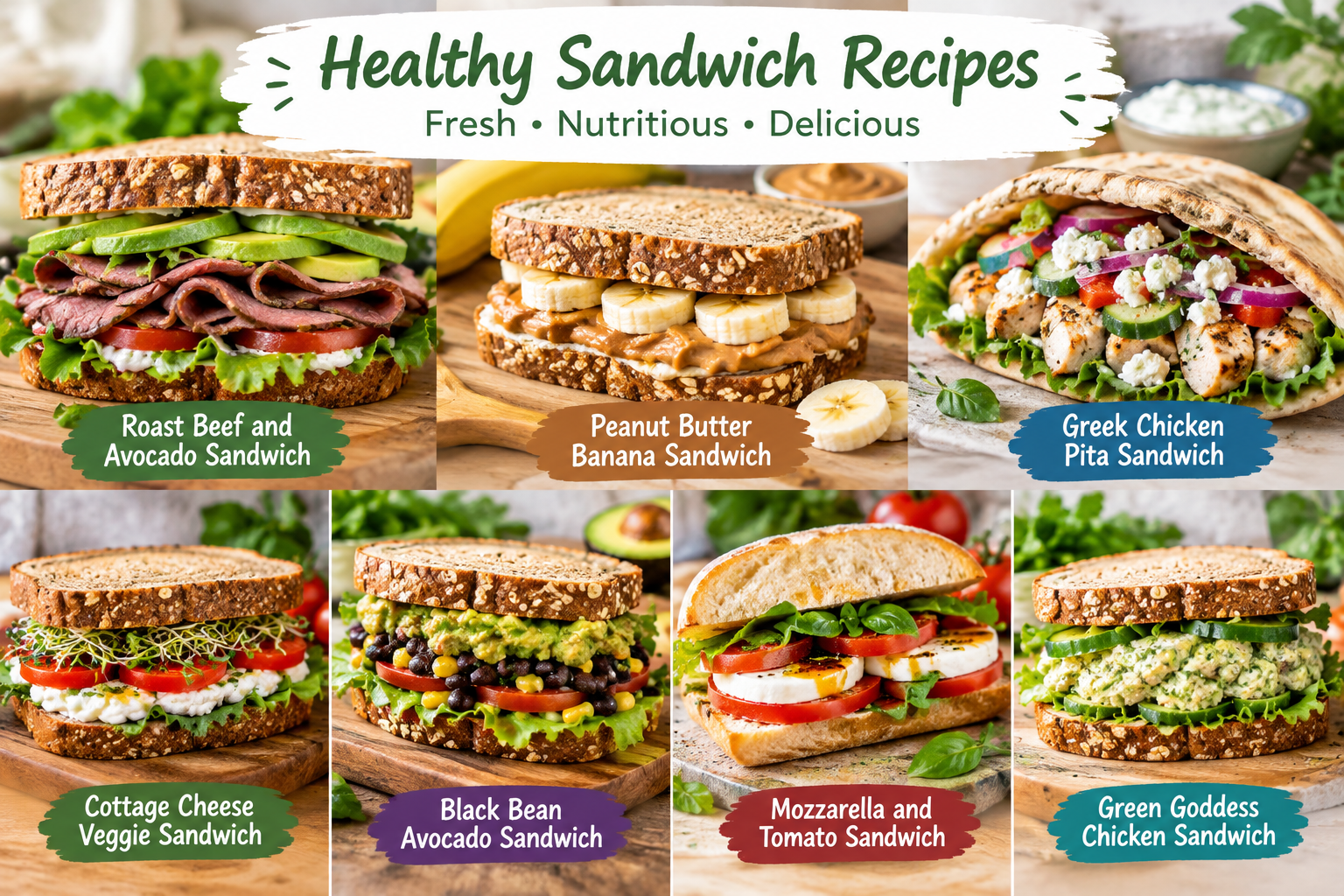
9. Roast Beef and Avocado Sandwich
Thinly sliced lean roast beef works well with creamy avocado, tomato, arugula, and mustard. Use whole-grain bread and keep the cheese optional.
The combination of savory beef, peppery greens, and buttery avocado gives this sandwich a restaurant-style feel while remaining easy to prepare at home. If you have leftover homemade roast beef, this is also a smart way to turn leftovers into a completely different lunch.
10. Peanut Butter Banana Sandwich
Not every healthy lunch sandwich has to be savory. A peanut butter banana sandwich can be a convenient option when you want something naturally sweet.
Spread natural peanut butter over whole-grain bread and add sliced banana. For extra fiber and texture, sprinkle on chia seeds or ground flaxseed. Choose peanut butter with a short ingredient list and little or no added sugar when possible.
This sandwich pairs especially well with plain Greek yogurt or a handful of berries if you want to create a more substantial lunch.
11. Greek Chicken Pita Sandwich
For a Mediterranean-style lunch, fill a whole-wheat pita with grilled chicken, cucumber, tomato, spinach, red onion, and Greek yogurt sauce. Mix the yogurt with lemon juice, garlic, dill, and black pepper to make a quick homemade dressing.
The pita keeps everything together while giving you plenty of room for vegetables. You can also add hummus for additional creaminess. This is an excellent meal-prep option because the chicken and sauce can be prepared ahead while the vegetables are chopped separately.
12. Cottage Cheese Veggie Sandwich
Cottage cheese can be a surprisingly good sandwich filling. Spread or layer cottage cheese onto whole-grain toast and top it with cucumber, tomato, spinach, shredded carrot, and black pepper.
If you like a little heat, add chili flakes or sliced jalapeño. The creamy cottage cheese contrasts with crisp vegetables, creating a sandwich that feels light but satisfying. Choose a lower-sodium cottage cheese if sodium is a concern.
13. Black Bean Avocado Sandwich
Mash black beans with avocado, lime juice, cumin, and black pepper. Spread the mixture over toasted whole-grain bread and top with tomato, lettuce, corn, or sliced bell peppers.
This is an affordable vegetarian sandwich that makes good use of pantry staples. Beans can contribute both protein and fiber, while avocado gives the filling a creamy consistency. The American Heart Association also recommends beans as a practical way to increase fiber in meals.
14. Mozzarella and Tomato Sandwich
For a simple meat-free lunch, combine fresh mozzarella, tomato, basil, spinach, and a small drizzle of balsamic vinegar on whole-grain bread. You can toast the sandwich if you prefer the mozzarella slightly melted.
The American Heart Association features a tomato and ricotta toast that uses whole-grain bread, tomatoes, herbs, and ricotta and provides 127 calories, 12 grams of protein, and 3 grams of fiber per serving. That recipe demonstrates how a simple combination of whole grains, dairy, herbs, and vegetables can create a quick lunch without complicated cooking.
15. Green Goddess Chicken Sandwich
For something especially fresh, combine chopped grilled chicken with Greek yogurt, lemon juice, parsley, spinach, cucumber, and avocado. Spread the mixture over whole-grain bread and add sprouts or shredded lettuce.
The herbs and lemon give the sandwich a bright flavor, while the avocado and yogurt create a creamy texture. It is also a great way to use leftover chicken. Prepare the filling the night before, refrigerate it, and assemble your sandwich in the morning.
Healthy Sandwich Spreads and Sauces
A sandwich can have nutritious ingredients and still become overly heavy if the spread is loaded on without much thought. Instead of automatically reaching for mayonnaise, experiment with hummus, mashed avocado, Greek yogurt, mustard, mashed beans, or nut butter.
MyPlate specifically recommends spreads such as avocado, hummus, non-fat Greek yogurt, nut butters, mustard, smashed black beans, roasted garlic, and lower-fat mayonnaise as ways to change the flavor and texture of a sandwich.
You can also make a quick yogurt sauce by combining plain Greek yogurt with lemon juice, garlic, dill, and black pepper. Another easy option is avocado mashed with lime juice and chili flakes. If you enjoy spicy food, a little hot sauce or sliced jalapeño can add significant flavor without requiring a large amount of creamy dressing.
The goal is not to eliminate flavor. It is to use flavorful ingredients strategically so you do not need a thick layer of sauce to make your sandwich enjoyable.
How to Make Sandwiches More Filling
If your sandwich leaves you hungry an hour later, the problem may not be that sandwiches are inadequate. It may simply need better balance. Start by including a clear protein source, such as chicken, tuna, eggs, beans, salmon, turkey, cottage cheese, or hummus.
Next, choose whole-grain bread and add plenty of vegetables. Fiber-rich foods can help you feel fuller, and the American Heart Association notes that fiber can support fullness and weight management. You can also add healthy fats in sensible portions through avocado, nuts, seeds, or nut butter.
Finally, think about the entire lunch rather than only the sandwich. A sandwich paired with an apple, berries, carrots, cucumber, yogurt, or a small portion of nuts can be more satisfying than simply making the sandwich larger.
Healthy Sandwiches for Meal Prep
Meal prep does not mean every lunch needs to look identical. In fact, preparing individual ingredients rather than fully assembling five sandwiches can give you much more variety.
Cook chicken, boil eggs, prepare tuna or chickpea filling, wash spinach, slice cucumbers, and portion hummus into small containers. Keep wet ingredients separate from bread until you are ready to eat. This simple approach can prevent soggy sandwiches while allowing you to assemble lunch in just a few minutes.
For example, prepare grilled chicken on Sunday and use it in a chicken-avocado sandwich on Monday, a Greek chicken pita on Tuesday, and a Caprese chicken sandwich on Wednesday. The same ingredient suddenly becomes three different lunches.
Meal prep also helps reduce food waste. MyPlate recommends starting with leftovers and produce already in your refrigerator, which makes sandwiches a useful tool for using ingredients before they spoil.
How to Pack a Sandwich for Work or School
The biggest enemy of a packed sandwich is moisture. Tomatoes, cucumbers, sauces, and other watery ingredients can make bread soft if they sit together for several hours.
A simple solution is to create a moisture barrier. Spread hummus, avocado, or another thick ingredient directly against the bread, then place lettuce or spinach between the bread and wetter vegetables. Alternatively, pack the vegetables separately and add them immediately before eating.
Keep your sandwich chilled when the ingredients require refrigeration, and use an insulated lunch bag with an appropriate cold pack. For work or school, choose sandwiches that travel well, such as turkey and hummus, chicken and avocado, chickpea salad, peanut butter and banana, or egg and spinach.
The American Heart Association recommends planning ahead and packing balanced lunches that include foods such as lean proteins, whole grains, fruits, vegetables, and lower-fat dairy.
Common Healthy Sandwich Mistakes to Avoid
One common mistake is focusing too heavily on the bread while ignoring what goes between it. Whole-grain bread cannot automatically turn a sandwich into a healthy lunch if it is buried under processed meats, large amounts of cheese, and creamy sauces.
Another issue is sodium. Processed meats, cheese, sauces, and some breads can contribute significant amounts of sodium. The American Heart Association recommends choosing ingredients with lower amounts of sodium and saturated fat and limiting processed meats.
Portion size also matters. A sandwich does not need to be enormous to be satisfying. If you have a large sandwich, consider eating half and pairing it with vegetables or fruit. The American Heart Association specifically recommends paying attention to portion size and cutting large sandwiches into halves or quarters.
Another mistake is skipping vegetables. Lettuce alone is fine, but adding tomato, cucumber, peppers, spinach, carrots, cabbage, sprouts, or avocado can dramatically improve the texture and nutritional variety of your lunch.
Finally, do not be afraid of variety. If you eat the same turkey sandwich every day, lunch can quickly become boring. Rotate between chicken, fish, eggs, beans, chickpeas, dairy, and nut-based options, then change the vegetables and sauces around them.
Conclusion
These healthy sandwich ideas for lunch prove that a quick meal does not have to be boring, complicated, or nutritionally unbalanced. With a few smart ingredients, you can transform ordinary bread into a satisfying lunch filled with protein, whole grains, vegetables, fruit, and healthy fats.
The easiest formula is simple: start with a whole-grain base, choose a protein you enjoy, add plenty of colorful produce, and finish with a flavorful spread. Chicken and avocado, turkey and hummus, tuna and Greek yogurt, chickpeas and vegetables, eggs and spinach, or even peanut butter and banana can all become excellent lunch options.
The most important part is making the system work for your lifestyle. Prepare a few ingredients ahead of time, keep your refrigerator stocked with versatile foods, and change your combinations throughout the week. Healthy eating does not have to mean spending an hour preparing lunch every morning. Sometimes, all you need are two slices of good bread and a few ingredients that work well together.
FAQs
1. What is the healthiest bread for a sandwich?
Whole-grain or whole-wheat bread is generally a strong choice because it can provide more fiber than refined bread. Look for bread that lists a whole grain as a primary ingredient and compare nutrition labels for fiber and sodium. Whole-grain pita, tortillas, rolls, and naan can also work well.
2. What can I put in a healthy sandwich instead of mayonnaise?
Try hummus, mashed avocado, plain Greek yogurt, mustard, mashed black beans, or a yogurt-based herb sauce. These spreads can provide creaminess and flavor without requiring a large amount of traditional mayonnaise. MyPlate specifically recommends several of these alternatives for building a better sandwich.
3. Are sandwiches good for weight management?
A sandwich can fit into a balanced eating pattern when portions and ingredients are appropriate. Choosing whole grains, vegetables, lean protein, and fiber-rich foods can make lunch more satisfying. The American Heart Association recommends emphasizing vegetables, whole grains, and appropriate protein while limiting highly processed ingredients.
4. How can I make a vegetarian sandwich high in protein?
Use ingredients such as chickpeas, black beans, hummus, eggs, cottage cheese, Greek yogurt, tofu, or nut butter. Pairing a protein-rich ingredient with whole-grain bread and vegetables creates a more balanced vegetarian lunch. You can also combine several plant-based ingredients, such as black beans and avocado or chickpeas and hummus.
5. How do I stop a packed sandwich from becoming soggy?
Keep wet ingredients under control. Use thick spreads as a barrier, place leafy greens between the bread and juicy vegetables, and consider packing tomatoes or cucumbers separately. For the freshest texture, assemble the sandwich shortly before eating whenever possible.
Comments
0No comments yet — be the first to share your thoughts!