15 Healthy Low-Carb Dinner Recipes for Busy Weeknights
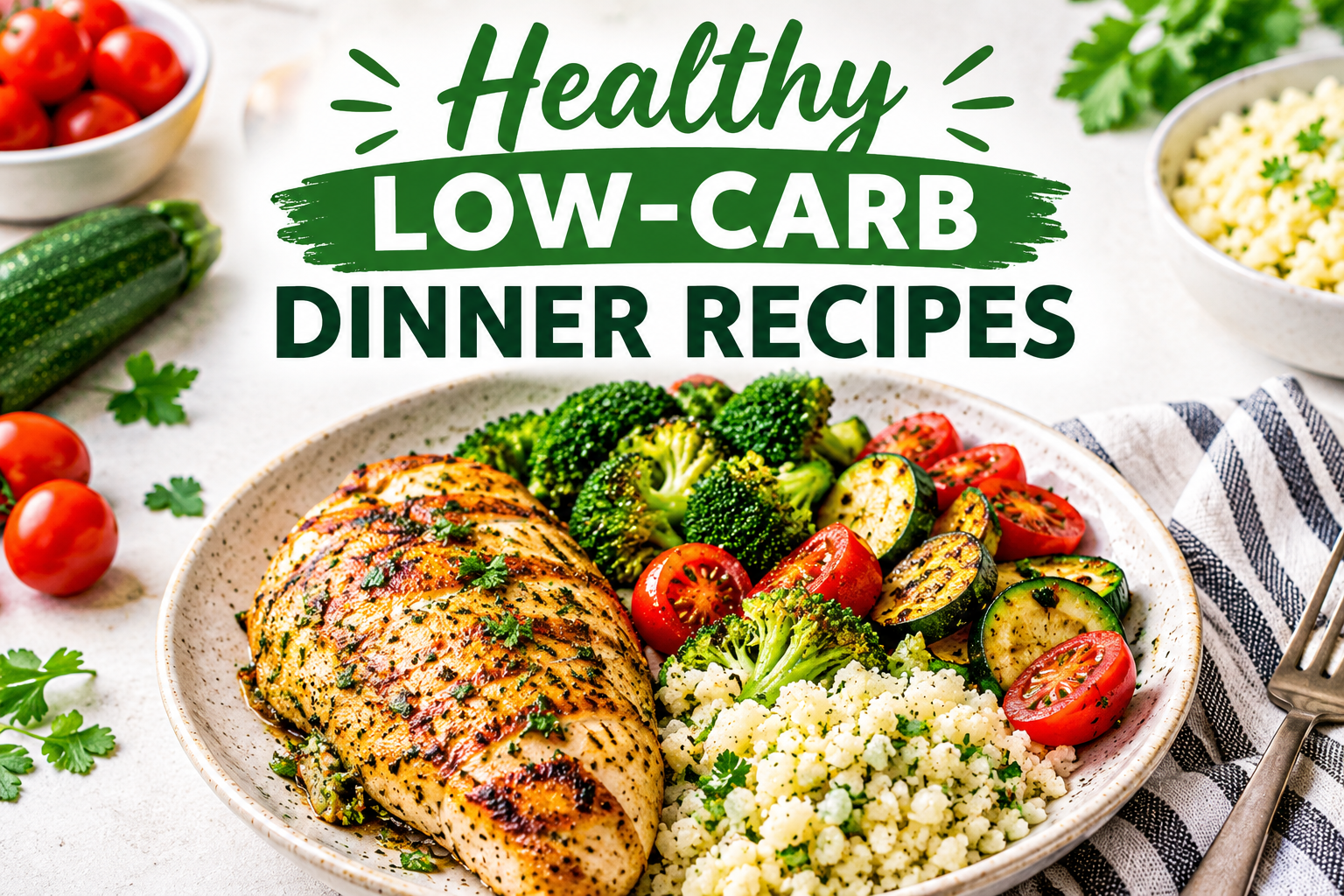
Try 15 healthy low-carb dinner recipes that are quick, easy, flavorful, and perfect for busy weeknights. Enjoy chicken, salmon, shrimp, turkey, and veggie meals.
Healthy Low-Carb Dinner Recipes
Finding dinner that is healthy, satisfying, and low in carbohydrates does not have to mean eating the same plain chicken breast and salad every night. The best healthy low-carb dinner recipes combine protein, colorful vegetables, flavorful herbs, and sensible portions of healthy fats to create meals that actually feel like dinner. Whether you are trying to reduce your carbohydrate intake, make weeknight meals lighter, or simply add more vegetables and protein to your routine, low-carb cooking can be surprisingly flexible. The American Diabetes Association describes a low-carbohydrate eating pattern as one that generally gets about 26–45% of calories from carbohydrates, while very-low-carbohydrate patterns reduce carbohydrates further.
That does not mean every healthy low-carb meal needs to be extremely restrictive. In fact, a balanced approach can be much easier to maintain. Current diabetes nutrition guidance emphasizes non-starchy vegetables, lean proteins, minimally processed foods, healthy fats, nuts, seeds, and other nutrient-dense choices rather than simply removing every carbohydrate from the plate. The recipes below are designed with that practical approach in mind. They are flavorful enough for the whole family, simple enough for busy weeknights, and flexible enough to customize with the vegetables, seasonings, and proteins you already have in your kitchen.
What Makes a Dinner Low-Carb and Healthy?
A low-carb dinner is not simply a meal with bread, rice, pasta, and potatoes removed. The quality of the foods that replace those ingredients matters just as much. A plate loaded with processed meat, heavy sauces, and excessive saturated fat may be low in carbohydrates but still fall short of what most people mean by a balanced, nutrient-rich dinner. A better strategy is to make non-starchy vegetables the foundation of the meal, add a satisfying source of protein, and use healthy fats in reasonable portions. The American Diabetes Association's current guidance similarly emphasizes non-starchy vegetables and lean proteins while encouraging nutrient-dense foods and limiting highly processed choices.
Think of your dinner plate like building a sturdy table. Protein provides one important leg, vegetables provide another, and healthy fats and optional high-fiber carbohydrate foods can complete the meal depending on your individual needs. Broccoli, cauliflower, spinach, zucchini, mushrooms, cabbage, cucumber, peppers, asparagus, and leafy greens can add volume, texture, fiber, and micronutrients without contributing as many carbohydrates as starchy side dishes. Fish, chicken, turkey, eggs, lean beef, tofu, and seafood can supply protein, while olive oil, avocado, nuts, seeds, and similar foods can add flavor and staying power. The result is a dinner that feels substantial rather than restrictive.
The Best Foods to Build a Low-Carb Dinner
The easiest way to make low-carb dinners regularly is to keep a small collection of versatile ingredients available. Chicken breasts and thighs can become stir-fries, salads, skillet meals, or sheet-pan dinners. Salmon and white fish cook quickly and pair beautifully with asparagus, broccoli, spinach, or zucchini. Ground turkey and lean beef are equally useful because they can be transformed into lettuce wraps, meatballs, taco bowls, stuffed vegetables, or one-pan skillet meals.
Vegetables deserve just as much attention as the protein. Instead of treating them as a decoration on the side of the plate, use them as a major component of dinner. Cauliflower can replace rice in many dishes, zucchini can become noodles, lettuce can replace tortillas, and roasted vegetables can take the place of heavier starches. The goal is not to make dinner feel like a collection of substitutions. It is to create meals where vegetables and protein taste good enough that you do not miss the traditional high-carb side dish.
How to Build a Balanced Low-Carb Plate
One of the simplest approaches is to start with a plate and divide it visually rather than obsessing over every gram of carbohydrate. The American Diabetes Association's Diabetes Plate method recommends filling half of a nine-inch plate with non-starchy vegetables, one-quarter with lean protein, and the remaining quarter with quality carbohydrate foods when appropriate. For someone intentionally eating lower-carb dinners, that framework can be adapted by increasing the non-starchy vegetables and choosing a smaller portion of a nutrient-dense carbohydrate when desired.
This approach is useful because it keeps dinner focused on foods rather than numbers. Imagine a plate containing grilled chicken, roasted broccoli, sautéed mushrooms, and a small serving of avocado. It can be satisfying without needing rice or pasta to make it feel complete. On another night, you might choose salmon, asparagus, a large green salad, and a modest portion of beans or another quality carbohydrate. There is room for flexibility, and that flexibility can make a healthy eating pattern much easier to maintain over time.
Protein, Vegetables, and Healthy Fats
Protein is especially useful in a low-carb dinner because it can help make a meal feel substantial. Chicken, turkey, fish, seafood, eggs, tofu, and lean beef are practical choices. Plant-based proteins such as tofu, nuts, seeds, and legumes can also play a role, although some plant proteins contain meaningful amounts of carbohydrates, so portions and individual nutritional goals should be considered. The ADA specifically encourages incorporating plant-based protein sources such as nuts, seeds, and legumes as part of a varied eating pattern.
Vegetables provide color, texture, and fiber while helping create larger portions without relying heavily on starches. Healthy fats can make these ingredients much more enjoyable: a drizzle of olive oil, a few slices of avocado, a spoonful of tahini, or a sprinkle of seeds can transform a basic vegetable-and-protein dinner. The trick is balance. You do not need to drown vegetables in cheese or butter simply because the meal is low-carb. Using garlic, lemon, herbs, spices, vinegar, chili, ginger, and fresh greens can create layers of flavor without turning dinner into a heavy meal.
15 Healthy Low-Carb Dinner Recipes
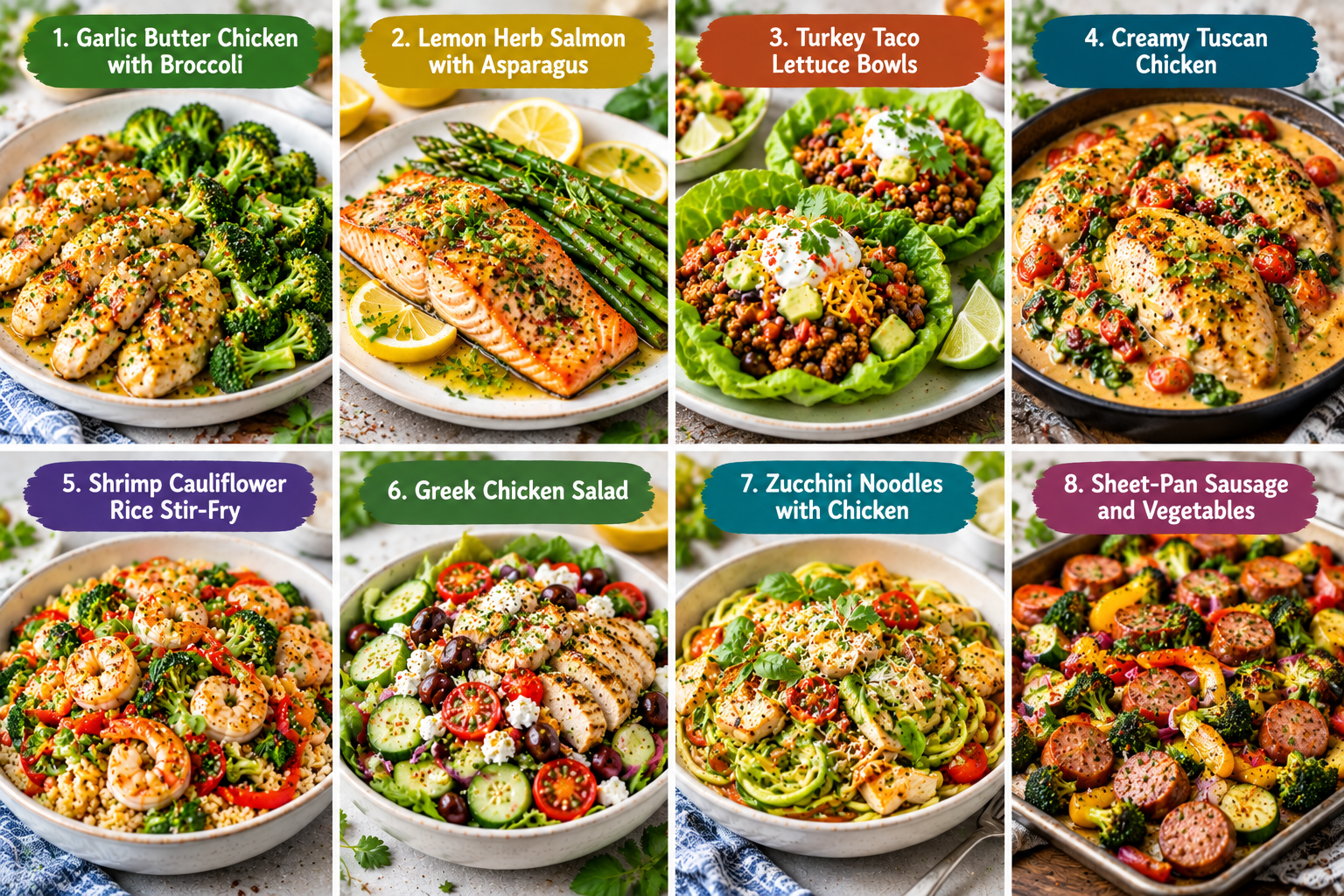
1. Garlic Butter Chicken with Broccoli
Garlic butter chicken with broccoli is one of those weeknight dinners that proves healthy food does not have to be complicated. Tender chicken pieces are cooked until golden, then finished with garlic, a modest amount of butter, lemon juice, and herbs. Broccoli cooks in the same skillet, allowing it to absorb some of the savory juices while still keeping a pleasant bite. The entire dish can be ready in roughly 25 minutes, making it ideal when you arrive home hungry and do not want to spend an hour in the kitchen.
For the ingredients, use boneless chicken breast or skinless chicken thighs, fresh broccoli florets, garlic, olive oil, a small amount of butter, lemon juice, black pepper, paprika, and parsley. Cut the chicken into evenly sized pieces so everything cooks quickly and consistently. Start by heating olive oil in a large skillet, season the chicken, and cook until browned and cooked through. Remove the chicken temporarily, add broccoli with a splash of water, cover briefly to steam, and then return the chicken to the pan with garlic, butter, lemon, and parsley. Serve immediately for a simple dinner with plenty of protein and vegetables.
2. Lemon Herb Salmon with Asparagus
Salmon and asparagus are a natural pairing for a quick low-carb dinner because both cook quickly and need very little preparation. Salmon provides protein and is also a source of long-chain omega-3 fatty acids, while asparagus contributes fiber and a range of micronutrients. Current diabetes nutrition guidance encourages eating patterns that include fatty fish, nuts, and seeds as sources of beneficial fats. Instead of covering the salmon in a complicated sauce, keep the flavors fresh with lemon, garlic, parsley, black pepper, and olive oil.
Place salmon fillets and asparagus on a baking sheet, season everything, drizzle lightly with olive oil, and roast until the salmon flakes easily and the asparagus is tender. A squeeze of fresh lemon just before serving brightens the entire dish. If you want additional volume, serve the meal with a large cucumber-and-lettuce salad or roasted cauliflower. This recipe is particularly useful for busy evenings because cleanup is minimal and the oven does most of the work. It also makes an excellent meal-prep dinner because cooked salmon can be paired with different vegetables throughout the week.
3. Turkey Taco Lettuce Bowls
If taco night is a favorite in your home, there is no reason to abandon it when you are reducing carbohydrates. Turkey taco lettuce bowls keep the bold flavors of traditional tacos while replacing flour or corn tortillas with crisp lettuce. Ground turkey is cooked with onion, garlic, paprika, cumin, chili powder, and a little tomato, creating a savory filling that works beautifully with fresh toppings. The result is colorful, crunchy, spicy, and satisfying without requiring a large tortilla.
For the bowl, layer seasoned turkey over chopped romaine or butter lettuce and add diced tomatoes, cucumber, avocado, fresh coriander, jalapeño, and a spoonful of plain Greek yogurt if desired. You can also add grated cheese in moderation. The beauty of this recipe is that everyone can assemble their own bowl. If one person wants more avocado and another wants extra vegetables, there is no problem. For meal prep, keep the warm turkey separate from the lettuce and toppings so everything stays fresh until dinner.
4. Creamy Tuscan Chicken
Creamy Tuscan chicken delivers restaurant-style flavor with surprisingly simple ingredients. Chicken breasts are browned in a skillet before being finished with garlic, spinach, sun-dried tomatoes, herbs, and a creamy sauce. To keep the dish balanced, use enough sauce to coat the chicken rather than completely submerging it. Serve it with sautéed zucchini, steamed broccoli, or cauliflower instead of traditional pasta.
The secret to making this dinner taste rich is building flavor in stages. Brown the chicken first, because those golden bits left in the skillet become part of the sauce. Add garlic and seasonings, then create the creamy base and stir in spinach at the end so it wilts without becoming overcooked. Sun-dried tomatoes bring a concentrated savory flavor that means you do not need large quantities of sauce. For a lighter variation, use Greek yogurt carefully off the heat or a lighter dairy option, remembering that the exact nutritional profile will change depending on the ingredients and portions.
5. Shrimp Cauliflower Rice Stir-Fry
Shrimp cauliflower rice stir-fry is an excellent answer to the question, "What can I make in 20 minutes?" Shrimp cooks rapidly, while cauliflower rice creates the texture of a rice bowl without relying on a large serving of white rice. Add scrambled egg, cabbage, bell pepper, spring onions, garlic, and ginger for a colorful meal with plenty of texture. A small amount of reduced-sodium soy sauce or coconut aminos can provide the savory flavor associated with classic stir-fry.
The best way to prevent cauliflower rice from becoming soggy is to cook it over reasonably high heat and avoid overcrowding the pan. Start with the shrimp, remove it once cooked, then stir-fry the vegetables before adding the cauliflower rice. Return the shrimp at the end and season everything together. This dinner works particularly well for meal prep because the components hold up nicely in the refrigerator. For extra flavor, finish each serving with sesame seeds, chili flakes, fresh coriander, or a squeeze of lime.
6. Greek Chicken Salad
A Greek chicken salad can be far more satisfying than the typical bowl of lettuce because it combines seasoned chicken with crunchy vegetables, olives, herbs, and a bright dressing. Grill or pan-cook chicken breast and slice it over romaine lettuce with cucumber, tomatoes, red onion, olives, and a modest amount of feta cheese. The dressing can be made with olive oil, lemon juice, oregano, garlic, black pepper, and vinegar. Every bite has a different combination of creamy, crunchy, salty, juicy, and fresh textures.
This is an especially good choice during warmer weather when you want something filling without turning on the oven for a long time. You can prepare the chicken ahead of time and assemble individual salads when needed. For a lower-carb approach, keep the focus on leafy greens and vegetables while limiting ingredients such as pita bread or large portions of grains. If you need more energy for your activity level, you can adapt the meal with an appropriate portion of a quality carbohydrate source rather than treating carbohydrates as automatically unhealthy.
7. Zucchini Noodles with Chicken
Zucchini noodles, often called zoodles, are one of the easiest ways to make a familiar pasta-style dinner feel lighter. Spiralized zucchini cooks in just a few minutes and pairs well with chicken, garlic, basil, tomatoes, and Parmesan. The key is not to overcook the zucchini. You want it tender enough to twirl but firm enough to maintain some texture.
Start by cooking sliced chicken with garlic and Italian herbs. Remove it from the skillet, quickly sauté the zucchini noodles, and then combine everything with cherry tomatoes and fresh basil. A small amount of Parmesan adds savory depth without requiring a heavy sauce. You can also use pesto, but check the portion because pesto can be calorie-dense even though it is relatively low in carbohydrates. This recipe is particularly useful for families who want a pasta-inspired dinner without making a separate meal for everyone.
8. Sheet-Pan Sausage and Vegetables
Sheet-pan dinners are a lifesaver on busy nights because they combine preparation and cooking in one place. For a low-carb version, choose a suitable chicken or turkey sausage and pair it with zucchini, broccoli, bell peppers, mushrooms, and red onion. Toss the vegetables lightly with olive oil, garlic powder, paprika, oregano, and black pepper before roasting. The high heat encourages the edges of the vegetables to caramelize, creating the deep flavor that makes this meal feel much more indulgent than it actually is.
Choosing the sausage carefully matters because processed meats can vary considerably in sodium and saturated fat. When possible, compare nutrition labels and choose an option that fits your dietary preferences. The ADA recommends limiting foods high in saturated fat and emphasizes less processed protein choices as part of healthy eating patterns. Once the meal is roasted, finish it with fresh parsley and lemon juice. Leftovers can be packed into containers for quick lunches, making this recipe useful beyond dinner.
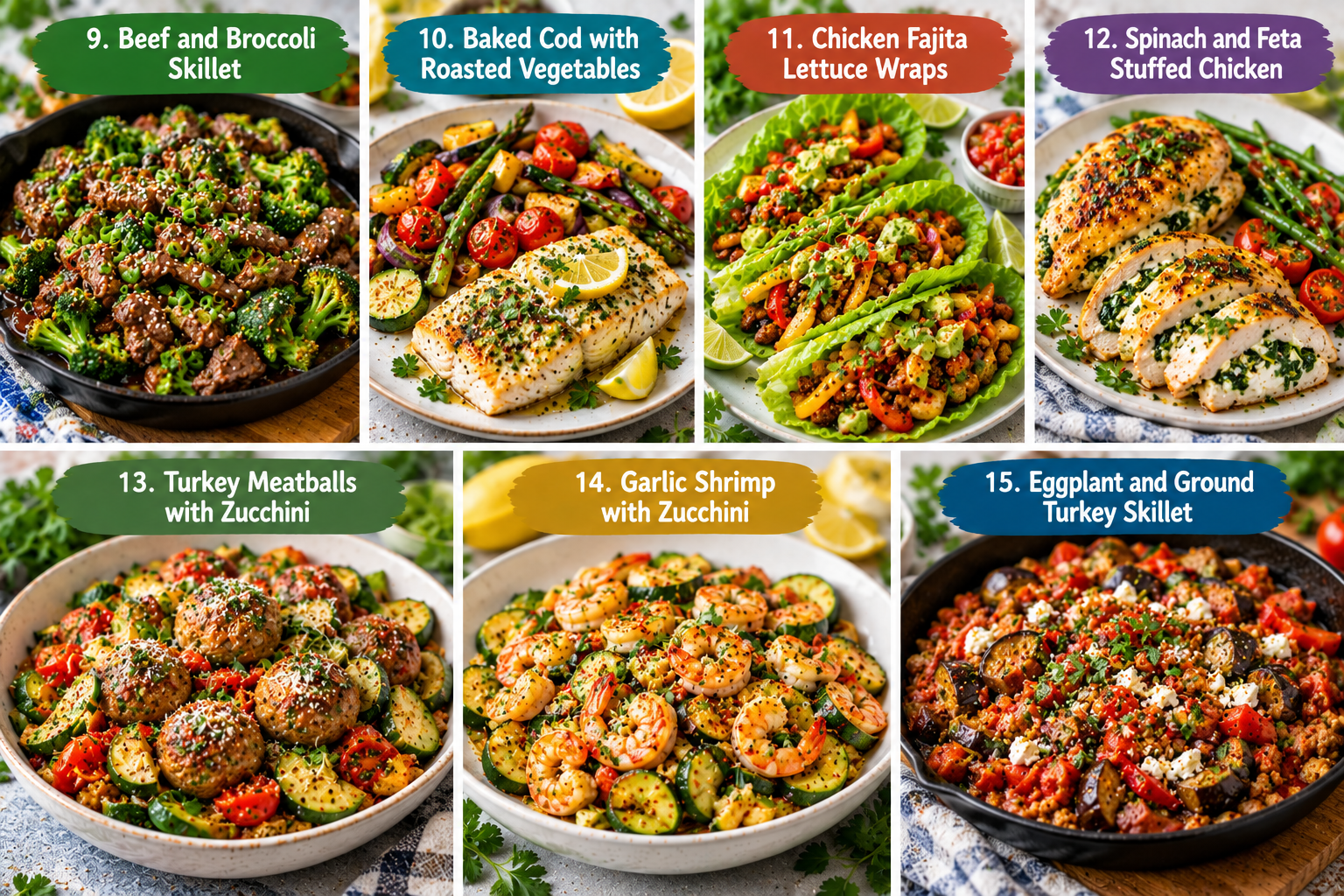
9. Beef and Broccoli Skillet
Beef and broccoli is a classic combination that can easily become a healthy low-carb dinner when prepared at home. Use thinly sliced lean beef, plenty of broccoli, garlic, ginger, and a savory sauce made from lower-sodium soy sauce, rice vinegar, and a small amount of sesame oil. Traditional restaurant versions can contain significant amounts of added sugar and sauce, so controlling the ingredients yourself gives you much more flexibility.
The cooking process is fast. Slice the beef thinly against the grain and cook it in a hot skillet until browned. Remove it, cook the broccoli until bright green and tender-crisp, then add the sauce and return the beef to the pan. The result is a flavorful dinner that can be served on its own or alongside cauliflower rice. If you prefer more heat, add chili flakes or fresh sliced chili. A handful of toasted sesame seeds can provide a final layer of texture.
10. Baked Cod with Roasted Vegetables
Cod is mild, lean, and extremely versatile, which makes it useful for people who want a lighter low-carb dinner. Season the fish with lemon zest, garlic, paprika, parsley, and black pepper, then bake it alongside vegetables such as zucchini, broccoli, asparagus, or cauliflower. Because cod has a delicate texture, it benefits from a short cooking time rather than prolonged baking.
This recipe can be changed according to the season. In summer, use zucchini and tomatoes; in colder months, choose cauliflower, broccoli, and Brussels sprouts. The vegetables can be roasted first if they need longer cooking, with the cod added later. That simple timing trick prevents the fish from becoming dry. Serve with lemon wedges and a spoonful of homemade yogurt-herb sauce for a fresh finish.
11. Chicken Fajita Lettuce Wraps
Chicken fajita lettuce wraps deliver the smoky, spicy flavor of fajitas without depending on flour tortillas. Slice chicken breast into thin strips and cook it with bell peppers, onions, cumin, smoked paprika, chili powder, garlic, and lime juice. Once the chicken is browned and the peppers are tender-crisp, spoon the mixture into crisp lettuce leaves. Add avocado, fresh coriander, tomato salsa, or Greek yogurt for extra flavor.
This is a particularly family-friendly dinner because the toppings can be placed in separate bowls and everyone can build their own wraps. If lettuce wraps do not feel filling enough, serve them with a large side of roasted vegetables or a simple avocado salad. The recipe is also easy to batch-cook. Prepare the chicken and peppers in advance, refrigerate them, and assemble fresh wraps when needed.
12. Spinach and Feta Stuffed Chicken
Stuffed chicken can look impressive while requiring very little extra effort. For this version, make a pocket in chicken breasts and fill it with sautéed spinach, garlic, and a modest amount of feta cheese. Season the outside with paprika, oregano, black pepper, and lemon zest before baking until the chicken reaches a safe internal temperature.
The combination works because the mild chicken provides a neutral base for the salty feta and earthy spinach. Pair the stuffed chicken with roasted cauliflower, green beans, or a simple cucumber salad. If you are preparing this for guests, slice the chicken before serving so the colorful filling is visible. It is a small presentation trick that makes an ordinary weeknight dinner look much more special.
13. Turkey Meatballs with Zucchini
Turkey meatballs are another versatile dinner option that can replace traditional meatballs served over a large portion of pasta. Combine lean ground turkey with garlic, parsley, Italian seasoning, egg, Parmesan, and a small amount of almond flour if needed for texture. Shape the mixture into meatballs and bake or pan-cook them until fully cooked. Serve them over sautéed zucchini noodles with a simple tomato sauce.
The important thing is to avoid assuming that "low-carb" automatically means unlimited cheese or cream. The ADA's current guidance encourages limiting foods high in saturated fat while emphasizing nutrient-rich foods. Use cheese as a flavor ingredient rather than the entire foundation of the meal. Fresh herbs, garlic, chili flakes, and a good tomato sauce can make the dish flavorful without making it excessively heavy.
14. Garlic Shrimp with Zucchini
Garlic shrimp with zucchini is one of the fastest recipes in this collection. Shrimp can cook in only a few minutes, while zucchini requires just a short sauté. Cook the shrimp with garlic, olive oil, paprika, lemon juice, and chili flakes, then add zucchini ribbons or half-moons. Finish with fresh parsley and another squeeze of lemon.
The recipe works well when you want dinner to feel fresh rather than heavy. You can add mushrooms, spinach, asparagus, or bell peppers depending on what is available. If you are cooking for someone who needs more carbohydrates, serve their portion alongside an appropriate serving of whole grains or another quality carbohydrate while keeping your own portion vegetable-focused. Healthy eating does not have to mean that every person at the table eats exactly the same plate.
15. Eggplant and Ground Turkey Skillet
Eggplant and ground turkey make a hearty combination for a budget-friendly low-carb dinner. Brown lean ground turkey with onion, garlic, paprika, cumin, and oregano before adding diced eggplant and tomatoes. As the eggplant softens, it absorbs the savory flavors from the skillet, creating a rich texture without needing pasta or rice.
This dish is also easy to customize. Add spinach near the end for extra greens, sprinkle fresh herbs over the top, or add a little feta if you enjoy Mediterranean flavors. It can be served straight from the skillet, making cleanup simple. Leftovers often taste even better the next day because the spices have more time to blend together.
Tips for Making Low-Carb Dinners More Filling
The biggest mistake people make when starting low-carb dinners is simply removing food without replacing the satisfaction that food provided. If you normally eat a large bowl of pasta and suddenly replace it with a tiny serving of chicken and lettuce, you are likely to feel hungry soon afterward. A better approach is to increase the volume of non-starchy vegetables, include an appropriate protein serving, and use flavorful ingredients that make the meal enjoyable. The ADA recommends non-starchy vegetables as a major component of a balanced plate, and its Diabetes Plate method uses them to fill about half the plate.
Fiber is another important consideration. Very restrictive carbohydrate eating can unintentionally reduce fiber intake, which the ADA notes can affect energy, nutrient intake, and digestion. Instead of cutting every carbohydrate-containing food, prioritize nutrient-dense sources according to your individual needs. Non-starchy vegetables, nuts, seeds, berries, and appropriate portions of legumes or whole grains can all contribute useful nutrients. If you have diabetes, take glucose-lowering medication, or are considering a very-low-carbohydrate or ketogenic approach, personalized advice from a qualified healthcare professional can be especially important.
Easy Low-Carb Meal Prep Ideas
Meal prep becomes much easier when you prepare components instead of trying to cook five completely different dinners on Sunday. Cook a batch of chicken, turkey, salmon, or another preferred protein and store it safely in the refrigerator. Roast a large tray of vegetables such as broccoli, cauliflower, zucchini, peppers, and Brussels sprouts. Prepare two simple sauces or dressings so the same basic ingredients can become completely different meals during the week.
For example, roasted chicken can become a Greek salad on Monday, lettuce tacos on Tuesday, and a vegetable skillet on Wednesday. This approach prevents the boredom that often causes people to abandon healthy meal plans. You can also wash and chop vegetables in advance, portion nuts and seeds, and prepare cauliflower rice so that dinner takes only a few minutes to assemble. The ADA's nutrition guidance specifically mentions meal planning, grocery lists, and preparing homemade meals ahead of time as useful strategies.
Common Low-Carb Dinner Mistakes to Avoid
One common mistake is assuming that low-carb means high-fat in unlimited quantities. Butter, cream, cheese, fatty meats, and coconut oil can all fit into some eating patterns, but relying heavily on saturated-fat-rich foods may not be the healthiest way to build dinner. Current ADA guidance recommends limiting foods high in saturated fat to help reduce cardiovascular risk. Instead, use a broader variety of fats and emphasize foods such as fish, nuts, seeds, avocado, and unsaturated plant oils where appropriate.
Another mistake is making every dinner extremely restrictive. There is no universal carbohydrate target that works for everyone, and the ADA notes that low-carb eating patterns vary considerably. A sustainable dinner plan should fit your health needs, preferences, lifestyle, and activity level. If you enjoy an occasional serving of beans, lentils, fruit, yogurt, or whole grains, those foods do not automatically make your overall diet unhealthy. The objective is to create a balanced eating pattern you can actually follow rather than a collection of rules that make dinner stressful.
Conclusion
Healthy low-carb dinners can be colorful, comforting, flavorful, and incredibly practical. From garlic chicken and broccoli to lemon salmon, turkey taco bowls, shrimp stir-fry, Greek chicken salad, and zucchini noodles, there are countless ways to reduce carbohydrate-heavy ingredients without turning dinner into a boring plate of plain protein. The most useful strategy is to build meals around non-starchy vegetables, satisfying protein, healthy fats, and minimally processed ingredients, then adjust portions according to your individual nutritional needs. Current nutrition guidance supports this food-first approach rather than focusing exclusively on carbohydrate restriction.
The recipes in this guide are especially useful for busy weeknights because most require straightforward ingredients and simple cooking methods. You do not need complicated equipment or an elaborate meal plan to eat well. Keep a few proteins, vegetables, herbs, spices, and healthy fats available, and you can create dozens of combinations without relying on takeout. Most importantly, remember that healthy eating should feel sustainable. Choose recipes you genuinely enjoy, prepare a few components ahead of time, and build dinners that leave you satisfied rather than feeling like you are missing out.
FAQs
1. What are the best foods for a healthy low-carb dinner?
The best options include non-starchy vegetables such as broccoli, spinach, cauliflower, zucchini, asparagus, mushrooms, cabbage, and leafy greens paired with protein sources such as chicken, fish, seafood, turkey, eggs, tofu, or lean beef. Healthy fats from olive oil, avocado, nuts, and seeds can add flavor and satisfaction. The exact combination should depend on your nutritional needs and preferences.
2. Can I eat chicken on a low-carb diet?
Yes. Chicken is naturally very low in carbohydrates and can be used in many healthy low-carb dinners. Pair it with vegetables and flavorful herbs or spices rather than relying on sugary sauces or heavily processed coatings. Chicken breast is lean, while chicken thighs generally contain more fat and have a richer flavor.
3. Is cauliflower rice a healthy alternative to regular rice?
Cauliflower rice can be a useful vegetable-based alternative when you want to reduce the carbohydrate content of a meal. It also adds volume and vegetables to dishes such as stir-fries and taco bowls. However, regular rice is not inherently unhealthy, so whether cauliflower rice is preferable depends on your individual dietary goals.
4. Are low-carb dinners good for weight loss?
A lower-carbohydrate eating pattern can support weight-loss goals for some people, particularly when it helps reduce overall calorie intake and encourages filling, nutrient-dense foods. However, weight management depends on the overall eating pattern, portions, activity, sleep, and individual factors. A low-carb label alone does not guarantee that a meal is suitable for weight loss.
5. How many carbs should a low-carb dinner contain?
There is no single carbohydrate amount that defines a healthy dinner for everyone. The ADA describes low-carbohydrate eating patterns broadly as around 26–45% of total calories from carbohydrates, while very-low-carbohydrate patterns are generally below 26%. Your ideal intake can depend on your health, medication, activity, preferences, and overall diet, so people with diabetes or other medical considerations should discuss individualized targets with a qualified healthcare professional.
Comments
0No comments yet — be the first to share your thoughts!