15 Fiber-Rich Recipes That Keep You Full | Healthy Meals
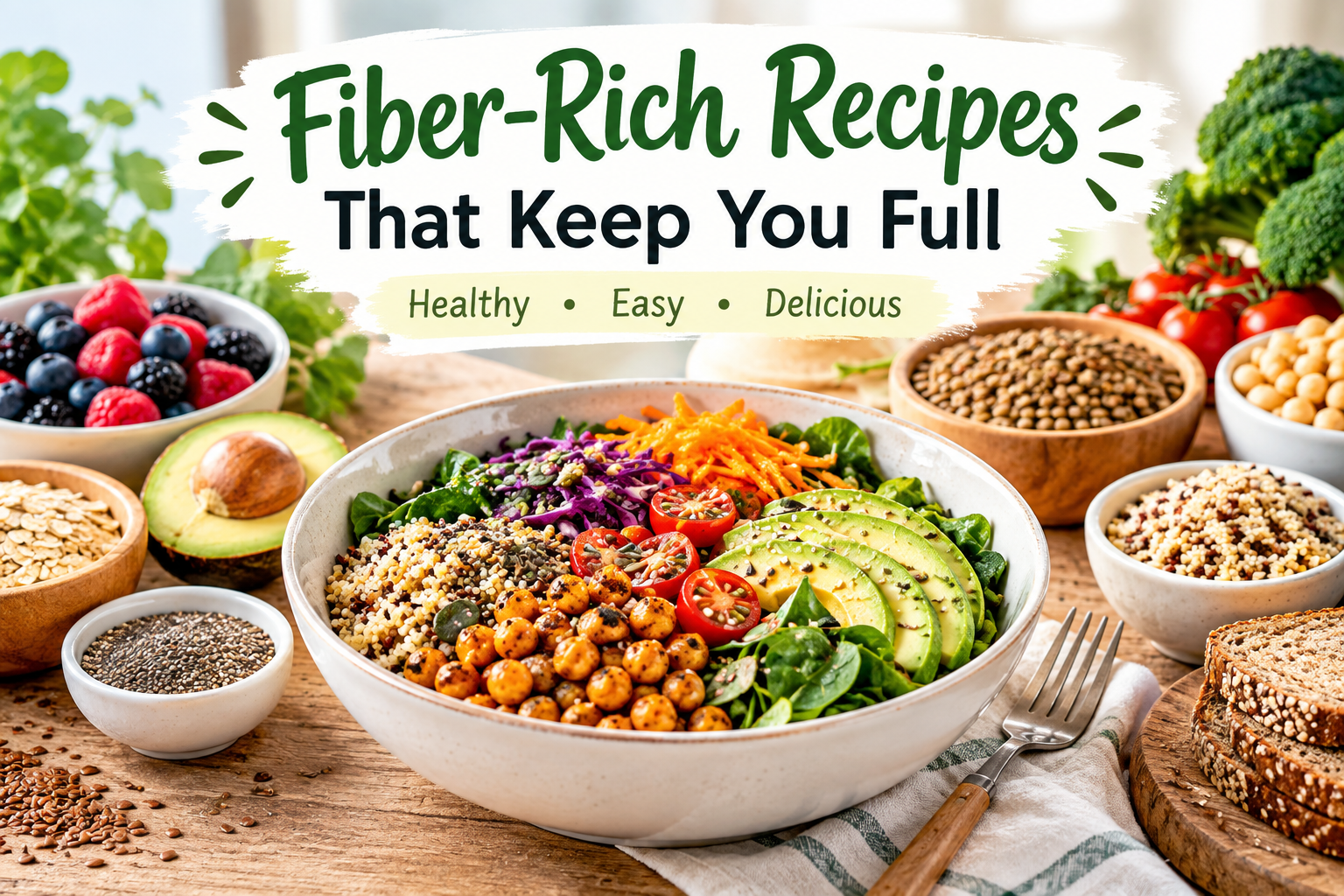
Discover 15 delicious fiber-rich recipes that keep you full, including oats, lentil bowls, salads, wraps, soups, and easy healthy meals.
Fiber-Rich Recipes That Keep You Full
If you are hungry again an hour or two after eating, the problem may not always be that your portion is too small. Sometimes, your meal simply does not contain enough fiber, protein, and satisfying whole-food ingredients. Fiber is found naturally in foods such as beans, lentils, whole grains, fruits, vegetables, nuts, and seeds, and it can add bulk to meals while helping you feel fuller. Current guidance from U.S. health authorities continues to encourage adults to include fiber-rich plant foods as part of a balanced eating pattern.
That is exactly why fiber-rich recipes that keep you full can be so useful for busy mornings, work lunches, quick dinners, and simple snacks. Instead of relying on highly processed foods that may leave you reaching for another snack soon afterward, you can build meals around ingredients that provide texture, volume, nutrients, and staying power. Think of fiber as the quiet workhorse of your plate: it does not need to be flashy to make a meal more satisfying.
The recipes in this guide are designed for people who want easy healthy meals with plenty of fiber without spending hours in the kitchen. You will find overnight oats, grain bowls, soups, salads, wraps, smoothies, pasta, and satisfying breakfast ideas. Most can be adapted with ingredients you already have at home, making them practical for meal prep and busy schedules.
Why Fiber Helps You Stay Full
Fiber behaves differently from other carbohydrates because the body does not fully digest it. Some types absorb water and form a gel-like substance, while others add bulk and help move food through the digestive tract. That difference can make fiber-rich meals feel more substantial and satisfying. MedlinePlus notes that dietary fiber can help you feel full faster and support digestive health, while USDA resources explain that fiber can help you stay fuller for longer.
The connection between fiber and fullness is also more complicated than simply eating a food labeled “high fiber.” Research examining dietary fiber and appetite suggests that certain fibers, particularly some viscous or soluble fibers, can influence hunger and satiety, although the effect varies depending on the type of fiber, dose, food, and individual. This is important because a bowl of vegetables by itself may not keep you satisfied for an entire afternoon. A more complete meal combines fiber-rich foods with protein and healthy fats.
For everyday eating, the goal should not be to chase the highest possible fiber number. Instead, build meals around beans, lentils, whole grains, vegetables, fruit, nuts, and seeds, then pair those ingredients with protein and flavorful sauces or seasonings. That approach makes healthy eating much easier to maintain because the food still tastes like something you genuinely want to eat.
Soluble and Insoluble Fiber Explained
Fiber is commonly divided into soluble and insoluble fiber, although many plant foods contain a mixture of both. Soluble fiber interacts with water and can form a gel-like material during digestion, which may slow digestion. Insoluble fiber adds bulk and helps food move through the digestive system. Both types contribute to a healthy diet, so there is no need to obsess over separating them at every meal.
You can naturally get both types by eating a variety of plant foods throughout the day. Oats, beans, peas, fruits, seeds, vegetables, and whole grains are all useful choices. For example, oatmeal topped with berries and chia seeds gives you a combination of whole grains, fruit, and seeds in one simple breakfast. A lentil and vegetable soup provides legumes and vegetables, while a whole-wheat wrap filled with chickpeas and crunchy vegetables offers another easy combination.
The simplest strategy is variety. Instead of asking, “Which single food has the most fiber?” ask, “How many different plant foods can I add to this meal?” That small change in thinking can make your diet more interesting while naturally increasing the amount and variety of fiber you eat.
How Much Fiber Do You Need Each Day?
Fiber needs vary according to factors such as age and sex. U.S. health guidance commonly gives an adult range of roughly 22 to 34 grams per day, depending on the individual, while other nutrition guidance uses different reference values. The important takeaway is that many people struggle to get enough fiber, so gradually adding more whole plant foods can be a practical goal.
You do not need to calculate every gram to make progress. A breakfast containing oats, berries, and chia seeds, followed by a lunch with lentils or chickpeas and vegetables, can make a meaningful difference. Add a piece of whole fruit, a handful of nuts, or a vegetable-based snack, and your daily intake can rise naturally.
If your current diet is low in fiber, increase it gradually rather than suddenly loading your plate with beans, bran, vegetables, and seeds overnight. A rapid increase can cause gas, bloating, cramps, or other digestive discomfort. Health guidance recommends increasing fiber slowly and drinking enough fluids as you do so.
What Makes a Fiber-Rich Meal Satisfying?
A truly satisfying meal usually needs more than one nutritional feature. Fiber gives meals bulk and can support fullness, while protein helps make a meal more substantial and healthy fats contribute flavor and richness. When you combine these components with vegetables or fruit, you create meals that can be both nutrient-dense and enjoyable.
For example, compare plain toast with a chickpea avocado toast. The first might be a quick carbohydrate source, while the second adds whole-grain carbohydrates, chickpeas for plant protein and fiber, avocado for healthy fats, and vegetables or herbs for additional texture. The second option gives your mouth and stomach more to work with.
The same principle works at dinner. A bowl containing brown rice, chicken, broccoli, black beans, avocado, and salsa has several different components working together. You can change the protein, grain, vegetables, and seasonings without changing the basic formula. That flexibility is one of the reasons high-fiber meals for weight management and healthy eating can fit so easily into a busy lifestyle.
Combine Fiber With Protein and Healthy Fats
One of the easiest ways to make a fiber-rich recipe more satisfying is to pair plant foods with protein and a moderate amount of healthy fat. Greek yogurt, eggs, chicken, fish, tofu, beans, lentils, cottage cheese, nuts, seeds, and nut butters can all help create more balanced meals.
Healthy fats can also make fiber-rich foods more appealing. Think avocado on toast, almond butter in oatmeal, olive oil in a grain bowl, or a tahini dressing over chickpeas and vegetables. The goal is balance rather than adding unlimited amounts of fat simply because a meal contains fiber.
A useful formula is fiber-rich carbohydrate + protein + colorful produce + healthy fat. Once you understand that formula, creating filling meals becomes much easier. You can use it for breakfast, lunch, dinner, snacks, and meal prep without following a rigid diet plan.
15 Fiber-Rich Recipes That Keep You Full
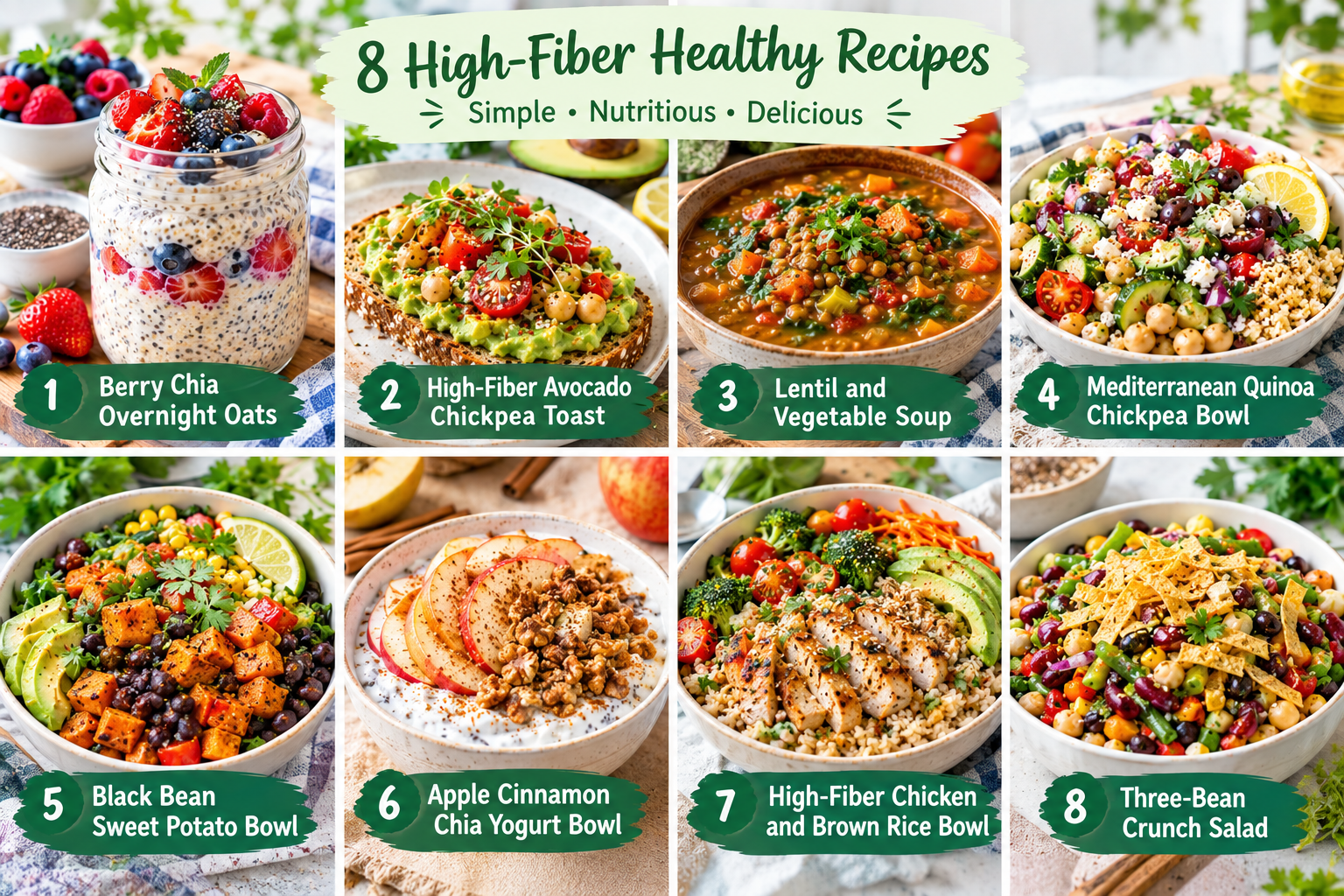
1. Berry Chia Overnight Oats
Overnight oats are one of the easiest ways to build a fiber-rich breakfast before your busy day even begins. Combine rolled oats with milk, Greek yogurt, chia seeds, and berries, then refrigerate the mixture overnight. The oats and chia seeds provide fiber, while Greek yogurt adds protein and a creamy texture. Berries bring natural sweetness and additional plant nutrients without requiring much preparation.
Ingredients for 1 serving:
½ cup rolled oats
½ cup milk
¼ cup Greek yogurt
1 tablespoon chia seeds
½ cup mixed berries
1 teaspoon honey or maple syrup
½ teaspoon cinnamon
Instructions: Stir everything together in a jar or container, cover, and refrigerate for at least 4 hours or overnight. Add a splash of milk in the morning if the oats are too thick. Top with extra berries or a few chopped almonds before serving.
Estimated nutrition per serving: 360 calories, 17g protein, 52g carbohydrates, 11g fat, and 11g fiber.
2. High-Fiber Avocado Chickpea Toast
This recipe turns ordinary toast into a satisfying breakfast or quick lunch. Mash chickpeas with avocado, lemon juice, black pepper, and a pinch of salt, then spread the mixture over whole-grain toast. Chickpeas contribute fiber and plant protein, while avocado adds creaminess and healthy fat. Add sliced tomatoes, cucumber, or leafy greens for extra volume.
Ingredients for 1 serving:
2 slices whole-grain bread
½ avocado
⅓ cup chickpeas
1 teaspoon lemon juice
¼ cup diced tomato
Black pepper and salt to taste
Optional chili flakes
Instructions: Toast the bread. Mash the avocado and chickpeas together with lemon juice and seasoning, then spread generously over the toast. Finish with tomatoes and chili flakes.
Estimated nutrition per serving: 430 calories, 14g protein, 52g carbohydrates, 21g fat, and 13g fiber.
3. Lentil and Vegetable Soup
When you want a warm meal that can keep you satisfied for hours, lentil soup deserves a regular place in your recipe rotation. Lentils provide fiber and plant protein, while vegetables add volume, flavor, and additional nutrients. The soup also works beautifully for meal prep because the flavor often becomes even better after resting overnight.
Ingredients for 4 servings:
1 cup dry green or brown lentils
1 medium carrot, diced
1 celery stalk, diced
1 small onion, chopped
2 cloves garlic, minced
1 can diced tomatoes
4 cups low-sodium vegetable broth
1 teaspoon cumin
½ teaspoon smoked paprika
2 cups spinach
1 tablespoon olive oil
Instructions: Sauté onion, carrot, celery, and garlic in olive oil for several minutes. Add lentils, tomatoes, broth, cumin, and paprika. Simmer until the lentils are tender, then stir in spinach during the final few minutes.
Estimated nutrition per serving: 330 calories, 19g protein, 49g carbohydrates, 7g fat, and 18g fiber.
4. Mediterranean Quinoa Chickpea Bowl
A grain bowl is practically a blank canvas for fiber-rich ingredients. Start with cooked quinoa, then add chickpeas, cucumber, tomatoes, spinach, olives, and a simple lemon-tahini dressing. The combination delivers different textures, from fluffy grains to crunchy vegetables and creamy chickpeas. It also travels well, making it an excellent healthy lunch for work.
Ingredients for 2 servings:
1 cup cooked quinoa
1 cup chickpeas
1 cup cucumber, chopped
1 cup cherry tomatoes
1 cup spinach
2 tablespoons tahini
1 tablespoon lemon juice
1 tablespoon water
Black pepper and herbs
Instructions: Divide quinoa between two containers. Add chickpeas, cucumber, tomatoes, and spinach. Mix tahini, lemon juice, water, and seasoning to create the dressing, then drizzle over the bowls before serving.
Estimated nutrition per serving: 450 calories, 17g protein, 61g carbohydrates, 17g fat, and 15g fiber.
5. Black Bean Sweet Potato Bowl
Sweet potatoes and black beans create a naturally filling combination that works for lunch or dinner. Roast a sweet potato until tender, then add seasoned black beans, corn, salsa, avocado, and fresh greens. The sweet potato provides fiber-rich carbohydrates, while black beans bring additional fiber and protein. You can prepare the components ahead of time and assemble the bowl in minutes.
Ingredients for 2 servings:
2 medium sweet potatoes
1 cup black beans
½ cup corn
½ avocado
½ cup salsa
1 cup chopped lettuce
½ teaspoon cumin
Lime juice
Instructions: Bake or air-fry the sweet potatoes until tender. Warm the black beans with cumin. Split the potatoes and fill them with beans, corn, lettuce, salsa, avocado, and lime juice.
Estimated nutrition per serving: 470 calories, 15g protein, 76g carbohydrates, 14g fat, and 17g fiber.
6. Apple Cinnamon Chia Yogurt Bowl
If you want something sweet without turning breakfast into dessert, try this simple yogurt bowl. Greek yogurt provides protein, while chia seeds, apple, and oats increase the fiber content. Cinnamon makes the bowl taste naturally sweet and comforting. It takes only a few minutes to assemble, which makes it ideal for busy mornings.
Ingredients for 1 serving:
¾ cup plain Greek yogurt
1 small apple, diced
1 tablespoon chia seeds
2 tablespoons rolled oats
1 tablespoon chopped walnuts
½ teaspoon cinnamon
1 teaspoon maple syrup
Instructions: Add yogurt to a bowl and stir in chia seeds. Top with diced apple, oats, walnuts, cinnamon, and maple syrup.
Estimated nutrition: 390 calories, 23g protein, 48g carbohydrates, 14g fat, and 10g fiber.
7. High-Fiber Chicken and Brown Rice Bowl
For people who prefer meals with animal protein, fiber can still be a major part of the plate. Brown rice, broccoli, carrots, and beans can turn a simple chicken bowl into a much more satisfying meal. The key is not to treat vegetables as a tiny side dish. Give them enough space on the plate to contribute meaningful volume.
Ingredients for 2 servings:
1 cup cooked brown rice
8 ounces cooked chicken breast
1 cup broccoli
1 cup carrots
½ cup black beans
1 tablespoon olive oil
Lemon juice
Garlic and black pepper
Instructions: Cook or reheat the brown rice and vegetables. Slice the chicken and divide everything between two bowls. Add black beans and finish with lemon juice, olive oil, garlic, and pepper.
Estimated nutrition per serving: 500 calories, 42g protein, 56g carbohydrates, 15g fat, and 12g fiber.
8. Three-Bean Crunch Salad
Bean salads are one of the simplest ways to increase fiber without spending much time cooking. Combine kidney beans, chickpeas, and black beans with crunchy vegetables and a bright lemon dressing. The beans make the salad hearty enough to serve as a main dish instead of merely an accompaniment. You can also add whole-grain pita or cooked quinoa if you want a larger meal.
Ingredients for 3 servings:
1 cup chickpeas
1 cup black beans
1 cup kidney beans
1 bell pepper
1 cucumber
½ red onion
2 tablespoons olive oil
2 tablespoons lemon juice
Parsley, pepper, and herbs
Instructions: Rinse and drain the beans well. Chop the vegetables and combine everything in a large bowl. Whisk together olive oil, lemon juice, herbs, and pepper, then toss with the salad.
Estimated nutrition per serving: 390 calories, 18g protein, 58g carbohydrates, 12g fat, and 17g fiber.
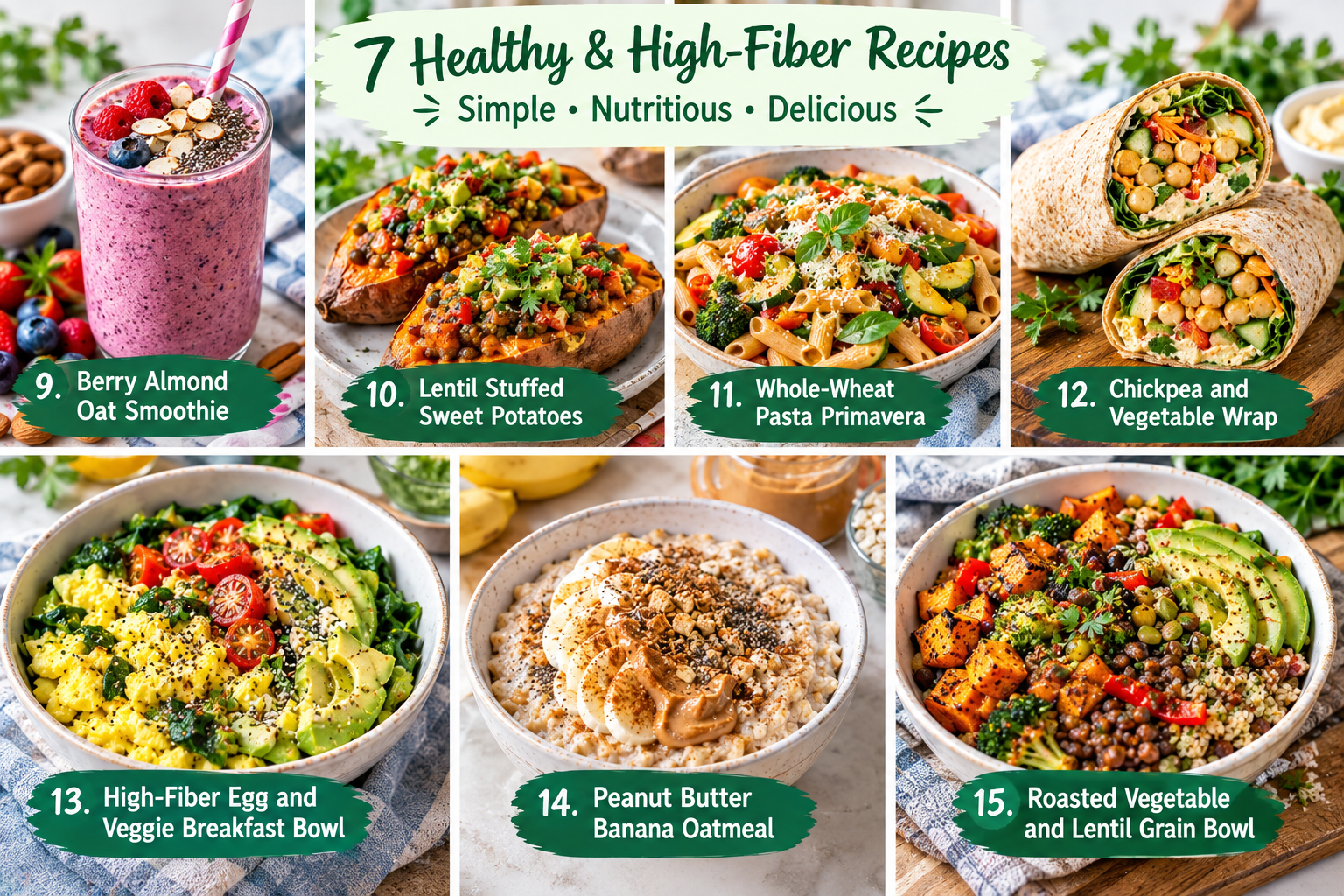
9. Berry Almond Oat Smoothie
Smoothies can be filling, but the ingredients matter. A fruit-only smoothie may be delicious but may not provide the same staying power as one containing oats, chia seeds, Greek yogurt, and nuts. This recipe combines those ingredients into a creamy breakfast that can be prepared quickly.
Ingredients for 1 serving:
½ cup mixed berries
½ banana
¼ cup rolled oats
¾ cup Greek yogurt
1 tablespoon chia seeds
1 tablespoon almond butter
½ cup unsweetened milk
Ice
Instructions: Add all ingredients to a blender and blend until smooth. Add extra milk if necessary to reach your preferred consistency.
Estimated nutrition: 420 calories, 25g protein, 53g carbohydrates, 15g fat, and 11g fiber.
10. Lentil Stuffed Sweet Potatoes
This recipe combines two fiber-rich staples in one comforting meal. Roasted sweet potatoes become the base, while seasoned lentils provide a savory filling. Add Greek yogurt, chopped herbs, or avocado for extra creaminess. It is an excellent meatless dinner that does not feel like a compromise.
Ingredients for 2 servings:
2 medium sweet potatoes
1 cup cooked lentils
½ cup diced tomatoes
½ teaspoon cumin
½ teaspoon paprika
¼ cup Greek yogurt
Fresh parsley
Lemon juice
Instructions: Roast sweet potatoes until tender. Warm lentils with tomatoes and spices. Cut open the potatoes and fill them with the lentil mixture, then top with Greek yogurt, parsley, and lemon juice.
Estimated nutrition per serving: 410 calories, 19g protein, 67g carbohydrates, 9g fat, and 16g fiber.
11. Whole-Wheat Pasta Primavera
Pasta can absolutely fit into a high-fiber eating pattern when you choose whole-wheat pasta and load it with vegetables. Broccoli, peas, bell peppers, spinach, and tomatoes create a colorful sauce-free pasta dish that feels fresh rather than heavy. Add white beans for extra protein and fiber if desired.
Ingredients for 2 servings:
4 ounces dry whole-wheat pasta
1 cup broccoli
½ cup peas
½ bell pepper
1 cup cherry tomatoes
½ cup white beans
1 tablespoon olive oil
1 garlic clove
Lemon juice and herbs
Instructions: Cook pasta according to package directions. Sauté the vegetables and garlic in olive oil, then add beans and cooked pasta. Toss everything with lemon juice and herbs.
Estimated nutrition per serving: 460 calories, 20g protein, 72g carbohydrates, 13g fat, and 15g fiber.
12. Chickpea and Vegetable Wrap
A whole-grain wrap filled with mashed chickpeas and crunchy vegetables makes a convenient lunch that can be packed for work or school. Mash chickpeas with Greek yogurt, lemon juice, and spices instead of using a heavy mayonnaise-based filling. Add spinach, shredded carrots, cucumber, and tomato for crunch.
Ingredients for 1 wrap:
1 whole-grain tortilla
¾ cup chickpeas
2 tablespoons Greek yogurt
1 teaspoon lemon juice
½ cup spinach
¼ cup shredded carrot
¼ cup cucumber
Tomato slices
Paprika and black pepper
Instructions: Mash chickpeas with Greek yogurt, lemon juice, and seasoning. Spread over the tortilla and add vegetables. Roll tightly, slice in half, and serve.
Estimated nutrition: 410 calories, 19g protein, 62g carbohydrates, 12g fat, and 14g fiber.
13. High-Fiber Egg and Veggie Breakfast Bowl
Eggs provide protein, but vegetables, beans, and whole grains can transform them into a more complete breakfast. This bowl combines scrambled eggs with black beans, spinach, tomatoes, and roasted potatoes. It is savory, colorful, and filling enough to carry you through a busy morning.
Ingredients for 1 serving:
2 eggs
½ cup black beans
½ cup cooked potatoes with skin
1 cup spinach
½ cup tomatoes
1 teaspoon olive oil
Black pepper and paprika
Instructions: Heat olive oil in a skillet and cook the potatoes until warm and lightly crisp. Add spinach and tomatoes. Scramble the eggs separately or push the vegetables aside and cook them in the same pan. Add black beans and season before serving.
Estimated nutrition: 430 calories, 25g protein, 45g carbohydrates, 18g fat, and 12g fiber.
14. Peanut Butter Banana Oatmeal
Oatmeal is a classic high-fiber breakfast because oats are easy to prepare and pair with countless toppings. Add banana for natural sweetness, peanut butter for healthy fat and protein, and chia seeds for an additional fiber boost. If you need more protein, stir in Greek yogurt after cooking.
Ingredients for 1 serving:
½ cup rolled oats
1 cup milk
1 small banana
1 tablespoon peanut butter
1 tablespoon chia seeds
½ teaspoon cinnamon
Instructions: Cook oats with milk until creamy. Stir in half the banana and cinnamon. Top with remaining banana, peanut butter, and chia seeds.
Estimated nutrition: 440 calories, 17g protein, 62g carbohydrates, 17g fat, and 12g fiber.
15. Roasted Vegetable and Lentil Grain Bowl
This final recipe is a meal-prep favorite because nearly every ingredient can be cooked in advance. Roast vegetables such as zucchini, broccoli, peppers, and carrots, then combine them with lentils and quinoa. Add a simple lemon-tahini dressing just before serving. The result is a colorful plant-based meal with plenty of texture and flavor.
Ingredients for 2 servings:
1 cup cooked quinoa
1 cup cooked lentils
2 cups mixed vegetables
1 tablespoon olive oil
2 tablespoons tahini
1 tablespoon lemon juice
1 tablespoon water
Garlic, pepper, and herbs
Instructions: Roast chopped vegetables with olive oil until tender and lightly browned. Divide quinoa and lentils between two bowls and add the roasted vegetables. Whisk tahini, lemon juice, water, garlic, and pepper together, then drizzle over the bowls.
Estimated nutrition per serving: 480 calories, 21g protein, 69g carbohydrates, 16g fat, and 18g fiber.
Nutrition note: The nutrition figures above are estimates and can change substantially depending on ingredient brands, portion sizes, cooking methods, and substitutions.
Easy Ways to Add More Fiber to Your Meals
You do not need to completely redesign your diet to eat more fiber. Small additions can make an ordinary meal significantly more fiber-rich. Add berries and chia seeds to oatmeal, toss chickpeas into salads, choose whole-grain bread, leave edible skins on fruits and potatoes when appropriate, and add vegetables to pasta, rice bowls, omelets, and wraps. The CDC specifically recommends options such as oatmeal, berries, pumpkin seeds, almonds, beans, lentils, whole grains, fruits, and vegetables as practical ways to increase fiber intake.
Another useful strategy is to keep convenient fiber-rich ingredients ready in your kitchen. Canned beans and lentils can dramatically reduce preparation time, while frozen vegetables eliminate much of the chopping. Rolled oats, chia seeds, nuts, whole-grain tortillas, brown rice, quinoa, and canned chickpeas can become the foundation for dozens of quick meals.
Try using the “add one” rule. If you are making scrambled eggs, add one vegetable. If you are making a sandwich, add one fiber-rich vegetable and choose whole-grain bread. If you are cooking pasta, add beans or vegetables. If you are eating yogurt, add berries, oats, or chia seeds. These small decisions accumulate over the course of the day.
Common Mistakes When Increasing Fiber
One of the biggest mistakes is increasing fiber too quickly. Someone who normally eats very little fiber may suddenly start eating large portions of beans, lentils, chia seeds, bran cereal, and raw vegetables. Although those are nutritious foods, the sudden change can cause gas, bloating, cramps, constipation, or diarrhea. Health guidance recommends increasing fiber gradually so your digestive system has time to adapt.
Another mistake is forgetting fluids. Fiber works alongside water in the digestive system, so drinking enough fluids is an important part of a fiber-friendly eating pattern. NIDDK specifically recommends drinking plenty of liquids when increasing fiber.
A third mistake is assuming that every packaged product labeled “high fiber” is automatically a healthy choice. A better approach is to build most meals around minimally processed foods such as beans, lentils, whole grains, fruits, vegetables, nuts, and seeds. These foods can provide fiber alongside a broader range of nutrients.
Finally, do not turn fiber into a competition. More is not automatically better for every person or situation. If you have a digestive condition, specific dietary restrictions, or persistent digestive symptoms, it is sensible to discuss your fiber intake with a qualified healthcare professional.
How to Meal Prep Fiber-Rich Recipes
Meal prepping fiber-rich meals becomes much easier when you prepare ingredients rather than trying to cook fifteen completely different recipes. Set aside one short preparation session to cook a batch of quinoa, brown rice, lentils, or another whole grain. At the same time, roast a large tray of vegetables and rinse several cans of beans or chickpeas. Store the components separately so you can create different combinations throughout the week.
For breakfast, prepare overnight oats or portion out smoothie ingredients. For lunch, assemble grain bowls, bean salads, or chickpea wraps. For dinner, use cooked grains and roasted vegetables as building blocks for chicken bowls, lentil bowls, or quick pasta dishes. This approach prevents the common meal-prep problem where you eat the exact same container of food five days in a row.
A useful meal-prep formula is one grain + one legume + two vegetables + one protein + one flavorful sauce. You can mix and match those components to create different meals. For example, quinoa, chickpeas, roasted peppers, broccoli, grilled chicken, and lemon-tahini dressing become one bowl, while brown rice, black beans, corn, spinach, chicken, and salsa become another.
Conclusion
Eating more fiber does not have to mean eating bland salads or spending your entire weekend preparing complicated meals. The best fiber-rich recipes that keep you full are practical, flavorful, and flexible enough to fit real life. From overnight oats and chia bowls to lentil soup, chickpea wraps, black bean sweet potato bowls, whole-wheat pasta, and colorful grain bowls, there are plenty of ways to make fiber a natural part of breakfast, lunch, dinner, and snacks.
The biggest win comes from focusing on variety. Include beans and lentils, choose whole grains, eat fruits and vegetables regularly, and add nuts or seeds when they fit your meal. Pair those foods with protein and healthy fats to create balanced meals that are satisfying without being unnecessarily complicated.
You do not need to transform your entire diet overnight. Start with one meal. Add berries and chia seeds to breakfast, beans to lunch, or an extra serving of vegetables to dinner. Little changes repeated consistently can turn fiber-rich eating from a nutritional goal into a normal part of your everyday routine.
Frequently Asked Questions
1. What are the best fiber-rich foods for staying full?
Beans, lentils, chickpeas, oats, whole grains, berries, apples, pears, vegetables, chia seeds, nuts, and seeds are excellent choices. Fiber adds bulk and can contribute to fullness, but the most satisfying meals usually combine fiber with protein and healthy fats.
2. Can high-fiber meals help with weight management?
Fiber-rich foods can support fullness and may make it easier for some people to manage overall food intake. Research on fiber and appetite shows potential benefits, but responses vary by fiber type, food, amount, and individual. Fiber should therefore be viewed as one part of a balanced eating pattern rather than a guaranteed weight-loss solution.
3. Are beans and lentils good for a high-fiber diet?
Yes. Beans and lentils are among the most useful fiber-rich ingredients because they provide both fiber and plant protein. They are also versatile enough for soups, salads, wraps, grain bowls, stuffed vegetables, and pasta dishes. USDA and federal nutrition resources regularly identify legumes as important sources of dietary fiber.
4. Why do I feel bloated after eating more fiber?
A sudden increase in fiber can cause gas, bloating, cramps, or changes in bowel habits, especially if your previous diet was low in fiber. Increase fiber gradually and drink adequate fluids. If symptoms are persistent, severe, or unusual for you, speak with a healthcare professional.
5. What is an easy high-fiber breakfast for busy mornings?
Overnight oats are one of the simplest options because you can prepare them the night before. Combine oats with Greek yogurt, chia seeds, berries, and milk, then refrigerate overnight. In the morning, you have a ready-to-eat breakfast containing whole grains, fruit, seeds, and protein.
Comments
0No comments yet — be the first to share your thoughts!