10 Protein-Packed Greek Yogurt Breakfast Ideas
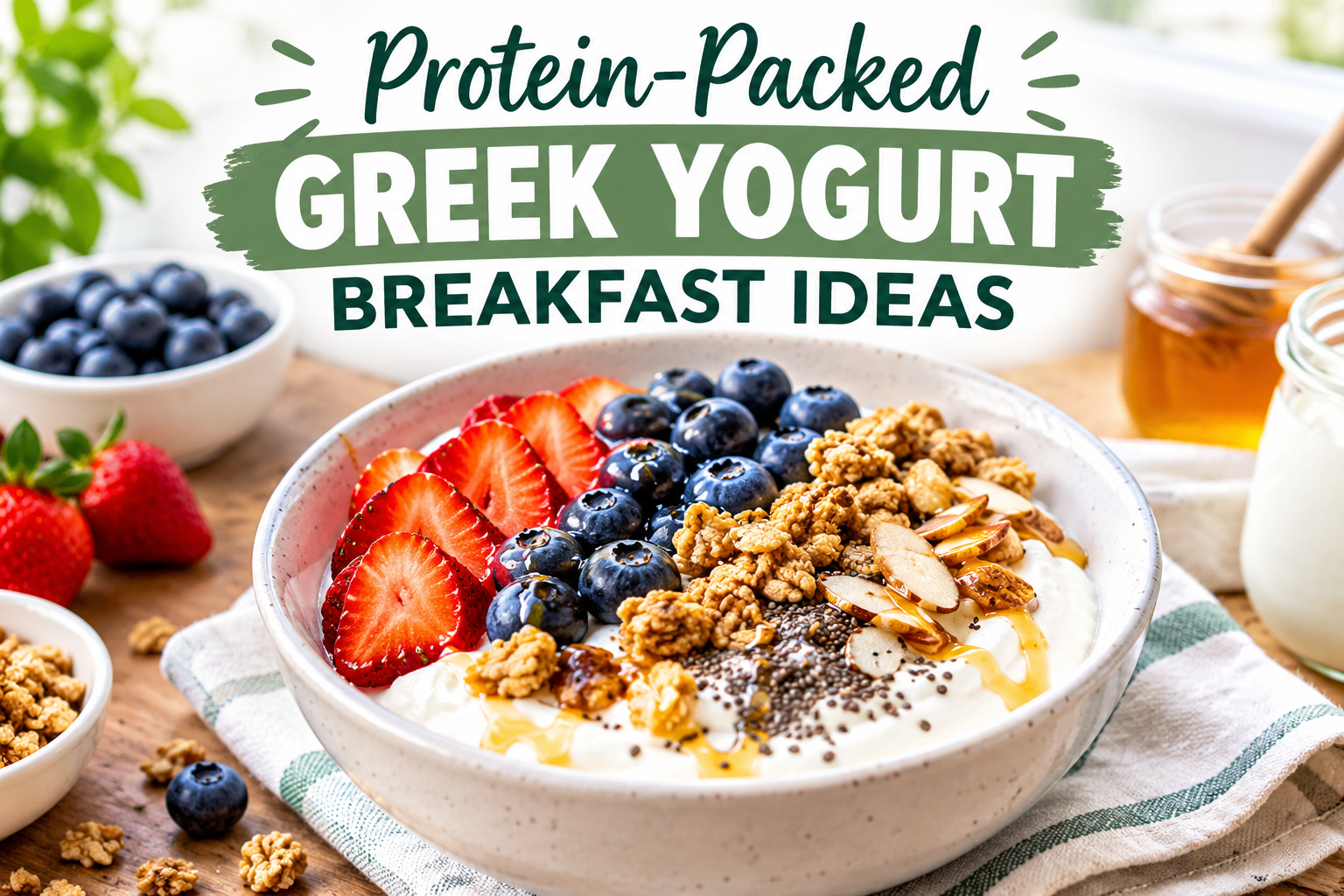
Try these 10 protein-packed Greek yogurt breakfast ideas for busy mornings. Easy, healthy, delicious recipes with fruit, oats, nuts, and seeds.
Protein-Packed Greek Yogurt Breakfast Ideas
If your mornings are busy, breakfast can easily become an afterthought. You may grab a piece of toast, pour a quick bowl of cereal, or simply reach for coffee and promise yourself that you will eat something later. But a breakfast built around Greek yogurt can change that routine without making your morning complicated. Greek yogurt is creamy, versatile, naturally rich in protein, and easy to pair with fruit, oats, nuts, seeds, and other nutritious ingredients. Harvard Health's recent nutrition review lists plain Greek yogurt at about 15 grams of protein per 6-ounce serving for whole-milk and low-fat varieties, while nonfat Greek yogurt provides about 18 grams in the same serving size.
That makes Greek yogurt an especially convenient starting point for a high-protein breakfast. The trick is not simply to eat a large bowl of yogurt and call it a meal. Instead, think of your breakfast bowl as a small building project: Greek yogurt supplies protein, fruit brings flavour and carbohydrates, oats or whole grains add staying power, and nuts or seeds provide healthy fats and texture. Current U.S. healthy-eating guidance also encourages prioritising protein foods, dairy without added sugars, fruits, vegetables, healthy fats, and fibre-rich whole grains.
The following protein-packed Greek yogurt breakfast ideas are designed for busy mornings and can be adapted to different tastes, budgets, and dietary goals. Some are ready in five minutes, while others can be prepared the night before. Whether you want a quick breakfast before work, a post-workout meal, or an easy meal-prep option, there is plenty of room to make Greek yogurt much more exciting than a plain spoonful from the tub.
Why Greek Yogurt Makes a Great High-Protein Breakfast
Greek yogurt has become a popular breakfast staple because it gives you a convenient combination of protein, creaminess, and versatility. Unlike many breakfast foods that require cooking, Greek yogurt can go straight from the refrigerator into a bowl. You can make it sweet with berries and cinnamon, turn it into overnight oats, blend it into a smoothie, or layer it with crunchy toppings for a parfait. The current Dietary Guidelines information available through MedlinePlus identifies yogurt as a source of protein along with nutrients such as calcium and potassium, while also recommending dairy choices without added sugars.
Protein is particularly useful when you are trying to make breakfast feel more substantial. A meal containing protein can be combined with fibre-rich carbohydrates and healthy fats to create a more balanced plate. The Academy of Nutrition and Dietetics lists yogurt, milk, cheese, eggs, beans, lentils, nuts, and seeds among useful protein choices. The goal does not need to be turning every breakfast into an enormous protein challenge. Instead, a practical approach is to start with a protein-rich base and add ingredients that contribute flavour, fibre, vitamins, minerals, and satisfying texture.
Greek yogurt also gives you plenty of flexibility. If you prefer a lower-calorie breakfast, nonfat Greek yogurt can work well. If you prefer a richer and creamier bowl, whole-milk Greek yogurt is an option. The best choice depends on your overall eating pattern and preferences. What matters most is learning to read the nutrition label, especially because products vary considerably in protein, calories, fat, and added sugar. Recent dietitian guidance recommends comparing protein and sugar amounts rather than assuming that every Greek yogurt product has the same nutritional profile.
How Much Protein Does Greek Yogurt Provide?
The exact protein content depends on the brand, milk type, serving size, and recipe. Harvard Health's July 2026 review reports approximately 15 grams of protein per 6 ounces of plain whole-milk or low-fat Greek yogurt and approximately 18 grams for plain nonfat Greek yogurt. This is one reason Greek yogurt can be such a convenient foundation for breakfast. You can start with a serving that already supplies a meaningful amount of protein and then add another protein-containing ingredient such as chia seeds, peanut butter, nuts, cottage cheese, or a protein-rich granola.
It is also helpful to remember that more protein is not automatically better. Protein requirements vary from person to person depending on factors such as body size, activity level, age, and overall diet. The World Health Organization notes that protein needs differ according to circumstances, including activity and muscle-building demands. For everyday breakfast planning, focus on creating a balanced meal rather than chasing an arbitrary protein number. A Greek yogurt bowl with berries, oats, and seeds may be more satisfying and nutritionally useful than simply adding more and more protein powder.
How to Choose the Best Greek Yogurt
Walking into a supermarket yogurt aisle can feel surprisingly complicated. There are plain varieties, flavoured varieties, low-fat options, full-fat options, high-protein products, lactose-free products, and plant-based alternatives. Instead of getting distracted by the packaging, look at the nutrition facts panel and ingredient list. For a protein-focused breakfast, compare protein per serving, check the amount of added sugar, and consider the calorie and saturated-fat content in the context of your personal needs. Current CDC guidance specifically recommends dairy products without added sugars as part of a healthy eating pattern.
Plain Greek yogurt is often the easiest option because you control the sweetness yourself. Add berries for natural sweetness, cinnamon for warmth, mashed banana for creaminess, or a small drizzle of honey if desired. This approach also makes it easier to adjust each bowl to your taste. If you prefer flavoured yogurt, you can absolutely use it, but compare labels because products can differ substantially in sugar and protein. A dietitian-reviewed guide from Verywell Health recommends paying attention to protein and added sugar when comparing yogurt products.
If dairy does not agree with you, lactose-free Greek yogurt may be worth considering. The Academy of Nutrition and Dietetics notes that some people with lactose intolerance may tolerate yogurt better than other dairy foods, while lactose-free and dairy-free varieties are also available. Plant-based yogurt deserves a closer label check, though, because its protein and nutrient content can vary widely. Fortified soy yogurt is generally nutritionally closer to dairy yogurt than many other plant-based yogurt alternatives.
Plain vs. Flavored Greek Yogurt
Both plain and flavoured Greek yogurt can fit into a healthy breakfast, but they offer different levels of control. Plain yogurt gives you a blank canvas, which means you can decide how much sweetness, fruit, crunch, and flavour to add. That makes it particularly useful for recipes where you want to keep added sugar modest. Flavoured yogurt is convenient when you are rushing, but it is worth checking the label before assuming that a product is low in sugar.
A simple compromise is to buy plain Greek yogurt and create your own flavours. Add strawberries and vanilla for a cheesecake-inspired bowl, apple and cinnamon for an autumn-style breakfast, or cocoa powder and banana for a chocolate breakfast bowl. You can also use a small amount of maple syrup or honey if the natural tartness is too strong. This gives you the convenience of Greek yogurt while allowing you to customise the sweetness.
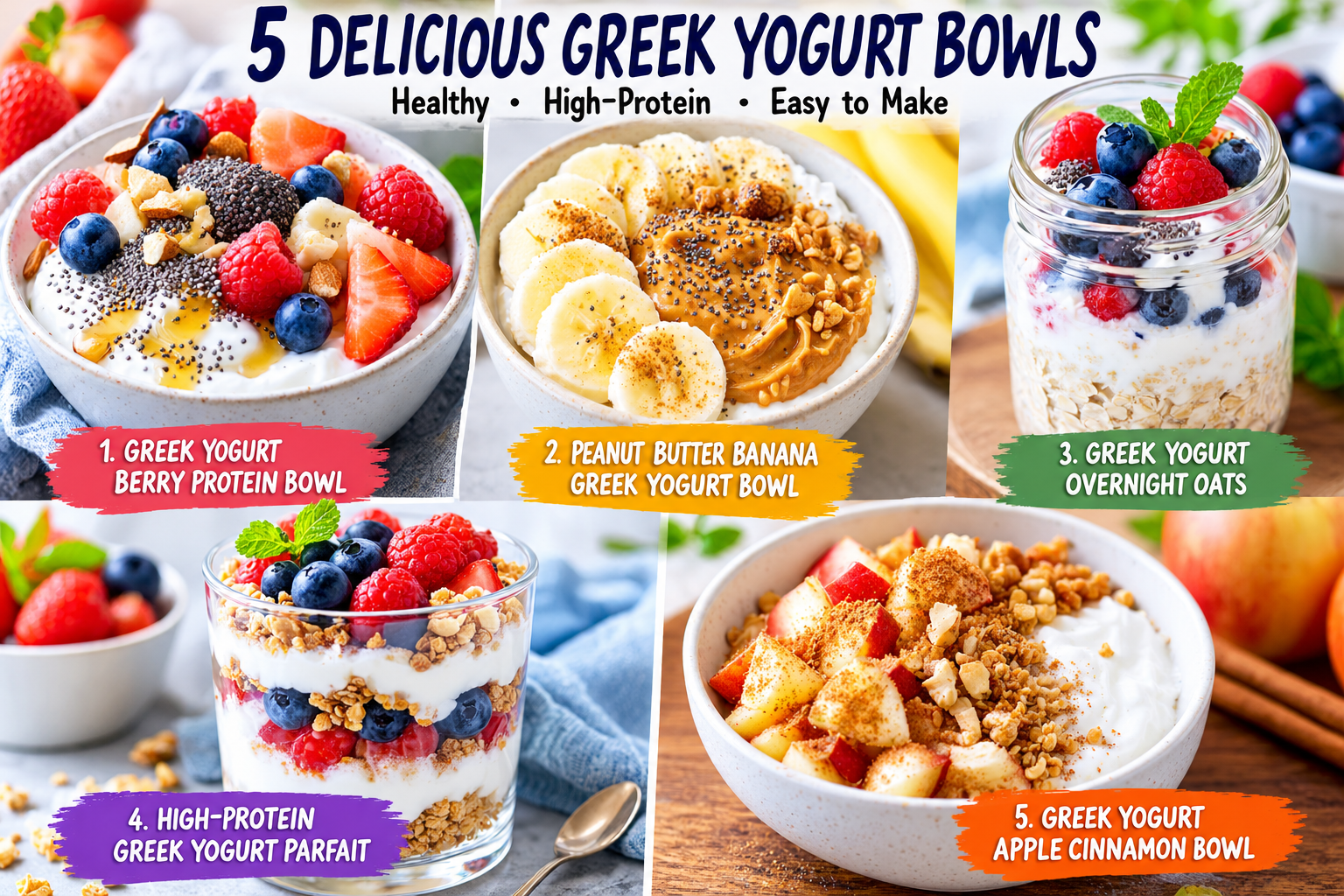
1. Greek Yogurt Berry Protein Bowl
A Greek yogurt berry protein bowl is one of the easiest breakfasts you can make. Start with about 1 cup of plain Greek yogurt and add a generous handful of fresh or frozen berries. Strawberries, blueberries, raspberries, and blackberries all work beautifully, and frozen berries are especially convenient because they can be kept in the freezer for weeks. Add 1 tablespoon of chia seeds, 1 tablespoon of chopped almonds or walnuts, and 2 tablespoons of oats or a lower-sugar granola. Finish with cinnamon and, if needed, a small drizzle of honey.
The beauty of this breakfast is that every ingredient has a job. Greek yogurt creates the creamy protein-rich base, berries bring colour and fruit flavour, oats contribute carbohydrates and texture, while chia seeds and nuts add additional nutrients and healthy fats. The result feels more like a café-style breakfast than a rushed weekday meal. Current healthy-eating guidance encourages combinations that include protein, fruits, healthy fats, and whole grains, making this kind of bowl an easy framework to adapt.
For an even faster morning, prepare the dry toppings in small containers at the beginning of the week. Keep yogurt and berries refrigerated and assemble everything when you wake up. You can also switch the fruit according to the season. Peaches and strawberries are excellent in summer, while apples and pears work nicely in cooler months. If you are watching added sugar, choose plain yogurt and unsweetened toppings.
2. Peanut Butter Banana Greek Yogurt Bowl
If you love the classic combination of peanut butter and banana, this breakfast is practically guaranteed to satisfy. Spoon 1 cup of plain Greek yogurt into a bowl, slice one small banana over the top, and add 1 tablespoon of natural peanut butter. Sprinkle with cinnamon and 1 tablespoon of chia or ground flaxseed. For extra crunch, add a tablespoon of chopped peanuts or walnuts.
Bananas bring natural sweetness and a soft texture, while peanut butter gives the bowl a rich, nutty flavour. Greek yogurt provides the creamy base and a substantial protein contribution. If the mixture seems too thick, stir in a splash of milk before adding the toppings. You can also turn this bowl into an overnight breakfast by mixing the yogurt, banana, oats, and chia seeds together in a jar and refrigerating it overnight.
This is particularly useful for busy mornings because there is almost no cooking involved. The ingredients are affordable, widely available in the UK and US, and easy to keep stocked. Choose natural peanut butter when possible and check the ingredient list if you want to avoid unnecessary added sugars. Because peanut butter is energy-dense, a tablespoon or two is generally enough to give you the flavour without turning a simple breakfast into an oversized serving.
3. Greek Yogurt Overnight Oats
Greek yogurt overnight oats combine two breakfast favourites into one convenient meal. In a jar or container, mix ½ cup rolled oats, ½ to ¾ cup Greek yogurt, ½ cup milk of your choice, 1 tablespoon chia seeds, and a small amount of honey or mashed banana for sweetness. Stir thoroughly, cover, and refrigerate overnight. In the morning, add berries, sliced banana, chopped nuts, or cinnamon before eating.
The overnight process allows the oats and chia seeds to absorb liquid, creating a thick and creamy texture. Greek yogurt makes the mixture richer than traditional overnight oats while also increasing its protein content. You can prepare several jars at once, making this one of the most practical options for meal prep breakfast recipes. Instead of preparing breakfast from scratch every morning, you simply grab a jar from the refrigerator.
Try creating several flavours so you do not get bored. One jar can feature blueberry and almond, another can use apple and cinnamon, and a third can combine banana with peanut butter. If you want more texture, keep crunchy toppings separate until breakfast. That prevents nuts and granola from becoming soft overnight.
4. High-Protein Greek Yogurt Parfait
A Greek yogurt parfait looks impressive, but it is surprisingly simple to make. Layer Greek yogurt with berries, chopped nuts, oats, and a small amount of granola in a glass or jar. Repeat the layers until the container is full. The contrast between creamy yogurt, juicy fruit, and crunchy toppings makes every spoonful interesting.
The key to making a satisfying parfait is controlling the balance of ingredients. Granola can be delicious, but some varieties contain significant amounts of added sugar and calories. Use it as a topping rather than the main ingredient. Build the bulk of your breakfast around Greek yogurt and fruit, then use granola, seeds, or nuts to create texture.
This breakfast also works well when you are serving family members because everyone can customise their own bowl. Put yogurt, fruit, nuts, seeds, and toppings on the table and let everyone assemble their preferred combination. It is a simple way to make a nutritious breakfast feel interactive rather than restrictive.
5. Greek Yogurt Apple Cinnamon Bowl
For a breakfast that tastes like apple pie without requiring an oven, try a Greek yogurt apple cinnamon bowl. Chop one small apple and place it over 1 cup of Greek yogurt. Add ½ teaspoon cinnamon, 1 tablespoon chopped walnuts, and 2 tablespoons oats. If you want the apple softer, microwave the chopped pieces for about one minute with a splash of water and a pinch of cinnamon before adding them to the yogurt.
Apple and cinnamon create a naturally sweet, comforting flavour combination. Walnuts add crunch and healthy fats, while oats make the bowl more substantial. You can also add a small amount of raisins, although fresh fruit is usually the simpler choice if you want to avoid concentrated sweetness.
This recipe is especially useful during autumn and winter, but there is no reason to wait for cold weather. For a refreshing summer version, use chilled apple pieces and add a few blueberries. You can also replace the apple with pear for a softer, slightly floral flavour.
6. Chocolate Greek Yogurt Protein Bowl
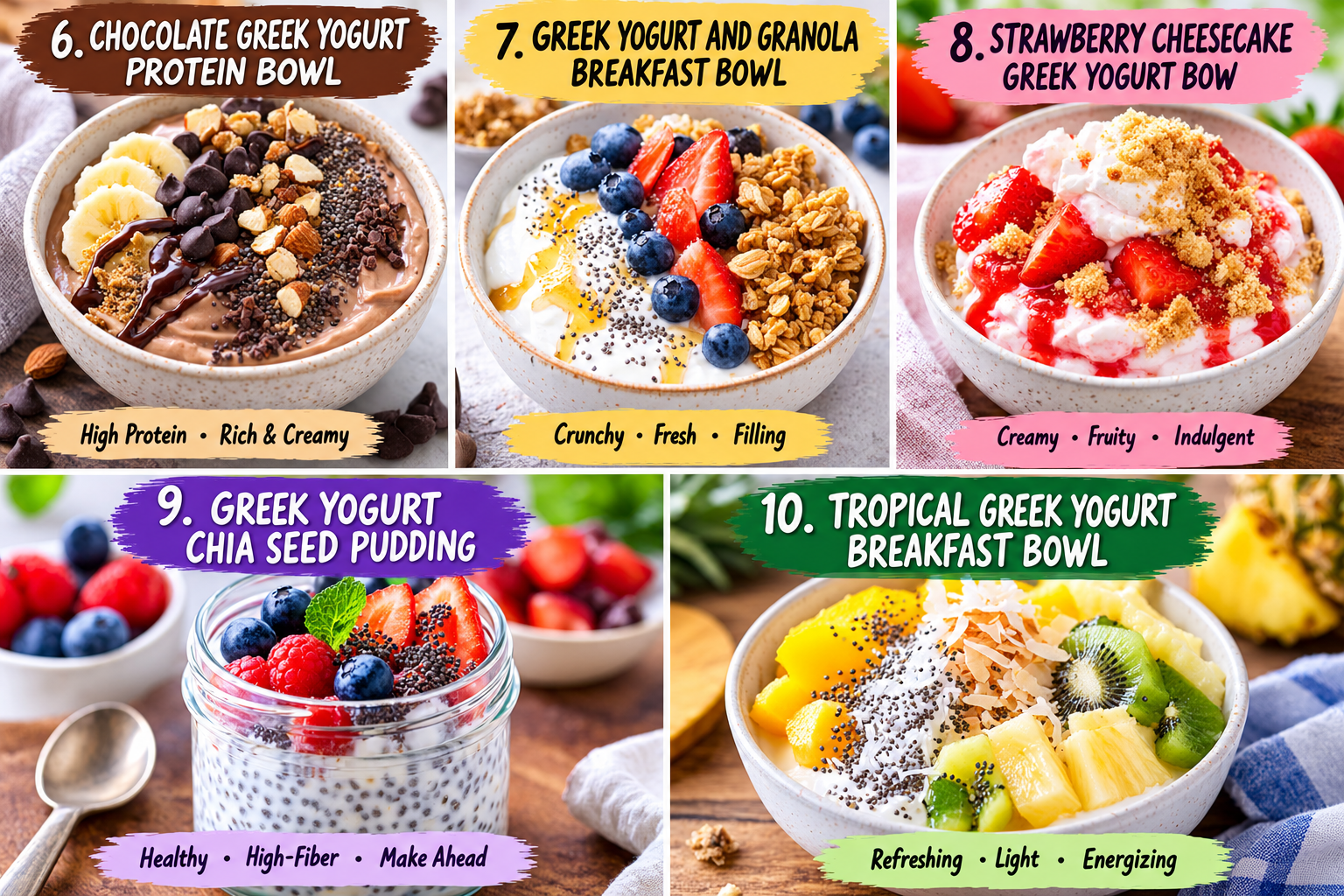
Chocolate for breakfast can absolutely work when you build it thoughtfully. Mix 1 cup of plain Greek yogurt with 1 tablespoon unsweetened cocoa powder and half a mashed banana. Stir until smooth, then add a tablespoon of peanut butter, a sprinkle of chia seeds, and a few sliced strawberries. If the cocoa tastes too bitter, add a small amount of honey or maple syrup.
This bowl is a useful option when you are tired of traditional fruit-and-yogurt combinations. Cocoa gives the breakfast a dessert-like character without requiring chocolate syrup. The banana helps sweeten and thicken the mixture naturally, while Greek yogurt provides the creamy texture.
For an extra indulgent texture, refrigerate the mixture for 10 to 15 minutes before serving. You can also freeze it briefly and stir it before eating for a thicker consistency. The result is somewhere between chocolate mousse and a breakfast yogurt bowl, which can make healthy eating feel much more enjoyable.
7. Greek Yogurt and Granola Breakfast Bowl
Sometimes simple really is best. Combine 1 cup Greek yogurt with ⅓ cup lower-sugar granola, fresh berries, sliced banana, and a tablespoon of pumpkin or sunflower seeds. The recipe takes only a few minutes and requires no cooking. It is ideal for mornings when you have barely enough time to make coffee.
Choose granola carefully because nutritional profiles vary dramatically between brands. Look for a product that provides some whole grains, nuts, or seeds without excessive added sugar. You can also make your own simple granola using oats, nuts, seeds, cinnamon, and a small amount of maple syrup.
If you need more protein, add a spoonful of nut butter or a few tablespoons of cottage cheese blended into the yogurt. The latter may sound unusual, but blending cottage cheese creates a smooth texture and can increase the protein content of the bowl.
8. Strawberry Cheesecake Greek Yogurt Bowl
This breakfast takes inspiration from strawberry cheesecake while keeping the ingredients simple. Mix Greek yogurt with a little vanilla extract and layer it with chopped strawberries and crushed whole-grain crackers or a small amount of granola. Add a tablespoon of chopped almonds for crunch. If desired, finish with a light drizzle of honey.
The combination of creamy yogurt, strawberries, vanilla, and crunchy crumbs creates a dessert-like experience. Yet you are still starting with a protein-rich dairy base and adding fruit rather than relying on a large amount of frosting or refined dessert ingredients.
For meal prep, keep the crunchy topping separate and add it immediately before eating. This prevents it from becoming soggy. You can also prepare the yogurt and strawberries in jars the night before, then add the topping in the morning.
9. Greek Yogurt Chia Seed Pudding
Greek yogurt and chia seeds create a thick, spoonable breakfast that is perfect for preparation the night before. Combine ¾ cup Greek yogurt, ¼ cup milk, 2 tablespoons chia seeds, and a little vanilla. Stir thoroughly, wait about five minutes, then stir again to prevent the seeds from clumping. Refrigerate overnight and top with berries or sliced fruit in the morning.
Chia seeds are particularly useful here because they contribute fibre and help transform the mixture into a pudding-like consistency. Add cinnamon, cocoa, mashed banana, or berries to create different flavours. You can even prepare several variations at once.
This breakfast is especially useful if you regularly find yourself skipping breakfast because you are short on time. There is no cooking required in the morning, and the jar is easy to carry. Just remember that chia seeds absorb liquid, so adjust the milk amount if you prefer a thinner consistency.
10. Tropical Greek Yogurt Breakfast Bowl
Bring a little summer to your breakfast table with a tropical Greek yogurt bowl. Start with plain Greek yogurt and add diced mango, pineapple, sliced banana, and unsweetened coconut. Sprinkle with chia seeds or pumpkin seeds and add a small amount of chopped cashews if desired.
The fruit provides natural sweetness and a bright flavour that works particularly well with creamy yogurt. Coconut and cashews add texture and richness, while seeds contribute additional nutrients. If fresh tropical fruit is expensive or unavailable, frozen mango and pineapple are excellent alternatives.
Frozen fruit can also make the bowl extra cold and refreshing. Let it thaw for a few minutes or use it partially frozen for a texture similar to a smoothie bowl. Keep the portions of calorie-dense toppings such as coconut and cashews moderate so the fruit and yogurt remain the stars.
How to Make Greek Yogurt Breakfasts More Filling
A common mistake is treating Greek yogurt as the entire breakfast instead of using it as the foundation. Although Greek yogurt can provide a substantial amount of protein, adding fruit, whole grains, seeds, and healthy fats can make the meal more varied and satisfying. The CDC recommends prioritising protein foods while also including fruits, healthy fats, and fibre-rich whole grains.
Think of your breakfast as a four-part formula: protein + produce + fibre-rich carbohydrate + healthy fat. Greek yogurt handles the protein component, berries or other fruit provide produce, oats supply whole-grain carbohydrates, and nuts or seeds contribute healthy fats. You do not need every component in exactly the same quantity every day. The formula is simply a useful mental shortcut for building balanced meals.
Portion size also matters. A huge bowl filled with yogurt, granola, nut butter, dried fruit, and honey can quickly become much more calorie-dense than expected. That does not make those foods unhealthy, but it does mean that portions should match your appetite and energy needs. Start with moderate servings and adjust based on how hungry you feel.
Easy Greek Yogurt Breakfast Meal Prep
Meal prepping Greek yogurt breakfasts can save considerable time during busy weekdays. The easiest strategy is to prepare the ingredients rather than necessarily assembling everything at once. Wash and portion berries, chop nuts, prepare overnight oats, and keep yogurt refrigerated. Then breakfast becomes an assembly job rather than a cooking job.
Overnight oats and chia pudding are especially suitable for meal prep because they are designed to sit in the refrigerator. Prepare three or four jars at once and label them with flavours such as berry almond, apple cinnamon, or peanut butter banana. Keep crunchy ingredients like granola separate when possible so they maintain their texture.
You can also prepare a homemade topping mixture using oats, pumpkin seeds, chopped nuts, cinnamon, and coconut. Store it in an airtight container and use a few tablespoons each morning. This approach gives you the convenience of a packaged breakfast while allowing you to control the ingredients.
Food safety still matters during meal prep. Keep yogurt and prepared breakfasts refrigerated and follow the storage guidance on your dairy products. If a prepared breakfast has been left at unsafe temperatures, do not rely on smell or appearance alone to determine whether it is safe.
Common Mistakes to Avoid With Greek Yogurt Breakfasts
One of the biggest mistakes is assuming that every product labelled Greek yogurt has the same nutritional profile. Protein, sugar, fat, and calories can vary significantly between brands and flavours. Check the nutrition label rather than relying only on front-of-package claims. Recent nutrition guidance also recommends paying attention to added sugars and choosing dairy products without added sugars when possible.
Another mistake is covering a healthy yogurt base with excessive amounts of granola, syrup, chocolate chips, and sweetened dried fruit. These toppings can turn a simple breakfast into something much more energy-dense. There is nothing wrong with enjoying them, but use them strategically. A tablespoon of nut butter, a small sprinkle of granola, and fresh fruit can provide plenty of flavour without overwhelming the yogurt.
A third mistake is forgetting fibre. Greek yogurt is naturally low in fibre, so fruit, oats, chia seeds, flaxseed, nuts, and whole grains can help fill that nutritional gap. The Academy of Nutrition and Dietetics also highlights nuts, seeds, legumes, and other foods as useful protein choices, showing why variety matters rather than relying on a single food.
How to Build a Balanced Greek Yogurt Breakfast
Building a Greek yogurt breakfast does not require a complicated recipe. Start with about ¾ to 1 cup of Greek yogurt, then choose one or two fruits. Add a modest portion of oats, whole-grain granola, or another whole-grain ingredient, followed by a tablespoon of nuts or seeds. Finish with cinnamon, vanilla, cocoa, or a small amount of honey if you want additional flavour.
The beauty of this approach is that you can adjust it to your lifestyle. If you have a workout planned, you might prefer a bowl with oats, banana, Greek yogurt, and peanut butter. If you want something light, Greek yogurt with berries and chia seeds may be enough. If you need breakfast that can survive a commute, overnight oats in a sealed container are more practical than a bowl assembled at the kitchen table.
Variety is also important. Eating the same breakfast every day can become boring, which often makes convenience foods more tempting. Rotate flavours throughout the week so the same basic ingredients feel completely different. The current healthy-eating guidance emphasises a broad range of nutrient-dense foods rather than relying on one particular “perfect” meal.
Conclusion
Protein-packed Greek yogurt breakfasts are one of the simplest ways to make busy mornings more nutritious without spending a lot of time in the kitchen. Greek yogurt gives you a convenient protein-rich foundation, while fruit, oats, nuts, seeds, and other toppings transform it into a complete and enjoyable meal. Current dietary guidance supports prioritising protein foods, fruits, whole grains, healthy fats, and dairy products without added sugars, which makes Greek yogurt a practical ingredient for many breakfast combinations.
The best part is the flexibility. You can make a berry protein bowl in five minutes, prepare overnight oats before bed, create a peanut butter banana bowl when you need something comforting, or prepare several parfaits for the week. Start with plain Greek yogurt, experiment with different flavours, and pay attention to serving sizes and nutrition labels. Once you have a few favourite combinations, breakfast becomes less of a daily decision and more of an easy routine.
A healthy breakfast does not need to be complicated or expensive. Sometimes all you need is a tub of Greek yogurt, some fruit, a handful of oats, and a few minutes. With these ideas, you can turn that simple combination into a breakfast that is creamy, filling, colourful, and genuinely enjoyable.
Frequently Asked Questions
Is Greek yogurt good for a high-protein breakfast?
Yes. Greek yogurt is naturally protein-rich compared with many regular yogurt varieties, although the exact amount varies by product. Harvard Health reports approximately 15 to 18 grams of protein per 6-ounce serving for several plain Greek yogurt varieties. Pairing it with nuts, seeds, oats, or other protein-containing foods can create an even more substantial breakfast.
Can I eat Greek yogurt every morning?
Greek yogurt can be part of a regular breakfast if it fits your overall dietary needs and preferences. Variety is still useful, so rotate the fruits, grains, seeds, and other toppings you use. If dairy causes digestive discomfort, consider lactose-free options or a suitable fortified alternative.
What should I add to Greek yogurt for more protein?
Try peanut butter, almonds, pumpkin seeds, chia seeds, cottage cheese, or a suitable high-protein granola. You can also combine Greek yogurt with eggs or another protein source if you are building a larger breakfast. The goal should be a balanced meal rather than simply maximising protein.
Is Greek yogurt good for weight loss?
Greek yogurt can fit into a weight-management eating pattern because it provides protein and can be combined with fruit and fibre-rich foods. However, no single food causes weight loss. Portion sizes, overall calorie intake, food quality, physical activity, and individual needs all matter.
Is plain Greek yogurt better than flavored Greek yogurt?
Plain Greek yogurt generally gives you more control over added sugar because you can sweeten it yourself with fruit, cinnamon, or a small amount of honey. Flavoured versions can still be convenient, but check the nutrition label because sugar and protein levels vary between products. For everyday use, plain yogurt is a flexible base for homemade breakfast combinations.
Comments
0No comments yet — be the first to share your thoughts!