10 Low-Calorie Meals That Actually Taste Good
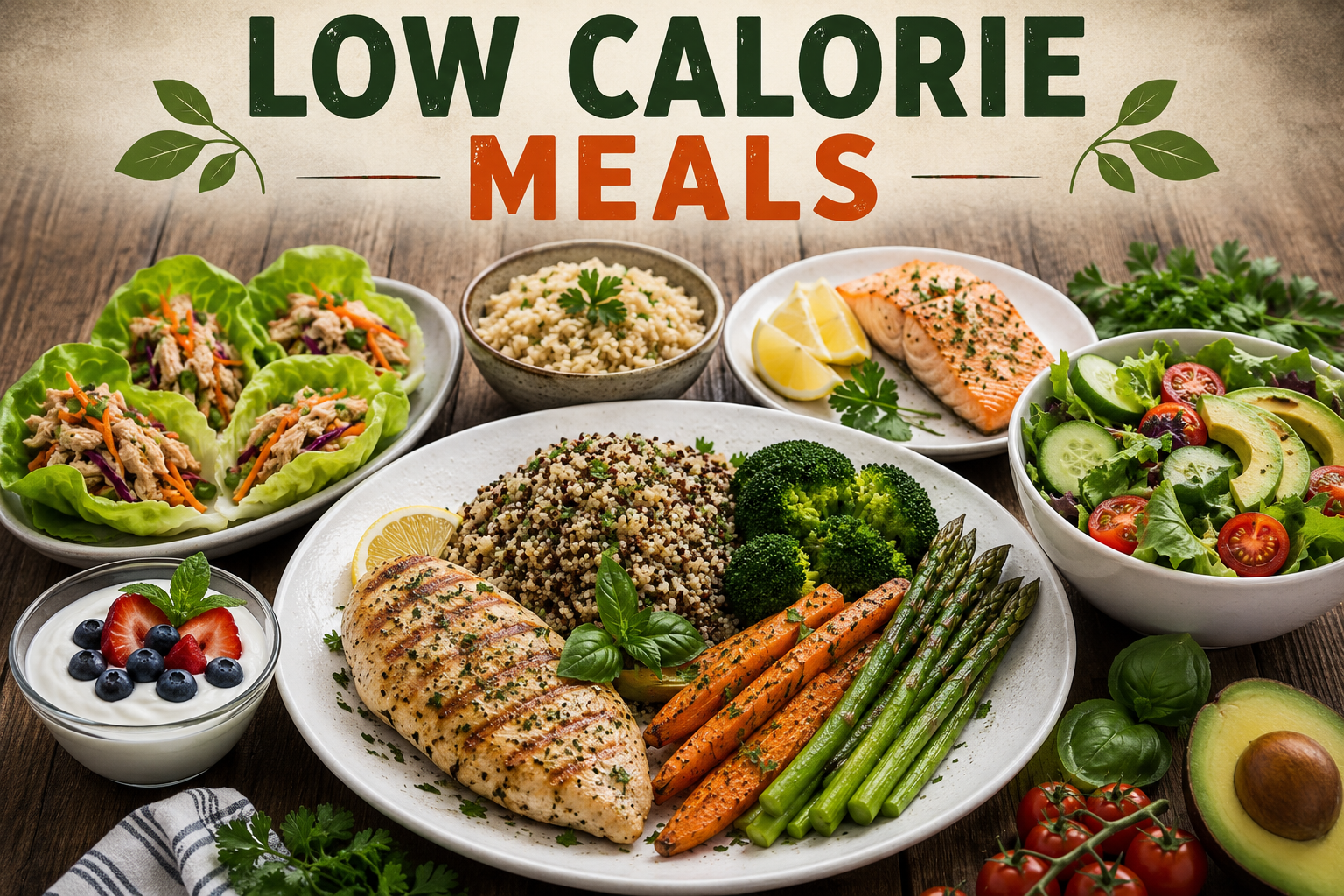
Discover 10 delicious low-calorie meals that are high in protein, filling, and easy to make. Perfect for healthy eating, weight loss, and busy weeknight dinners.
Low-Calorie Meals That Actually Taste Good
Many people think that eating fewer calories means giving up delicious food. That idea has kept countless people from starting a healthier lifestyle because they expect every meal to be bland, repetitive, and unsatisfying. Thankfully, modern cooking proves the opposite. With the right ingredients, simple cooking methods, and a little creativity, low-calorie meals can be packed with flavor while helping you maintain a healthy weight. Fresh herbs, spices, lean proteins, vegetables, healthy fats, and whole grains work together to create meals that taste indulgent without adding unnecessary calories.
Whether you're trying to lose weight, maintain your current weight, or simply eat healthier, choosing satisfying meals is one of the best ways to stay consistent. Instead of focusing on what you can't eat, it is far more effective to discover foods you genuinely enjoy. Healthy eating becomes sustainable when meals are exciting enough that you actually look forward to them. The recipes and tips in this guide are designed for busy people, families, students, and professionals who want quick, affordable, and flavorful meals without spending hours in the kitchen.
This article explores why low-calorie meals can be incredibly satisfying, explains how to build balanced meals, and shares delicious recipes that prove healthy food never has to be boring.
Why Low-Calorie Meals Don't Have to Be Boring
One of the biggest misconceptions about healthy eating is that reducing calories automatically means sacrificing flavor. This belief usually comes from old-fashioned dieting advice that relied heavily on plain salads, steamed vegetables, and grilled chicken without seasoning. While those foods can certainly be healthy, they don't represent the incredible variety available today. Modern healthy cooking focuses on maximizing flavor through fresh ingredients, spices, herbs, marinades, citrus juice, garlic, onions, and cooking techniques that naturally enhance taste.
Flavor doesn't come only from butter, cream, or sugar. Ingredients like smoked paprika, cumin, fresh basil, ginger, rosemary, garlic, lemon zest, soy sauce, balsamic vinegar, and chili flakes provide bold tastes while contributing very few calories. Roasting vegetables instead of boiling them caramelizes their natural sugars, creating deeper flavors without unhealthy additions. Grilling meat adds a smoky taste that makes simple chicken or fish much more exciting.
Another reason low-calorie meals taste better today is the growing awareness of balanced nutrition. Combining lean proteins with fiber-rich vegetables and whole grains keeps you full for longer while providing satisfying textures and flavors. Rather than feeling deprived, many people discover they actually enjoy these meals more because they leave them feeling energized instead of sluggish.
Healthy eating isn't about restriction. It's about making smarter choices that still satisfy your cravings while supporting your long-term health goals.
Common Myths About Healthy Eating
Many myths continue to discourage people from trying healthier recipes. One common myth is that healthy meals are expensive. While specialty health foods can be costly, basic ingredients such as eggs, oats, beans, lentils, frozen vegetables, chicken breast, canned tuna, and brown rice remain affordable and highly nutritious. Buying seasonal produce and cooking at home often costs much less than ordering fast food several times a week.
Another myth suggests that carbohydrates should be completely avoided. In reality, complex carbohydrates like quinoa, sweet potatoes, oats, and brown rice provide fiber, vitamins, minerals, and long-lasting energy. The problem isn't carbohydrates themselves but oversized portions and highly processed foods loaded with added sugars and unhealthy fats.
Some people also believe healthy food takes too long to prepare. While elaborate recipes certainly exist, many delicious low-calorie meals come together in under 30 minutes. Sheet-pan dinners, stir-fries, salads, wraps, soups, and rice bowls require minimal preparation and cleanup, making them perfect for busy schedules.
Perhaps the biggest myth is that dieting must involve constant hunger. Meals built around lean protein, vegetables, legumes, and whole grains naturally increase fullness while keeping calorie intake under control. The result is a healthier lifestyle that feels realistic instead of restrictive
What Makes a Meal Low in Calories?
A low-calorie meal is more than simply eating less food. The real goal is to create meals that deliver plenty of nutrition while keeping calories under control. A satisfying meal should provide lean protein, fiber-rich carbohydrates, healthy fats, and colorful vegetables. This combination helps you stay full longer, supports muscle maintenance, and provides steady energy throughout the day. When meals are balanced, you're less likely to snack on high-calorie foods between meals.
The cooking method also plays an important role. Baking, grilling, steaming, roasting, air frying, and stir-frying with a small amount of healthy oil generally keep calories lower than deep frying. Swapping heavy cream sauces for tomato-based sauces or Greek yogurt can significantly reduce calories while maintaining a rich taste. Fresh herbs, garlic, onions, lemon juice, ginger, and spices provide bold flavors without adding unnecessary fat or sugar.
Portion size matters as well. Even healthy foods can contribute too many calories if eaten in excessive amounts. Using measuring cups or a food scale occasionally can help you understand appropriate serving sizes. Filling half your plate with vegetables, one-quarter with lean protein, and one-quarter with whole grains is a simple way to create a balanced, low-calorie meal. This approach allows you to enjoy satisfying portions while supporting healthy weight management.
Understanding Calories and Portion Control
Calories are simply units of energy that your body uses for everyday activities such as walking, working, exercising, and even sleeping. Weight management depends on balancing the calories you consume with the calories your body burns. Choosing nutrient-dense foods means you get more vitamins, minerals, fiber, and protein for fewer calories, making healthy eating much easier to maintain.
Many restaurant meals contain oversized portions that can easily exceed an entire day's calorie needs. Cooking at home gives you complete control over ingredients and serving sizes. Simple habits like using smaller plates, measuring cooking oil instead of pouring it freely, and loading meals with vegetables can dramatically reduce calorie intake without making you feel deprived.
High-protein foods such as chicken breast, turkey, fish, eggs, tofu, and Greek yogurt increase satiety, meaning you'll feel full for longer. Fiber from vegetables, fruits, beans, and whole grains works alongside protein to slow digestion and reduce hunger. Together, they form the foundation of delicious low-calorie meals that satisfy both your appetite and your nutritional needs.
Choosing Nutrient-Dense Ingredients
The secret to flavorful low-calorie cooking lies in selecting ingredients that provide maximum nutrition with relatively few calories. Fresh vegetables like broccoli, spinach, zucchini, bell peppers, mushrooms, tomatoes, and cauliflower add volume, texture, and vibrant color without dramatically increasing calorie counts. They also supply antioxidants, vitamins, and minerals that support overall health.
Lean proteins are equally important because they help repair muscles and keep you feeling satisfied. Chicken breast, turkey, shrimp, white fish, tuna, tofu, lentils, and beans are excellent choices. Whole grains such as quinoa, brown rice, oats, and barley provide lasting energy and additional fiber, making meals more filling than refined grains.
Healthy fats shouldn't be avoided entirely. Small portions of avocado, olive oil, nuts, and seeds enhance flavor and help your body absorb fat-soluble vitamins. The key is moderation. A teaspoon of olive oil or a few slices of avocado can elevate a meal without pushing calories too high.
Essential Ingredients for Flavorful Low-Calorie Cooking
Many people assume healthy food lacks flavor because they rely on salt, butter, or creamy sauces for taste. In reality, herbs and spices are some of the most powerful flavor boosters available. Fresh basil, parsley, cilantro, rosemary, thyme, dill, oregano, and mint instantly brighten meals. Spices like smoked paprika, cumin, turmeric, coriander, cayenne pepper, black pepper, garlic powder, onion powder, and chili flakes create bold flavors without adding calories.
Acidic ingredients are another secret weapon. Lemon juice, lime juice, balsamic vinegar, apple cider vinegar, and rice vinegar enhance natural flavors while reducing the need for excessive salt or fat. Fresh garlic, onions, ginger, and shallots build rich flavor bases for soups, stir-fries, sauces, and marinades.
Keeping your pantry stocked with these ingredients allows you to create endless combinations of healthy meals that never become repetitive. Even simple grilled chicken tastes completely different when seasoned with Mediterranean herbs one day and Mexican-inspired spices the next.
10 Low-Calorie Meals That Actually Taste Good
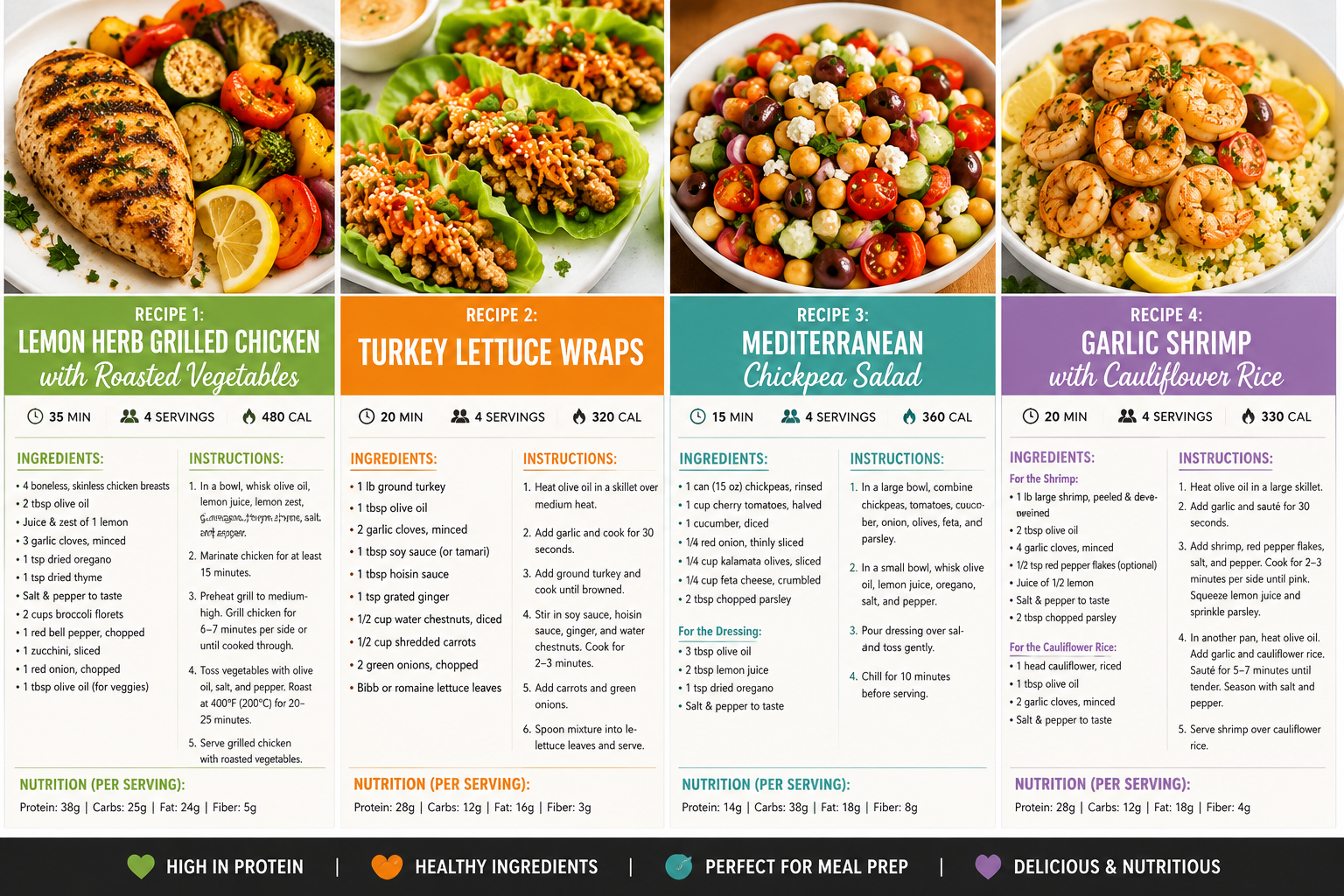
Recipe 1: Lemon Herb Grilled Chicken with Roasted Vegetables
Ingredients
· 1 skinless chicken breast (150g)
· 1 cup broccoli florets
· 1 zucchini, sliced
· ½ red bell pepper, chopped
· 1 teaspoon olive oil
· Juice of ½ lemon
· 2 garlic cloves, minced
· 1 teaspoon Italian herbs
· Salt and black pepper
Instructions
Preheat the oven to 400°F (200°C). Toss the vegetables with olive oil, garlic, herbs, salt, and pepper before spreading them on a baking tray. Roast for about 20 minutes until tender and slightly caramelized. Meanwhile, marinate the chicken with lemon juice, garlic, herbs, salt, and pepper. Grill the chicken for about 6–7 minutes per side until fully cooked. Serve the grilled chicken alongside the roasted vegetables and drizzle with any remaining lemon juice for a bright, fresh finish.
Nutrition (Per Serving)
Nutrient Amount
Calories 340 kcal
Protein 39 g
Carbohydrates 15 g
Fat 12 g
Fiber 5 g
This meal is rich in lean protein and fiber while remaining light enough for lunch or dinner.
Recipe 2: Turkey Lettuce Wraps
Ingredients
· 150g lean ground turkey
· 1 tablespoon low-sodium soy sauce
· 1 teaspoon sesame oil
· 1 teaspoon grated ginger
· 2 garlic cloves, minced
· ½ cup diced mushrooms
· ½ cup shredded carrots
· Butter lettuce leaves
· Chopped green onions
Instructions
Heat sesame oil in a non-stick pan over medium heat. Add garlic and ginger, cooking until fragrant. Stir in the ground turkey and cook until browned, breaking it into small pieces. Mix in mushrooms and carrots, then add soy sauce and cook for another few minutes. Spoon the filling into crisp lettuce leaves and garnish with green onions.
Nutrition (Per Serving)
Nutrient Amount
Calories 295 kcal
Protein 33 g
Carbohydrates 10 g
Fat 13 g
Fiber 3 g
These wraps are crunchy, flavorful, and perfect for a quick lunch.
Recipe 3: Mediterranean Chickpea Salad
Ingredients
· 1 cup canned chickpeas, rinsed
· 1 cucumber, diced
· 1 cup cherry tomatoes
· ¼ red onion, thinly sliced
· 2 tablespoons chopped parsley
· Juice of 1 lemon
· 1 teaspoon olive oil
· Salt, pepper, and oregano
Instructions
Combine the chickpeas, cucumber, tomatoes, onion, and parsley in a large bowl. Whisk together lemon juice, olive oil, oregano, salt, and pepper before pouring over the salad. Toss everything gently and chill for 15 minutes before serving for the best flavor.
Nutrition (Per Serving)
Nutrient Amount
Calories 310 kcal
Protein 13 g
Carbohydrates 39 g
Fat 11 g
Fiber 11 g
The combination of fiber and plant-based protein makes this salad surprisingly filling.
Recipe 4: Garlic Shrimp with Cauliflower Rice
Ingredients
· 170g shrimp, peeled
· 2 cups cauliflower rice
· 2 garlic cloves
· 1 teaspoon olive oil
· Juice of half a lemon
· Fresh parsley
· Salt and black pepper
Instructions
Heat olive oil in a skillet and sauté the garlic until fragrant. Add the shrimp and cook for 2–3 minutes per side until pink. In another pan, lightly cook the cauliflower rice for about five minutes. Season both with salt, pepper, lemon juice, and parsley before serving.
Nutrition (Per Serving)
Nutrient Amount
Calories 270 kcal
Protein 34 g
Carbohydrates 9 g
Fat 10 g
Fiber 4 g
This meal is high in protein while remaining incredibly light and satisfying
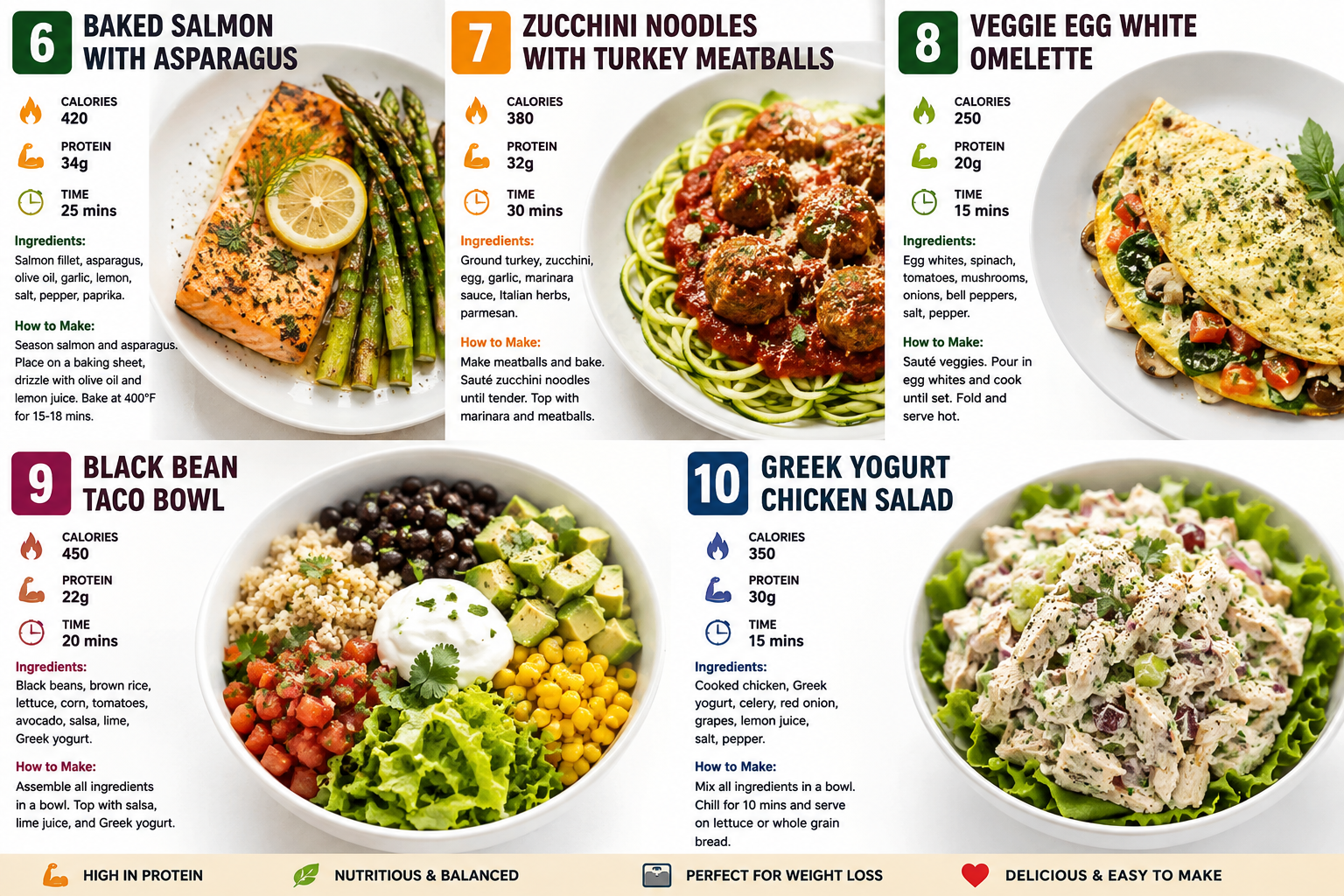
Recipe 6: Baked Salmon with Asparagus
Ingredients
· 1 salmon fillet (150g)
· 1 bunch asparagus, trimmed
· 1 teaspoon olive oil
· Juice of ½ lemon
· 1 teaspoon garlic powder
· Salt and black pepper
· Fresh dill (optional)
Instructions
Preheat the oven to 400°F (200°C). Place the salmon and asparagus on a baking tray lined with parchment paper. Drizzle with olive oil, lemon juice, garlic powder, salt, and pepper. Bake for 12–15 minutes, or until the salmon flakes easily with a fork. Garnish with fresh dill before serving.
Nutrition (Per Serving)
Nutrient Amount
Calories 360 kcal
Protein 34 g
Carbohydrates 8 g
Fat 20 g
Fiber 4 g
Salmon provides heart-healthy omega-3 fatty acids, making this meal both nutritious and satisfying.
Recipe 7: Zucchini Noodles with Turkey Meatballs
Ingredients
· 2 medium zucchinis, spiralized
· 150g lean ground turkey
· 1 egg
· 2 tablespoons whole-wheat breadcrumbs
· ½ teaspoon Italian seasoning
· 1 cup low-sugar marinara sauce
· Fresh basil
Instructions
Mix the turkey, egg, breadcrumbs, and Italian seasoning before forming small meatballs. Bake at 400°F (200°C) for 18–20 minutes. While the meatballs cook, lightly sauté the zucchini noodles for two to three minutes until just tender. Warm the marinara sauce and combine everything before garnishing with fresh basil.
Nutrition (Per Serving)
Nutrient Amount
Calories 330 kcal
Protein 31 g
Carbohydrates 17 g
Fat 15 g
Fiber 4 g
This dish delivers the comfort of pasta with significantly fewer calories and carbohydrates.
Recipe 8: Veggie Egg White Omelette
Ingredients
· 4 egg whites
· 1 whole egg
· ½ cup spinach
· ¼ cup mushrooms
· ¼ cup diced tomatoes
· ¼ cup onions
· Cooking spray
· Salt and pepper
Instructions
Spray a non-stick pan lightly with cooking spray and sauté the vegetables until softened. Beat the egg whites and whole egg together, then pour over the vegetables. Cook over medium heat until set before folding the omelette in half.
Nutrition (Per Serving)
Nutrient Amount
Calories 225 kcal
Protein 26 g
Carbohydrates 8 g
Fat 8 g
Fiber 2 g
This protein-packed breakfast keeps you full for hours without weighing you down.
Recipe 9: Black Bean Taco Bowl
Ingredients
· 1 cup cooked black beans
· ½ cup cooked brown rice
· ½ cup corn
· ½ cup diced tomatoes
· ¼ avocado
· Chopped lettuce
· Salsa
· Lime juice
· Fresh cilantro
Instructions
Arrange the brown rice, black beans, lettuce, tomatoes, and corn in a serving bowl. Top with avocado slices, salsa, fresh cilantro, and a squeeze of lime juice. Mix everything together before eating.
Nutrition (Per Serving)
Nutrient Amount
Calories 390 kcal
Protein 17 g
Carbohydrates 50 g
Fat 13 g
Fiber 14 g
The combination of beans, vegetables, and whole grains creates a filling, fiber-rich meal that supports healthy digestion.
Recipe 10: Greek Yogurt Chicken Salad
Ingredients
· 150g cooked chicken breast
· ¼ cup plain non-fat Greek yogurt
· 1 celery stalk, chopped
· 1 tablespoon diced red onion
· 1 teaspoon Dijon mustard
· Lemon juice
· Salt and pepper
· Mixed greens
Instructions
Combine the Greek yogurt, mustard, lemon juice, salt, and pepper to make a light dressing. Mix in the chopped chicken, celery, and onion until evenly coated. Serve over fresh mixed greens or inside whole-grain lettuce wraps.
Nutrition (Per Serving)
Nutrient Amount
Calories 315 kcal
Protein 38 g
Carbohydrates 9 g
Fat 12 g
Fiber 2 g
Replacing mayonnaise with Greek yogurt creates a creamy texture while cutting calories and increasing protein.
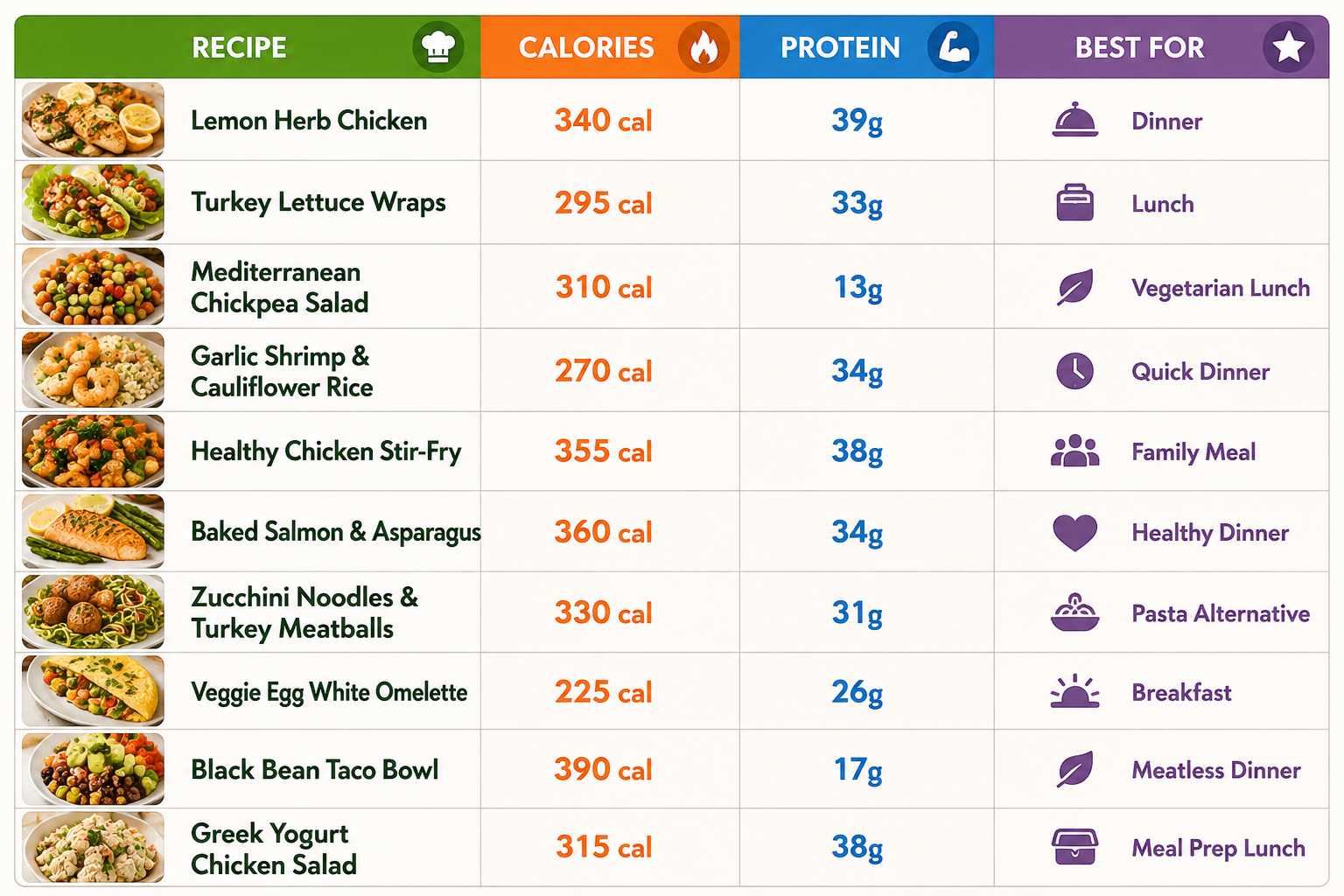
Comparison Table of All 10 Low-Calorie Meals
Meal Prep Tips for Busy People
Preparing meals ahead of time is one of the easiest ways to stay consistent with healthy eating. Instead of deciding what to cook every day, dedicate an hour or two during the weekend to preparing proteins, vegetables, and grains. Grill several chicken breasts, roast a tray of mixed vegetables, cook a batch of brown rice or quinoa, and portion everything into individual containers. Having ready-to-eat ingredients makes assembling lunches and dinners much faster, reducing the temptation to order takeout.
Choose recipes that store well and can be mixed and matched throughout the week. For example, grilled chicken can be used in salads, wraps, stir-fries, or grain bowls. Fresh vegetables can be chopped in advance and stored in airtight containers, while sauces and dressings can be prepared separately to keep meals fresh. Investing in high-quality meal prep containers also helps with portion control and keeps food organized.
Planning meals in advance saves time, reduces food waste, and helps you stick to your calorie goals even during busy workdays. It also makes grocery shopping easier because you know exactly what ingredients you need for the week.
Storage and Reheating Tips
Proper food storage helps maintain flavor, texture, and food safety. Most cooked chicken, turkey, fish, rice, and vegetables stay fresh in the refrigerator for 3–4 days when stored in airtight containers. Soups, stews, and cooked grains often freeze well for up to three months, making them excellent options for batch cooking.
When reheating meals, use the microwave or stovetop with a splash of water or broth to prevent food from drying out. Delicate vegetables such as zucchini or spinach should be reheated gently to preserve their texture. Fresh herbs, avocado, and salad greens are best added just before serving rather than during storage.
Common Mistakes to Avoid
Many people unintentionally increase the calorie content of healthy meals by using too much cooking oil, creamy sauces, or sugary dressings. Measuring oils with a teaspoon instead of pouring directly from the bottle can save hundreds of calories over time. Choosing homemade dressings made with lemon juice, vinegar, herbs, and a small amount of olive oil adds plenty of flavor without excess fat.
Another mistake is relying solely on salads without enough protein. A bowl of lettuce alone won't keep you satisfied for long, often leading to unhealthy snacking later in the day. Including lean protein, healthy fats, and fiber ensures meals are balanced and filling. Skipping meals entirely is another common error because it can lead to overeating at the next meal.
Expert Tips for Making Healthy Food Delicious
Professional chefs know that flavor comes from technique as much as ingredients. Roasting vegetables caramelizes their natural sugars, while grilling meats adds smoky depth. Marinating proteins with herbs, garlic, citrus, and spices before cooking creates richer flavors without adding many calories.
Layering flavors is another effective strategy. Start by cooking onions, garlic, or ginger as a flavor base, then add herbs and spices gradually throughout the cooking process. Finish dishes with fresh herbs, a squeeze of lemon juice, or a sprinkle of toasted seeds to enhance both taste and presentation.
Experimenting with global cuisines can also keep healthy eating exciting. Mediterranean, Mexican, Thai, Indian, and Japanese dishes often use aromatic spices, fresh herbs, and vibrant vegetables that naturally create delicious low-calorie meals.
Conclusion
Eating healthy does not mean sacrificing flavor. By choosing lean proteins, colorful vegetables, whole grains, and fresh herbs, you can enjoy meals that are both delicious and nourishing. The ten recipes in this guide show that low-calorie cooking can be simple, affordable, and satisfying for every lifestyle.
Small changes, such as replacing heavy sauces with lighter alternatives or roasting vegetables instead of frying them, can make a significant difference over time. Consistency is more important than perfection, and finding meals you genuinely enjoy makes healthy eating easier to maintain.
Whether your goal is weight loss, improved energy, or better overall health, flavorful low-calorie meals can help you stay on track while still enjoying every bite.
Frequently Asked Questions
1. What is considered a low-calorie meal?
Most low-calorie meals contain 300–500 calories while providing a good balance of protein, fiber, healthy fats, and complex carbohydrates.
2. Can low-calorie meals help with weight loss?
Yes. Eating balanced meals that create a moderate calorie deficit while supplying enough protein and nutrients can support healthy, sustainable weight loss.
3. How can I make low-calorie meals taste better?
Use fresh herbs, spices, garlic, onions, citrus juice, vinegars, and flavorful cooking methods such as roasting or grilling instead of relying on heavy sauces.
4. Are low-calorie meals filling?
Absolutely. Meals high in protein and fiber help control hunger and keep you satisfied for longer than meals made primarily with refined carbohydrates.
5. Can I prepare these meals in advance?
Yes. Most of the recipes in this article can be prepared ahead of time and stored in the refrigerator for up to four days, making them ideal for weekly meal prep.
Comments
0No comments yet — be the first to share your thoughts!