10 High-Protein Smoothies to Keep You Full | Healthy & Easy Recipes
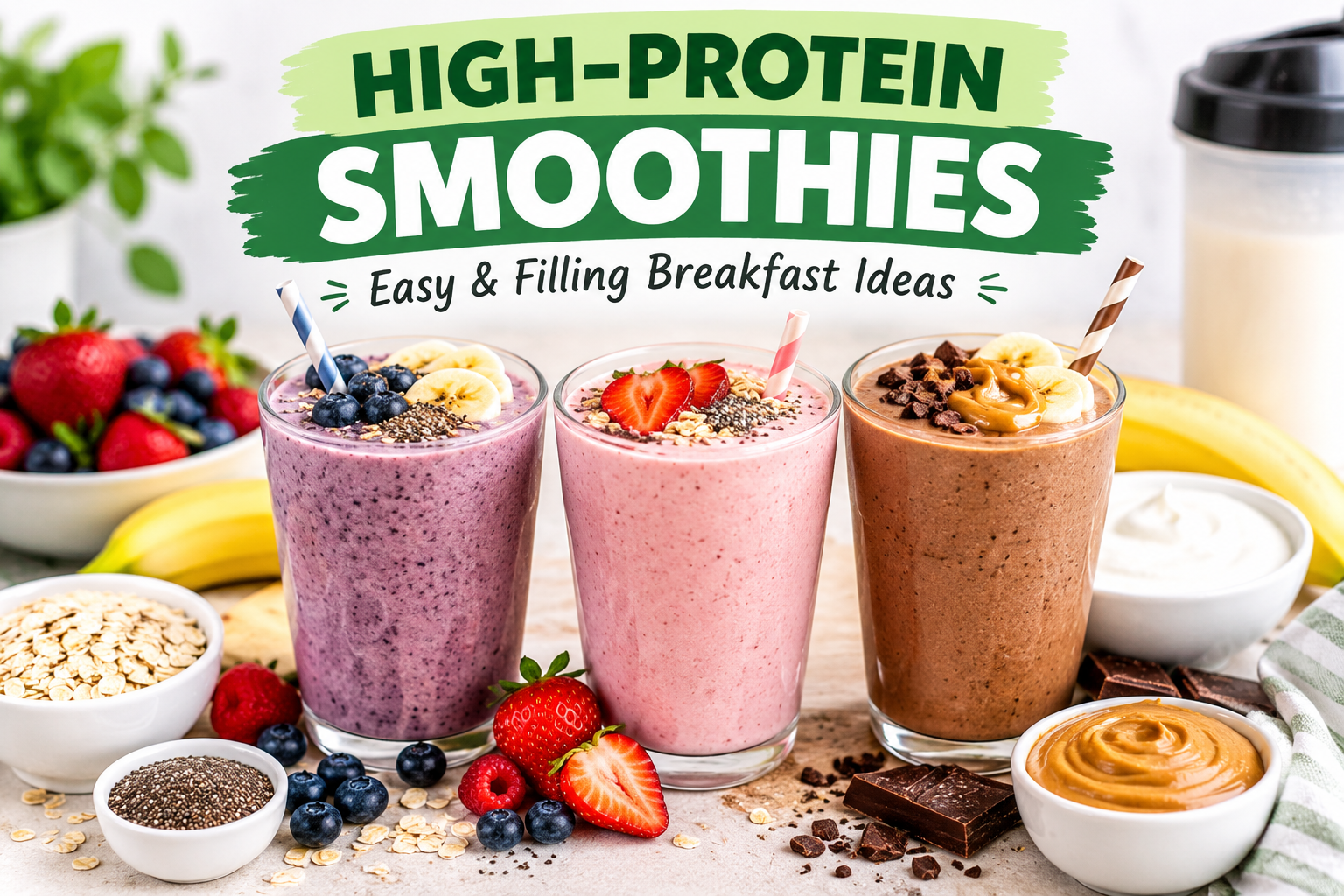
Stay full longer with these high-protein smoothie recipes. Discover healthy ingredients, nutrition tips, and 10 easy smoothies for weight loss and energy.
Why High-Protein Smoothies Are So Popular
High-protein smoothies have become one of the most popular healthy breakfast and snack options because they combine convenience, nutrition, and great taste in a single glass. Whether your goal is losing weight, gaining lean muscle, or simply staying full until your next meal, a protein-packed smoothie can make healthy eating much easier. Instead of grabbing sugary cereals or processed snacks, many people now blend whole fruits, vegetables, protein-rich ingredients, and healthy fats into a balanced meal that takes less than five minutes to prepare.
Nutrition experts continue to recommend increasing daily protein intake because protein is the most filling of the three major macronutrients. Recent dietary guidance also emphasizes combining protein with fiber and healthy fats to improve satiety and maintain stable energy throughout the day. This combination helps reduce unnecessary snacking while supporting overall health.
Another reason these smoothies are so popular is their flexibility. You can create recipes that fit almost any dietary preference, including vegetarian, vegan, dairy-free, gluten-free, or low-carb lifestyles. Ingredients like Greek yogurt, cottage cheese, tofu, whey protein, soy milk, chia seeds, flaxseed, oats, and nut butters can all be mixed with fruits and vegetables to create countless delicious combinations. Since smoothies are highly customizable, they are suitable for busy professionals, students, parents, and fitness enthusiasts alike.
Unlike many commercial smoothies that contain large amounts of added sugar, homemade high-protein smoothies allow you to control every ingredient. You can increase protein, reduce sugar, add more fiber, and include nutrient-dense foods that support your personal health goals. With the right ingredients, a smoothie becomes much more than a drink—it becomes a complete, satisfying meal.
The Science Behind Protein and Fullness
Protein plays a unique role in controlling hunger because it affects several hormones that regulate appetite. When you consume a protein-rich meal, your body releases hormones that signal fullness while reducing the production of hunger hormones. This natural response helps you stay satisfied for longer periods compared to meals that are mostly made of refined carbohydrates.
Digestion also explains why protein keeps you feeling full. Your body takes longer to digest protein than simple carbohydrates, creating a slower and steadier release of nutrients into the bloodstream. Instead of experiencing the rapid spike and crash that often follows sugary breakfasts, a high-protein smoothie provides more consistent energy throughout the morning. Many people notice fewer cravings and improved concentration after choosing a protein-rich breakfast.
Adding fiber-rich ingredients such as berries, spinach, oats, chia seeds, or flaxseed makes the smoothie even more satisfying. Fiber slows digestion further and helps stabilize blood sugar levels. Healthy fats from almonds, peanut butter, walnuts, avocado, or seeds also contribute to longer-lasting fullness while providing essential nutrients.
The combination of protein, fiber, and healthy fats creates what nutrition professionals often describe as the ideal balanced meal. Rather than relying on a single ingredient, these nutrients work together to reduce hunger naturally. That is why high-protein smoothies have become one of the easiest strategies for people trying to improve eating habits without feeling deprived.
Why Smoothies Make Healthy Eating Easier
Busy schedules often make healthy eating difficult. Many people skip breakfast, rely on fast food, or choose convenient processed snacks simply because they don't have enough time to prepare balanced meals. High-protein smoothies solve this problem by offering excellent nutrition with very little preparation. Most recipes require only a blender and a few fresh or frozen ingredients, making them perfect for hectic mornings.
Smoothies are also an excellent way to increase daily fruit and vegetable intake without much effort. Many people struggle to eat enough greens during the day, but adding spinach, kale, or cucumber to a smoothie blends them into a naturally sweet drink with very little noticeable flavor. This makes smoothies especially useful for children or adults who want more vegetables without eating large salads.
Another major advantage is portion control. By measuring ingredients before blending, you know exactly how much protein, healthy fat, fiber, and carbohydrates you're consuming. This makes smoothies suitable for people following calorie-controlled diets, athletes monitoring macronutrients, or anyone aiming to build healthier eating habits.
Perhaps the greatest benefit is consistency. Healthy eating doesn't require complicated recipes every day. A reliable smoothie recipe can become part of your morning routine, helping you meet your nutrition goals with minimal effort. Once you develop a few favorite combinations, preparing nutritious meals becomes faster, easier, and much more enjoyable.
Benefits of High-Protein Smoothies
High-protein smoothies provide much more than temporary fullness. They support healthy weight management by reducing hunger, preserving lean muscle during weight loss, and making it easier to avoid unnecessary snacking. Protein also helps repair muscles after exercise, making these smoothies an excellent post-workout option for active individuals.
These smoothies also provide essential vitamins, minerals, antioxidants, and healthy fats when prepared with whole-food ingredients. Fruits contribute vitamin C and natural antioxidants, leafy greens provide vitamins A and K, while seeds and nuts add omega-3 fatty acids, magnesium, and fiber. Together, these nutrients support immune health, heart health, digestion, and overall wellness.
Energy is another major advantage. Unlike sugary breakfasts that often lead to mid-morning fatigue, balanced smoothies release energy gradually. Stable blood sugar levels help improve focus, productivity, and physical performance throughout the day. Whether you're heading to work, school, or the gym, a high-protein smoothie provides sustained fuel without feeling heavy.
Finally, these smoothies are incredibly versatile. They can be enjoyed as breakfast, a post-workout recovery drink, a healthy afternoon snack, or even a light dinner when paired with nutritious ingredients. Because they are quick to prepare, easy to customize, and packed with nutrients, high-protein smoothies remain one of the simplest ways to build healthier eating habits that last.
Best Protein Sources for Smoothies
Creating a satisfying smoothie starts with choosing the right protein source. While fruits add natural sweetness and vitamins, protein is the ingredient that transforms a simple smoothie into a filling meal. The best protein sources not only increase satiety but also provide essential amino acids that support muscle repair, metabolism, and overall health. Whether you prefer dairy products, plant-based ingredients, or protein powders, there are plenty of options that fit different dietary needs and taste preferences.
The ideal protein source depends on your goals. If you're looking for muscle recovery after exercise, whey protein and Greek yogurt are excellent choices because they contain all nine essential amino acids. If you're following a vegan lifestyle, soy protein, pea protein, hemp seeds, and tofu offer high-quality plant protein while adding a creamy texture. Combining different protein sources can also improve both flavor and nutrition. For example, blending Greek yogurt with chia seeds or tofu with almond butter creates a balanced smoothie rich in protein, healthy fats, and fiber.
Quality matters just as much as quantity. Choose plain Greek yogurt instead of flavored varieties with added sugar. Select unsweetened plant-based milk whenever possible, and read protein powder labels carefully to avoid unnecessary sweeteners or artificial additives. Whole-food protein sources often contribute additional nutrients such as calcium, probiotics, iron, magnesium, and healthy fats that benefit overall wellness.
Another advantage of varying your protein sources is preventing flavor fatigue. Rotating between dairy, plant proteins, and protein powders keeps your smoothie routine interesting while ensuring a wider variety of nutrients. This simple strategy makes it easier to maintain healthy eating habits over the long term.
Dairy-Based Proteins
Dairy products remain some of the most effective ingredients for building high-protein smoothies because they naturally contain complete proteins. Greek yogurt is one of the best options, providing approximately 15–20 grams of protein per serving while adding a rich, creamy texture. It also contains probiotics that support gut health, calcium for strong bones, and potassium for muscle function.
Cottage cheese is another underrated smoothie ingredient. Although many people associate it with savory meals, it blends surprisingly well into fruit smoothies without creating a noticeable flavor. Cottage cheese delivers an impressive amount of protein while contributing calcium, phosphorus, and vitamin B12. It creates an extra-thick smoothie that keeps you satisfied for hours.
Milk also plays an important role. Low-fat milk offers protein, calcium, and vitamin D, while whole milk provides additional healthy fats that can further increase fullness. Kefir, a fermented dairy drink, supplies probiotics along with protein, making it another excellent smoothie base for digestive health.
People who tolerate dairy well often find these ingredients both affordable and widely available. Combined with fruits such as berries, bananas, peaches, or mangoes, dairy proteins produce naturally sweet smoothies without requiring excessive added sugar.
Plant-Based Protein Options
Plant-based smoothies can be just as satisfying when built with the right ingredients. Silken tofu blends into an incredibly smooth texture while providing complete protein and very little flavor, making it one of the easiest vegan protein additions. Soy milk is another complete protein source that works well as a smoothie base.
Legumes and seeds also contribute valuable nutrition. Chia seeds and flaxseeds contain protein, fiber, and omega-3 fatty acids that help increase satiety and support heart health. Hemp hearts are especially impressive because they provide complete protein while blending smoothly into drinks without becoming gritty. Nut butters such as almond butter, peanut butter, and cashew butter add protein along with healthy monounsaturated fats that promote longer-lasting fullness.
Oats deserve special mention even though they are not extremely high in protein. Their soluble fiber slows digestion and complements higher-protein ingredients perfectly. Pairing oats with soy milk and peanut butter creates a balanced breakfast smoothie that provides sustained energy throughout the morning.
Many plant-based eaters also enjoy adding spinach, kale, avocado, pumpkin seeds, or sunflower seeds. These ingredients contribute additional vitamins, minerals, antioxidants, and healthy fats while increasing the nutritional value of every serving.
Protein Powders: Whey vs. Plant Protein
Protein powders offer one of the simplest ways to increase protein intake without dramatically changing the flavor of a smoothie. Whey protein remains one of the most popular options because it contains all essential amino acids and is rapidly absorbed after exercise. Athletes often choose whey protein to support muscle recovery and growth after strength training.
Plant-based protein powders have improved significantly in recent years. Modern blends often combine pea protein, brown rice protein, pumpkin seed protein, and hemp protein to create a complete amino acid profile. These products are excellent choices for vegans, people with dairy allergies, or anyone seeking more plant-based nutrition.
When comparing whey and plant protein, neither is automatically better for everyone. Whey typically offers a smoother texture and slightly higher levels of leucine, an amino acid that stimulates muscle protein synthesis. Plant proteins provide additional fiber and are often easier for individuals with lactose intolerance or dairy sensitivities.
Regardless of the type you choose, look for protein powders with minimal added sugar and simple ingredient lists. A high-quality protein powder can easily raise the protein content of a smoothie by 20 to 30 grams while maintaining excellent taste.
Essential Ingredients for a Filling Smoothie
Protein alone cannot create a truly satisfying smoothie. The most filling recipes combine protein with healthy fats, fiber, and nutrient-dense fruits and vegetables. This combination slows digestion, balances blood sugar, and keeps hunger away for several hours.
Healthy fats from avocado, walnuts, almonds, chia seeds, flaxseed, and natural nut butters help create a creamy texture while improving the absorption of fat-soluble vitamins. Fiber-rich ingredients such as berries, apples, spinach, oats, and kale increase volume without adding excessive calories. Together, these ingredients produce a smoothie that nourishes the body while satisfying the appetite.
Liquid also plays an important role. Water creates a lighter smoothie, while milk or soy milk increases protein. Coconut water offers natural electrolytes after exercise, and kefir adds probiotics for digestive support. Choosing the right liquid depends on your nutrition goals and desired consistency.
Frozen fruit provides another advantage by making smoothies naturally thick and refreshing without requiring ice cream or sugary syrups. Frozen berries, bananas, mangoes, and peaches create a creamy texture while supplying vitamins, minerals, and antioxidants that support overall health.
The most successful smoothies balance every ingredient instead of relying heavily on fruit. Excess fruit can increase sugar intake, while adding vegetables, protein, healthy fats, and fiber creates a more nutritious and satisfying meal.
Healthy Fats
Healthy fats often receive less attention than protein, yet they are essential for creating smoothies that truly satisfy hunger. Avocados contribute creaminess, potassium, fiber, and heart-healthy monounsaturated fats without overpowering the flavor. Nut butters such as peanut, almond, and cashew butter increase richness while providing additional protein and vitamin E.
Seeds also play a valuable role. Chia seeds absorb liquid and create a thicker consistency while supplying omega-3 fatty acids and fiber. Flaxseeds support digestive health and add subtle nutty flavor, while hemp hearts provide complete protein alongside healthy fats.
Including a moderate amount of healthy fat helps slow digestion, allowing nutrients to be absorbed gradually. Instead of experiencing an energy crash an hour after breakfast, you'll enjoy more consistent energy and longer-lasting fullness throughout the morning.
Fiber-Rich Fruits and Vegetables
Fiber is the secret ingredient that makes high-protein smoothies even more filling. Berries rank among the best smoothie fruits because they provide antioxidants and fiber while remaining relatively low in natural sugar. Apples, pears, and bananas also contribute fiber, although portion size should be balanced with protein-rich ingredients.
Leafy greens like spinach and kale blend easily without dramatically changing the taste. They supply vitamins A, C, and K along with minerals such as iron and magnesium. Carrots, cucumber, zucchini, and cauliflower can also be added for extra nutrients while maintaining a smooth texture.
Oats deserve another mention because their soluble fiber slows digestion and supports heart health. Even a small amount significantly improves the smoothie's ability to keep you feeling satisfied for longer.
Liquid Bases
The liquid base determines both texture and nutritional value. Dairy milk adds protein and calcium, while soy milk provides a similar protein content in a plant-based form. Almond milk and oat milk are lower in protein but work well when combined with Greek yogurt or protein powder.
Water remains the lowest-calorie option for people focused on weight management, while coconut water supplies natural electrolytes after workouts. Kefir offers probiotics that support digestive health and creates a rich, creamy consistency similar to drinkable yogurt.
Choosing an unsweetened liquid base helps keep added sugars low while allowing the natural sweetness of fruits to shine. Combined with high-quality protein and fiber-rich ingredients, the right liquid creates a smoothie that is both delicious and nutritionally balanced.
10 High-Protein Smoothie Recipes
These high-protein smoothie recipes are designed to keep you feeling full for hours while providing essential nutrients to fuel your day. Each recipe contains a healthy balance of protein, fiber, healthy fats, and natural carbohydrates, making them perfect for breakfast, post-workout recovery, or a nutritious snack. Feel free to adjust ingredient amounts to match your calorie and protein goals.
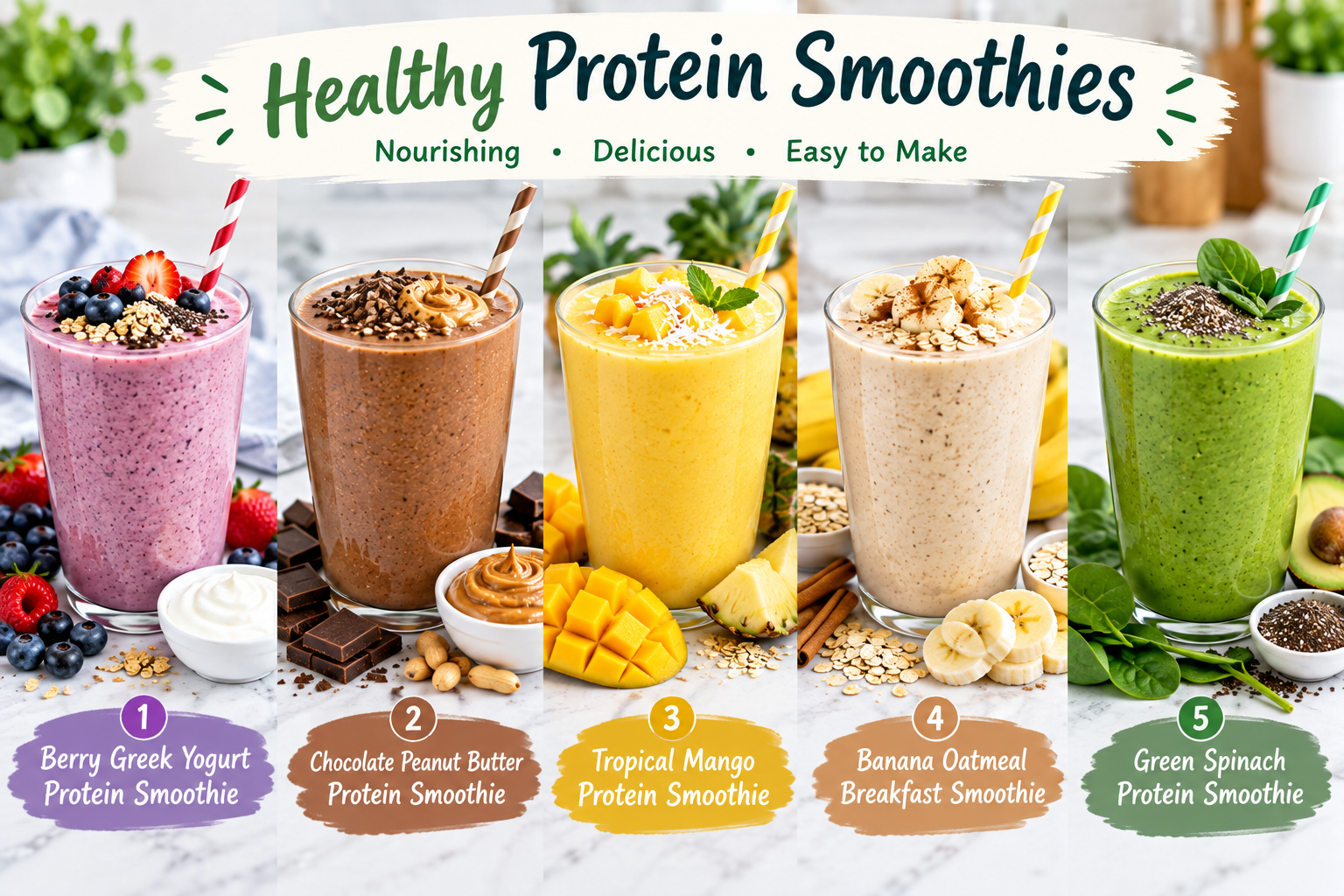
1. Berry Greek Yogurt Protein Smoothie
If you're looking for a refreshing smoothie that's loaded with antioxidants and protein, this berry smoothie is an excellent choice. Greek yogurt provides a creamy texture while delivering plenty of protein, and mixed berries add natural sweetness along with vitamin C and fiber. Chia seeds increase the fiber content, helping you stay satisfied much longer than a typical fruit smoothie.
Simply blend 1 cup plain Greek yogurt, 1 cup mixed frozen berries, ½ banana, 1 tablespoon chia seeds, ½ cup unsweetened almond milk, and a few ice cubes until smooth. The result is a thick, delicious smoothie that works perfectly as a healthy breakfast or afternoon snack. It tastes like a berry milkshake but provides balanced nutrition that supports weight management and muscle recovery.
Nutrition (Approximate)
Nutrient Amount
Calories 320
Protein 28g
Carbohydrates 29g
Fat 10g
Fiber 8g
2. Chocolate Peanut Butter Protein Smoothie
Chocolate and peanut butter are a classic combination that satisfies sweet cravings while delivering excellent nutrition. This smoothie feels like dessert, yet it's packed with protein and healthy fats that help control hunger throughout the day.
Blend 1 scoop chocolate whey protein, 1 tablespoon natural peanut butter, 1 frozen banana, 1 cup low-fat milk, 1 tablespoon unsweetened cocoa powder, and a handful of ice. The smoothie becomes rich, creamy, and naturally sweet without relying on processed sugars. Peanut butter contributes healthy monounsaturated fats, while cocoa adds antioxidants that support heart health.
Nutrition (Approximate)
Nutrient Amount
Calories 390
Protein 35g
Carbohydrates 31g
Fat 15g
Fiber 5g
3. Tropical Mango Protein Smoothie
Bring a taste of the tropics to your breakfast with this refreshing mango smoothie. Mango provides vitamin C and natural sweetness, while vanilla protein powder and Greek yogurt create a creamy texture that keeps you full for hours.
Blend 1 cup frozen mango, ½ cup plain Greek yogurt, 1 scoop vanilla protein powder, 1 cup unsweetened coconut milk, and 1 tablespoon flaxseed until silky smooth. The combination of tropical fruit and protein creates a refreshing meal that's ideal after a morning workout or during warm weather.
Nutrition (Approximate)
Nutrient Amount
Calories 340
Protein 32g
Carbohydrates 30g
Fat 9g
Fiber 6g
4. Banana Oatmeal Breakfast Smoothie
This smoothie is perfect for busy mornings when you need long-lasting energy. Oats provide slow-digesting carbohydrates and fiber, while Greek yogurt and peanut butter deliver protein and healthy fats.
Blend ½ cup rolled oats, 1 banana, ¾ cup Greek yogurt, 1 tablespoon peanut butter, 1 cup low-fat milk, and cinnamon until creamy. The smoothie resembles a bowl of oatmeal but is much quicker to prepare. It offers sustained energy that helps reduce mid-morning hunger and keeps your blood sugar more stable.
Nutrition (Approximate)
Nutrient Amount
Calories 420
Protein 30g
Carbohydrates 45g
Fat 12g
Fiber 7g
5. Green Spinach Protein Smoothie
Don't let the green color fool you—this smoothie tastes surprisingly sweet and refreshing. Spinach contributes vitamins A, C, and K without changing the flavor, while banana and pineapple naturally balance the taste.
Blend 2 cups fresh spinach, 1 banana, ½ cup pineapple chunks, 1 scoop vanilla protein powder, 1 cup unsweetened almond milk, and 1 tablespoon chia seeds. This nutrient-rich smoothie is ideal for anyone trying to increase vegetable intake while enjoying a delicious breakfast.
Nutrition (Approximate)
Nutrient Amount
Calories 300
Protein 29g
Carbohydrates 28g
Fat 8g
Fiber 7g
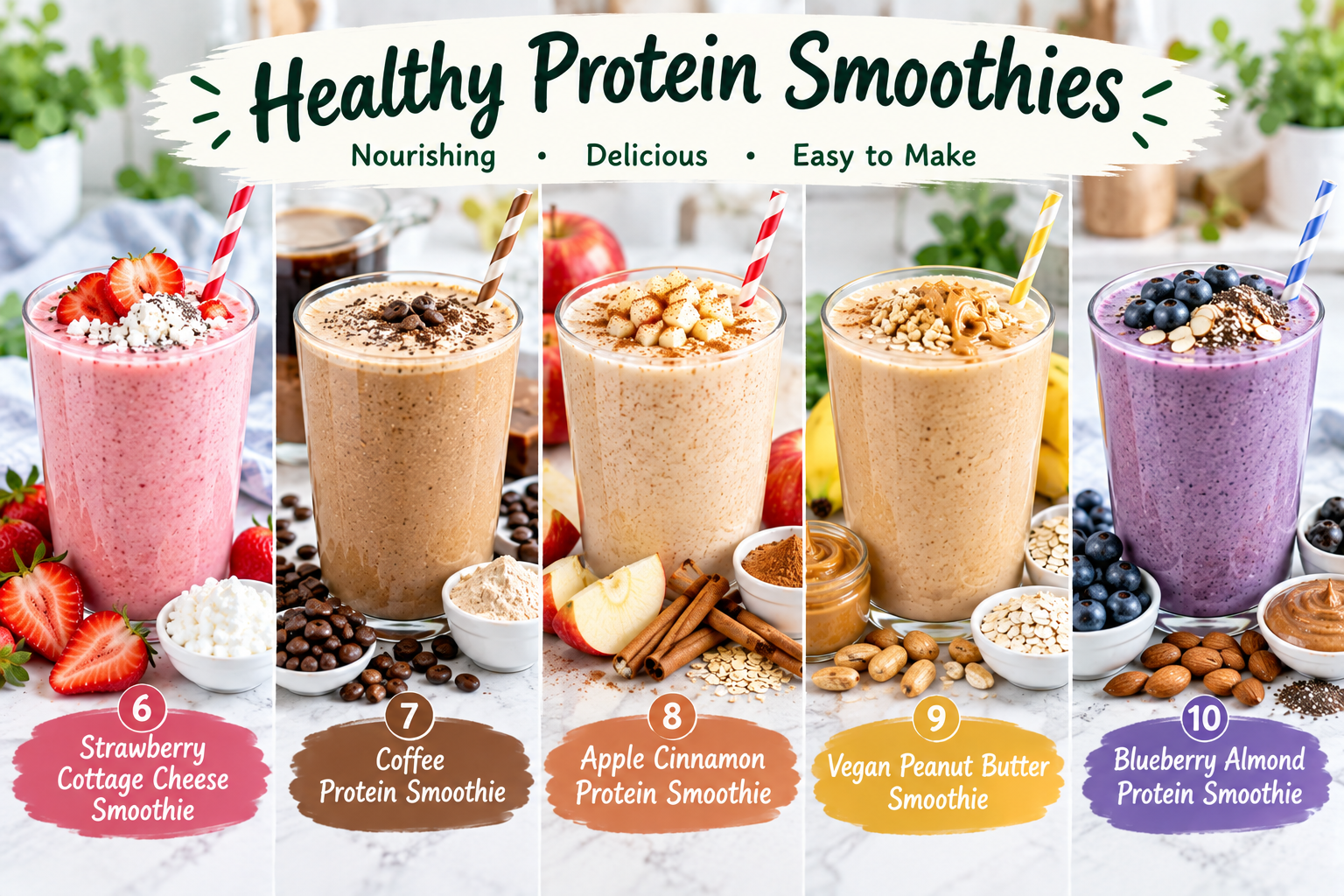
6. Strawberry Cottage Cheese Smoothie
Cottage cheese creates an incredibly creamy smoothie while supplying a generous amount of protein. Combined with fresh strawberries, it becomes a naturally sweet breakfast that's both filling and refreshing.
Blend 1 cup low-fat cottage cheese, 1 cup strawberries, ½ banana, ½ cup milk, 1 teaspoon honey (optional), and ice. The cottage cheese blends completely, leaving behind a smooth texture without any noticeable curds.
Nutrition (Approximate)
Nutrient Amount
Calories 310
Protein 31g
Carbohydrates 24g
Fat 8g
Fiber 4g
7. Coffee Protein Smoothie
Coffee lovers can combine their morning caffeine with a protein-packed breakfast. This smoothie delivers sustained energy while reducing the temptation to grab sugary pastries on the way to work.
Blend 1 cup chilled brewed coffee, 1 scoop vanilla protein powder, ½ frozen banana, ½ cup Greek yogurt, ½ cup milk, and ice. The result is similar to an iced coffee frappé but with significantly more nutrition and much less sugar.
Nutrition (Approximate)
Nutrient Amount
Calories 280
Protein 33g
Carbohydrates 21g
Fat 5g
Fiber 3g
8. Apple Cinnamon Protein Smoothie
This smoothie tastes remarkably similar to apple pie while remaining healthy and satisfying. Apples provide natural sweetness and fiber, while cinnamon adds warmth and flavor without extra calories.
Blend 1 apple, ¾ cup Greek yogurt, ¼ cup rolled oats, 1 scoop vanilla protein powder, 1 cup milk, and ½ teaspoon cinnamon. This smoothie is especially comforting during the fall season but works well throughout the year.
Nutrition (Approximate)
Nutrient Amount
Calories 360
Protein 32g
Carbohydrates 38g
Fat 7g
Fiber 6g
9. Vegan Peanut Butter Smoothie
Plant-based eaters don't have to sacrifice protein. This vegan smoothie combines soy milk, peanut butter, chia seeds, and pea protein to create a complete, satisfying meal.
Blend 1 cup unsweetened soy milk, 1 scoop pea protein, 1 tablespoon peanut butter, ½ banana, 1 tablespoon chia seeds, and ice. The combination creates a creamy smoothie rich in protein, fiber, and healthy fats while remaining completely dairy-free.
Nutrition (Approximate)
Nutrient Amount
Calories 370
Protein 34g
Carbohydrates 24g
Fat 15g
Fiber 8g
10. Blueberry Almond Protein Smoothie
Blueberries are packed with antioxidants that support overall health, while almond butter provides healthy fats and a delicious nutty flavor. Combined with protein powder and Greek yogurt, this smoothie becomes an ideal meal replacement.
Blend 1 cup frozen blueberries, 1 tablespoon almond butter, ¾ cup Greek yogurt, 1 scoop vanilla protein powder, 1 cup unsweetened almond milk, and ice until perfectly smooth. The blueberry flavor pairs beautifully with almonds, creating a balanced smoothie that's both nutritious and delicious.
Nutrition (Approximate)
Nutrient Amount
Calories 345
Protein 33g
Carbohydrates 27g
Fat 11g
Fiber 6g
Common Mistakes to Avoid
Even the healthiest smoothie can become less nutritious if it's made with the wrong ingredients or poor portion control. One of the biggest mistakes people make is assuming that every smoothie is automatically healthy. Many store-bought smoothies and café versions contain large amounts of added sugar, flavored syrups, fruit juice concentrates, and sweetened yogurt. These ingredients can significantly increase calorie and sugar intake while reducing the overall nutritional value. Instead of keeping you full, sugary smoothies may cause a rapid rise in blood sugar followed by an energy crash that leaves you hungry again within a short time.
Another common mistake is not including enough protein. A smoothie made only with fruit and juice may taste delicious, but it lacks the protein needed to promote satiety and support muscle health. Aim for 20–30 grams of protein per serving by including ingredients such as Greek yogurt, cottage cheese, whey protein, soy protein, tofu, or high-quality plant-based protein powder. Pairing protein with healthy fats like almond butter or chia seeds and fiber-rich foods like oats or berries creates a balanced meal that supports steady energy levels throughout the day.
Portion size is another factor that people often overlook. While nutritious ingredients are beneficial, consuming excessive amounts of nut butters, seeds, dried fruit, or sweeteners can dramatically increase calories. Measuring ingredients helps maintain a balanced smoothie without sacrificing flavor. It's also wise to avoid relying solely on fruit for sweetness. Frozen bananas, berries, mangoes, or apples usually provide enough natural sweetness, making additional sugar or honey unnecessary in many recipes.
Finally, don't forget variety. Drinking the exact same smoothie every day can limit your nutrient intake and become repetitive. Rotate different fruits, vegetables, protein sources, healthy fats, and seeds throughout the week to enjoy a wider range of vitamins, minerals, antioxidants, and flavors. This approach keeps your meals interesting while supporting better overall nutrition and long-term healthy eating habits.
Conclusion
High-protein smoothies are one of the simplest and most effective ways to enjoy a balanced, satisfying meal without spending hours in the kitchen. By combining high-quality protein with fiber-rich fruits and vegetables, healthy fats, and nutritious liquid bases, you can create smoothies that support weight management, muscle recovery, heart health, and consistent energy throughout the day. Whether your goal is losing weight, building lean muscle, improving your breakfast routine, or simply reducing unhealthy snacking, these smoothies provide a convenient solution that fits into almost any lifestyle.
The beauty of homemade smoothies lies in their flexibility. You can customize every ingredient to match your dietary preferences, fitness goals, or favorite flavors. Dairy-based recipes, vegan blends, post-workout shakes, and meal replacement smoothies all offer unique nutritional benefits while helping you stay full for longer. Small adjustments—such as adding oats for extra fiber, spinach for more vitamins, or chia seeds for healthy fats—can make a significant difference in both nutrition and satisfaction.
Consistency is often more important than perfection. Preparing a nutritious smoothie a few times each week can gradually replace less healthy breakfast choices and support long-term wellness. As you experiment with different ingredients and recipes, you'll discover combinations that suit your taste while meeting your nutritional needs. With the right balance of protein, fiber, and healthy fats, high-protein smoothies become more than a quick drink—they become a reliable habit that supports better health every day.
Frequently Asked Questions (FAQs)
1. How much protein should a filling smoothie contain?
A satisfying high-protein smoothie should generally contain 20 to 30 grams of protein. This amount helps support muscle maintenance, reduces hunger, and provides longer-lasting energy. You can reach this target by combining ingredients like Greek yogurt, cottage cheese, whey protein, soy protein, tofu, or protein powder with seeds or nut butter.
2. Can high-protein smoothies help with weight loss?
Yes. High-protein smoothies can support weight loss when they are part of a balanced diet. Protein increases feelings of fullness, helping reduce unnecessary snacking and overeating. Choosing whole-food ingredients while limiting added sugars can make smoothies an effective meal or snack for healthy weight management.
3. Are protein powders necessary?
No. Although protein powders are convenient, they are not essential. Natural protein sources such as Greek yogurt, cottage cheese, tofu, kefir, soy milk, peanut butter, hemp seeds, and chia seeds can provide plenty of protein while adding valuable nutrients. Protein powder simply makes it easier to increase protein intake when needed.
4. Can I prepare protein smoothies ahead of time?
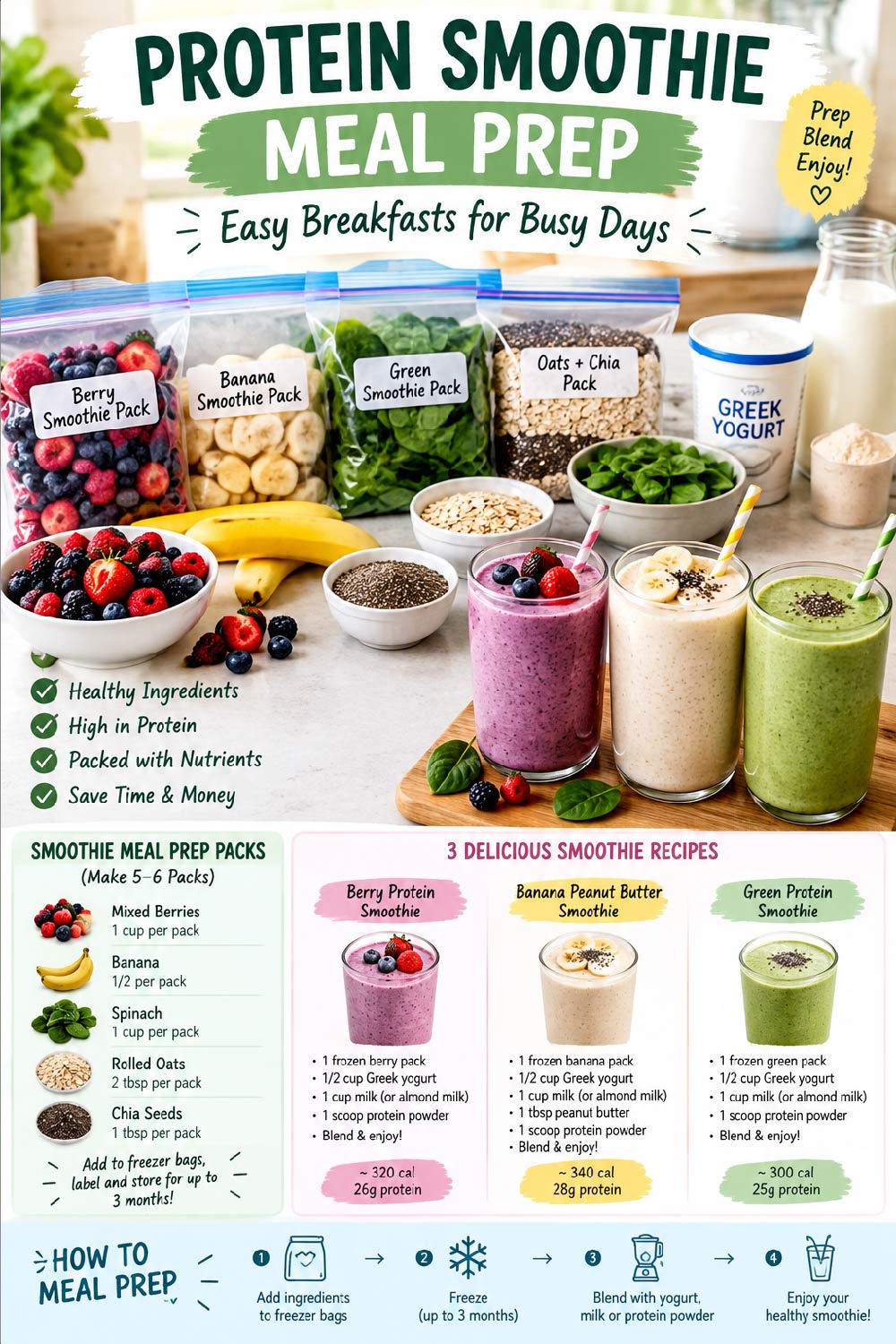
Yes. You can prepare smoothies up to 24 hours in advance and store them in an airtight container in the refrigerator. Another convenient option is preparing freezer smoothie packs by portioning fruits, vegetables, and seeds into freezer bags. When you're ready, simply add your preferred liquid and protein source before blending.
5. What fruits work best in high-protein smoothies?
Some of the best fruits include berries, bananas, mangoes, peaches, apples, cherries, and pineapple. These fruits provide natural sweetness, vitamins, antioxidants, and fiber. Pairing fruit with protein-rich ingredients and healthy fats.
Comments
0No comments yet — be the first to share your thoughts!