10 Healthy Recipes Under 300 Calories | Easy & Filling Meals
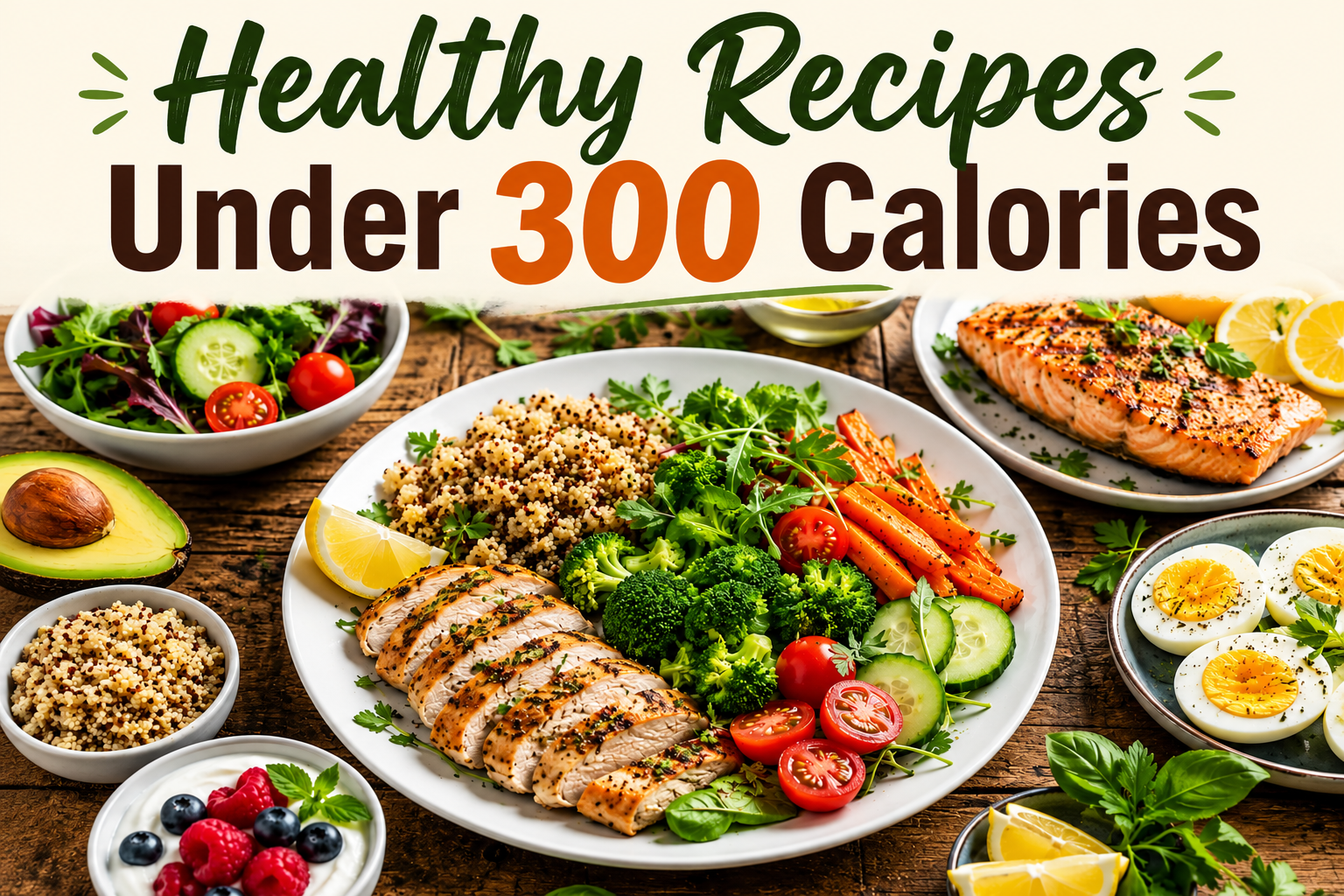
Discover 10 healthy recipes under 300 calories that are high in protein, packed with vegetables, and easy to meal prep. Enjoy delicious, filling meals for healthy eating.
Healthy Recipes Under 300 Calories
Finding meals that are both delicious and low in calories doesn't have to be difficult. Many people believe that eating fewer calories means giving up flavor, satisfaction, or nutrition. The truth is quite the opposite. With the right ingredients and smart cooking techniques, you can prepare meals that are rich in protein, packed with fiber, and full of vitamins while keeping the calorie count below 300.
Whether you're trying to lose weight, maintain a healthy lifestyle, or simply enjoy lighter meals, these healthy recipes under 300 calories can make healthy eating easier. They are simple enough for busy weekdays, affordable for families, and perfect for meal prep. Best of all, they help you stay full without feeling deprived.
Why Low-Calorie Meals Can Be Healthy
Choosing healthy recipes under 300 calories is about much more than simply reducing the number on the nutrition label. A healthy meal should provide your body with the nutrients it needs while helping you feel satisfied and energized. Many people mistakenly believe that low-calorie meals leave them hungry within an hour, but that usually happens when meals contain too many refined carbohydrates and not enough protein or fiber. By combining lean proteins, colorful vegetables, whole grains, and healthy fats in the right proportions, you can create meals that are filling despite their modest calorie count.
A balanced low-calorie meal also supports long-term health goals. It can help with weight management, improve blood sugar control, and encourage healthier eating habits without requiring extreme diets. Instead of focusing only on cutting calories, think about maximizing nutrition in every bite. Fresh vegetables provide vitamins and minerals, lean proteins help maintain muscle mass, and healthy fats contribute to heart health. When these ingredients work together, your meals become satisfying and flavorful rather than restrictive.
Another important benefit is sustainability. Crash diets often fail because they are difficult to maintain, while nutritious meals under 300 calories can easily become part of your everyday routine. You don't need expensive superfoods or complicated cooking techniques. Everyday ingredients like chicken breast, eggs, Greek yogurt, beans, spinach, cucumbers, tomatoes, and berries can create delicious meals that fit almost any lifestyle. Healthy eating becomes much easier when the recipes are simple, affordable, and enjoyable.
Calories vs. Nutrition
Calories measure energy, but they do not measure nutritional quality. Two meals containing the same number of calories can have completely different effects on your body. For example, a sugary pastry may contain around 300 calories, but it offers very little protein, fiber, or essential nutrients. On the other hand, a grilled chicken salad with mixed vegetables may also contain 300 calories while providing protein, vitamins, minerals, and fiber that keep you full much longer.
This is why focusing only on calories can sometimes be misleading. Nutrient-dense foods help improve digestion, strengthen the immune system, and provide lasting energy throughout the day. Protein increases satiety, fiber slows digestion, and healthy fats support hormone function and brain health. These nutrients work together to reduce hunger and prevent overeating later in the day.
When planning meals, choose ingredients that deliver the most nutrition for the fewest calories. Fresh vegetables, lean meats, seafood, eggs, legumes, low-fat dairy, and whole grains are excellent choices. Building meals around these foods allows you to enjoy satisfying portions while staying within your calorie goals.
Benefits of Portion Control
Portion control is one of the simplest habits for maintaining a healthy weight. Even nutritious foods can contribute to excess calorie intake when portions become too large. Learning appropriate serving sizes helps you enjoy a wide variety of foods without feeling restricted or guilty.
Meals under 300 calories naturally encourage mindful eating. They teach you to balance protein, vegetables, and healthy carbohydrates rather than relying on oversized portions. Over time, your body adjusts to more reasonable serving sizes, making it easier to recognize true hunger and fullness signals.
Portion control also supports meal planning and budgeting. Preparing individual servings reduces food waste and makes healthy choices more convenient during busy weekdays. Instead of guessing how much to eat, you'll have nutritious meals ready whenever hunger strikes.
How to Build a Filling Meal Under 300 Calories
Creating satisfying meals under 300 calories is easier than many people think. The secret is choosing foods that provide plenty of volume and nutrition without adding excessive calories. Vegetables, lean proteins, and fiber-rich ingredients help create meals that are both delicious and filling.
Start by selecting a lean protein source such as chicken breast, turkey, shrimp, fish, tofu, eggs, or Greek yogurt. Protein helps preserve muscle while increasing feelings of fullness after meals. Next, fill at least half your plate with vegetables like broccoli, spinach, zucchini, cauliflower, bell peppers, cucumbers, or tomatoes. These vegetables are naturally low in calories but high in vitamins and fiber.
Healthy fats should also be included in moderation. A small amount of avocado, olive oil, nuts, or seeds adds flavor and supports heart health without significantly increasing calories. Finally, if desired, add a modest serving of whole grains such as quinoa or brown rice for extra fiber and sustained energy.
Choose Lean Protein
Protein is one of the most satisfying nutrients because it slows digestion and reduces hunger between meals. Including a quality protein source in every meal helps prevent unnecessary snacking while supporting muscle maintenance during weight loss.
Excellent protein choices include skinless chicken breast, turkey breast, tuna, salmon, shrimp, eggs, cottage cheese, Greek yogurt, tofu, and beans. Most of these ingredients provide high amounts of protein while remaining relatively low in calories.
Cooking methods matter just as much as ingredient selection. Grilling, baking, steaming, roasting, or air frying keeps calorie counts lower than deep frying while preserving flavor and texture.
Add Fiber-Rich Vegetables
Vegetables are the foundation of healthy low-calorie meals because they provide large portions with very few calories. Fiber helps slow digestion, supports gut health, and promotes longer-lasting fullness after eating.
Aim to include a variety of colorful vegetables throughout the week. Spinach, kale, carrots, zucchini, cucumbers, broccoli, cauliflower, mushrooms, peppers, and tomatoes all add valuable nutrients while making meals visually appealing. Different colors often indicate different vitamins and antioxidants, so eating a rainbow of vegetables helps maximize nutrition.
Fresh herbs and spices can transform vegetables into exciting dishes without adding many calories. Garlic, basil, parsley, cilantro, paprika, cumin, lemon juice, and black pepper provide bold flavors that reduce the need for heavy sauces.
Include Healthy Fats Wisely
Healthy fats are often misunderstood because they contain more calories per gram than protein or carbohydrates. However, moderate amounts are essential for absorbing vitamins and supporting overall health.
Rather than avoiding fats entirely, focus on quality over quantity. A teaspoon of olive oil, a few slices of avocado, or a sprinkle of nuts can enhance flavor while keeping meals balanced. These healthy fats also help increase satisfaction, making it easier to stick to healthy eating habits.
The key is moderation. Measuring ingredients instead of pouring freely helps prevent calories from adding up unexpectedly while still allowing you to enjoy nutritious, flavorful meals.
Healthy Recipes Under 300 Calories
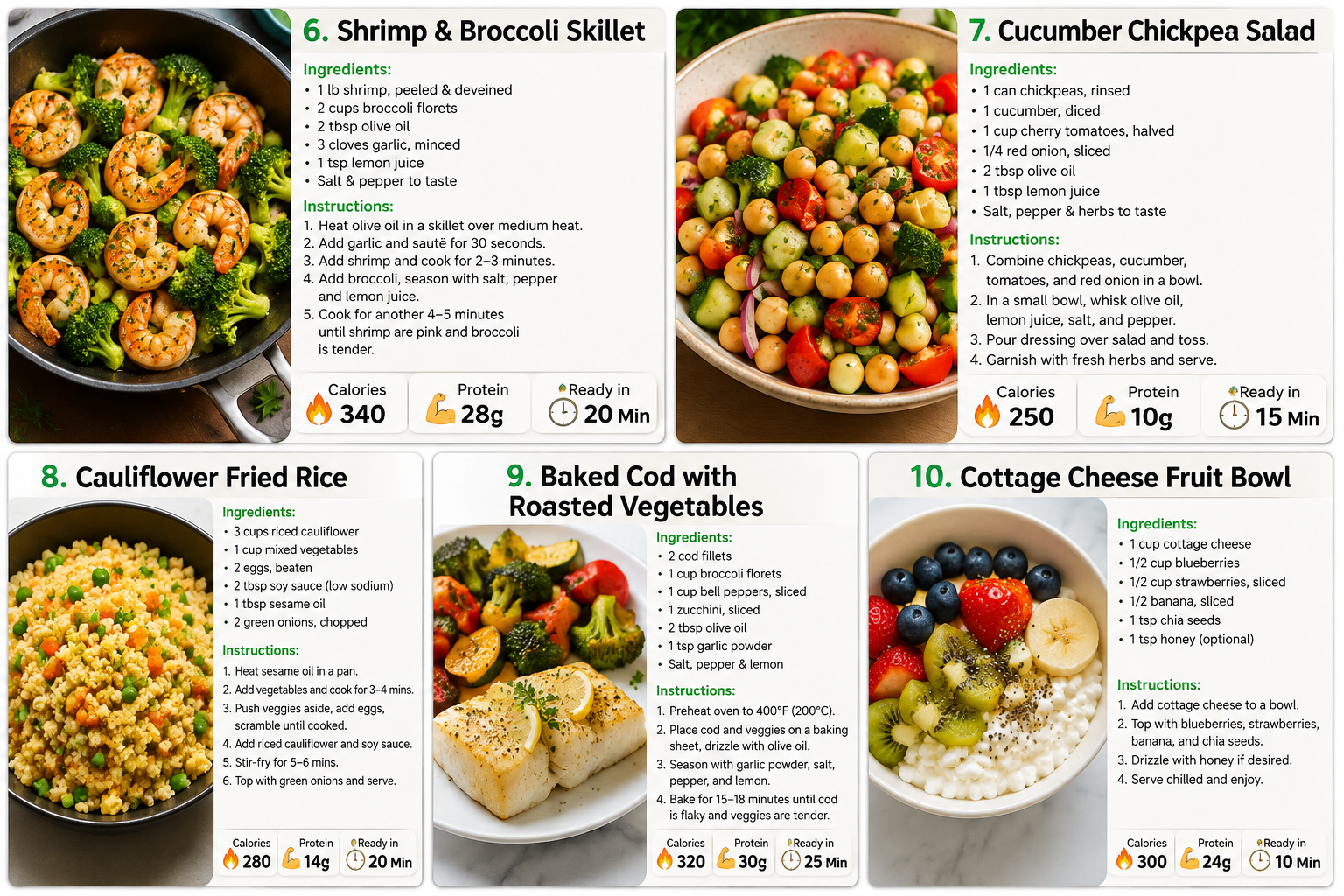
1. Greek Yogurt Berry Parfait
This refreshing parfait is an excellent breakfast or healthy snack that delivers protein, fiber, and natural sweetness without excessive calories. Greek yogurt provides high-quality protein while berries contribute antioxidants, vitamin C, and fiber. The combination creates a creamy, satisfying meal that feels like dessert but supports healthy eating goals.
Ingredients
· ¾ cup non-fat Greek yogurt
· ½ cup mixed berries
· 1 tablespoon chia seeds
· 1 teaspoon honey
· 1 tablespoon chopped almonds
Instructions
Mix the yogurt with honey until smooth. Layer the yogurt and berries in a serving glass. Sprinkle chia seeds and almonds on top before serving. Enjoy immediately or refrigerate for later.
Nutrition Per Serving
Calories 245
Protein 22g
Carbohydrates 24g
Fat 7g
Fiber 6g
2. Veggie Egg White Omelet
A vegetable-packed egg white omelet is a quick breakfast that is light yet filling. Egg whites are naturally high in protein while remaining very low in calories, making them ideal for weight-conscious meals. Adding colorful vegetables increases volume, flavor, and nutrition without significantly increasing the calorie count.
Ingredients
· 4 egg whites
· ½ cup spinach
· ¼ cup mushrooms
· ¼ cup diced tomatoes
· Cooking spray
· Salt and pepper
Instructions
Heat a non-stick pan with cooking spray. Sauté the vegetables for two minutes. Pour in the egg whites and cook until set. Fold the omelet gently and serve warm.
Nutrition Per Serving
Calories 165
Protein 22g
Carbohydrates 8g
Fat 4g
Fiber 3g
3. Grilled Chicken Salad
Grilled chicken salad is one of the most satisfying low-calorie lunches because it combines lean protein with crunchy vegetables and a light homemade dressing. Every bite is packed with flavor while remaining comfortably below 300 calories.
Ingredients
· 90g grilled chicken breast
· 2 cups mixed greens
· Cherry tomatoes
· Cucumber
· Red onion
· 1 teaspoon olive oil
· Lemon juice
Instructions
Arrange vegetables in a large bowl. Slice the grilled chicken and place on top. Drizzle with olive oil and fresh lemon juice before serving.
Nutrition Per Serving
Calories 278
Protein 30g
Carbohydrates 10g
Fat 11g
Fiber 4g
4. Zucchini Noodle Stir-Fry
Replacing traditional noodles with zucchini noodles dramatically reduces calories while adding vitamins and fiber. This colorful stir-fry is perfect for busy weeknights and comes together in less than 20 minutes.
Ingredients
· 2 zucchini, spiralized
· 80g shrimp
· Bell pepper
· Garlic
· Soy sauce (low sodium)
· Sesame seeds
Instructions
Cook shrimp until pink. Add vegetables and garlic, then stir-fry for several minutes. Toss with zucchini noodles and soy sauce. Cook briefly to maintain the vegetables' crisp texture before serving.
Nutrition Per Serving
Calories 232
Protein 24g
Carbohydrates 13g
Fat 8g
Fiber 4g
5. Turkey Lettuce Wraps
Turkey lettuce wraps are a delicious alternative to sandwiches and tortillas. Crisp lettuce leaves provide freshness while seasoned lean turkey creates a satisfying filling that's rich in protein and naturally low in calories.
Ingredients
· 100g lean ground turkey
· Romaine lettuce leaves
· Diced carrots
· Green onions
· Garlic
· Low-sodium soy sauce
Instructions
Cook the turkey with garlic until browned. Stir in carrots, green onions, and soy sauce. Spoon the mixture into lettuce leaves and serve immediately.
Nutrition Per Serving
Calories 260
Protein 28g
Carbohydrates 9g
Fat 10g
Fiber 3g
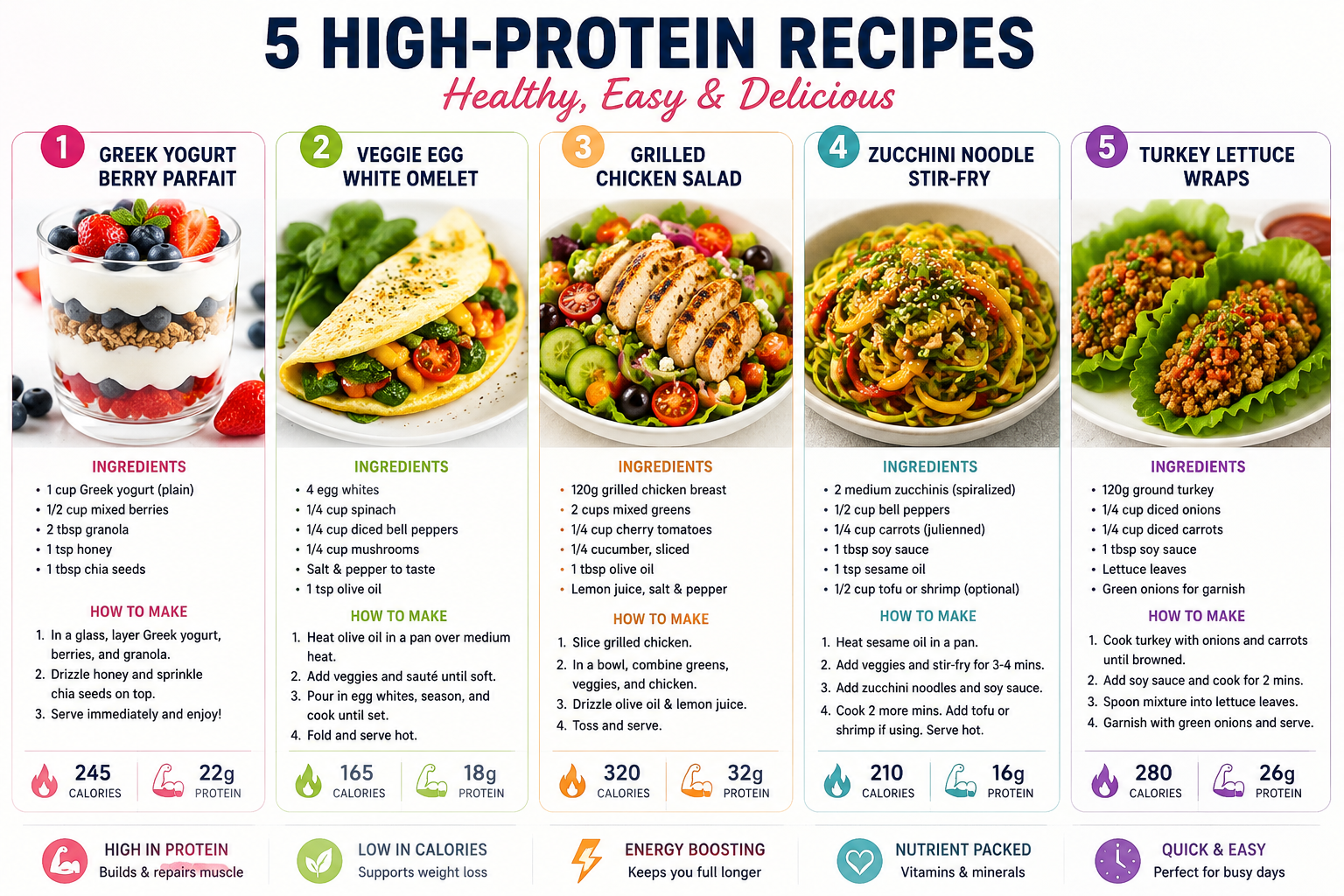
6. Shrimp & Broccoli Skillet
If you're looking for a quick dinner that is packed with protein and nutrients, this Shrimp & Broccoli Skillet is an excellent choice. Shrimp cooks in just a few minutes, making it perfect for busy evenings when you don't have much time to prepare dinner. Broccoli adds fiber, vitamin C, potassium, and antioxidants while keeping the calorie count low. A touch of garlic and lemon juice enhances the flavor naturally, so you don't need heavy sauces.
Ingredients
· 100g shrimp, peeled and deveined
· 2 cups broccoli florets
· 2 cloves garlic, minced
· 1 teaspoon olive oil
· 1 tablespoon lemon juice
· Salt and black pepper
Instructions
1. Heat olive oil in a large skillet over medium heat.
2. Add garlic and cook for about 30 seconds.
3. Add broccoli and cook for 4–5 minutes.
4. Stir in shrimp and cook until pink.
5. Finish with lemon juice, salt, and pepper before serving.
Nutrition Per Serving
Calories 228
Protein 27g
Carbohydrates 11g
Fat 8g
Fiber 4g
7. Cucumber Chickpea Salad
This refreshing salad is ideal for lunch or as a light dinner. Chickpeas provide plant-based protein and fiber, while cucumbers, tomatoes, and fresh herbs create a crisp, refreshing texture. The lemon dressing ties everything together without adding unnecessary calories.
Ingredients
· ½ cup cooked chickpeas
· 1 cucumber, diced
· 1 tomato, chopped
· 2 tablespoons red onion
· Fresh parsley
· 1 teaspoon olive oil
· Lemon juice
· Salt and pepper
Instructions
1. Combine all vegetables in a large bowl.
2. Add chickpeas.
3. Mix olive oil, lemon juice, salt, and pepper.
4. Toss everything together.
5. Chill for 15 minutes before serving for the best flavor.
Nutrition Per Serving
Calories 245
Protein 9g
Carbohydrates 31g
Fat 9g
Fiber 8g
8. Cauliflower Fried Rice
Traditional fried rice can easily exceed 500 calories per serving. Swapping rice with cauliflower creates a lighter version that still delivers amazing flavor and texture. This recipe is packed with vegetables and protein while staying comfortably under 300 calories.
Ingredients
· 2 cups cauliflower rice
· 1 egg
· ½ cup peas and carrots
· 2 green onions
· 1 teaspoon sesame oil
· 1 tablespoon low-sodium soy sauce
· Garlic
Instructions
1. Heat sesame oil in a skillet.
2. Cook garlic and vegetables.
3. Add cauliflower rice and stir-fry for 5 minutes.
4. Push vegetables aside and scramble the egg.
5. Mix everything together with soy sauce before serving.
Nutrition Per Serving
Calories 210
Protein 12g
Carbohydrates 16g
Fat 10g
Fiber 5g
9. Baked Cod with Roasted Vegetables
Cod is one of the leanest fish available, making it perfect for healthy low-calorie meals. Baking allows the fish to stay tender while roasted vegetables develop natural sweetness without requiring heavy sauces or breading.
Ingredients
· 120g cod fillet
· Broccoli
· Bell peppers
· Zucchini
· 1 teaspoon olive oil
· Garlic powder
· Paprika
· Lemon slices
Instructions
1. Preheat oven to 400°F (200°C).
2. Arrange vegetables and cod on a baking tray.
3. Drizzle with olive oil and seasonings.
4. Bake for 15–18 minutes.
5. Serve with fresh lemon.
Nutrition Per Serving
Calories 248
Protein 30g
Carbohydrates 12g
Fat 8g
Fiber 4g
10. Cottage Cheese Fruit Bowl
This simple recipe works well for breakfast, dessert, or a protein-rich snack. Cottage cheese provides slow-digesting protein, while fresh fruit adds vitamins, antioxidants, and natural sweetness.
Ingredients
· ¾ cup low-fat cottage cheese
· ½ cup strawberries
· ¼ cup blueberries
· 1 teaspoon honey
· Cinnamon
Instructions
1. Place cottage cheese into a serving bowl.
2. Top with fresh berries.
3. Drizzle lightly with honey.
4. Sprinkle cinnamon over the top.
5. Serve immediately.
Nutrition Per Serving
Calories 218
Protein 21g
Carbohydrates 18g
Fat 6g
Fiber 3g
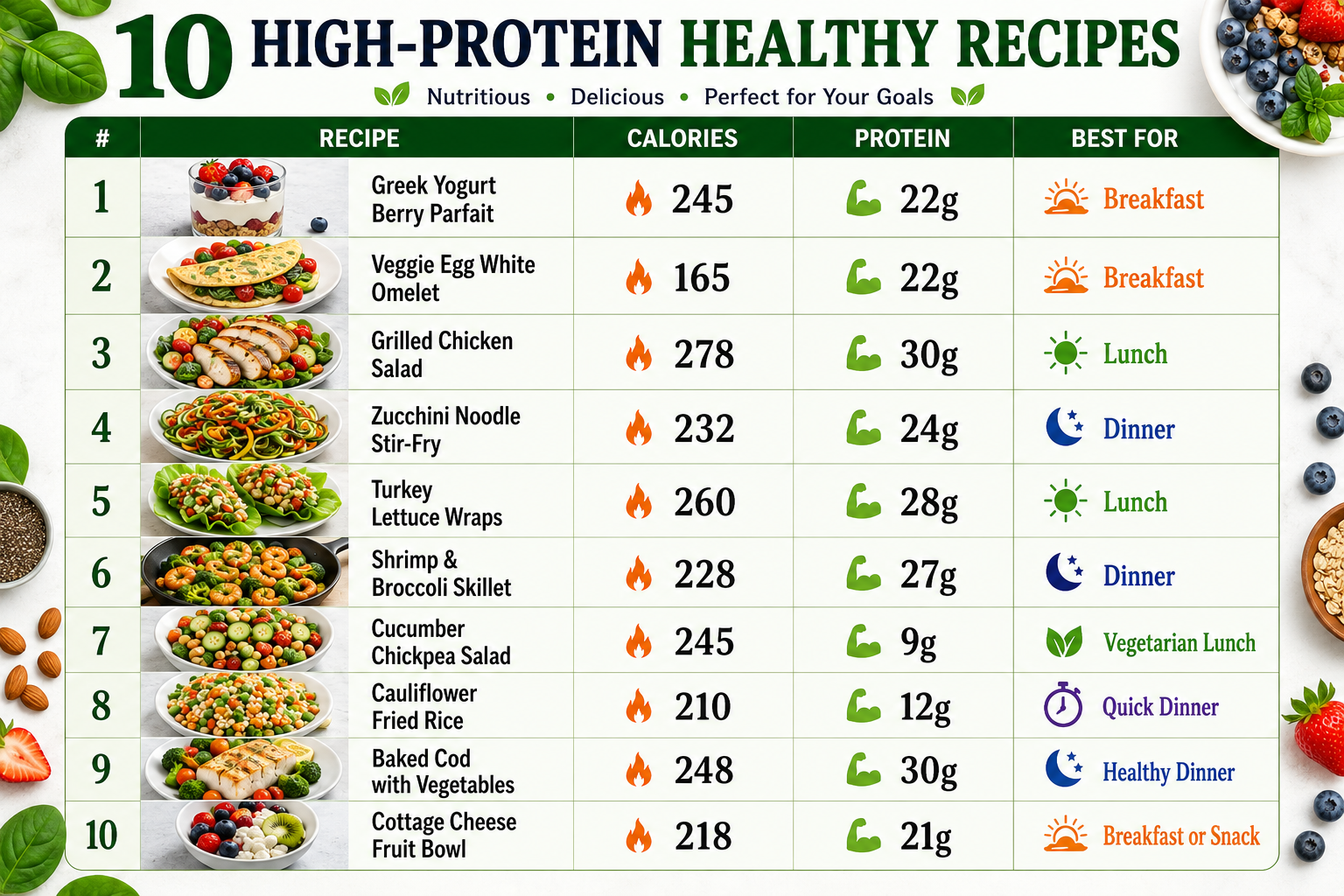
Comparison Table:
Meal Prep Strategies
Meal prepping is one of the easiest ways to stay consistent with healthy eating. Spending one or two hours preparing meals for the week saves time, reduces stress, and helps prevent unhealthy food choices during busy days. Cook proteins such as chicken, turkey, shrimp, or fish in batches, roast several trays of vegetables, and portion everything into individual containers. This makes it easy to grab a balanced meal without needing to cook from scratch every day.
Store fresh ingredients properly to maintain their quality throughout the week. Keep salad greens dry, slice vegetables only when needed, and use airtight containers to preserve freshness. Many of the recipes in this guide can be refrigerated for up to four days, while soups and cooked proteins often freeze well for longer storage. Preparing healthy snacks like Greek yogurt cups, chopped vegetables, and fruit bowls can also reduce the temptation to reach for processed foods.
Variety is another key to successful meal prep. Rotating different vegetables, proteins, herbs, and spices keeps meals interesting while ensuring you get a wide range of nutrients. Even small changes, such as switching lemon seasoning for paprika or replacing chicken with shrimp, can make familiar meals feel completely new.
Expert Healthy Cooking Tips
Healthy cooking doesn't mean sacrificing flavor. Herbs such as basil, parsley, cilantro, rosemary, and thyme add freshness without adding calories. Spices like paprika, cumin, turmeric, garlic powder, chili flakes, and black pepper can transform simple ingredients into delicious meals. Citrus juices, vinegar, and mustard also provide bright flavors while keeping recipes light.
Choose cooking methods that require little added fat. Grilling, baking, steaming, roasting, poaching, and air frying allow ingredients to retain their natural flavors while reducing unnecessary calories. Measuring oils instead of pouring directly from the bottle can also help keep calorie counts under control.
Reading nutrition labels and understanding serving sizes are valuable habits. Even healthy ingredients such as nuts, seeds, avocado, and olive oil should be enjoyed in moderation. Pairing lean proteins with vegetables and whole grains creates balanced meals that support energy, muscle maintenance, and long-lasting fullness throughout the day.
Common Mistakes to Avoid
One of the biggest mistakes people make when trying to eat healthier is cutting calories too aggressively. Extremely low-calorie diets often lead to fatigue, hunger, and cravings that make healthy eating difficult to maintain. Instead, focus on creating balanced meals that provide protein, fiber, healthy fats, and plenty of vegetables while staying within your calorie goals.
Another common mistake is relying too heavily on processed "diet" foods. While some low-calorie packaged meals may seem convenient, they often contain high amounts of sodium, added sugars, and artificial ingredients. Preparing meals at home gives you complete control over ingredients and portion sizes while usually costing less than buying prepackaged alternatives.
People also underestimate the calories hidden in sauces, dressings, beverages, and cooking oils. A healthy salad can quickly exceed its calorie target if it's covered with creamy dressing or excessive amounts of cheese. Measuring ingredients carefully and choosing lighter dressings, herbs, and citrus juices helps maintain both flavor and nutritional balance.
Conclusion
Healthy eating doesn't have to be boring, expensive, or time-consuming. These healthy recipes under 300 calories prove that nutritious meals can be flavorful, satisfying, and easy enough for everyday life. By focusing on lean proteins, fresh vegetables, whole foods, and smart portion sizes, you can enjoy meals that support weight management without feeling deprived.
The best eating plan is one you can maintain over the long term. Experiment with different herbs, spices, vegetables, and protein sources to keep your meals exciting while staying within your calorie goals. Small, consistent improvements often produce better results than strict diets that are difficult to follow. With these recipes in your weekly routine, you'll be well on your way to enjoying delicious, balanced meals that nourish your body and fit your lifestyle.
Frequently Asked Questions
1. Are meals under 300 calories filling?
Yes. Meals that include lean protein, fiber-rich vegetables, and healthy fats can keep you satisfied for several hours despite having fewer than 300 calories.
2. Can I lose weight by eating meals under 300 calories?
These meals can support weight loss when they fit into your overall daily calorie needs and are combined with a balanced diet and regular physical activity.
3. Which protein is best for low-calorie recipes?
Chicken breast, turkey, shrimp, cod, tuna, egg whites, Greek yogurt, tofu, and cottage cheese are all excellent high-protein, low-calorie choices.
4. Can these recipes be meal prepped?
Absolutely. Most recipes can be prepared in advance and stored in the refrigerator for 3–4 days, making them ideal for busy schedules.
5. What are the best vegetables for low-calorie meals?
Broccoli, spinach, cauliflower, zucchini, cucumbers, tomatoes, bell peppers, mushrooms, kale, asparagus, and leafy greens are all nutritious, low in calories, and high in fiber.
Comments
0No comments yet — be the first to share your thoughts!