10 Healthy Lunch Box Ideas for Adults | Easy & Quick
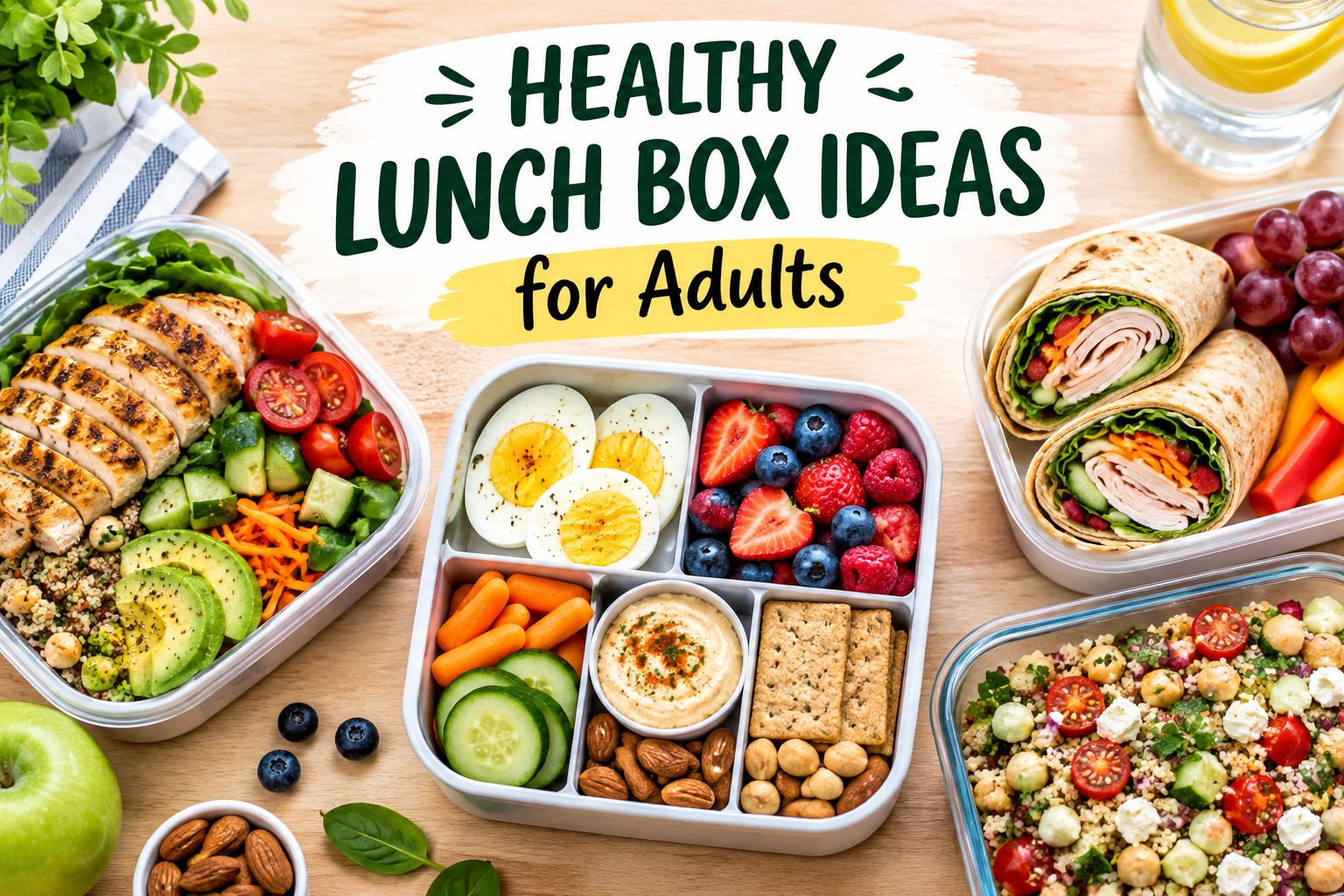
Discover 10 healthy lunch box ideas for adults that are quick, easy, filling, and perfect for work. Try simple meal prep lunches for busy weekdays.
Healthy Lunch Box Ideas for Adults
Finding healthy lunch box ideas for adults can make busy weekdays much easier. When your morning is already packed with work, errands, meetings, or family responsibilities, lunch is often the meal that gets pushed aside. You may grab fast food, skip lunch completely, or eat whatever happens to be nearby. The problem is that these choices can leave you feeling hungry again soon after eating. A thoughtfully packed lunch box, on the other hand, gives you a simple way to enjoy a satisfying meal without spending your entire lunch break cooking.
The best healthy lunch box ideas for adults do not need to be complicated. You can build a balanced meal around lean protein, whole grains, vegetables, fruit, and healthy fats. USDA MyPlate guidance recommends including a variety of foods from the major food groups and making fruits and vegetables a major part of your meals. It also encourages choosing whole grains and nutritious protein foods while limiting added sugars, saturated fat, and sodium.This guide includes 10 practical adult lunch box ideas that work well for offices, home workdays, commuting, and meal prep. They are filling, flexible, and easy to customize, so you can create lunches you actually look forward to eating.
Why Healthy Lunch Boxes Matter for Busy Adults
A good lunch can feel like a reset button in the middle of a busy day. Instead of relying on vending-machine snacks or expensive restaurant meals, you can open your lunch box and already have something satisfying waiting for you. Packing lunch also makes it easier to control the ingredients, portion sizes, vegetables, sauces, and snacks that make up your meal. You do not have to create a perfect “diet lunch” either. The goal is simply to make everyday eating more balanced and enjoyable.
Healthy lunch boxes are especially useful when you have unpredictable schedules. A container filled with chicken, vegetables, grains, fruit, or yogurt can become the foundation of a complete meal. You can also prepare several components on the weekend and mix them differently throughout the week. USDA meal-preparation advice recommends preparing produce in advance and using cooking methods such as baking, grilling, broiling, or roasting instead of relying heavily on frying.
The biggest benefit is convenience. When healthy food is already packed and ready to eat, you remove one of the biggest barriers to making better choices: having to decide what to eat when you are already hungry.
What Makes a Balanced Lunch Box?
A balanced lunch box is less about following strict rules and more about combining different types of nutritious foods. Start with a protein source such as chicken, turkey, eggs, tuna, salmon, beans, lentils, tofu, Greek yogurt, or hummus. Add a carbohydrate source such as quinoa, brown rice, whole-grain bread, whole-wheat pita, or whole-grain crackers. Then bring in vegetables and fruit for color, texture, fiber, and variety.
Healthy fats can also make lunch more satisfying. Avocado, nuts, seeds, olive oil-based dressings, and hummus are convenient choices. You can finish the box with something simple such as berries, an apple, grapes, yogurt, or a small portion of nuts. USDA MyPlate encourages variety across fruits, vegetables, grains, protein foods, and dairy or fortified soy alternatives. Think of your lunch box like building a small puzzle. You do not need every piece to be identical every day. Instead, combine a few different food groups in portions that suit your appetite and routine. This approach makes healthy lunches much easier to repeat.
1. Grilled Chicken and Quinoa Lunch Box
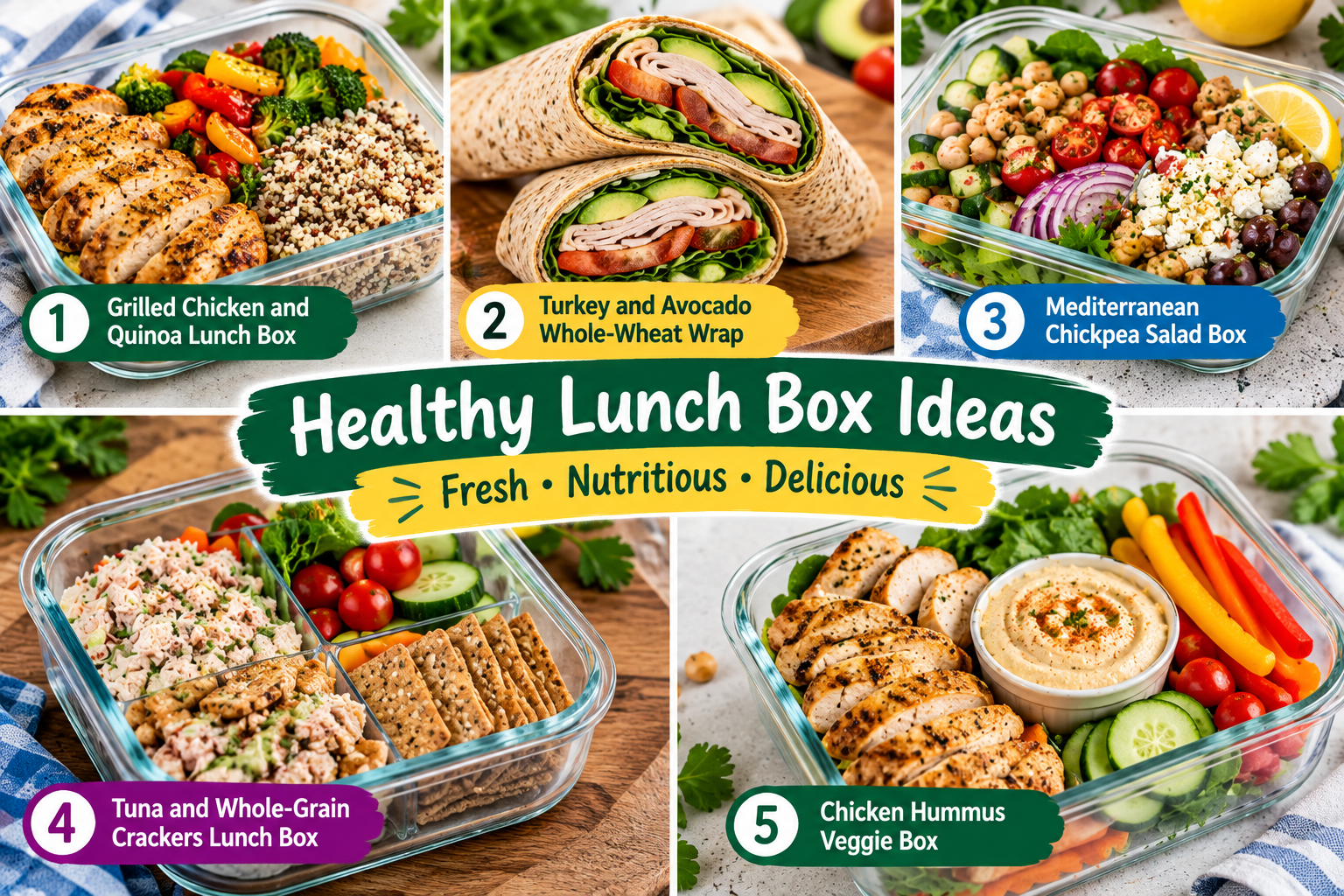
A grilled chicken and quinoa lunch box is one of the easiest healthy lunches for adults because it combines lean protein, whole grains, vegetables, and a simple dressing in one container. For one lunch, combine sliced grilled chicken breast with cooked quinoa, cucumber, cherry tomatoes, roasted broccoli, and a few slices of avocado. Add a small container of lemon-herb dressing made with olive oil, lemon juice, garlic, black pepper, and dried herbs. You can also include berries or an orange on the side if you want something naturally sweet after lunch.
The beauty of this lunch is that most of the ingredients can be prepared in advance. Cook several chicken breasts and a batch of quinoa at the beginning of the week, then portion them into containers. Keep the dressing separate until you are ready to eat so the vegetables and quinoa do not become soggy. You can also switch the vegetables depending on what you have available. Roasted peppers, carrots, green beans, spinach, or zucchini can all work well.
Easy Meal Prep Tips
Prepare the chicken and quinoa together during one meal-prep session. Divide them into containers, add vegetables, and store the dressing separately. If you want different flavors during the week, use different seasonings on the chicken or change the dressing rather than cooking an entirely new meal. This type of mix-and-match meal preparation can save time and reduce food waste. USDA guidance also recommends cooking ahead and portioning leftovers for convenient future meals.
2. Turkey and Avocado Whole-Wheat Wrap
A turkey and avocado wrap is ideal when you want something portable that can be eaten quickly at work or while traveling. Start with a whole-wheat tortilla and layer on sliced turkey, avocado, spinach, cucumber, tomato, and a small amount of plain Greek yogurt or mustard. Roll it tightly, slice it in half, and place it in your lunch container alongside baby carrots, grapes, or sliced apple. The combination gives you a satisfying mixture of protein, vegetables, whole grains, and fruit without requiring much cooking.
You can easily make this lunch more interesting by changing the flavors throughout the week. Add hummus and roasted peppers for a Mediterranean-style version, or use shredded lettuce and a little salsa for a more southwestern taste. If you prefer a warm lunch, you can briefly toast the wrap before packing it, although it is also delicious cold. Keep wet ingredients controlled because excess moisture can make the tortilla soft. Wrapping the finished roll tightly in parchment paper can also make it easier to eat neatly at your desk.
3. Mediterranean Chickpea Salad Box
A Mediterranean chickpea salad lunch box is a fantastic meat-free option for adults who want a filling plant-based lunch. Combine chickpeas with cucumber, cherry tomatoes, red onion, spinach, olives, and a small amount of feta cheese. Add a lemon and olive oil dressing with oregano and black pepper. Serve the mixture with whole-wheat pita or a few whole-grain crackers, and add grapes or berries for a refreshing side.
Chickpeas are particularly useful for meal prep because they can be kept ready in the refrigerator and quickly transformed into salads, wraps, bowls, or snack boxes. You can make several portions at once without spending hours in the kitchen. For a more substantial meal, add cooked quinoa or brown rice. If you enjoy extra crunch, include pumpkin seeds or a small handful of nuts in a separate compartment. The result is a lunch box with different textures and flavors rather than one repetitive bowl of greens.
4. Tuna and Whole-Grain Crackers Lunch Box
A tuna lunch box is one of the fastest options for busy adults because canned or pouch tuna requires little preparation. Mix tuna with plain Greek yogurt, a little mustard, chopped celery, black pepper, and lemon juice. Pack the tuna salad in a sealed container and serve it with whole-grain crackers, cucumber slices, cherry tomatoes, and fruit. You can also use the tuna mixture as a sandwich filling if you prefer a traditional packed lunch.
The important thing is to make the meal more than just tuna and crackers. Adding vegetables and fruit gives the lunch more variety, while a protein-rich tuna filling can make the meal feel more substantial. You can also swap tuna for canned salmon or another convenient protein. When choosing packaged foods, reading the Nutrition Facts label can help you compare sodium, saturated fat, and added sugar. USDA guidance specifically recommends using food labels when making food choices.
5. Chicken Hummus Veggie Box
For a lunch that feels almost like a snack platter but is still filling enough to count as a meal, try a chicken hummus veggie lunch box. Add sliced cooked chicken, hummus, carrots, cucumber, bell peppers, cherry tomatoes, and whole-wheat pita wedges. Include a piece of fruit such as an apple, pear, or orange. Instead of putting everything into one compartment, separate the ingredients so you can combine bites as you eat.
This format is excellent for people who dislike eating the same kind of lunch every day. You might dip vegetables into hummus, fill pita with chicken and vegetables, or simply eat the components separately. It also works well for busy office days because there is no complicated reheating involved. To save time, buy ready-to-eat cooked chicken or use leftover roasted chicken from dinner. The key is to keep the meal simple enough that you can realistically prepare it every week.
6. Greek Yogurt Chicken Salad Box
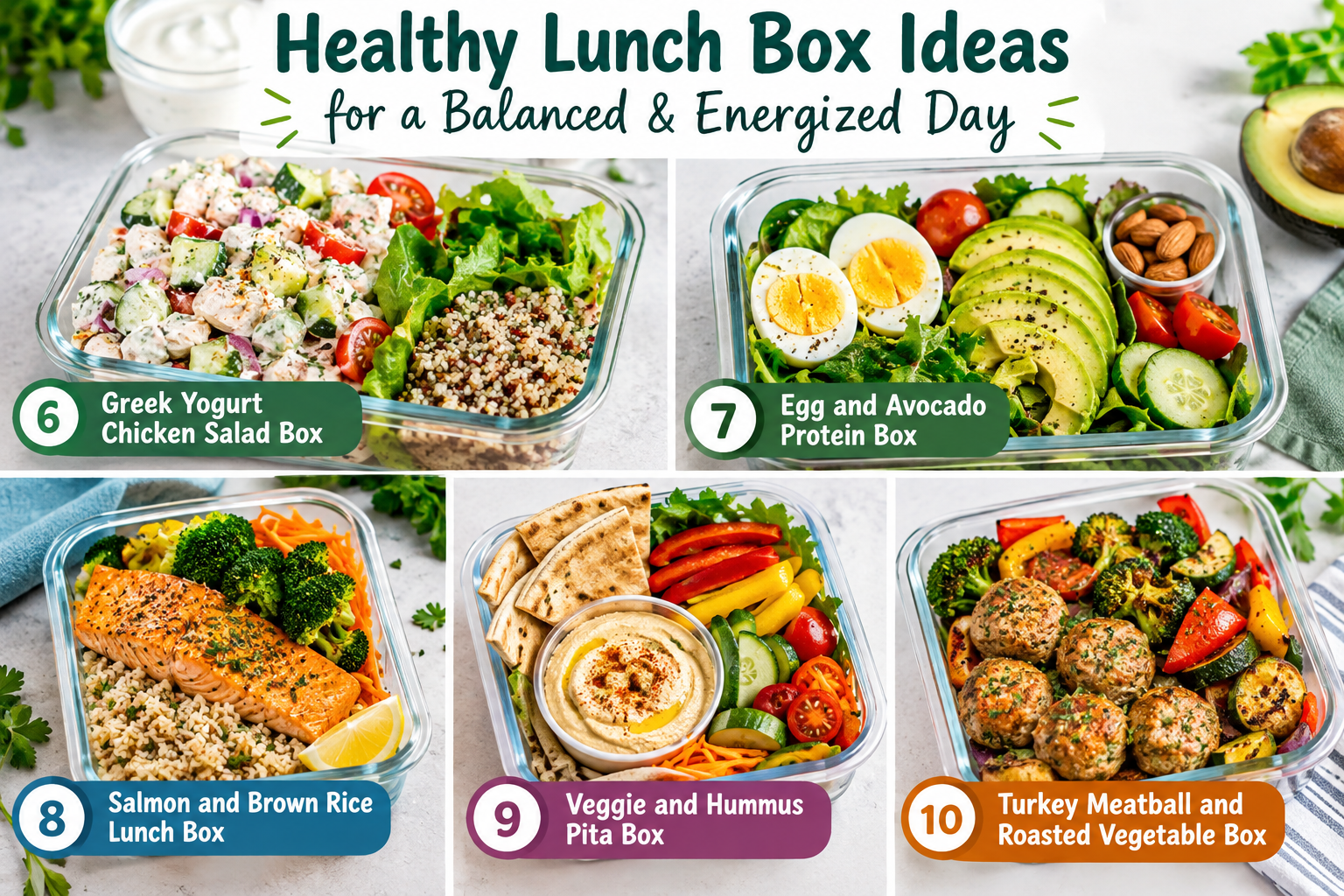
A Greek yogurt chicken salad lunch box gives traditional chicken salad a lighter, fresh twist. Combine cooked shredded chicken with plain Greek yogurt, chopped celery, diced apple, a little Dijon mustard, black pepper, and lemon juice. Serve it with whole-grain bread, lettuce leaves, or whole-wheat crackers. Add grapes, cucumber slices, and a small portion of nuts to complete the lunch box.
This recipe is especially useful when you have leftover chicken from dinner. Rather than eating the same leftovers again, you can turn them into an entirely different lunch in a few minutes. The apple adds natural sweetness and crunch, while celery provides another layer of texture. You can also replace the apple with grapes or dried fruit if preferred. For meal prep, make the chicken salad ahead and keep the bread or crackers separate until serving so everything stays fresh.
7. Egg and Avocado Protein Box
An egg and avocado lunch box is simple, inexpensive, and highly customizable. Pack two hard-boiled eggs with avocado slices, whole-grain toast or crackers, cucumber, cherry tomatoes, and a piece of fruit. You can add a small serving of hummus or Greek yogurt if you want additional variety. A sprinkle of paprika, black pepper, or everything-bagel seasoning can make the eggs more flavorful without requiring a complicated sauce.
This is a good option for adults who prefer smaller foods that can be eaten gradually. Instead of sitting down to a large meal, you can enjoy a few bites of egg, vegetables, avocado, and toast throughout your lunch break. Prepare the eggs ahead of time and store them properly in the refrigerator. USDA meal-prep recommendations also highlight hard-boiled eggs as a practical food that can be prepared ahead for meals and snacks.
8. Salmon and Brown Rice Lunch Box
A salmon and brown rice lunch box is a flavorful option when you want something more substantial. Use cooked salmon with brown rice, steamed broccoli, shredded carrots, cucumber, and a simple lemon dressing. You can add avocado or sesame seeds for additional flavor and texture. If you enjoy Asian-inspired flavors, use a small amount of low-sodium soy sauce with ginger and lime.
This lunch can be prepared using leftover salmon from dinner, which makes it particularly convenient. Cook extra rice and vegetables at the same time and store the components separately. When you pack the lunch, combine them in a microwave-safe container if you plan to reheat it. You can also eat the meal cold if you prefer a rice bowl-style lunch. The USDA notes that seafood, lean meats, rice, whole-wheat pasta, and other staple foods can be useful components of nutritious meals.
9. Veggie and Hummus Pita Box
A veggie and hummus pita box is an easy vegetarian lunch that requires minimal cooking. Fill whole-wheat pita with hummus, spinach, cucumber, tomatoes, shredded carrots, and roasted peppers. Pack extra vegetables on the side with a small serving of fruit and a few whole-grain crackers. If you want more protein, add chickpeas, edamame, boiled eggs, or a small serving of Greek yogurt.
The trick to making a vegetarian lunch satisfying is to include enough variety rather than relying only on lettuce. Hummus provides creaminess, crunchy vegetables create texture, and whole-wheat pita gives the meal a substantial base. You can also change the vegetables every few days to prevent boredom. Try cucumber and tomato one day, roasted peppers and spinach another day, and shredded carrots with cabbage later in the week. A flexible lunch box is much easier to maintain than a rigid meal plan.
10. Turkey Meatball and Roasted Vegetable Box
A turkey meatball lunch box is perfect for anyone who enjoys hearty meals but wants something more balanced than a typical takeout lunch. Pack homemade or prepared turkey meatballs with roasted vegetables such as broccoli, zucchini, carrots, or bell peppers. Add a small portion of brown rice, quinoa, or whole-wheat pasta. A simple tomato-based sauce can be packed separately for dipping or drizzling.
This lunch is another excellent way to use leftovers. Make a larger batch of turkey meatballs for dinner and reserve several portions for your lunch boxes. Roast a large tray of vegetables at the same time, then divide everything into containers once cooled appropriately. USDA meal-planning resources recommend cooking ahead and repurposing leftovers to save time and make future meals easier.
How to Meal Prep Healthy Lunch Boxes
The easiest way to maintain healthy lunch habits is to stop thinking about lunch as five separate meals. Instead, prepare a few basic ingredients that can be mixed and matched throughout the week. Cook one or two protein sources, prepare a grain, wash and chop vegetables, and portion a few fruits. You can then create different combinations without cooking from scratch every morning. For example, grilled chicken can become a quinoa bowl on Monday, a wrap on Tuesday, a salad on Wednesday, and a hummus pita on Thursday.
A simple weekly preparation routine might take less than an hour once you become comfortable with it. Start by choosing two proteins, two carbohydrates, four vegetables, and two fruits. Cook what needs cooking, wash what needs washing, and divide the ingredients into containers. Keep dressings, sauces, crunchy toppings, and other moisture-sensitive foods separate. USDA guidance supports preparing foods ahead, using frozen produce when convenient, and portioning leftovers for quick future meals.
Healthy Lunch Box Swaps for More Variety
Healthy eating does not have to mean eating chicken and broccoli every day. Small swaps can completely change the personality of your lunch box. Replace chicken with tuna, salmon, eggs, beans, lentils, tofu, turkey, or chickpeas. Swap brown rice for quinoa, whole-wheat pasta, barley, potatoes, or whole-grain bread. Vegetables can rotate between broccoli, spinach, carrots, cucumbers, tomatoes, peppers, cabbage, green beans, and roasted zucchini.
Sauces are another easy way to create variety. A lemon-herb dressing can make a lunch taste fresh and Mediterranean-inspired, while hummus creates a creamy texture without requiring a heavy sauce. Greek yogurt mixed with herbs can become a quick dip, while salsa can add brightness to wraps and bowls. The USDA recommends building meals from a variety of food groups rather than relying on the same foods repeatedly.
Think of your refrigerator as a collection of building blocks. Once you have several ingredients ready, you can assemble different lunches depending on your mood and schedule.
How to Keep Lunch Fresh and Safe
A healthy lunch is only useful when it is stored safely. Perishable foods such as cooked chicken, eggs, seafood, yogurt, and prepared salads should be kept properly chilled until they are ready to eat. Use an insulated lunch bag and cold packs when refrigeration is not immediately available. If your workplace has a refrigerator, place your lunch there when you arrive rather than leaving it at your desk for several hours.
It is also smart to separate foods that become soggy easily. Keep salad dressing in a small sealed container, place crackers away from hummus, and pack bread separately from wet fillings when necessary. Wash fresh produce before preparation and keep raw and cooked ingredients handled appropriately. Good food storage habits protect the quality of your lunch as much as the recipe itself.
If you regularly take lunch to work, consider buying a leak-resistant container with separate compartments. It can make meal prep easier and prevent your bag from becoming messy. A little organization goes a long way when you are carrying lunch several days each week.
Common Healthy Lunch Box Mistakes
One common mistake is making lunch too small. A lunch containing only a few vegetables may look healthy, but it might not feel satisfying enough for a busy adult. Another mistake is focusing so heavily on calories that you forget about flavor, texture, and enjoyment. If your lunch feels like punishment, you are much more likely to abandon it and order takeout later.
Another problem is preparing the same meal repeatedly. Even a delicious chicken bowl can become boring if you eat it five days in a row. Instead, prepare ingredients rather than complete identical meals. This gives you the flexibility to make wraps, salads, grain bowls, and snack boxes from the same basic ingredients.
Finally, do not overlook sauces and seasonings. Healthy food does not need to be bland. Lemon juice, herbs, spices, garlic, mustard, salsa, yogurt-based sauces, and small amounts of olive oil can make simple ingredients much more enjoyable. USDA guidance encourages using herbs and spices and lemon or lime juice to add flavor while helping reduce reliance on salt.
How to Build a Healthy Lunch Box on a Budget
You do not need expensive specialty foods to create healthy adult lunch boxes. Start with affordable staples such as oats, brown rice, whole-wheat bread, eggs, beans, chickpeas, carrots, cabbage, bananas, apples, frozen vegetables, and canned fish. Buy ingredients that can be used in several different meals rather than purchasing one ingredient for one recipe. This makes your grocery list smaller and helps reduce waste.
Leftovers can also become the secret weapon of budget-friendly meal prep. If you cook chicken for dinner, reserve some for tomorrow's wrap. If you roast vegetables, save a portion for a grain bowl. Extra rice can become the base for a lunch bowl, while leftover beans can be added to salads or stuffed into a whole-wheat pita. USDA planning resources specifically recommend repurposing leftovers and mixing staple ingredients with proteins, grains, fruits, and vegetables to create different meals.
Frozen produce can also be useful because it reduces preparation time and can help you keep vegetables available without worrying about them spoiling quickly. A budget-friendly lunch does not have to look boring. With smart planning, basic ingredients can become several different meals.
Conclusion
The best healthy lunch box ideas for adults are the ones that fit naturally into your real life. You do not need elaborate recipes, expensive ingredients, or hours of Sunday meal prep. A few basic foods—lean protein, whole grains, vegetables, fruit, and healthy fats—can become wraps, salads, grain bowls, snack boxes, and pita lunches with very little effort.
Start with two or three recipes from this list and prepare the ingredients ahead of time. Once you have a few reliable combinations, experiment with different vegetables, proteins, grains, sauces, and seasonings. USDA guidance supports planning ahead, preparing ingredients in advance, and using a variety of nutritious foods to make everyday meals easier. A packed lunch can be more than something you eat between meetings. It can be an easy daily habit that helps you save time, reduce unnecessary takeout, and make nutritious choices even when your schedule is busy. The goal is not perfection—it is creating a lunch routine that is simple enough to repeat.
FAQs
1. What should I put in a healthy lunch box for adults?
A good adult lunch box can include a protein source, whole grain or another carbohydrate, vegetables, fruit, and a healthy fat. Examples include grilled chicken with quinoa and vegetables, turkey with avocado in a whole-wheat wrap, or chickpeas with hummus and whole-wheat pita. The exact combination can change based on your preferences and dietary needs.
2. What are easy healthy lunch box ideas for work?
Some easy options include chicken and quinoa bowls, turkey avocado wraps, Mediterranean chickpea salads, tuna and whole-grain crackers, hummus veggie boxes, and egg protein boxes. These lunches can be prepared ahead and packed in individual containers, making them convenient for busy workdays.
3. How can I meal prep healthy lunches for the whole week?
Prepare a few basic ingredients instead of making five identical meals. Cook one or two proteins, prepare a grain, roast vegetables, wash fresh produce, and portion fruit. During the week, combine those ingredients differently to create wraps, salads, bowls, and snack boxes.
4. What are healthy lunch ideas without meat?
Vegetarian lunch boxes can include chickpea salads, hummus and veggie pitas, egg and avocado boxes, bean bowls, lentil salads, tofu grain bowls, and Greek yogurt-based meals. Combining plant proteins with whole grains and plenty of vegetables can create satisfying meat-free lunches.
5. How do I stop healthy packed lunches from becoming boring?
Variety is the easiest answer. Rotate your protein, grain, vegetables, fruit, and dressing instead of repeating the exact same meal. You can also turn the same prepared ingredients into different formats, such as a wrap one day, a salad the next, and a grain bowl later in the week.
Comments
0No comments yet — be the first to share your thoughts!