10 Easy Healthy Fish Recipes for Dinner | Quick Meals
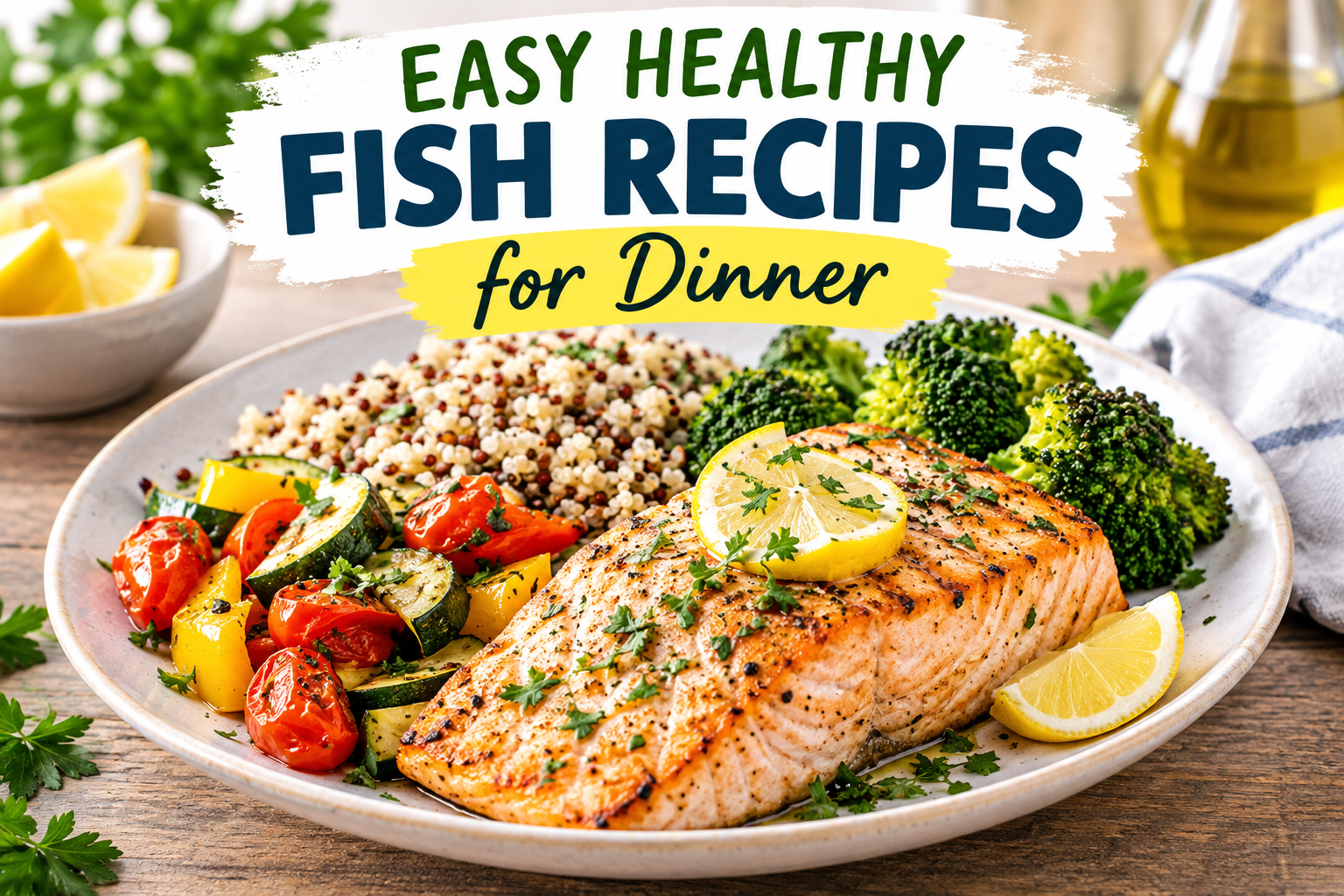
Discover 10 easy healthy fish recipes for dinner, including quick salmon, cod, trout, fish tacos, and more. Perfect for busy weeknights!
Easy Healthy Fish Recipes for Dinner: 10 Quick and Delicious Ideas
When dinner needs to be on the table quickly, fish can be one of the easiest proteins to reach for. It cooks faster than many cuts of meat, pairs beautifully with vegetables and whole grains, and gives you plenty of room to change flavours without making your evening complicated. Whether you're feeding a family after a busy day or simply want a lighter meal that doesn't leave you stuck in the kitchen, easy healthy fish recipes for dinner can make weeknight cooking feel much more manageable.
Fish is also incredibly versatile. Salmon can handle bold garlic, lemon, herbs, and spices, while mild white fish such as cod, haddock, and tilapia can take on Mediterranean, Mexican-inspired, or Asian-inspired flavours. You can bake it, pan-sear it, grill it, or turn it into tacos, bowls, salads, and sheet-pan meals. That flexibility means you don't have to eat the same fish dinner twice.
The American Heart Association recommends eating fish at least twice a week, particularly fatty fish, as part of a heart-conscious eating pattern. The organisation describes a serving as about 3 ounces cooked and highlights fish such as salmon, sardines, trout, herring, and mackerel as good sources of omega-3 fatty acids.
The recipes below are designed with real-life weeknights in mind. They focus on straightforward ingredients, simple preparation, and balanced plates rather than complicated techniques. Nutrition information is an estimate per serving and can vary depending on the exact ingredients and brands used.
Why Fish Makes a Great Healthy Dinner
A good weeknight dinner should not feel like a second job. That's where fish earns its place in your meal rotation. Most fillets are relatively thin, so they can go from refrigerator to dinner plate in a short amount of time. Add a quick vegetable side and a simple whole-grain or potato option, and you've got a complete meal without needing a long ingredient list or several pans.
Fish can also help you build a balanced dinner around a high-quality protein source. The FDA notes that fish provides protein as well as healthy fatty acids and several vitamins and minerals. The agency also recommends seafood as part of a healthy eating pattern, with at least 8 ounces of seafood per week for a typical 2,000-calorie diet.
Nutritional Benefits of Fish
One reason fish fits so naturally into healthy dinner recipes is its nutritional profile. Fish supplies protein that can make a meal satisfying, while many varieties provide omega-3 fatty acids. Fatty fish such as salmon and trout are especially useful when you're looking for ways to include more omega-3-rich foods in your diet. The American Heart Association notes that fatty fish are good sources of omega-3 fatty acids and recommends two servings of fish per week.
Different fish bring different nutritional qualities to the table, which is another reason variety is useful. Salmon and trout tend to be richer and more substantial, whereas cod, haddock, and tilapia have a milder taste and lean texture. That makes white fish particularly helpful when you're cooking for someone who isn't enthusiastic about seafood. You can also change the seasonings completely, so one basic fish fillet can become a lemon-herb dinner one night and a taco filling the next.
The best approach isn't to think of fish as a magical food that automatically makes every dinner healthy. Instead, think about the complete plate. A baked fillet served with roasted vegetables, beans, brown rice, quinoa, potatoes, or a fresh salad can create a satisfying meal. A heavily fried fillet covered in rich sauces is a different nutritional proposition. Preparation matters just as much as the main ingredient.
Why Fish Works for Busy Weeknights
Fish is almost tailor-made for busy evenings because wide varieties cook quickly. A salmon fillet can be seasoned while the oven heats, and a cod fillet can be ready for a simple herb and lemon treatment in minutes. You don't necessarily need a long marinade, complicated sauce, or special equipment. Sometimes olive oil, lemon juice, garlic, black pepper, and dried herbs are enough.
Another advantage is that fish works well with shortcuts. Frozen fish can be useful when fresh seafood isn't available, and canned tuna can become dinner without requiring any cooking at all. Pre-cut vegetables, frozen vegetables, microwaveable brown rice, and bagged salad can reduce the amount of preparation even further. The result is the kind of quick, healthy fish dinner that can fit into an ordinary Wednesday rather than only appearing on a weekend menu.
Fish also gives you plenty of flavour options. Mediterranean ingredients such as tomatoes, olives, lemon, and oregano create one style, while chilli, lime, avocado, and cabbage produce something completely different. This means your freezer doesn't have to be packed with ten different proteins. Keep a few reliable fish varieties available and change the supporting ingredients instead.
How to Choose Fish for Healthy Dinner Recipes
Choosing the right fish doesn't have to be intimidating. If you're shopping for a quick dinner, begin with the recipe you want to make and then consider what fish is available, affordable, and suitable for the cooking method. Firm fish such as salmon and cod are forgiving in the oven, while delicate fish may need a little more care during pan cooking.
Look at the thickness of the fillet as well. A thick centre-cut salmon fillet will naturally take longer to cook than a thin white-fish fillet. Rather than relying only on a recipe's cooking time, use visual cues and, ideally, a food thermometer. Fish can go from perfectly moist to dry surprisingly quickly, so checking near the end of cooking is one of the easiest ways to improve your results.
Fresh, Frozen, or Canned Fish
Fresh fish is wonderful when it is readily available, but it isn't the only practical option. Frozen fish can be an excellent choice for healthy dinner recipes, particularly when you want to keep seafood available without worrying about using it immediately. The FDA advises thawing frozen seafood in the refrigerator overnight, or using cold water or a microwave when you need a faster method and will cook it immediately afterward.
Canned fish is another useful option. Tuna can be turned into stuffed peppers, wraps, salads, grain bowls, and sandwiches without needing a cooking session. When choosing canned products, compare labels for sodium and ingredients if those are important to your eating pattern. You can also drain and rinse some canned products when appropriate to reduce excess sodium.
The key is not to create an artificial hierarchy where fresh is always "healthy" and frozen or canned is automatically inferior. The healthiest option is often the one you will actually use. A bag of frozen cod sitting in the freezer can be more useful than fresh fish that gets forgotten in the refrigerator. Likewise, canned tuna can rescue dinner on a night when cooking from scratch simply isn't realistic.
Lower-Mercury Fish Choices
Fish offers important nutritional benefits, but seafood choices can differ in mercury levels. The FDA and EPA provide advice to help people choose fish based on mercury exposure, particularly for people who are pregnant or breastfeeding and young children. The FDA recommends choosing a variety of lower-mercury fish and provides a "Best Choices" category.
For adults generally, variety is a sensible approach. Rather than eating the same fish repeatedly, rotate different choices such as salmon, cod, trout, haddock, pollock, and other suitable options. People who are pregnant, breastfeeding, or feeding young children should follow the FDA/EPA recommendations specific to those groups because mercury exposure is particularly important during development.
10 Easy Healthy Fish Recipes for Dinner
The following recipes are designed to be simple enough for a busy weeknight while still giving you enough variety to keep fish dinners interesting. Each recipe serves four unless otherwise stated. Nutrition figures are approximate estimates per serving and may change depending on the fish, oil, sauces, and side dishes you use.
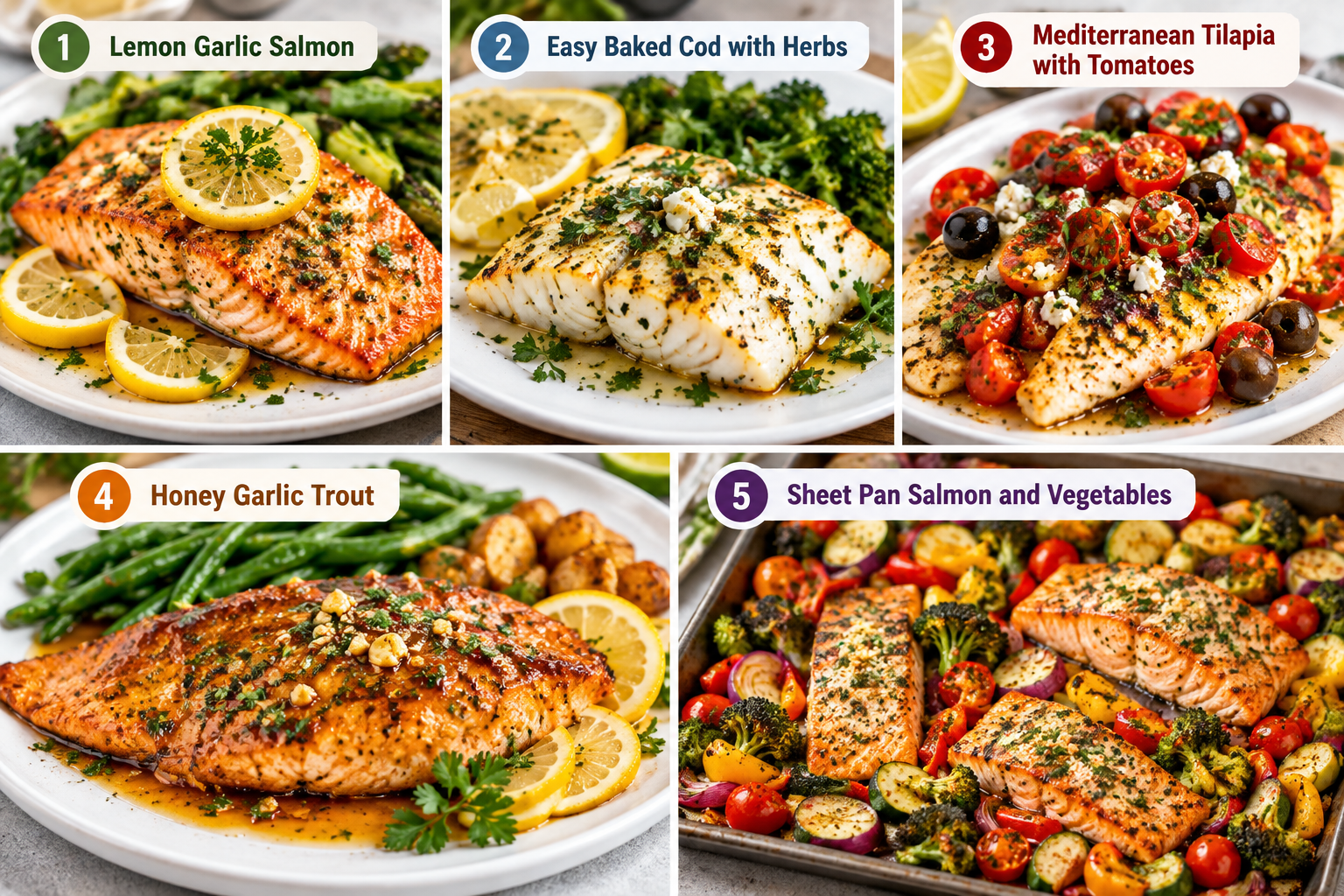
1. Lemon Garlic Salmon
Lemon garlic salmon is one of those recipes worth memorising because it uses ingredients you may already have at home. Salmon has a naturally rich flavour, so it doesn't need a complicated sauce. A combination of lemon, garlic, olive oil, parsley, black pepper, and a little salt creates a bright coating that complements the fish without overpowering it. Serve it with steamed broccoli, green beans, roasted potatoes, or a simple salad.
Prep time: 10 minutes
Cook time: 12–15 minutes
Ready in: About 25 minutes
Calories: ~360 per serving
Protein: ~34g
Carbs: ~5g
Fat: ~23g
Fiber: ~1g
Ingredients:
4 salmon fillets, about 5 oz each
1 tablespoon olive oil
3 garlic cloves, minced
1 tablespoon fresh lemon juice
1 teaspoon lemon zest
1 teaspoon dried parsley
½ teaspoon black pepper
¼ teaspoon salt
Lemon wedges for serving
Instructions:
Heat the oven to 400°F.
Place salmon on a lined baking sheet.
Mix olive oil, garlic, lemon juice, lemon zest, parsley, pepper, and salt.
Brush the mixture over the salmon.
Bake until the fish is cooked through and flakes easily.
Serve with lemon wedges and your favourite vegetables.
The trick here is not to overcook the salmon. Begin checking it toward the end of the estimated cooking time because fillet thickness can vary significantly. The lemon adds acidity and freshness, while garlic gives the dish enough savoury character to make it feel more substantial than its short ingredient list suggests.
2. Easy Baked Cod with Herbs
Cod is an excellent starting point if you want a mild, lean fish dinner. Its delicate flavour works well with herbs, lemon, garlic, and olive oil, while its firm flesh makes it easy to bake. This recipe is especially useful for families because you can keep the seasoning simple and let everyone add extra lemon or herbs at the table.
Prep time: 8 minutes
Cook time: 12–15 minutes
Ready in: About 25 minutes
Calories: ~230 per serving
Protein: ~35g
Carbs: ~3g
Fat: ~9g
Fiber: ~1g
Ingredients:
4 cod fillets, about 5 oz each
1 tablespoon olive oil
1 tablespoon lemon juice
2 garlic cloves, minced
1 teaspoon dried oregano
1 teaspoon dried parsley
½ teaspoon paprika
¼ teaspoon black pepper
¼ teaspoon salt
Instructions:
Heat the oven to 400°F.
Place cod fillets on a lined baking tray.
Combine olive oil, lemon juice, garlic, oregano, parsley, paprika, pepper, and salt.
Spoon the seasoning mixture over the cod.
Bake until the fish is opaque and separates easily with a fork.
Serve with vegetables and brown rice, quinoa, or potatoes.
Cod is also an easy fish to use when you're trying to keep dinner lighter without making it feel boring. The herbs add aroma, paprika provides a little warmth, and lemon keeps the finished dish bright. Pair it with roasted carrots and a small baked potato for a comforting meal, or use it with a large salad when you want something lighter.
3. Mediterranean Tilapia with Tomatoes
Tilapia is mild, affordable in many markets, and particularly useful when strong fish flavours aren't popular at your dinner table. In this Mediterranean-style recipe, tomatoes, garlic, oregano, lemon, and olive oil create a quick pan sauce that keeps the fish moist and flavorful. You can add spinach, olives, or a few chopped peppers depending on what you have available.
Prep time: 10 minutes
Cook time: 15 minutes
Ready in: About 25 minutes
Calories: ~280 per serving
Protein: ~31g
Carbs: ~9g
Fat: ~14g
Fiber: ~2g
Ingredients:
4 tilapia fillets
1 tablespoon olive oil
2 cups chopped tomatoes
2 garlic cloves, minced
1 teaspoon dried oregano
½ teaspoon paprika
1 tablespoon lemon juice
1 cup baby spinach
¼ cup chopped parsley
Black pepper and salt to taste
Instructions:
Heat olive oil in a large skillet over medium heat.
Season tilapia with paprika, pepper, and a small amount of salt.
Cook the fillets for several minutes on each side, depending on thickness.
Remove the fish and add tomatoes, garlic, and oregano.
Simmer until the tomatoes soften and form a light sauce.
Stir in spinach and cook until wilted.
Return the fish to the pan and finish with lemon juice and parsley.
This is a good example of how a simple fish fillet can become a complete dinner with very little extra work. The tomato mixture can also be spooned over quinoa or whole-grain couscous, helping stretch the meal for a family. If you're cooking for one or two people, leftovers can be flaked into a salad or grain bowl the following day.
4. Honey Garlic Trout
Honey and garlic may sound like a rich combination, but you only need a small amount of honey to create a glossy, lightly sweet coating. Trout has enough flavour to stand up to the garlic, while lemon juice prevents the sauce from becoming too heavy. Serve it with steamed broccoli and brown rice, or pair it with roasted Brussels sprouts for a more substantial plate.
Prep time: 10 minutes
Cook time: 12–15 minutes
Ready in: About 25 minutes
Calories: ~330 per serving
Protein: ~32g
Carbs: ~12g
Fat: ~17g
Fiber: ~1g
Ingredients:
4 trout fillets
1 tablespoon honey
1 tablespoon olive oil
2 garlic cloves, minced
1 tablespoon lemon juice
½ teaspoon paprika
½ teaspoon black pepper
¼ teaspoon salt
Instructions:
Heat the oven to 400°F.
Place trout fillets on a lined baking sheet.
Mix honey, olive oil, garlic, lemon juice, paprika, pepper, and salt.
Brush the mixture over the fish.
Bake until the trout is opaque and flakes easily.
Serve immediately with vegetables and a whole-grain side.
If you like sweet-and-savoury dinners, this recipe can become a reliable favourite. Keep the honey modest so the dish still tastes like a healthy fish dinner rather than a sugary glaze. You can also replace honey with a small amount of maple syrup for a slightly different flavour profile.
5. Sheet Pan Salmon and Vegetables
Sheet-pan dinners are practically designed for busy people. Instead of cooking the protein, vegetables, and side dishes in separate pans, you can arrange everything on one baking tray. Salmon works particularly well with broccoli, bell peppers, courgette, asparagus, or green beans.
Prep time: 12 minutes
Cook time: 18–22 minutes
Ready in: About 35 minutes
Calories: ~390 per serving
Protein: ~35g
Carbs: ~18g
Fat: ~22g
Fiber: ~6g
Ingredients:
4 salmon fillets
2 cups broccoli florets
1 bell pepper, sliced
1 medium courgette/zucchini, sliced
1 tablespoon olive oil
1 teaspoon garlic powder
1 teaspoon Italian seasoning
½ teaspoon paprika
1 tablespoon lemon juice
Salt and black pepper to taste
Instructions:
Heat the oven to 425°F.
Arrange vegetables on a large baking sheet.
Toss vegetables with half the olive oil and seasonings.
Roast vegetables for about 8 minutes.
Add salmon to the tray.
Brush salmon with remaining oil, lemon juice, and seasonings.
Continue baking until the salmon is cooked and the vegetables are tender.
The beauty of this recipe is that you can change the vegetables according to the season or your fridge. Use asparagus in spring, peppers and courgettes in summer, or Brussels sprouts and carrots during colder months. This keeps the same basic recipe from feeling repetitive.
6. Blackened Haddock with Avocado
Blackened seasoning gives mild haddock a much bigger personality. The spice mixture creates a warm, savoury crust while creamy avocado balances the heat. You can serve this fish over brown rice, alongside roasted vegetables, or in a large salad.
Prep time: 10 minutes
Cook time: 10–12 minutes
Ready in: About 25 minutes
Calories: ~310 per serving
Protein: ~32g
Carbs: ~8g
Fat: ~17g
Fiber: ~4g
Ingredients:
4 haddock fillets
1 teaspoon paprika
½ teaspoon garlic powder
½ teaspoon onion powder
¼ teaspoon dried thyme
¼ teaspoon black pepper
1 tablespoon olive oil
1 avocado, diced
1 tablespoon lime juice
2 tablespoons chopped coriander/cilantro
Instructions:
Combine paprika, garlic powder, onion powder, thyme, and pepper.
Coat the haddock with the spice mixture.
Heat olive oil in a non-stick skillet.
Cook the haddock until browned and cooked through, turning carefully.
Combine avocado, lime juice, and coriander.
Serve the fish topped with the avocado mixture.
This recipe works especially well when you want a dinner that feels exciting without relying on a heavy sauce. If you're sensitive to spice, reduce the pepper and add a little more lime. For extra fibre, serve the fish with black beans and a crunchy cabbage salad.
7. Healthy Tuna Stuffed Peppers
Canned tuna can absolutely become dinner, and stuffed peppers are a clever way to turn it into a colourful, satisfying meal. The filling combines tuna with Greek yogurt, celery, herbs, and a little mustard. Add cooked quinoa or chickpeas if you want a more substantial meal.
Prep time: 15 minutes
Cook time: 20 minutes
Ready in: About 35 minutes
Calories: ~290 per serving
Protein: ~29g
Carbs: ~18g
Fat: ~12g
Fiber: ~5g
Ingredients:
4 bell peppers, halved and seeded
2 cans tuna in water, drained
½ cup plain Greek yogurt
1 celery stalk, finely chopped
1 tablespoon Dijon mustard
2 tablespoons chopped parsley
½ teaspoon garlic powder
½ cup cooked quinoa
Black pepper to taste
Instructions:
Heat the oven to 375°F.
Place pepper halves in a baking dish.
Mix tuna, Greek yogurt, celery, mustard, parsley, garlic powder, quinoa, and pepper.
Fill each pepper half with the tuna mixture.
Bake until the peppers soften and the filling is heated through.
Serve with a green salad or steamed vegetables.
This is particularly useful when you're trying to keep dinner inexpensive. Canned tuna is easy to store, and the peppers provide colour and texture without needing a complicated side dish. If you have leftover filling, use it in a whole-grain wrap the next day.
8. Quick Fish Tacos with Crunchy Slaw
Fish tacos can be a healthy weeknight dinner when you skip deep-frying and focus on grilled, baked, or pan-cooked fish. White fish such as cod or haddock works beautifully with lime, paprika, cabbage, and avocado. The result is fresh, crunchy, and satisfying without feeling heavy.
Prep time: 15 minutes
Cook time: 10–12 minutes
Ready in: About 30 minutes
Calories: ~350 per serving
Protein: ~30g
Carbs: ~35g
Fat: ~12g
Fiber: ~7g
Ingredients:
4 white fish fillets
8 small whole-grain tortillas
2 cups shredded cabbage
½ avocado, sliced
2 tablespoons Greek yogurt
1 tablespoon lime juice
1 teaspoon paprika
½ teaspoon cumin
1 tablespoon olive oil
Fresh coriander/cilantro
Black pepper and salt to taste
Instructions:
Season fish with paprika, cumin, pepper, and salt.
Heat olive oil in a skillet and cook fish until flaky.
Mix cabbage with Greek yogurt and lime juice.
Warm tortillas.
Divide fish between tortillas.
Top with slaw, avocado, and coriander.
Serve with extra lime.
For an even faster version, prepare the slaw while the fish cooks. You can also add chopped tomatoes, pickled onions, or a mild salsa. This is a great recipe for families because everyone can assemble their own tacos, making dinner feel interactive rather than overly formal.
9. Garlic Herb Fish with Roasted Potatoes
When you want something comforting, fish doesn't have to mean a salad and steamed vegetables. Pairing a simple white fish with crispy roasted potatoes and green beans creates a balanced dinner that feels like classic comfort food. The key is to keep the potatoes portioned reasonably and use olive oil rather than a heavy creamy sauce.
Prep time: 12 minutes
Cook time: 25 minutes
Ready in: About 40 minutes
Calories: ~380 per serving
Protein: ~32g
Carbs: ~34g
Fat: ~14g
Fiber: ~5g
Ingredients:
4 cod or haddock fillets
500g baby potatoes, halved
2 cups green beans
1 tablespoon olive oil
2 garlic cloves, minced
1 teaspoon dried rosemary
1 teaspoon dried parsley
1 tablespoon lemon juice
Black pepper and salt to taste
Instructions:
Heat the oven to 425°F.
Toss potatoes with half the olive oil, rosemary, pepper, and salt.
Roast for about 15 minutes.
Add green beans and fish to the tray.
Mix remaining oil with garlic, parsley, and lemon juice.
Brush the mixture over the fish.
Roast until the fish is cooked through and the potatoes are tender.
This meal demonstrates why simple seasoning often works best. Garlic, rosemary, parsley, and lemon give the fish plenty of character while allowing the roasted potatoes to remain the comforting star of the plate. If you want more fibre, add a larger serving of green vegetables or swap some of the potatoes for chickpeas.
10. Coconut Lime Cod
Coconut and lime create a bright, slightly tropical flavour combination without requiring a long list of ingredients. Cod is especially good here because its mild flavour allows the sauce to shine. Serve it with brown rice and steamed greens for a complete meal.
Prep time: 10 minutes
Cook time: 15 minutes
Ready in: About 30 minutes
Calories: ~320 per serving
Protein: ~32g
Carbs: ~13g
Fat: ~16g
Fiber: ~2g
Ingredients:
4 cod fillets
½ cup light coconut milk
1 tablespoon lime juice
1 teaspoon lime zest
1 garlic clove, minced
½ teaspoon grated ginger
1 teaspoon olive oil
1 tablespoon chopped coriander/cilantro
Black pepper and salt to taste
Instructions:
Season cod with pepper and a small amount of salt.
Heat olive oil in a skillet.
Cook cod gently on both sides until nearly done.
Add coconut milk, lime juice, lime zest, garlic, and ginger.
Simmer gently until the fish is cooked through and the sauce slightly thickens.
Sprinkle with coriander/cilantro before serving.
The sauce is intentionally light rather than thick and creamy. That helps keep the meal fresh and lets the lime cut through the richness of the coconut milk. Add steamed broccoli, spinach, or green beans for extra vegetables and colour.
Healthy Side Dishes to Serve with Fish
The easiest way to turn a fish fillet into a complete dinner is to use a simple three-part plate: fish + vegetables + satisfying carbohydrate. You don't need an elaborate side dish for every meal. Roasted broccoli and a baked potato can be enough, while a busy evening might call for microwaveable brown rice and a bagged salad.
For higher-fibre meals, consider quinoa, brown rice, beans, lentils, sweet potatoes, or whole-grain couscous. Vegetables such as broccoli, asparagus, green beans, peppers, courgettes, spinach, cabbage, and carrots pair naturally with fish. If you want something refreshing, a cucumber-tomato salad with lemon juice can balance richer fish such as salmon or trout.
A useful strategy for busy households is to prepare one large batch of a side dish at the beginning of the week. Cook a container of brown rice or quinoa, roast a tray of vegetables, or wash and chop salad ingredients. Then your fish dinner becomes more of an assembly job. That's the real secret behind sustainable healthy eating: make the healthy choice convenient enough that you don't have to negotiate with yourself at 7 p.m.
Fish Dinner Mistakes to Avoid
One of the most common mistakes is overcooking fish. Because fish cooks quickly, an extra few minutes can make a dramatic difference in texture. Check the thickest portion near the end of the suggested cooking time instead of assuming the timer knows exactly when your particular fillet is finished.
Another common problem is using too much seasoning or sauce to compensate for poor-quality fish. Strong sauces aren't always necessary. Lemon, garlic, herbs, olive oil, and a little spice can create plenty of flavour while allowing the fish itself to remain the centre of the meal.
Don't forget the rest of the plate either. A healthy fish dinner shouldn't be judged only by whether the fish itself is lean. If you cover a small piece of fish with a very rich sauce and serve it with a large portion of refined carbohydrates, you've changed the overall balance. Think about the whole meal instead of searching for a single "perfect" ingredient.
Finally, don't feel obligated to buy fresh fish every time. Frozen and canned options can make healthy seafood much easier to fit into a busy lifestyle. The best meal plan is the one that works with your schedule, budget, cooking skills, and food preferences.
Safe Fish Cooking and Storage Tips
Food safety is an important part of any fish recipe. The FDA recommends cooking finfish to an internal temperature of 145°F (63°C), or until the flesh is opaque and separates easily with a fork. A food thermometer is the most reliable way to check the internal temperature rather than relying only on colour or cooking time.
Keep raw seafood separate from foods that will be eaten without cooking. Use clean utensils and cutting boards, and never place cooked fish on a plate that previously held raw seafood unless the plate has been properly washed. The FDA also advises refrigerating or freezing seafood and other perishable foods within two hours, or within one hour when the temperature is above 90°F.
If you're using frozen fish, thaw it safely rather than leaving it on the kitchen counter. Refrigerator thawing is the easiest method when you have time. For a quicker method, FDA guidance allows cold-water thawing or microwave defrosting when the fish will be cooked immediately afterward.
People who are pregnant, breastfeeding, or feeding young children should also pay special attention to fish choices because mercury exposure matters more during development. The FDA/EPA guidance recommends choosing a variety of lower-mercury fish and using its current fish-consumption chart to guide choices.
Conclusion
Easy healthy fish recipes for dinner don't have to be complicated, expensive, or reserved for seafood enthusiasts. A few dependable ingredients can turn salmon, cod, trout, haddock, tilapia, or canned tuna into completely different meals throughout the week. Lemon and garlic can create a bright baked salmon dinner, tomatoes and herbs can take tilapia in a Mediterranean direction, and cabbage, avocado, and lime can transform white fish into quick tacos.
Fish also gives busy cooks an important advantage: speed. Many fillets cook in roughly 10 to 20 minutes, making them particularly useful when you're trying to get dinner on the table without spending your whole evening in the kitchen. Add vegetables and a whole-grain or starchy side, and you can create a balanced meal without relying on complicated recipes.
The nutrition side is compelling, too. The FDA recommends at least 8 ounces of seafood per week for a typical 2,000-calorie diet, while the American Heart Association recommends two servings of fish per week, particularly fatty fish.
Start with two or three recipes from this list rather than trying to change everything at once. Keep a few easy fish options in your freezer, stock your pantry with canned tuna, and have simple staples such as lemons, garlic, herbs, brown rice, vegetables, and whole-grain tortillas available. Once those ingredients become regular residents of your kitchen, healthy fish dinners stop feeling like a special project and start becoming one of the easiest parts of your week.
Frequently Asked Questions
1. What is the healthiest fish for dinner?
There isn't one fish that needs to win the title of "healthiest." Salmon and trout are popular choices because fatty fish provide omega-3 fatty acids, while cod, haddock, pollock, and similar white fish can be useful lean protein choices. The American Heart Association specifically recommends eating fish at least twice a week, particularly fatty fish.
2. What is the easiest way to cook fish for dinner?
Baking is one of the easiest methods because you can season the fish, place it on a baking tray, and let the oven do most of the work. Pan-searing is another quick option, especially for thinner fillets. Whichever method you choose, check the thickest portion with a food thermometer and follow the FDA recommendation of 145°F for finfish.
3. Can I use frozen fish for healthy dinner recipes?
Absolutely. Frozen fish can be a convenient option when fresh seafood isn't readily available. Thaw it in the refrigerator overnight when possible, or use cold water or a microwave for faster thawing when you're going to cook it immediately afterward.
4. What should I serve with fish for a healthy dinner?
Try combining fish withrecommend vegetables and a satisfying carbohydrate source. Good choices include broccoli, green beans, asparagus, spinach, salad, brown rice, quinoa, sweet potatoes, beans, lentils, and whole-grain couscous. This approach makes the meal more filling and gives you a wider range of nutrients and textures.
5. How often should you eat fish?
The American Heart Association recommends two servings of fish per week, particularly fatty fish. The FDA says the Dietary Guidelines for Americans recommends at least 8 ounces of seafood per week based on a 2,000-calorie diet. Individual needs can differ, and people who are pregnant, breastfeeding, or feeding young children should follow the FDA/EPA advice about fish types and mercury exposure.
Comments
0No comments yet — be the first to share your thoughts!